





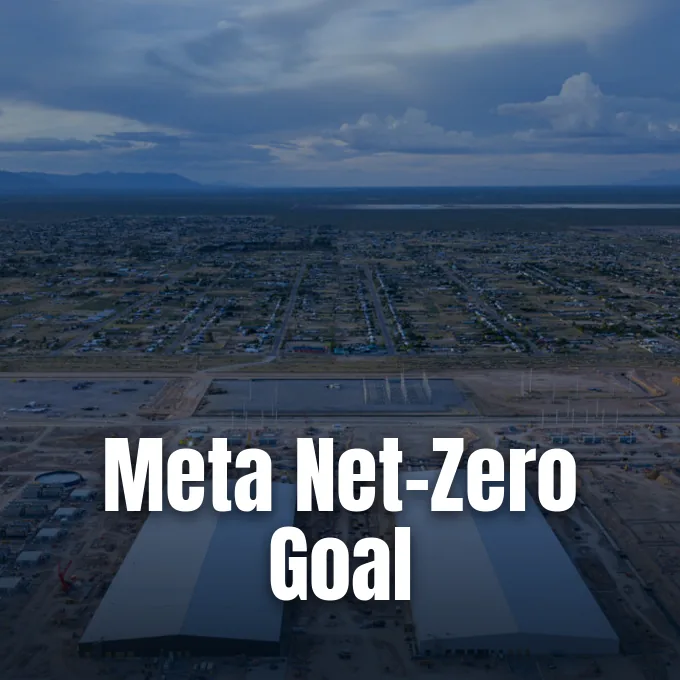
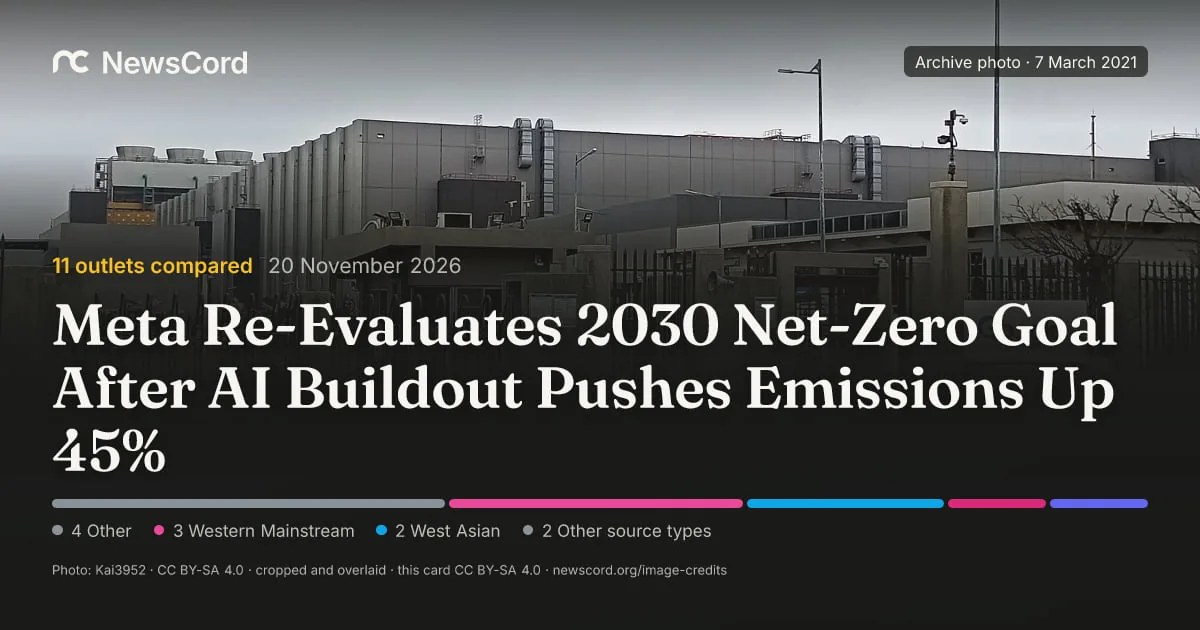
Meta Platforms is rethinking its target of reaching net-zero carbon emissions by 2030, citing power demands from artificial intelligence data centers that drove company emissions up 45% in 2025. In its annual sustainability report released on November 19, 2026, Meta Platforms said it must re-evaluate its target dates as computing clusters shift its operating landscape. The shift marks a turning point for the Meta net-zero goal, which executives first framed in 2020 as a ten-year plan to eliminate carbon pollution across operations and supplier networks [1].
Why the Meta Net-Zero Goal Slipped
Company pollution climbed to 11.8 million metric tons of carbon dioxide equivalent in 2025 as Meta Platforms expanded its computing network [2]. That 45% jump exceeded rival tech builders. In the report introduction, data center head Rachel Peterson and climate lead Blair Swedeen said, “our long-term ambitions haven’t changed, but our operating environment has” [1].
When leaders first mapped out the Meta net-zero goal in 2020, the plan aimed to align with the Paris Agreement, which seeks to limit global temperature increases to 1.5 degrees Celsius. The pledge covered direct energy use as well as supply chain goods (including purchased equipment, construction machinery, and new computing gear) [2]. Meta Platforms had already reduced emissions from its own direct operations by 94% between 2017 and 2020, mainly by purchasing renewable power contracts [4]. Maintaining that clean record became difficult once training and running large AI models demanded steady power that local utility grids could not always provide from wind or solar farms alone [2].
Meta Platforms acknowledged that early forecasts fell short of reality. In their joint statement, Rachel Peterson and Blair Swedeen said, “When we set our net-zero emissions goal, we anticipated steady growth, falling clean energy costs, and changes in the broader system that would enable progress at the pace we envisioned. The reality has been far more complex” [2].
Power Needs for Server Hubs
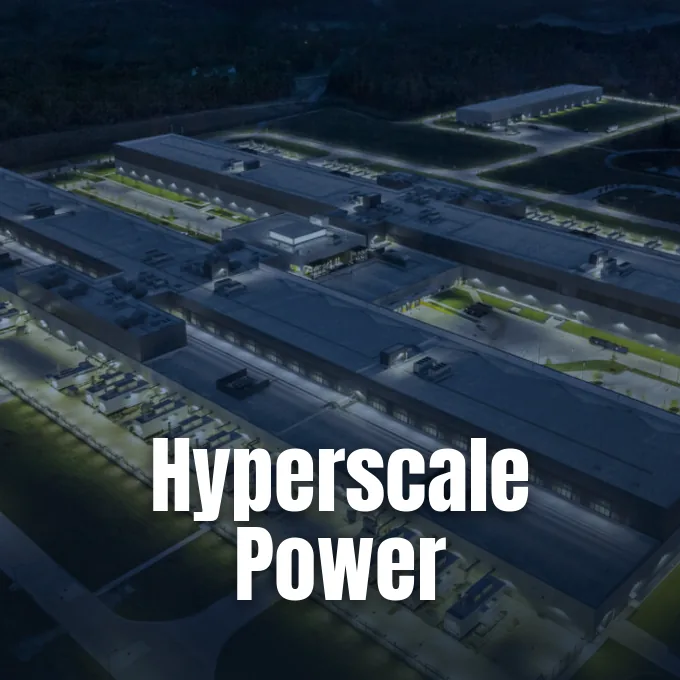
Power use at Meta Platforms climbed 35% in 2025 as new server hubs opened to support AI computing workloads. Large machine learning clusters demand constant baseload power [4]. Delivering on company products “requires building the infrastructure that powers AI,” Rachel Peterson and Blair Swedeen wrote in their review [2].
Capital costs jumped alongside heavy power needs. A news report from Reuters indicated that capital spending at Meta Platforms could reach as high as $135 billion in 2026, with budget cuts hitting non-AI teams while server purchases accelerate. Meta Platforms bought tens of thousands of advanced processors, cooling systems, and backup generators, adding to supply chain emissions before the chips even processed data. Much of the 45% pollution increase came from capital goods such as server racks, rather than simple office lights or employee travel [4].
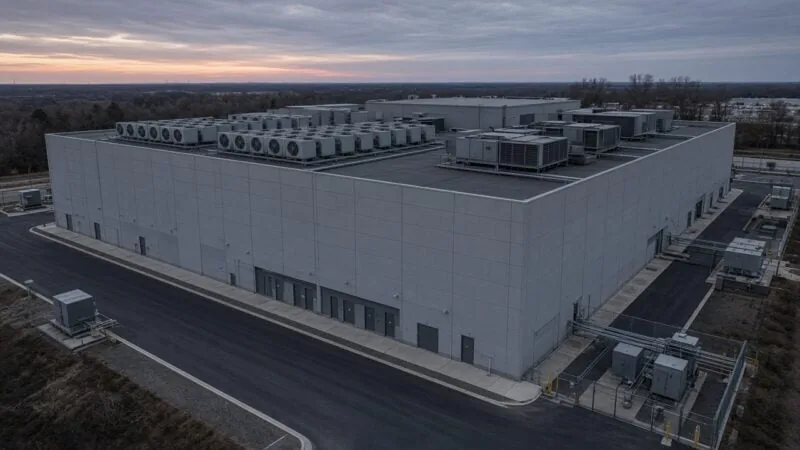
The trend spans the United States. A study published in Nature Sustainability found that 403 top data centers consumed roughly 2% of total US electricity, producing a carbon footprint equal to Denmark’s national output. Data shows how hyperscale data centers use 2% of US power as roughly 1,200 large facilities run nationwide and hundreds more sit in planning stages. That scale of power draw strains public grids and forces utilities to run natural gas plants longer [2].

Questions Over Green Energy Accounting
Advocates question corporate climate math. An analysis by Al Jazeera noted that corporate accounting tools, such as clean energy certificates, face growing doubt from climate advocates. Much of the green power that tech firms buy relies on paper certificates that do not guarantee matching hourly power delivery on the physical power grid. When data centers run around the clock, local transmission lines often draw energy from fossil fuel plants during peak hours regardless of purchased credits [4].
In Oklahoma, the Oklahoma Legislature and Governor Kevin Stitt have debated moratorium proposals on new server campuses to protect local power reserves from excessive industrial draws. Those legislative debates show how communities mount data center opposition to stall projects when local water and energy supplies face heavy demands. Rising public scrutiny means Meta Platforms can’t simply rely on unverified green claims or distant tree-planting deals to balance heavy utility draws, especially as prediction markets tracked by Crypto Briefing price in policy pushback before December 31, 2027, at 20.5% [3].
Meta Platforms previously planned to balance remaining emissions by buying credits from carbon removal projects. But when total pollution jumps by millions of tons in twelve months, buying sufficient carbon credits becomes expensive and difficult to verify. Dependence on future carbon removal also draws criticism from climate groups who argue companies should cut gross output at the source [2].
Rethinking the Meta Net-Zero Goal Milestones
Original corporate schedules no longer match conditions on the ground. In the sustainability report, Rachel Peterson and Blair Swedeen wrote that the company is “re-evaluating our timelines, sequencing, and interim milestones—including the 2030 timeframe for our net zero emissions goal and our near-term intensity targets” [1].
Meta Platforms did not set a new target year in the report, explaining that it intends to post updates on its public sustainability website as internal assessments wrap up [4]. A delayed schedule lets the company avoid missing public deadlines on the Meta net-zero goal while negotiating clean power pacts with utilities, yet pushing back 2030 milestones weakens public trust after years of promoting climate leadership. Without binding check-ins, voluntary climate targets risk becoming moving finish lines that shift whenever priorities change [2].
Company leaders view computing capacity as central to corporate survival, making server procurement a top priority that outranks voluntary climate plans. In that race, the Meta net-zero goal has taken a back seat to capital expansion [1].
Wider Pullbacks in American Industry
Other tech firms face identical arithmetic [2]. Al Jazeera reported that Google faces the same math as Meta Platforms as AI workloads surge [4]. Google set a 2030 target six years ago to supply its facilities with carbon-free electricity, an effort CEO Sundar Pichai described as a “moonshot”. By 2024, Google stopped claiming its operations were carbon neutral, and the firm recently acknowledged that growing AI workloads keep driving net emissions higher [2].
The retreat reaches older industrial sectors. As reported by Tech Xplore correspondent Issam Ahmed, major American businesses have stepped back from environmental commitments during President Donald Trump’s second term as regulatory pressures softened. In January 2021, automaker General Motors set a target of selling 100% zero-emission vehicles by 2035. While GM technically keeps that target on paper, the company backed federal policy changes that weakened fuel economy rules to levels requiring no further mileage improvements. That dual approach allows industrial firms to market green pledges while slowing real transitions [2].
Consumer brands follow similar playbooks. In 2020, retail giant Walmart pledged to cut emissions by about a third by 2025 and two-thirds by 2030 from a 2015 baseline, but admitted in a 2024 report that it would miss its interim target and recycling benchmarks. Meanwhile, beverage giants Coca-Cola and Pepsi changed baseline years to weaken their published reduction goals [2].
- ONLINE NEWS Ars Technica. (2026, November 19). Meta reconsiders 2030 net-zero goal amid record emissions from AI data centers. [Article Link]
- ONLINE NEWS Ahmed, I. (2026, November 20). Meta says ‘reevaluating’ 2030 net-zero target amid AI buildout. Tech Xplore. [Article Link]
- ONLINE NEWS Gomez, E. (2026, November 20). Meta reconsiders 2030 net-zero goal amid record AI data center emissions. Crypto Briefing. [Article Link]
- ONLINE NEWS NewsCord. (2026, November 20). Meta Re-Evaluates 2030 Net-Zero Goal After AI Buildout Pushes Emissions Up 45%: 11 outlets compared. [Article Link]


