




Between April and June of 2026, organized community resistance blocked or delayed at least 45 data center projects worth nearly $68 billion across the United States. Research organization Data Center Watch, an initiative of 10a Labs cited by Bloomberg, revealed that grassroots groups disrupted this pipeline across the nation even before developers could secure official municipal permits. This surge in data center opposition compounds an earlier 75 projects stalled during the first quarter, pushing the total disrupted capital during the first half of 2026 to nearly $200 billion [1].
Data Center Opposition Stalls Billions in Infrastructure
In municipal land planning, local data center opposition defines collective pushback by civic coalitions and residents against heavy industrial rezoning. The scale of this resistance caught technology executives off guard. Hyperscalers including Amazon, Microsoft, Meta, and Google have spent over $1 trillion on data infrastructure since 2023, with CNBC reporting at least $700 billion earmarked for artificial intelligence during 2026 alone [1]. Capital expenditures projected by industry analysts reach $745 billion this year as technology firms pursue an expansive global infrastructure buildout anticipated to hit $32 trillion by 2050 [2].
Grassroots coalitions are erecting a formidable wall. Data Center Watch estimates that 843 opposition groups now operate across all U.S. states except Hawaii [2]. Furthermore, a Gallup survey conducted in March revealed that seven in 10 Americans oppose constructing artificial intelligence data centers in their local area, with 48% expressing that they are strongly opposed to nearby developments [1].
Can tech giants overcome this united front? Prominent consumer advocate Erin Brockovich recently joined the fray by launching a crowdsourced map collecting neighborhood grievances about computational infrastructure [1]. Grassroots activists channeled growing data center opposition into coordinated direct action. The financial stakes are staggering. In July, 142 anti-data center protests were simultaneously staged across 42 states during a single weekend [2].
Water Depletion Sparks Grassroots Mobilization Across States
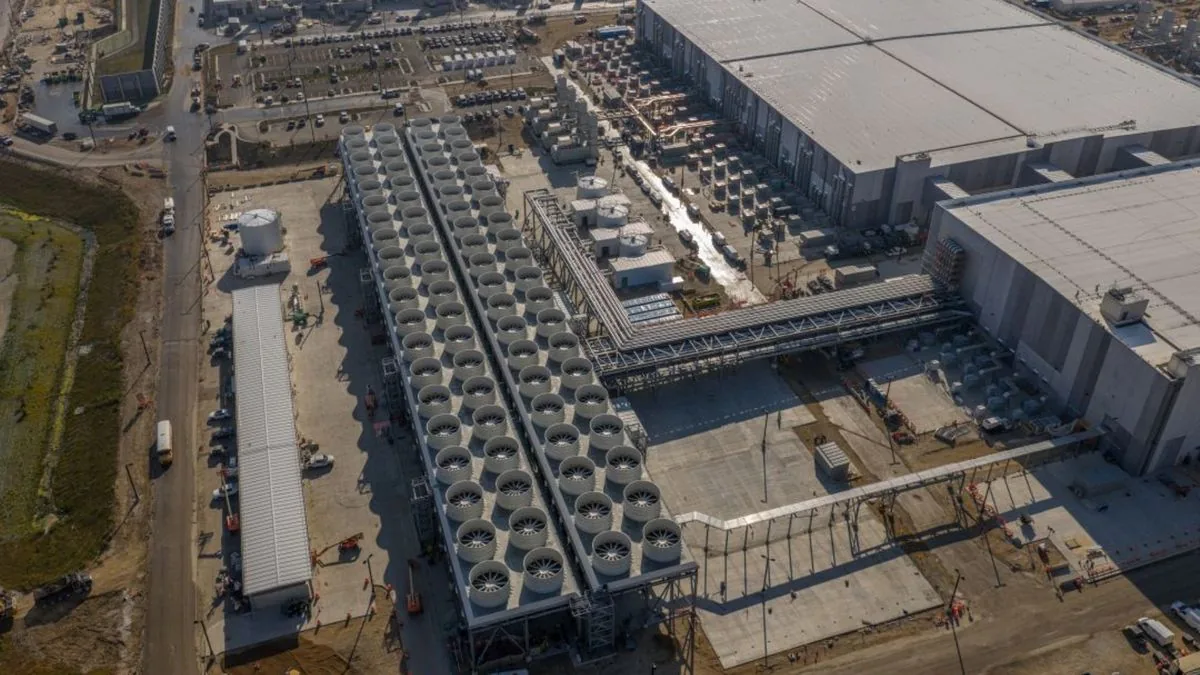
Cooling hundreds of thousands of specialized accelerators requires staggering aquatic resources. Projections indicate that artificial intelligence server clusters could consume up to 600 billion gallons of water annually by 2030, a figure that alarms regional utility planners in drought-prone and agricultural communities. Industry executives argue that public apprehension is unfounded. OpenAI chief executive Sam Altman famously asserted that 38,000 ChatGPT queries consume only as much water as cultivating a single almond, while Microsoft claims its newest server cooling architecture consumes as little water as a neighborhood restaurant [2].
Corporate assurances frequently collapse under local scrutiny. In May 2026, an artificial intelligence data center project secretly consumed 29 million gallons of municipal water over a period of 15 months before low residential water pressure alerted nearby homeowners to its presence. Discovery ignited immediate community fury [2].
Municipal authorities are responding by refusing to gamble with critical water tables. In June, the Minneapolis City Council approved a six-month moratorium on large data center construction to study community impacts [1]. Rising data center opposition has prompted local councils to erect legal barriers before developers even apply for construction permits [2]. This municipal caution mirrors international scrutiny, such as debates surrounding Google’s €13 billion investment in Finnish power infrastructure, where power grid demand and thermal waste required extensive municipal oversight. Four separate municipal councils in New Jersey have similarly enacted or debated strict local moratoriums [1].


Electric Grids Strain Under Hyperscale Energy Demands
Grid capacity represents an even more contentious battleground than municipal water supplies. Industry analysts project that server facilities will consume 20% of total United States electrical output by 2035, placing extraordinary stress on aging transmission lines. Escalating utility costs have transformed regional data center opposition into a potent economic issue for suburban households. In Virginia, home to the largest concentration of server campuses on earth, an artificial intelligence facility triggered an irreversible 76% surge in residential electricity rates [2].
State regulators intervened by requiring developers to fund the dedicated transmission equipment required exclusively for their private facilities. Will mandatory transmission surcharges protect ratepayers? Similar mandates are now proliferating across other states as public utility commissions force hyperscalers to offset localized infrastructure expenditures [2].

To secure power without waiting for overextended public utilities, tech giants are constructing private on-site generation. Meta recently finalized an agreement with Entergy Louisiana to secure 7 gigawatts (GW) of generation for its Hyperion campus. Entergy asserts that Meta’s capital commitment will save other utility customers $20 billion over a 20-year span [2]. Yet civic advocates question whether isolated utility agreements genuinely shield communities from wider grid vulnerabilities.
Statehouse Moratoriums Challenge Federal AI Race Priorities
Community pushback has escalated from local zoning hearings directly into state capitols. This wave of data center opposition reached state legislatures rapidly. During the first six weeks of 2026, lawmakers introduced more than 300 state-level bills, with proposals for statewide moratoriums surfacing in 14 states. By the conclusion of the 2026 legislative session, 30 statehouses had introduced statutory legislation, formal resolutions, or executive orders regulating data center siting, electricity and water constraints, and infrastructure cost-sharing frameworks [1].
In July, New York became the first state in the country to establish a statewide moratorium on new hyperscale data centers after Governor Kathy Hochul signed an executive order mandating a one-year pause. Conservative states are adopting similar cautionary policies. In August, Texas Governor Greg Abbott instructed the Public Utility Commission of Texas (PUCT) and the Electric Reliability Council of Texas (ERCOT) to conduct a comprehensive audit of data center projects seeking grid connections [1].
Federal leadership views these regional pauses through an entirely different lens. President Donald Trump has aggressively denounced local limits, asserting that delays jeopardize American technological dominance against international rivals. Writing on Truth Social in September, Trump claimed that ‘there is a SICK conspiracy going on against AI and Data Centers, and the only one that is happy about it is China,’ warning that communities opposing construction ‘want to end up being backwards and poor‘ [1, 2]. Federal leaders have pushed back aggressively against data center opposition, framing local delays as a national security vulnerability [1].
Turbine Emissions and Long-Term Grid Realities
To avoid grid bottlenecks, developers are turning to fossil-fueled natural gas turbines for rapid electricity generation, igniting severe air quality controversies in neighboring towns. Elon Musk’s Colossus 2 facility in Mississippi drew sharp condemnation after deploying 59 unpermitted natural gas turbines that discharged thousands of tons of hazardous pollutants into predominantly Black communities. Meanwhile, Amazon secured authorization for a dedicated 35-turbine natural gas plant permitted to emit 33 million tons of greenhouse gases annually, a volume that will establish the installation as the largest single source of carbon dioxide (CO2) pollution in the United States [2]. These severe environmental impacts have intensified local resistance across several regional jurisdictions.
Local officials now face intense personal hostility. Civic friction has degenerated into harassment, death threats, and gunfire directed at municipal planning boards [2].
The escalating standoffs expose an unresolved dilemma at the center of the computational boom. Proponents insist that expanding server clusters is mandatory to prevent economic stagnation and maintain competitiveness, while community organizers maintain that they do not oppose technological progress itself, but insist upon equitable resource allocation, transparent utility accounting, and clean air protections. Community organizers emphasize that data center opposition is about democratic oversight rather than hostility to innovation. As capital commitments race toward $32 trillion by 2050, the battle between local municipal authority and hyperscale expansion will decide where the digital future is built [2].
- ONLINE NEWS Gil, B. (2026, September 21). Nearly $200 billion worth of data center projects have been blocked or delayed this year. Gizmodo. [Article Link]
- ONLINE NEWS Uko, E. (2026, September 21). Local opposition blocked $68 billion worth of data center projects in the second quarter of 2026. Tom’s Hardware. [Article Link]


1 comment