





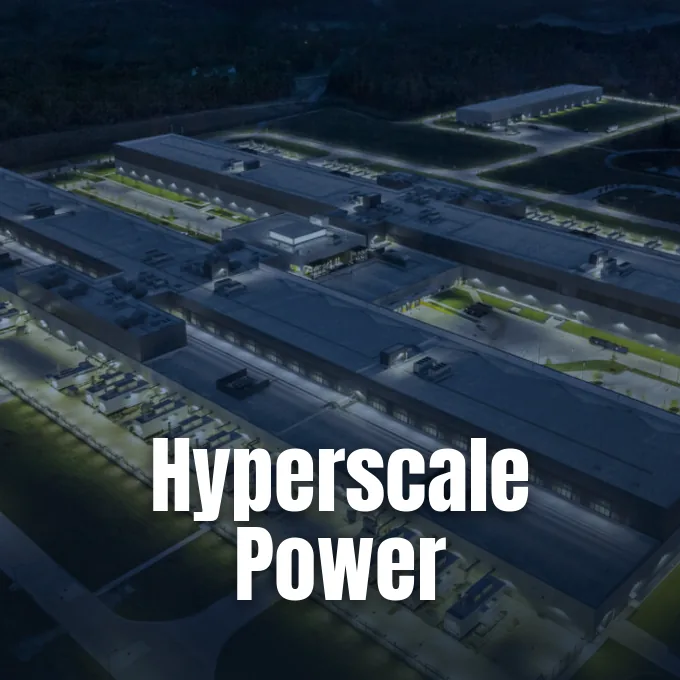
Researchers at the Harvard T.H. Chan School of Public Health found that 403 hyperscale data centers in the United States consumed about 82 terawatt-hours of electricity between May 2024 and April 2025. The annual total equals roughly 1.8 percent of all electricity used across the nation, matching the power demand of the entire state of Michigan. The peer-reviewed study, published Monday in the journal Nature Sustainability, shows that 54 percent of that energy came from fossil fuels such as gas and coal [2].
Inventory of Hyperscale Data Centers
The Harvard team identified computing sites using satellite pictures, company disclosures, and commercial real estate databases. They began with a preliminary list of 675 sites, but dropped any location lacking verified electrical capacity or visible cooling gear. The final tally identified 403 active facilities with an average electrical capacity of 40 megawatts [1].
Gianluca Guidi, lead author of the study and a postdoctoral fellow in the Department of Biostatistics at the Harvard T.H. Chan School of Public Health, said power choices matter far more than computing labels. “We tend to discuss AI’s environmental footprint as though it were some fixed property of the technology, when in reality the same computing infrastructure can have dramatically different consequences depending on the electricity system supporting it,” Guidi said in an email to The Verge. Guidi noted that pollution outcomes are not inevitable because companies choose where to build and how to supply power. “I actually find that encouraging, because it means these impacts aren’t inevitable. We have choices about where we build and how we power this infrastructure,” Guidi said [2].
Jon Koomey, an energy researcher who has contributed to federal benchmark reports at Lawrence Berkeley National Laboratory since 2007, said large computing clusters were growing fast before generative models gained traction. “Hyperscalers have been growing fast, even before the AI boom,” Koomey said [3]. Koomey pointed out that utility contracts often hide behind strict nondisclosure agreements, preventing local towns from learning exact utility loads. Citizen concern has intensified, and communities mount data center opposition to stall projects in multiple counties.

Fossil Fuel Reliance
The 82 terawatt-hours drawn by these server clusters places their collective power burn ahead of 148 nations, according to John Sterman, director of the MIT System Dynamics group and the MIT Sloan Sustainability Initiative. The comparison includes countries such as Austria, Israel, and Venezuela, though it excludes the largest economies like China and the United States. Sterman used the help of Claude to compare the Harvard findings against international consumption figures [2]. Computing loads now rival sovereign nations.
Running those facilities generated 25.7 million metric tons of carbon dioxide during the twelve-month study window. Annual carbon pollution from the 403 sites matches Denmark’s carbon footprint, while exceeding total greenhouse gas emissions generated by 113 individual nations. “I think AI can be extraordinarily helpful,” Sterman said [2]. “But we’ve got to figure out a way to limit the harms … Especially because those impacts are irreversible. Once you allow these data centers to emit the CO2, you can never undo that.”
Grid reliance on fossil generators drives the study’s high emissions totals. Guidi’s team found that 54 percent of the electricity consumed by these server halls came from gas and coal plants [2]. Emissions linked to server power have tripled since the boom started [3].


Regional Grid Variations
Geography dictates how much carbon spews from power plants supplying server halls. The study revealed that facilities in four states—Virginia, Oregon, Ohio, and Iowa—accounted for over half of all electricity demand identified across the surveyed facilities. Northern Virginia contains Data Center Alley, the densest concentration of commercial server buildings in the world [3].
Fuel supplies on local grids create sharp contrasts in pollution between states. In coal-reliant Wyoming, generating electricity produced roughly seven times more carbon pollution per kilowatt-hour than in Oregon, where hydropower supplies a large share of local energy. “Two data centers consuming exactly the same amount of electricity can have dramatically different carbon footprints simply because of where they’re located,” Guidi wrote [2]. A server hall in Oregon runs on relatively clean water power, whereas an identical facility in Wyoming relies on coal.

Fengqi You, a professor in energy systems engineering at Cornell University who was not involved in the study, said the findings spotlight a serious threat of long-term carbon lock-in. You warned that gas plants and electric substations constructed to serve computing hubs will stay operational for decades once utilities build them. “Power plants and supporting infrastructure built to meet rapidly growing data center demand may operate for decades,” You said in an email to The Verge [2]. Decisions made today will govern emissions for decades because energy infrastructure remains in service for thirty to forty years.
Behind-the-Meter Power Pipelines
While the Harvard study surveyed sites active through April 2025, the data may already undercount actual consumption. The typical site in Guidi’s dataset drew 40 megawatts, but modern developers are now designing computing campuses requiring hundreds or thousands of megawatts. “Some of the massive campuses being proposed today are substantially larger than the typical facility in our dataset,” Guidi said [3].
Developers are building private power plants directly on site to avoid waiting years for electric utilities to hook up high-voltage grid lines. Known as behind-the-meter generation, this setup lets operators burn natural gas right beside their server buildings without connecting to local power grids. Proposed behind-the-meter projects earmarked for computing hubs have surged to 189 gigawatts in the development pipeline [3].
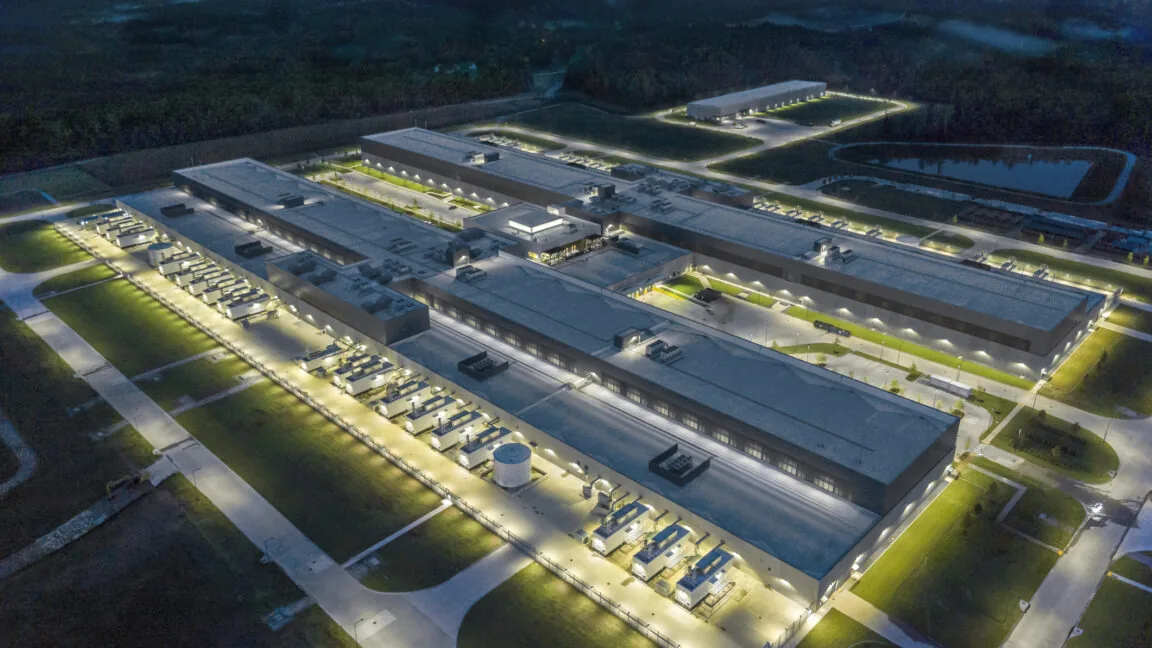
Private gas plants could erase broader emission reductions achieved by other sectors. BloombergNEF estimated that if every proposed behind-the-meter generator in the development pipeline gets built, overall emissions in the United States could jump by 10 percent. Many of these private installations plan to deploy inefficient natural gas turbines that release heavy carbon loads per megawatt-hour [3]. The Harvard study did not measure local smog or gas leaks caused by private turbines, leaving their full neighborhood health impact uncounted [2].
Federal Oversight of Hyperscale Data Centers
Government agencies do not track electricity consumption from hyperscale data centers as an independent category. Power demand numbers are treated as confidential trade secrets, leaving utility agreements shielded by nondisclosure agreements. “Knowing for certain data centers how much they use over a year is a really useful thing,” Koomey said, pointing out that public numbers remain rare [3]. “Sometimes we know it, but sometimes it’s behind an NDA, and no one ever sees it.” Limited public disclosure forces scientists to rely on satellite thermal scans and mathematical models to estimate basic grid impacts.
Federal energy officials are taking initial steps to collect hard figures. Lee Tucker, a spokesperson for the Energy Information Agency, said the federal office recently wrapped up three pilot surveys of data center power use in 10 states. The EIA plans to use those preliminary findings to design a potential survey for the entire industry [3].
Public pressure could also spur federal action. A bipartisan bill in Congress could soon mandate formal public reporting on data center electricity and water use nationwide. Meanwhile, Guidi and his colleagues are building a public website to track the environmental footprint of individual facilities. Gina McCarthy, former EPA administrator and White House national climate advisor, praised the independent accounting effort. “Communities and policymakers need reliable, independent data on what these facilities mean for our air, health, and the climate. This study is an important step,” McCarthy said in a statement [2].
- ONLINE NEWS Ars Technica. (2026, November). Hyperscale data centers use 2% of US electricity. [Article Link]
- ONLINE NEWS Calma, J. (2026, November 16). US data centers now burn more electricity than a midsized country. The Verge. [Article Link]
- ONLINE NEWS Taft, M. (2026, November 16). Just 400 US Data Centers Use More Electricity Than Michigan. WIRED. [Article Link]
- ONLINE NEWS Techmeme. (2026, November 16). Harvard study: just 403 US data centers operational between May 2024 and April 2025 consumed as much electricity annually as the state of Michigan. [Article Link]


