





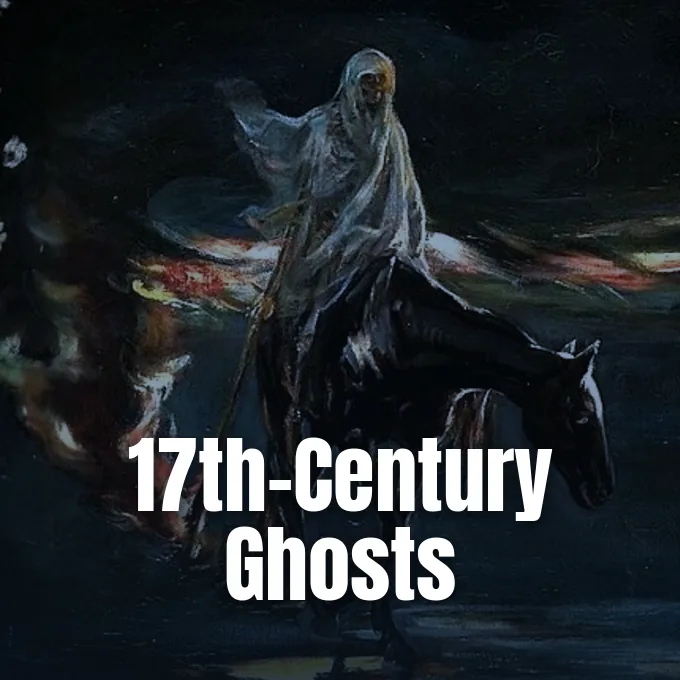
Late in 1671, a Wiltshire minister named parson Symonds rode home in the dark when an apparition leapt up behind him. The ghost was John Estcourt. Estcourt was a local gentleman who had died about two years before. Instead of leaving such encounters to tavern gossip, early British naturalists treated them as field evidence. Inquiries into 17th-Century Ghosts helped fellows of the new Royal Society test witness credibility and confront materialist doubts, though an academic study by Louise Ryland-Epton documenting these investigations is a 2026 preprint that has not undergone peer review [1].
Glanvill and the Royal Society
The Royal Society began in 1660 as England’s central scientific body, yet early fellows did not draw a firm wall between nature and the spirit world. Writer Joseph Glanvill, who entered the society as a fellow, collected accounts of spirits and witchcraft to build what he saw as empirical proof of divine presence. In his 1681 book Saducismus Triumphatus, Glanvill argued that denying apparitions was equivalent to denying God [2]. He believed that careful records of supernatural events could answer philosophical skepticism and keep religious belief secure against atheism [4]. Glanvill trusted testimony that other scholars viewed with doubt [5].
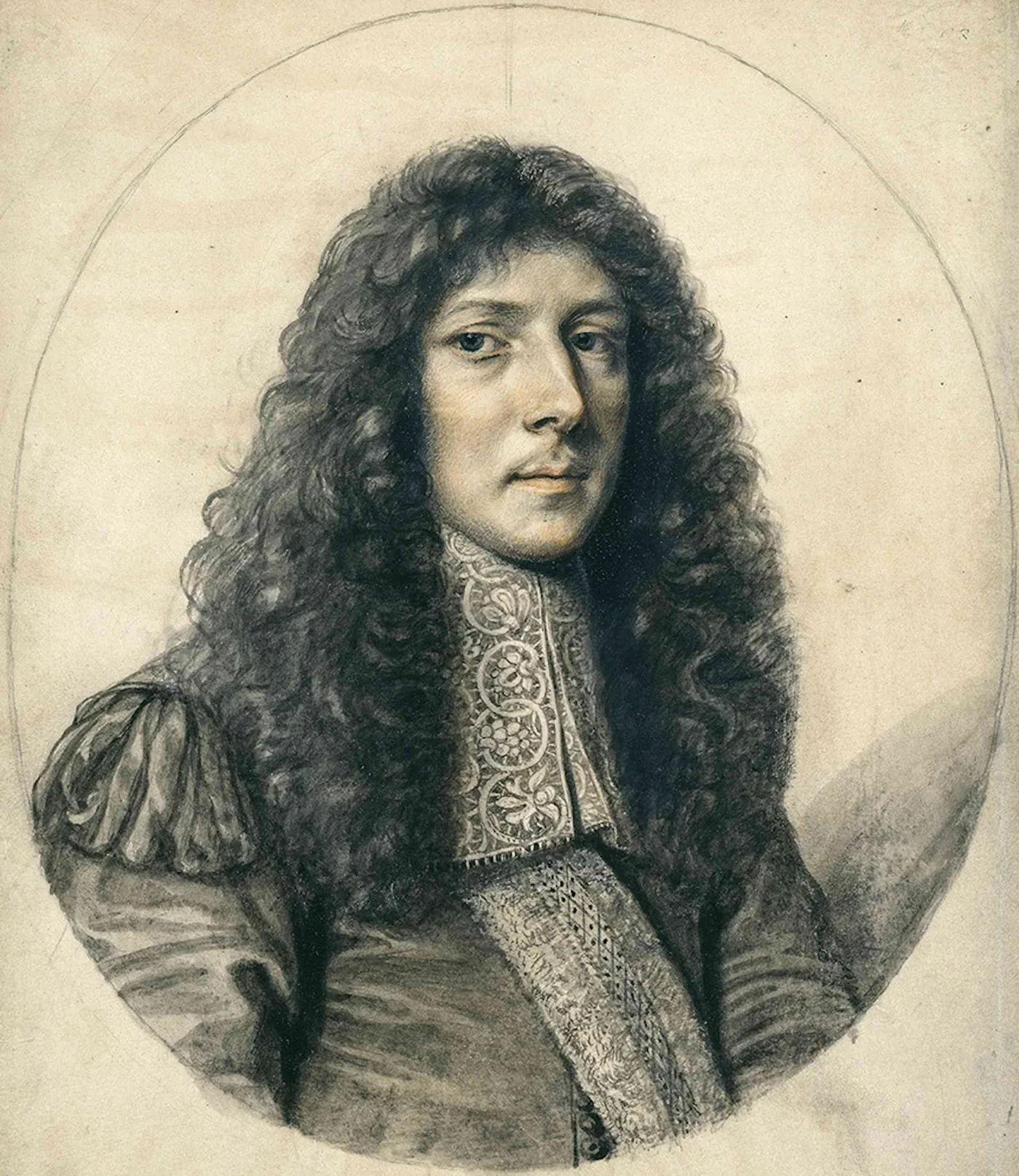
Fellow member John Aubrey shared Glanvill’s curiosity about the supernatural. Born in 1626 at Easton Piercy, Aubrey directed readers to Saducismus Triumphatus, but he considered Glanvill somewhat gullible. Aubrey wanted solid evidence [2].
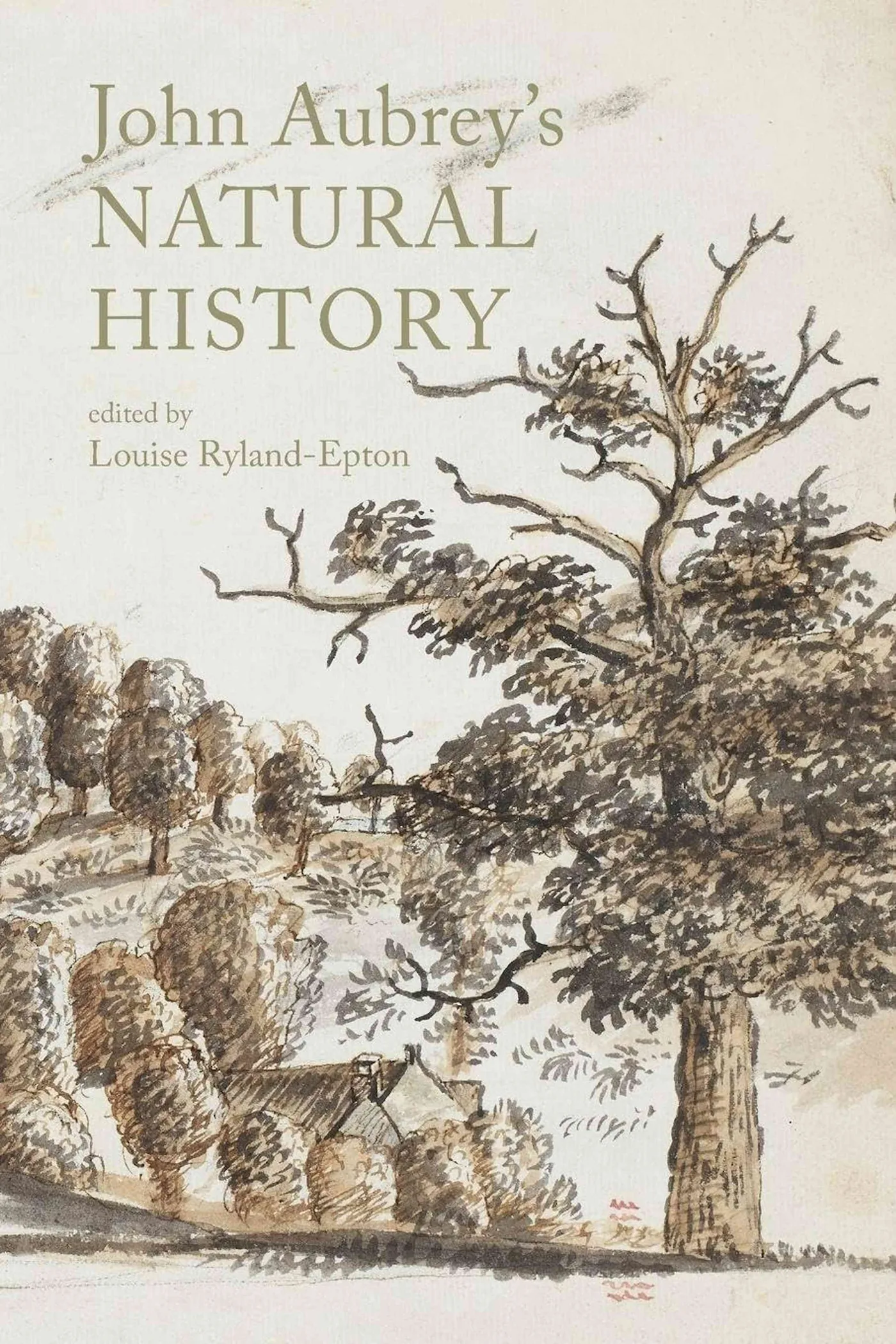
Aubrey began compiling his natural history of Wiltshire in 1656, gathering regional notes on rock formations, flora, weather, and strange local occurrences. He spent decades collecting stories from parish elders, farmers, and traveling squires, recording odd events alongside soil observations. In 1691, the Royal Society acknowledged the scientific value of this survey by having the entire text copied for its library. Aubrey loved unusual tangents, writing about swan-sized dragons in Africa or giant skeletons, but his methods still relied on assembling testimonies. When he published Miscellanies in 1696, the only book printed during his lifetime, he preserved dozens of strange tales because he refused to dismiss human experience without an inquiry [2].
Investigating 17th-Century Ghosts with Evidence
When Aubrey recorded parson Symonds meeting the ghost of Estcourt near Garsdon church, he evaluated the claim like an experimental observation. Symonds was known as “a lusty strong fellow,” which suggested he was not a timid man prone to hysteria or nervous panic. His status as a church minister gave social weight to his words, yet Aubrey remained cautious. He quoted an old French saying that drunk men saw devils, acknowledging that alcohol could alter human perception. Then Aubrey cited an independent detail that seemed hard to fake. Symonds’ horse began sweating and trembling violently on the dark road home, continued shaking through the following day, and refused to eat its morning feed of oats [2].
The animal could not lie. Its fear showed genuine physical distress that corroborated the minister’s testimony [2].
Aubrey also gathered examples of deliberate deception to balance his records. He documented exposed cheats such as Katherine Waldron, a woman who pretended to be bewitched and allowed pins to be pushed into her flesh to convince observers. Aubrey concluded that genuine apparitions were rare, writing that where one was true, a hundred were figments. He applied this cautious approach to reports of 17th-Century Ghosts because gathering evidence was how early natural philosophers sought to build reliable theories about the physical world [2].
Testing Illusions on Badbury Warren
Aubrey balanced tales of terror with accounts where witnesses tested their fright directly against the physical environment. One such story involved a valet in the service of Sir Ralph Bankes, whom Aubrey described as “a briske young fellow”. While riding late at night over Badbury Warren in Dorset, the valet saw a dark shape in the distance that seemed to grow bigger as he approached. Fear seized the valet. His hair stood on end, but he chose to investigate: “I have but a life to lose and I will see it, be it spirit or not” [2].
The valet spurred his horse. The terrifying figure was horse dung [2].
Aubrey included the Badbury Warren incident to illustrate the difference between unverified panic and tested truth. In the case of parson Symonds, the spectre vanished before anyone could examine it, leaving Aubrey to weigh the parson’s character and the sweating horse. With the valet, the witness rode forward and exposed an optical illusion caused by darkness and fear. Aubrey applied this same empirical mindset to assessing 17th-Century Ghosts and everyday natural phenomena, collecting facts with patience and avoiding rash conclusions [2].


Why Thinkers Catalogued 17th-Century Ghosts
Why did educated men in Restoration England devote so much energy to recording 17th-Century Ghosts? Between 1650 and 1700, English thinkers watched materialist philosophy gain influence across universities, prompting elite anti-sadducean writers to defend belief in the soul with contemporary case studies. Demonological explanations that attributed every phantom to the Devil began losing ground to neoplatonic views that treated ghosts as departed human spirits [4]. Writers like Richard Bovet and Cambridge philosopher Henry More collected accounts of hauntings to prove that atheism had no basis in fact [5]. As Jo Bath and John Newton showed in their 2006 study in Folklore, ghost narratives served as empirical evidence in learned debates [3].
Archival records from the period reveal that apparitions were also linked to legal trials and unsolved crimes. In a 2011 analysis published in the Journal of British Studies, historian Todd Butler examined the case of Isabell Binnington, where ghost testimony intersected with murder accusations and court proceedings in Restoration England [3]. Natural philosophers were not trying to pull society back into superstition. Instead, they worried that a strictly mechanical view of nature would leave no room for spiritual life or moral responsibility. By treating apparitions as phenomena that could be documented and weighed against physical evidence, scholars hoped to keep spiritual experience within the bounds of rational and orderly investigation [4].
Wonders in Broadsides and Chapbooks
While fellows of the Royal Society discussed evidence in libraries, ordinary citizens in seventeenth-century Britain and New England lived in a world of wonders. Cheap broadsides circulated omens, such as a 1648 ballad reporting wheat falling from the sky at Brotherton. Another 1663 report described an invisible drummer boy in Tidworth [6]. In August 1680, twenty-three-year-old Robert Baty drowned near Arthuret. His coffin was found sitting above ground three times until his family moved the body into their stone vault [5].
His sister Mary Baty reported a dream warning that he would disturb the living until buried properly [5].
Other popular accounts described long-lasting spectral visitations across Great Britain. In 1665, a schoolboy named Bligh was haunted in Launceston by the ghost of a neighbor named Dorothy Durant. His headmaster, Mr. Ruddle, investigated and spoke with Durant’s apparition for fifteen minutes in an open field. In Ormiston, Scotland, servant Isabel Heriot returned as a poltergeist in winter 1680, pelting her former master’s home with stones for weeks [5].
Supernatural reports also reached public figures. In Cornwall, servant Ann Jefferies claimed six fairies visited her in 1645 while working for the Pitt family. Magician Dr. John Lambe advised George Villiers, Duke of Buckingham, before Buckingham was assassinated in 1628 [5]. Cambridge ministers Thomas Beard and Samuel Clarke collected such marvels, while Cotton Mather and Samuel Sewall recorded colonial wonders in Boston. Sewall heard his infant son utter portents [6].
The Limits of Early Natural History
Aubrey’s notes in his survey of Wiltshire and in Miscellanies reveal how early scientific inquiry operated before laboratory tools existed [2]. Scholars used the same observational methods to study phantom sightings, rare weather events, and fossil discoveries. When early researchers confronted puzzling signals in the physical landscape, they gathered witness accounts and tracked environmental clues, a method seen when nineteenth-century investigators sought to understand unexplained telegraph disturbances in our analysis of 1840s space weather [1]. Natural history at the time was an open catalog of human experience and physical curiosities [2].
Sorting verified facts from folklore also required researchers to examine physical remnants with care, much like modern scientists studying preserved specimens to trace ancient social behaviors in fossil ants [1]. Men like Aubrey could not measure emotional bias or nervous shock with laboratory instruments, so they relied on witness temperament, sweating animals, and physical clues from the scene. Their work was not an abrupt leap into modern rationalism, but a tentative effort to demand evidence where rumors once ruled. Inquiries into 17th-Century Ghosts helped establish empirical habits of testing and cross-examination that gradually shaped scientific thought [2].
- PREPRINT Ryland-Epton, L. (2026). The 17th-century British scientists who investigated hauntings. [Article Link]
- ONLINE NEWS Ryland-Epton, L. (2026). The 17th-century British scientists who investigated hauntings. The Conversation. [Article Link]
- WEBSITE Bernhardt, L. (2018). Research Guides: Social History of Ghosts: 17th Century. Springshare. [Article Link]
- WEBSITE Ghost Belief During the 17 Century. (2026). Scribd. [Article Link]
- WEBSITE Frater, J., & Shaw, T. (2017). 10 Bizarre Supernatural Stories From 17th-Century Britain. Listverse. [Article Link]
- WEBSITE A World of Wonders: The Mentality of the Supernatural in Seventeenth-Century New England. (2012). Colonial Society of Massachusetts. [Article Link]
APA 7: PerEXP Teamworks. (2026). Royal Society Fellows Studied 17th-Century Ghosts.


