





Can a modest village hall transform into an active stargazing outpost through a community-built mini-observatory? Members of the Shropshire Astronomical Society (SAS) recently proved it possible by securing planning permission to install a decommissioned military telescope dome in Shropshire [1]. The approval clears the path for the volunteer club to install the structure at Rodington Village Hall after operating from the location for 25 years [2].
- Shropshire Society Secures Mini-Observatory Planning Approval
- How Do Astronomers Get to Use Observatories?
- Zoning Laws and Setbacks for a Backyard Observatory
- Building Permits and Structural Design for a Tiny Observatory
- Environmental Standards for Mini-Observatory Installations
- Why Are Astronomers Important?
Shropshire Society Secures Mini-Observatory Planning Approval
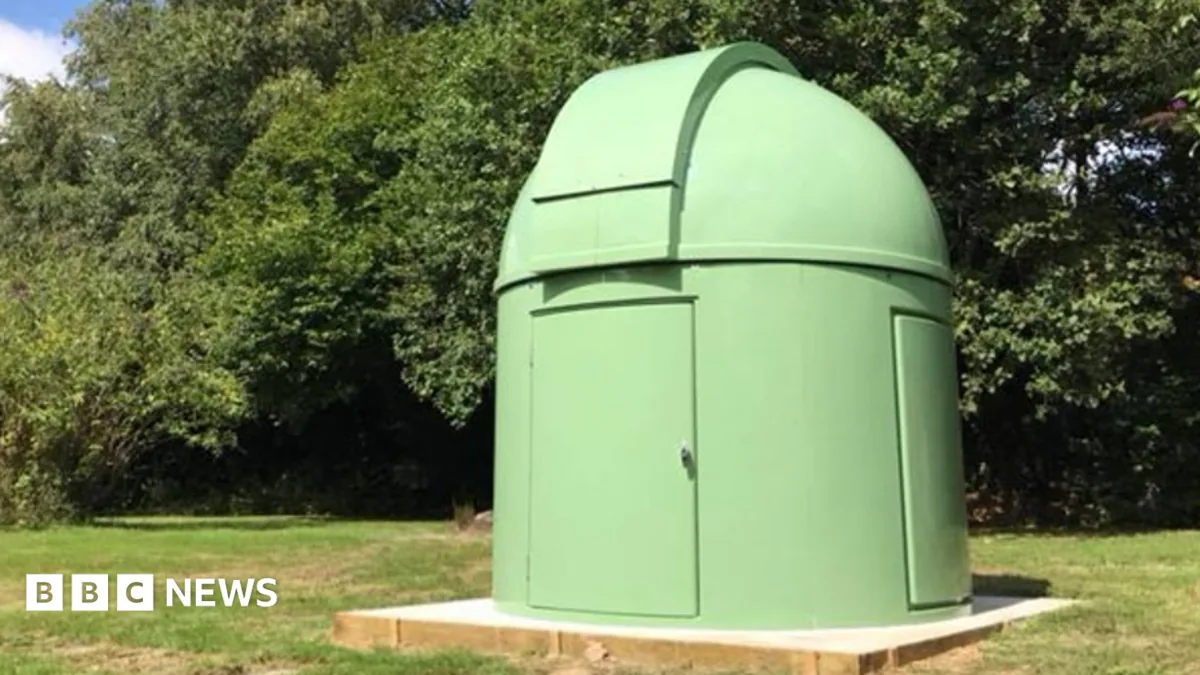
Planners from Telford and Wrekin council formally approved the proposal to erect the curved gloss white fibreglass dome on the village hall grounds. Officials observed that while the circular housing would appear “somewhat unusual” alongside a traditional municipal building, the installation would add “some visual interest to the site” without disrupting rural scenery [1]. The society reached a firm agreement to purchase the mini-observatory in May [2]. Standing a little less than 2.7 meters (8 feet 9 inches) tall, the compact enclosure was deemed modest enough to blend into the grounds without overwhelming nearby village architecture [1].
The dome and telescope carry a notable past, having previously seen service with the Irish Rangers stationed at the Tern Hill army base near Market Drayton. Transferring this surplus defense hardware into civic hands revitalizes optical tools that had fallen completely out of active use. In the official planning submission, society member Stephen Szwajkun explained the public vision behind the site: “It will be a first public astronomical observatory in the area and provide inspiration for the diverse residents of Telford and Wrekin as well as the wider area” [1].
Local council officials reviewed potential neighborhood disturbances before granting building consent, with technical assessments determining that stargazing sessions would produce no unacceptable noise or disturbance for nearby residents in Rodington. Planners also concluded the project was “not considered likely to result in a significant increase in traffic or parking demand,” agreeing that the facility would deliver a useful additional community and educational facility for schools and amateur skywatchers [1].
How Do Astronomers Get to Use Observatories?
Astronomers get access to observation facilities by competing for telescope time at national research centers or by constructing shared community dome sites. Research teams often spend months submitting telescope allocation proposals for Mauna Kea observing time, facing rigorous selection boards to win brief windows on high-altitude instruments. For local amateur societies and independent hobbyists, scheduling time on institutional telescopes is rarely feasible, making local dome projects the most reliable pathway to regular observation [4].
Setting up tripod-mounted telescopes in a field introduces constant practical friction that discourages frequent skywatching [4]. Optical tubes, heavy counterweights, power cables, and delicate imaging cameras require significant assembly time before every clear night, while polar alignment must be calibrated from scratch and optics need cooldown periods to match ambient air temperatures. An enclosed dome or shed protects optical gear around the clock, allowing observers to start charting craters within two minutes of opening the hatch [5].
Permanent club installations also reduce individual financial barriers for beginners who cannot afford private backyard domes [4]. A shared society telescope gives members hands-on training with large apertures, computerized tracking mounts, and digital imaging sensors. By placing the Tern Hill dome at Rodington Village Hall, the Shropshire group creates a steady physical hub for collective night sky exploration [1].
Zoning Laws and Setbacks for a Backyard Observatory
Municipal planning departments regulate any permanent garden structure under zoning ordinances governing accessory buildings. In a compliance guide published on Canal New Generation, author Arthur explained that hobbyists frequently mistake telescope shelters for standard storage sheds, even though stargazing shelters face specific land-use rules concerning parcel boundaries, total structure heights, and intended non-commercial applications [4].
Zoning codes establish clear property line setbacks, generally requiring accessory shelters to sit at least 5 to 10 feet away from property borders, fences, and adjacent dwellings. Allowable heights typically range between 10 and 15 feet, while overall ground footprint allowances frequently cap building dimensions at 120 to 200 square feet. In a documented case study from the Pacific Northwest, an amateur astronomer named James designed an 8 by 10 foot roll-off roof observatory for a 10-inch Schmidt-Cassegrain telescope. Although James initially assumed his modest building was exempt from scrutiny, municipal codes mandated a building permit for any accessory structure exceeding 80 square feet, enforced a 6-foot setback from property lines, and required a $125 filing fee alongside electrical inspections. Navigating the formal application and two site visits took six weeks from filing to final sign-off [4].
Homeowners’ Association (HOA) covenants often impose architectural restrictions that exceed basic town ordinances. Some residential boards restrict visible roof lines, limit paint colors, or forbid separate backyard outbuildings altogether. Reviewing local covenant documents before purchasing building supplies prevents costly demolition notices or legal disagreements with neighbors [4].


Building Permits and Structural Design for a Tiny Observatory
Permit thresholds vary widely by county, with many jurisdictions requiring formal applications once an accessory structure exceeds 120 square feet or includes wired power. Permit application costs generally range between $50 and $500 depending on construction complexity, and builders must submit scaled site plans detailing foundations, framing lumber, and electrical connections before breaking ground [4].
To navigate tight permit limits, DIY builders often design micro-shelters optimized around standard material dimensions. In a design guide shared on Instructables, a telescope builder documented constructing a compact shelter within a strict 8 by 8 foot footprint. Selecting an 8-foot square base allowed the floor to be built from two untrimmed pieces of oriented strand board (OSB) sheet. The builder elected to use a floating foundation resting on corner points rather than digging permanent concrete footings into the earth. The base framing utilized 8-foot lengths of 2×3 lumber assembled on 16-inch centers, providing rigidity while keeping the total footprint under the 100-square-foot threshold that triggered permitting in that locality [5].
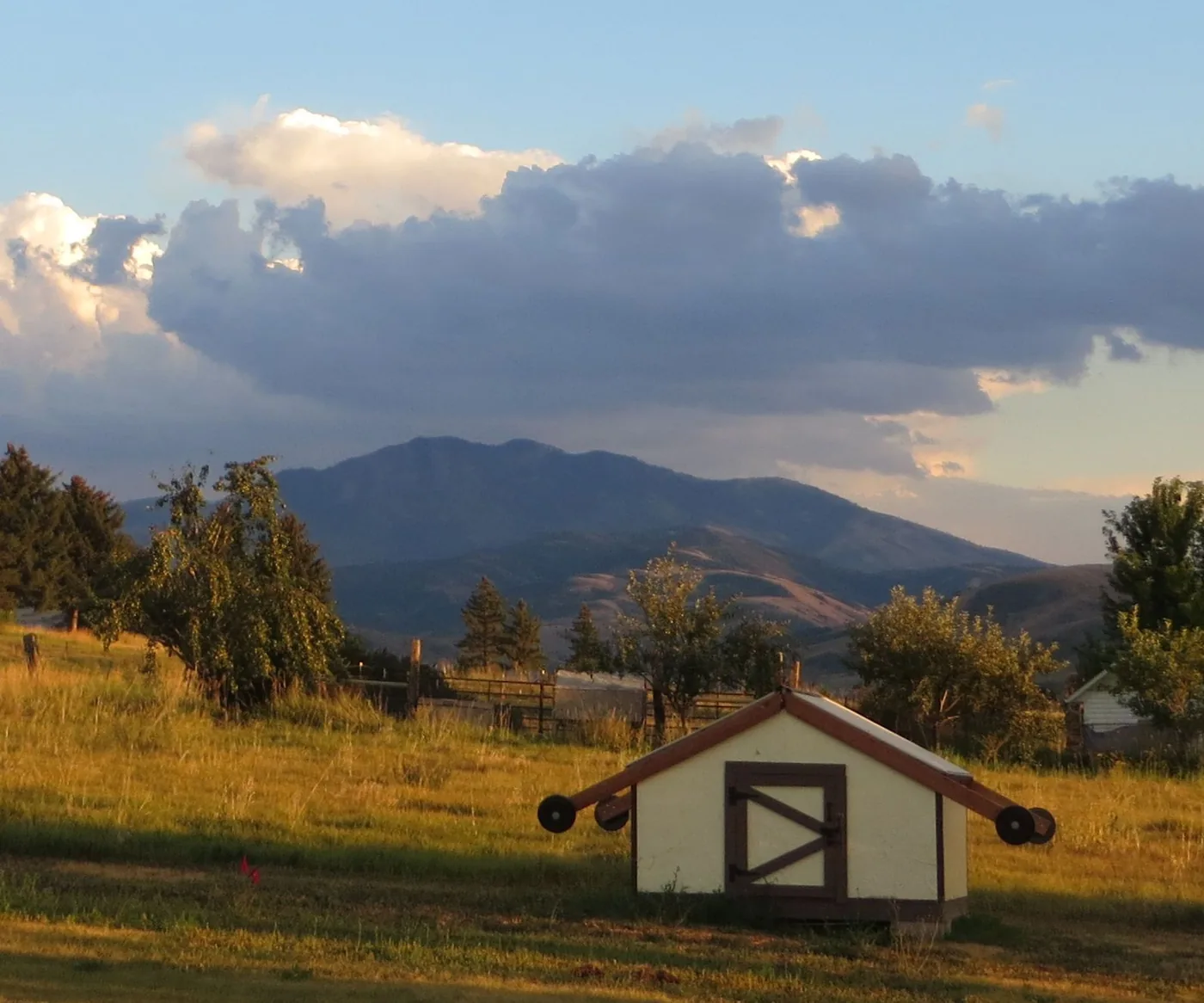
Roof mechanics must balance weather protection against swift manual operation. In the Instructables design, the roof angled upward at 30 degrees, with vertical wall studs cut to 4 feet 4.5 inches. The two roof sections were secured to the east and west walls with four heavy-duty door hinges. A counterweight and rope system allowed the builder to open the panels by hand, pivot them past vertical, and lower them securely without mechanical winches. Tested by an unexpected winter snowstorm immediately after completion, the sealed structure kept the interior dry and allowed observations to begin in under two minutes [5].
Environmental Standards for Mini-Observatory Installations
Light pollution controls represent an essential regulatory factor when planning any observation outpost. Municipalities located near dark-sky preserves or active astronomical societies frequently enforce specific lighting ordinances to stop light trespass, meaning observatory builders may need to submit a lighting plan demonstrating that outdoor lamps are fully shielded or motion-activated. Observing nighttime lighting curfews protects sky darkness while preserving safety around exterior walkways [4].
Visual aesthetics and heritage rules also guide local planning reviews. If an observatory sits within a designated historic district, building authorities examine exterior siding, paints, and dome finishes to ensure harmony with nearby landmarks [4]. In Shropshire, council planners noted that the gloss white fibreglass dome was unusual for Rodington Village Hall, yet concluded its clean curves contributed visual interest without detracting from local character [1].
Environmental considerations can also shape site preparation. Building near protected wetlands or wildlife habitats can trigger environmental reviews before excavation or tree trimming begins. Early discussions with neighbors and city planners help builders resolve potential concerns over property lines, nighttime movement, or tree clearances before setting anchors in the ground [4].
Why Are Astronomers Important?
Astronomers are important because their research expands scientific knowledge of planetary systems while grassroots observers share the wonders of the cosmos with the public. Amateur societies play a critical role in science education, organizing public viewing nights where hands-on telescope viewing turns abstract textbook diagrams into tangible observations of lunar craters, Saturnian rings, and distant stellar clusters [1].
Public astronomical sites also foster wider civic engagement with global space missions. Community stargazers frequently support citizen science initiatives, connecting grassroots observations with collaborative open science frameworks under the Artemis Accords that emphasize transparent data sharing. When local residents can peer through a community telescope, complex aerospace endeavors become accessible neighborhood experiences [1].
Society chairman Philip Osman emphasized the public value of establishing the county’s only community dome. Osman said: “The dome will be the only publicly accessible observatory in the county and we hope that this new facility will allow us to broaden our outreach activities and successfully engage with a new generation”. By securing formal council approval, the Shropshire group demonstrated that amateur astronomy societies can work constructively with municipal planners to build permanent stargazing centers for the public good [1].
- ONLINE NEWS Tooley, D. (2026, October 3). Shropshire Astronomical Society get permission for observatory. BBC News. [Article Link]
- ONLINE NEWS Tooley, D. (2026, October 3). Shropshire Astronomical Society get permission for observatory. BBC News. [Article Link]
- DICTIONARY ENTRY BBC News. (2026, October 3). Astronomers get permission for mini-observatory. Specialist Online Dictionary. [Article Link]
- WEBSITE Arthur. (2025, December 13). Backyard observatory permits & compliance guide. Canal New Generation. [Article Link]
- WEBSITE Instructables. (2018, September 16). A tiny telescope observatory. Instructables. [Article Link]
APA 7: TWs Editor. (2026, October 4). Shropshire astronomers win approval for mini-observatory. PerEXP Teamworks. https://perexpteamworks.com/en/mini-observatory-planning-permission-approval/


