



How will the International Space Station secure enough electrical energy for its final operational years in orbit? NASA has scheduled two upcoming NASA spacewalks to finish mounting roll-out solar panels on the station’s exterior truss, lifting overall electrical generation capacity to about 215 kilowatts. Crew members will exit the Quest airlock on October 29 and November 5 to finish this power upgrade. Flight planners in Houston arranged a preview conference on October 20 to explain the orbital tasks [1].
NASA Spacewalks to Install Roll-Out Solar Arrays
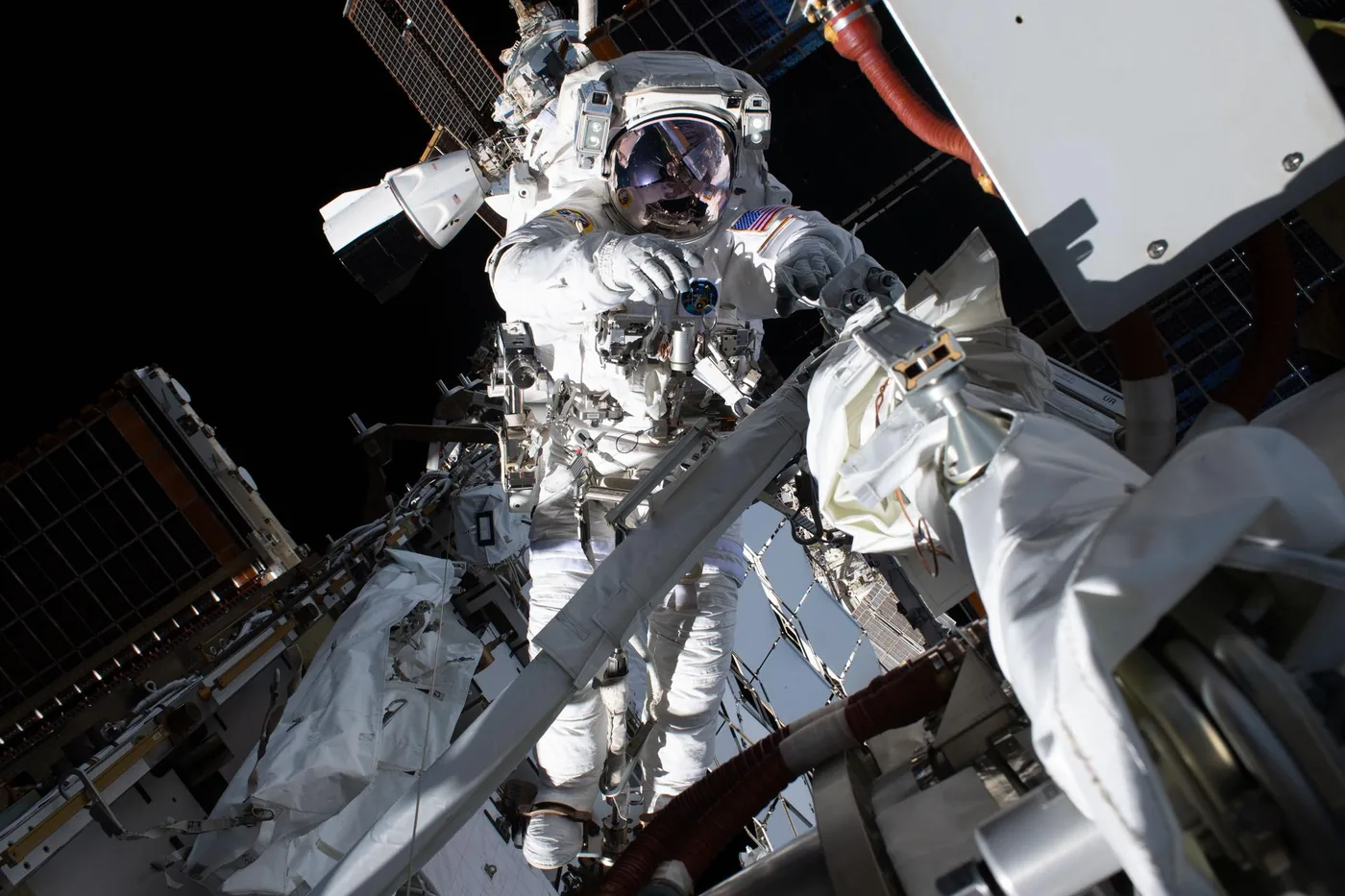
Astronauts will carry out the final stages of the station upgrade during two spacewalks planned for late autumn. During U.S. spacewalk 100 on Thursday, October 29, NASA astronaut Anil Menon and CSA astronaut Joshua Kutryk will step outside the Quest airlock. The new panel unrolls over existing wings [1].
Their job centers on installing the seventh International Space Station Roll-Out Solar Array, known as an IROSA, on the 2A electrical power channel. Ground teams confirmed that the new hardware will supply fresh current to support core station functions. By unrolling a flexible blanket of solar cells over the older silicon panels, the crew provides immediate power reinforcement without disconnecting original wiring [1].
One week later, on Thursday, November 5, Menon and Kutryk will conduct U.S. spacewalk 101 to mount the eighth and final roll-out solar array on the 3B channel of the orbital complex. Working in microgravity high above Earth, the two spacewalkers will bolt mounting brackets, run electrical cables, and release deployment latches so the flexible solar blanket can unfurl under its own stored spring tension. These two excursions represent the 285th and 286th spacewalks conducted to support space station assembly, maintenance, and upgrades since orbital construction began. Completing the pair of NASA spacewalks will conclude a multi-year effort to modernize the station’s electrical power channels before commercial platforms arrive [1].
Schedule and Crew for Spacewalks 100 and 101
The assigned spacewalkers bring a blend of flight experience and thorough training to these outdoor tasks [1]. NASA astronaut Anil Menon will serve on both excursions, building on his previous spaceflight work outside the airlock earlier in the year [3]. CSA astronaut Joshua Kutryk will partner with Menon for both outings, marking his first career spacewalks [1].
The pair trained extensively in the Neutral Buoyancy Laboratory to rehearse moving bulky array canisters along the station truss. Every movement outside the airlock follows a step-by-step checklist directed from Earth. Astronauts must secure their tethers, handle heavy tools with pressurized gloves, and align delicate electrical connectors while floating 250 miles above the ground [1]. Careful coordination keeps the crew on schedule throughout the six-hour excursion [3].
Flight controllers at Mission Control Center in Houston will supervise every phase of the spacewalks as the crew works outside the orbital outpost [3]. Spacewalk flight director Garrett Hehn from the Flight Operations Directorate and Low Earth Orbit Program operations integration manager Gaurang Patel will guide ground teams during the October 20 preview briefing. United States news outlets seeking in-person access must submit credentials to the Johnson Space Center newsroom by 3 p.m. Monday, October 19. Media representatives who join by phone need to dial in at least 15 minutes before the briefing starts [1].
Why Are Space Station Spacewalks Upgrading Power?
Why do orbital laboratories need new solar arrays after years of continuous flight? The original solar wings on the International Space Station have degraded naturally over time because of solar radiation, micro-meteorite strikes, and orbital temperature swings. Space station spacewalks dedicated to solar upgrades allow the laboratory to restore lost electrical capacity [1].
By overlaying newer, more efficient solar cells directly in front of the aging wings, NASA restores lost generating capacity without needing to remove the original panels. The older arrays still produce power, but the addition of modern roll-out arrays gives the laboratory extra energy to run advanced science facilities. Solar cells become less efficient after decades in space, making these targeted upgrades necessary for continuing research [1].
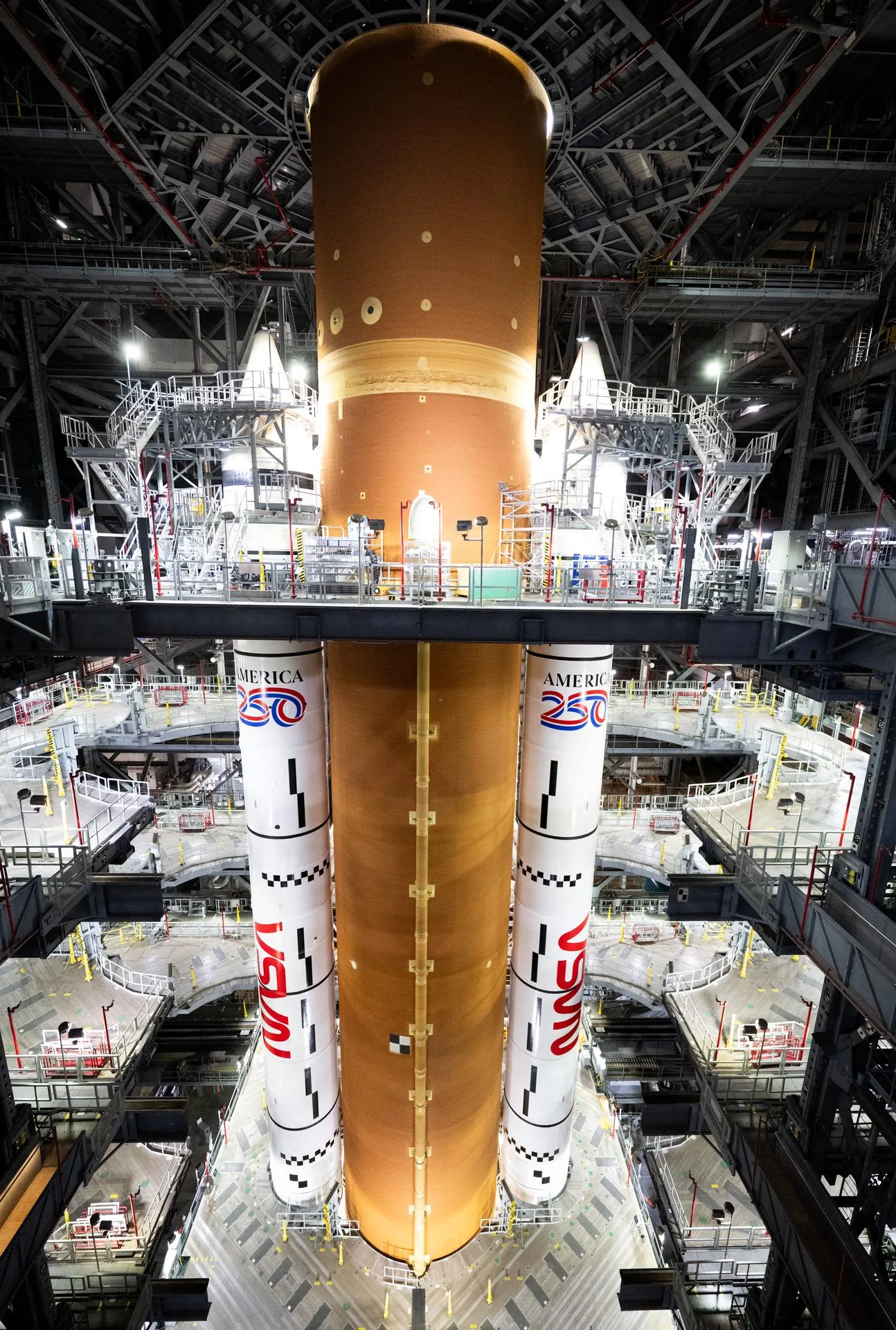
The energy boost is substantial for both current research and future mission needs. Together, the eight roll-out arrays will lift total electrical energy production by up to 30%, increasing station power capacity from 160 kilowatts to approximately 215 kilowatts. That additional electricity feeds high-draw science experiments, environmental life support machinery, and visiting commercial crew spacecraft. NASA also noted that the power augmentation ensures the space station has sufficient electrical reserves for its safe and controlled deorbit at the end of its mission lifetime. As international partners coordinate future lunar goals through forums like the International Space Conference exploration partnerships, maintaining reliable electrical power in low Earth orbit remains a central objective for station operations [1].

Earlier Missions That Prepared the Station Truss
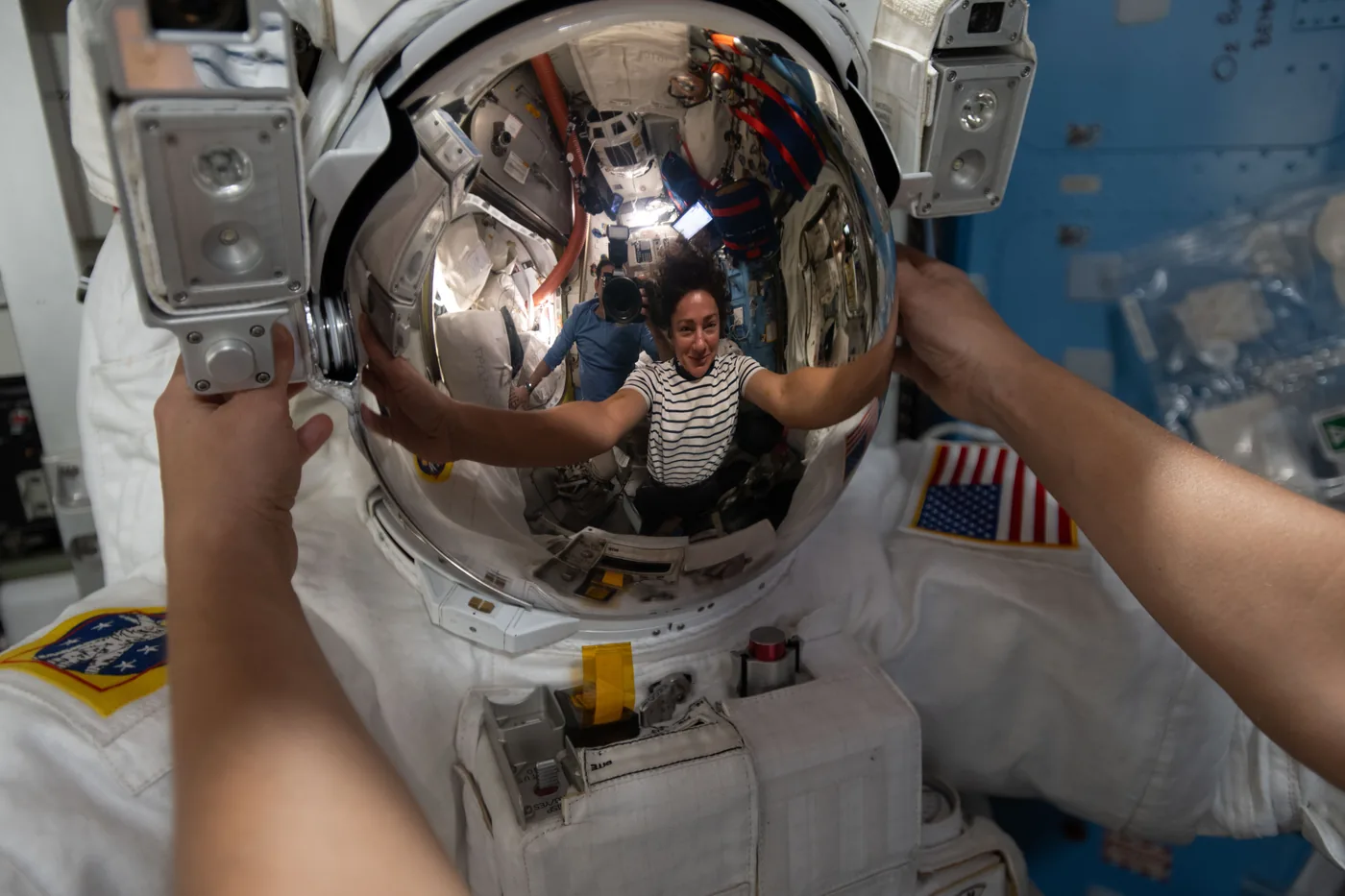
The upcoming spacewalks 100 and 101 follow a sequence of earlier spacewalks conducted during the summer to prepare the station’s exterior power backbone. On August 6, NASA astronauts Jessica Meir and Anil Menon completed U.S. spacewalk 96 from the Quest airlock, working for six and a half hours to install modification hardware on the 3B power channel [3].
Meir wore a suit with red stripes as spacewalk crew member 1, while Menon wore an unmarked suit for his first spacewalk. That modification kit created the physical attachment point needed for the eighth roll-out array. Ground teams monitored the installation closely to confirm that the mounting brackets could support the heavy solar canister during future deployment. Precision mechanical alignment ensured the hardware seated properly against the truss [3].
Following that preparation, Menon teamed up with ESA astronaut Sophie Adenot for two consecutive spacewalks in late August. During U.S. spacewalk 97 on August 18, Menon and Adenot installed a Space-to-Ground antenna, making Adenot the first French woman to conduct a spacewalk. On August 25, during U.S. spacewalk 98, the pair finished connecting the communications antenna and swapped an optical retroreflector on the forward port of the Harmony module. Spacewalks 96, 97, and 98 were the 281st, 282nd, and 283rd spacewalks for station assembly, setting the stage for the final NASA spacewalks this autumn [3].
Cargo Deliveries Carrying Final Roll-Out Solar Arrays
Mounting the final solar wings required careful logistics and regular resupply flights to deliver the hardware into orbit. NASA and SpaceX launched the 35th commercial resupply services mission on Tuesday at 6:33 a.m. EDT aboard a Falcon 9 rocket from Space Launch Complex 40 at Cape Canaveral Space Force Station in Florida [2].
The commercial resupply flight delivered more than 6,300 pounds of research experiments, spare parts, and station supplies, including the final set of roll-out solar arrays destined for channels 2A and 3B. Teams packed the cylindrical array canisters securely to protect them during liftoff. The hardware arrived safely to await installation outside the hull. Station crew members later staged the equipment near the work sites [2].
Logistics coordination also balanced heavy station traffic during the autumn flight schedule. The Cygnus XL cargo spacecraft recently completed its departure after delivering more than 11,000 pounds of supplies and research payloads to the orbital laboratory. Meanwhile, crew rotations saw four members of NASA’s SpaceX Crew-13 mission launch from Florida to begin their science expedition, following the safe Pacific splashdown of Crew-12 after seven months in orbit. Through Crew-12 mission return briefing updates and related agency agreements, NASA continues to coordinate commercial flights that keep the orbital laboratory fully stocked with maintenance hardware [2].
Briefing Details from Johnson Space Center
Public interest in upcoming NASA spacewalks continues to grow as the orbital laboratory enters its final assembly phase [4]. NASA will broadcast the October 20 preview news conference live from Johnson Space Center in Houston starting at 2 p.m. EDT across agency streaming outlets. Viewers can watch the briefing on the agency website, mobile app, and social video platforms [1].
The broadcast will feature mission overviews, animations of the array deployment, and commentary from flight directors who mapped out each spacewalk step [1]. Agency spokespersons explained that media interest remains strong as the orbital complex approaches full power augmentation [4]. Flight controllers at Johnson Space Center in Houston emphasize thorough preparation before sending astronauts outside the hatch [1]. Public streaming gives viewers around the world an inside look at complex spacewalk planning [4].
Independent public networks like C-SPAN also carry NASA briefings to document agency milestones for archival and civic viewing [5]. Spacewalk coordinators Jimi Russell and Joshua Finch at NASA Headquarters, along with Sandra Jones and Anna Schneider in Houston, will release updated timelines closer to the October 29 and November 5 spacewalk dates [1]. Each spacewalk is expected to span approximately six and a half hours outside the Quest airlock [3]. Once the final array unfurls over the 3B channel, the space station will operate with its full complement of modern solar wings, ready for its remaining years of orbital science [1].
- PRESS RELEASE Taveau, J. (2026, October 14). NASA to host news conference previewing US spacewalks 100, 101. NASA. [Article Link]
- PRESS RELEASE Massengill, D. (2026, January 2). 2026 NASA news releases. NASA. [Article Link]
- PRESS RELEASE Low, L. E. (2026, July 27). NASA to cover three US spacewalks, host preview news conference. NASA. [Article Link]
- ONLINE NEWS PressBee. (2026, October 14). NASA to host news conference previewing US spacewalks 100, 101. PressBee. [Article Link]
- ONLINE NEWS C-SPAN. (2026, March 16). NASA officials hold news conference previewing upcoming spacewalks. C-SPAN.org. [Article Link]
APA 7: TWs Editor. (2026, October 15). NASA spacewalks will complete station solar array upgrades. PerEXP Teamworks. https://perexpteamworks.com/en/nasa-spacewalks-solar-array-upgrades/


1 comment