





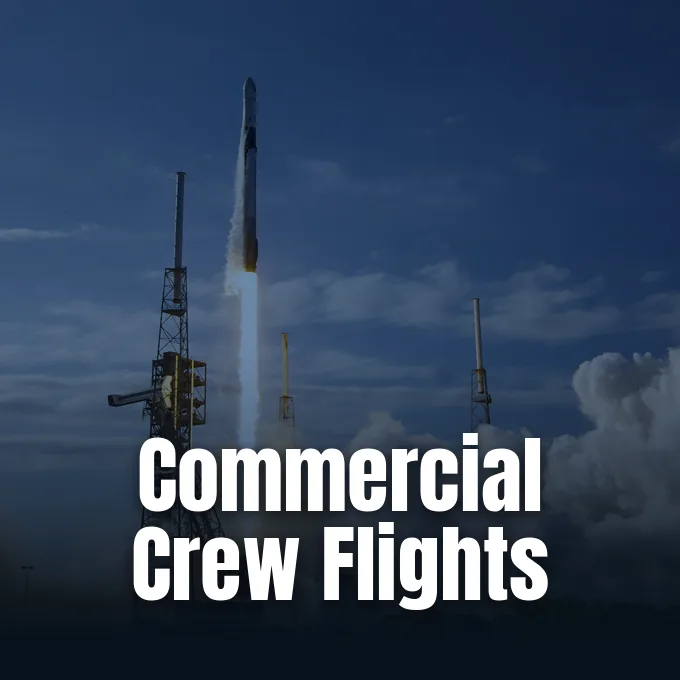
How does a national space agency secure uninterrupted human access to low Earth orbit when commercial transportation cadences shift? In September 2026, NASA awarded SpaceX three additional astronaut rotation missions to the International Space Station under the Commercial Crew Transportation Capability (CCtCap contract framework). The formal modification guarantees regular transportation services through 2030, raising the agency’s total mission commitment with the commercial provider to 17 flights valued at $5.92 billion [1].
- Commercial Crew Transportation Capability Contract Scope
- Why NASA Awarded SpaceX Extended Rotation Missions
- Financial Framework and Nine Hundred Million Dollar Commitment
- Orbital Lifeboat Systems and Astronaut Safety Mandates
- Cargo Resupply Synergy and Orbital Laboratory Science
- Path to 2030 and Low Earth Orbit Commercialization
Commercial Crew Transportation Capability Contract Scope
Under the public-private partnership structured by the Commercial Crew Program, National Aeronautics and Space Administration managers originally certified commercial flight architectures to restore domestic orbital launches. In 2014, federal administrators awarded initial Commercial Crew Transportation Capability contracts to Boeing and SpaceX through a rigorous selection process (established for orbital transport certification). Before any commercial contractor transports human spaceflight crews to the International Space Station, engineering teams evaluate every life support subsystem against strict government standards. Rigorous oversight protects astronaut safety. SpaceX achieved formal human-rating certification for crew transportation in November 2020 after exhaustive orbital flight testing [1].
The operational architecture combines two primary flight elements: the Falcon 9 rocket and the Dragon spacecraft. Together, these flight systems ferry crews of up to four astronauts and vital pressurized logistics directly to the International Space Station. Demonstrating high vehicle reliability across recurrent orbital rotations mirrors agency procurement strategies in other scientific domains, including SpaceX Falcon 9 launch selections for high-priority astrophysics payloads. Each regular rotation sustains continuous laboratory operations without interruption [1].
Every certified mission represents an integrated operational envelope. Technical specialists validate each launch processing milestone at Cape Canaveral Space Force Station in Florida before flight clearance [1].
Why NASA Awarded SpaceX Extended Rotation Missions
Why did federal administrators decide to execute this major procurement modification at this specific juncture? Long-duration mission planning for the International Space Station requires extensive advance scheduling to coordinate international astronaut assignments, scientific payloads, and complex vehicle dockings. When NASA awarded SpaceX the contract modification covering missions Crew-15, Crew-16, and Crew-17, the agency acted directly upon an official notice of intent issued in May [1]. This proactive procurement ensures that American astronauts maintain reliable orbital access through two independent commercial crew industry partners [2].
Mission readiness dates for the newly contracted flights target 2027 and 2028, guaranteeing schedule continuity well before older rotational agreements lapse. Meanwhile, the operational Crew-12 mission remains docked to the International Space Station as flight controllers oversee ongoing laboratory research. Orbital planners align these multi-year rotations with operational milestones outlined during the NASA SpaceX Crew-12 return briefing. Maintaining this disciplined launch sequence prevents staffing gaps during critical crew handover periods in orbit [2].
Agency leadership structured this sole source modification to satisfy vital operational requirements while preserving future flexibility. Federal administrators retain broad legal authority to negotiate supplemental flight orders whenever International Space Station schedules or international partner rotations require extra flight capacity [1]. Contract terms remain adaptable [2].

Financial Framework and Nine Hundred Million Dollar Commitment
The financial structure governing these additional flights follows a firm fixed-price, indefinite-delivery/indefinite-quantity procurement model valued at $946 million for all three missions and related mission services. This substantial capital commitment covers comprehensive ground processing, launch operations, complex in-orbit maneuvering, and complete return and recovery operations following ocean splashdown. By utilizing a fixed-price framework, National Aeronautics and Space Administration planners eliminate unexpected cost overruns while binding the commercial contractor to verifiable delivery timelines across each flight phase. The award elevates total cumulative funding for SpaceX commercial transportation services to $5.92 billion under CCtCap agreements, culminating more than a decade of shared technical investment and sustained operational flight execution [1].
Official statements released from NASA Headquarters in Washington emphasize the distributed inter-center management architecture governing human spaceflight expenditures. Public affairs officers Joshua Finch and Jimi Russell (contactable at 202-358-1100 in Washington) manage national press inquiries concerning program milestones. At the Florida spaceport, Steven Siceloff coordinates operational media updates through the Kennedy Space Center newsroom (reachable at 321-876-2468 and 321-867-2468). These dedicated administrative units ensure contract accountability across all aerospace initiatives [1].
Procurement documentation confirms that when NASA awarded SpaceX these three rotational flights, financial provisions encompassed standard launch support and contingency operational reserves. Federal auditors at Kennedy Space Center review each vehicle milestone prior to pad integration [2].


Orbital Lifeboat Systems and Astronaut Safety Mandates
Beyond scheduled crew transport, each SpaceX Dragon spacecraft docked to the International Space Station serves as an active lifeboat for the orbital crew. In the event of an unforeseen station crisis (such as sudden cabin depressurization or acute astronaut medical emergency), the docked vehicle functions as an immediate evacuation craft designed to return four astronauts safely to Earth. Contractual obligations formally require this continuous standby return capability throughout the spacecraft’s multi-month stay at the International Space Station [1].
Human spaceflight integration specialists Sandra Jones and Joseph Zakrzewski at Johnson Space Center in Houston (telephone contact 281-483-5111) coordinate crew health protocols and emergency flight procedures. Mission controllers at Johnson Space Center monitor docked spacecraft telemetry continuously to verify that emergency re-entry thrusters and life support systems remain fully functional. Because the International Space Station has supported more than 25 years of continuous human habitation, certified emergency egress architectures represent an essential operational requirement [1].
Commercial crew flights also transport essential research equipment, optimizing available payload mass inside the pressurized cabin. The agreement under which NASA awarded SpaceX extended rotational flights ensures that replacement environmental hardware and experimental specimens accompany each astronaut crew to the International Space Station [1].
Cargo Resupply Synergy and Orbital Laboratory Science
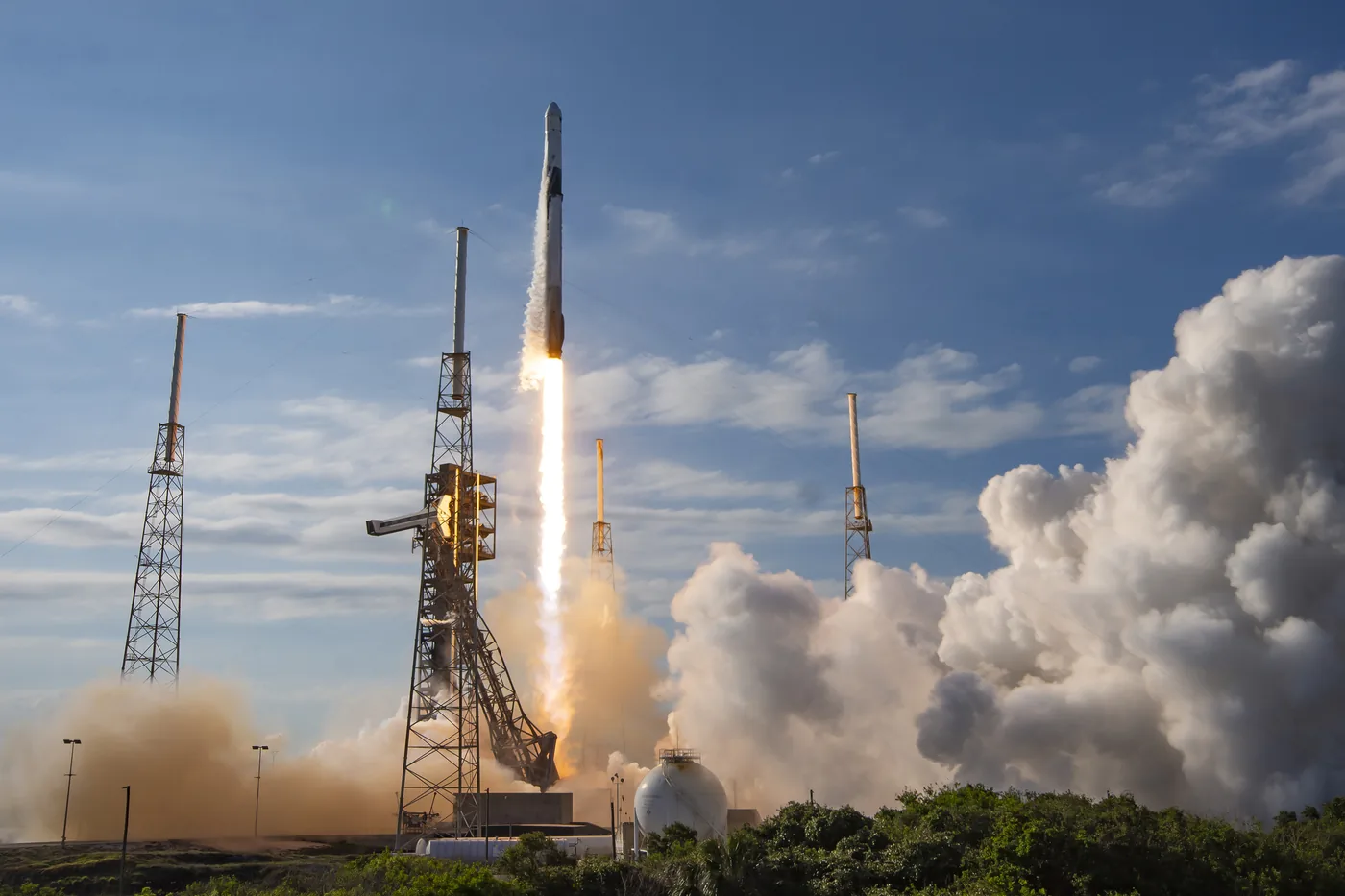
Commercial crew rotation represents only one aspect of low Earth orbit logistics, complemented by uncrewed robotic resupply flights that deliver bulk consumables and laboratory investigations. Media accreditation recently opened for the 35th SpaceX commercial resupply services mission, scheduled to lift off on a Falcon 9 rocket from Cape Canaveral Space Force Station in Florida. Lauren E Low from the Kennedy Space Center newsroom announced that media credential applications close at 11:59 p.m. EDT on Thursday, Oct. 1. These uncrewed cargo flights replenish essential scientific experiments that astronaut crews oversee during expedition duties [3].
The 35th resupply mission transports critical power infrastructure, including the final sets of International Space Station Roll-Out Solar Arrays (designated as IROSA by orbital engineering teams). Station astronauts will deploy these roll-out solar arrays during upcoming spacewalks to complete the electrical grid modernization. Once fully unfurled across the station truss, the new photovoltaic arrays will generate substantial supplemental electrical power to support demanding microgravity research and essential vehicle systems, including power reserves required for the station’s eventual safe and controlled deorbit. Reliable electrical supply directly determines scientific throughput aboard humanity’s orbital laboratory [3].
Robust cargo delivery capabilities ensure that National Aeronautics and Space Administration scientists can dispatch complex investigations in biology, biotechnology, physical sciences, and Earth observation directly to microgravity facilities [3]. When NASA awarded SpaceX operational missions through 2030, mission architects at Johnson Space Center coordinated these cargo launches with long-duration astronaut science schedules [1].
Path to 2030 and Low Earth Orbit Commercialization
Specialized laboratory facilities aboard the International Space Station enable experimental manufacturing breakthroughs unachievable under Earth gravity. Upcoming cargo flights carry bio-fabrication hardware to manufacture artificial retinas in microgravity (engineered to combat degenerative vision loss in clinical patients) together with three-dimensional cardiac tissue models designed to advance pharmaceutical screening for long-duration interplanetary spaceflight. Dragon will also transport novel glass formation experiments and brain organoid cultures investigating cellular mechanisms underlying Alzheimer’s disease, Parkinson’s disease, and multiple sclerosis [3].
Continuous orbital research provides vital operational experience for deep space exploration under the Artemis program, preparing astronauts for lunar expeditions and long-distance human missions to Mars [3]. Lessons learned from extended orbital missions, comparable to operational milestones in three-year Mars operations, validate autonomous life support systems. Furthermore, foundational orbital architectures inform proposed space-to-space experiment concepts, such as the SHARPEx space-to-space VLBI experiment (which has not yet been peer-reviewed in preprint form), demonstrating how orbital infrastructure fosters next-generation astrophysical observation [4].
By executing contract extensions through 2030 when NASA awarded SpaceX additional crew rotations, the agency guarantees unbroken human presence in low Earth orbit while commercial space stations mature. Flight directors and engineering specialists at Johnson Space Center and Kennedy Space Center remain focused on vehicle readiness milestones, ensuring that scientific research continues smoothly aboard the International Space Station [1].
- PRESS RELEASE Garcia, M. A. (2026, September 18). NASA Awards SpaceX Three Crew Flights to Space Station. National Aeronautics and Space Administration. [Article Link]
- PRESS RELEASE Garcia, M. A. (2026, September 18). Commercial Crew Transportation Capability Contract Modification. National Aeronautics and Space Administration. [Article Link]
- PRESS RELEASE Low, L. E. (2026, September 17). NASA Invites Media to SpaceX’s 35th Resupply Launch to Space Station. National Aeronautics and Space Administration. [Article Link]
- PREPRINT SHARPEx Collaboration. (2026). The SHARPEx space-to-space VLBI experiment. arXiv. [Article Link]
APA 7: PerEXP Teamworks. (2026). Why NASA Awarded SpaceX Three Additional Station Flights. Retrieved from https://perexpteamworks.com/en/nasa-awarded-spacex-crew-flights/


3 comments