





Global space exploration diplomacy accelerates as multilateral agencies coordinate upcoming missions to the lunar surface and deep space. At the international space conference in Antalya, Türkiye, the 77th International Astronautical Congress brings international agencies together to debate lunar exploration standards, climate observation networks, and commercial spaceflight integration. Hosted by the Turkish Space Agency (TUA), the assembly marks a pivotal transition toward cooperative planetary architectures. NASA Deputy Administrator Matt Anderson leads the American delegation to present preliminary lunar findings with seventy-six signatory nations [1].
- What Agenda Drives the International Space Conference in 2026?
- How the International Space Congress Unveils Artemis II Lunar Data
- Can Autonomous Artificial Intelligence Navigate Martian Science?
- How Global Space Conference Partners Modernize Earth Observation
- Biotechnology and Microgravity Research on Orbital Platforms
- Expanding Multilateral Accords and Commercial Space Logistics
What Agenda Drives the International Space Conference in 2026?
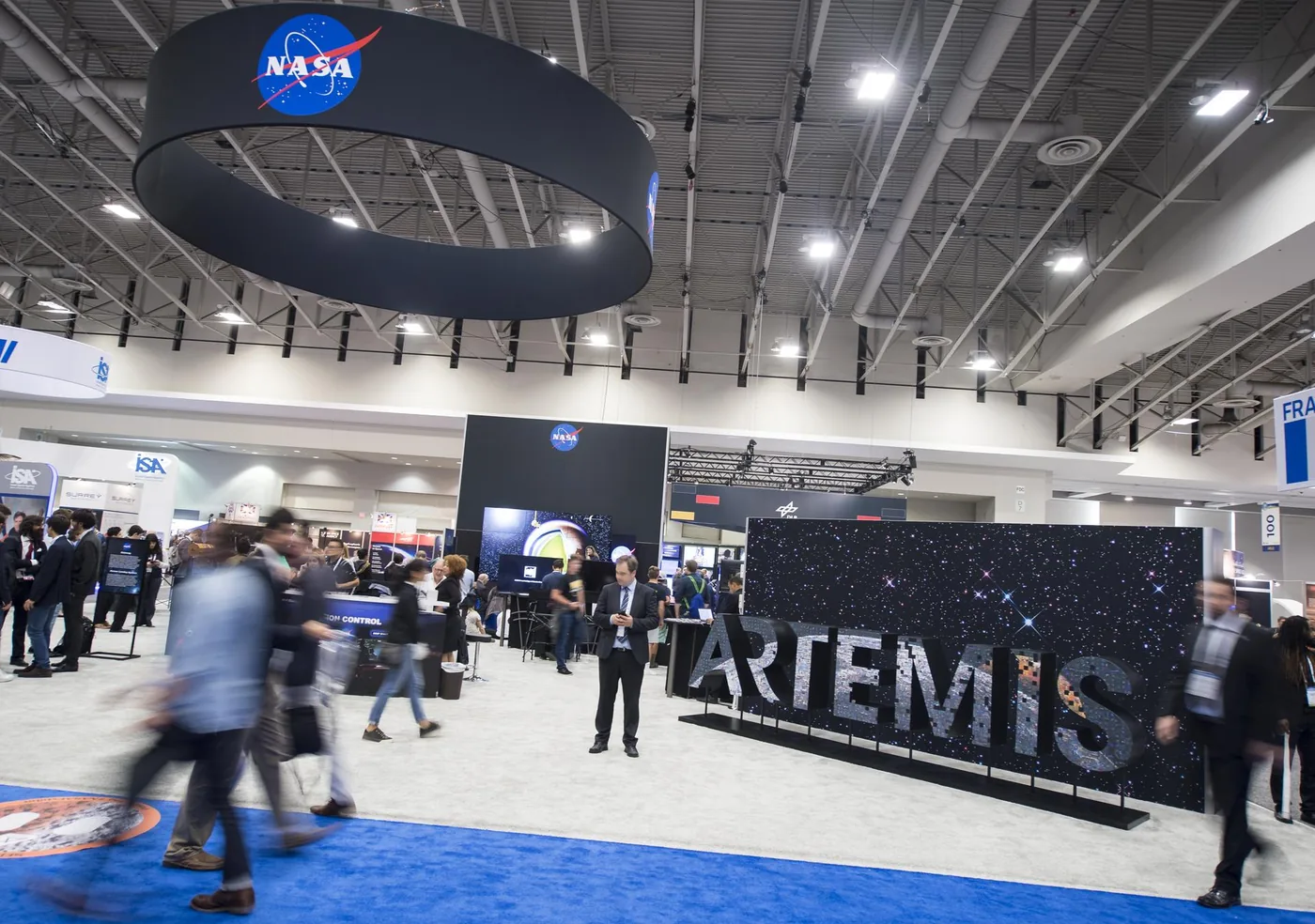
A shared commitment to lunar surface operations, rapid Earth monitoring, and autonomous space systems defines the agenda presented by NASA at the 77th International Astronautical Congress in Antalya, Türkiye. Convening from Monday, Oct. 5, to Friday, Oct. 9, 2026, the international congress gathers delegates at the NEST Convention Centre in Hall 1. The assembly commemorates the U.S. Freedom 250 milestone while highlighting American leadership across planetary science, orbital research, and commercial space partnerships. Plenary panels showcase multilateral collaboration under the Artemis Accords [1].
Agency leadership connects diplomatic dialogue with active flight operations through high-level bilateral summits. Deputy Administrator Matt Anderson inaugurates the assembly with agency leaders before senior directors outline new operational frameworks [1]. The international assembly builds directly upon priorities established during the previous congress in Sydney, Australia, where acting Administrator Sean Duffy engaged international partners at the International Convention Centre Sydney. Booth 132 anchored that exhibition. Discussions in Sydney united Australian Space Agency head Enrico Palermo and UAE Space Agency Chairman Ahmad Belhoul Al Falasi around shared lunar governance [2].
Public engagement and aerospace education complement diplomatic negotiations at major aerospace forums. Astronaut Chris Williams hosts interactive sessions detailing astronaut candidate training and orbital flight regimes at the agency exhibit [1]. Meanwhile, academic leaders and early-career engineers evaluate technical papers on planetary navigation and lunar surface power distribution. These sessions ensure technical knowledge transfers across international borders [8].
How the International Space Congress Unveils Artemis II Lunar Data
Preliminary lunar science insights from the Artemis II mission take center stage during dedicated technical briefings in Antalya. Artemis program manager Jeremy Parsons reviews flight dynamics and hardware reliability from an industry perspective. The mission data release features Science Mission Directorate Associate Administrator Dr. Nicky Fox and Human Spaceflight Mission Directorate Associate Administrator Dr. Lori Glaze. NASA planetary geologist Kelsey Young presents targeted lunar surface analysis to prepare future crews for lunar south pole exploration [1].
Rigorous planetary science requires extensive terrestrial field testing before flight hardware touches the lunar regolith. The Goddard Instrument Field Team hauled advanced sensing equipment across the cliffs of Clachtoll in Scotland to study rocky geological formations that mirror lunar and Martian surface morphology. Field geologists mapped rugged analog terrain to refine instrument deployment strategies. Analog tests refined hammer protocols. These European rock samples validate autonomous spectrometry routines designed for upcoming landing sites [3].
Sustained lunar infrastructure demands dependable communication networks between surface landing vehicles and orbital relay satellites. Through the 2027 Human Lander Challenge, participating university student teams develop novel communication architectures designed to overcome lunar terrain occlusion and extreme thermal variations [3]. In addition, academic competitions organized by the National Space Society, including the Gerard K. O’Neill Space Settlement Contest, encourage emerging engineers to submit structural concepts for permanent cislunar habitats [7].
Can Autonomous Artificial Intelligence Navigate Martian Science?
Autonomous flight software architectures demonstrate sufficient operational precision to direct robotic instruments and manage complex planetary exploration schedules without requiring continuous guidance from ground stations on Earth. Steve Chien, technical fellow and senior researcher in the Artificial Intelligence Group at NASA’s Jet Propulsion Laboratory, presents these advances during the “Trusted AI on Mars” session in Antalya. Sophisticated algorithms allow surface rovers to analyze rock mineral compositions rapidly, schedule automated image captures, and prioritize scientific telemetry transmissions whenever orbital communication windows narrow [1].
Operational robotic missions across the Martian surface prove that automated decision software accelerates daily scientific returns. Following a maintenance hiatus, the Perseverance rover resumed automated telemetry updates while investigating ancient delta formations inside Jezero Crater. Perseverance resumed scientific telemetry updates. Onboard navigation software routines evaluate hazardous surface topography, steer multi-wheel mobility actuators across treacherous rock fields, and autonomously target high-priority geological samples for drilling [3]. Autonomous target selection algorithms maximize sample collection efficiency while minimizing idle waiting periods [1].
Suborbital flight campaigns serve as indispensable test platforms for validating guidance sensors and autonomous navigation hardware before orbital deployment. The Mullenax Test Flight carried experimental meteorology and navigation hardware aboard a scientific balloon launched from Fort Sumner, New Mexico, at 7:57 a.m. MDT on Sept. 28, 2026. Ground teams used the flight to verify recovery rigging and test tracking telemetry during high-altitude ascent. Autonomous systems proven in near-space conditions directly inform planetary lander guidance packages [3].

How Global Space Conference Partners Modernize Earth Observation
Major international space agencies are transitioning away from isolated Earth observation architectures toward federated satellite constellations operated in close coordination with private commercial aerospace fleets. Karen St. Germain, division director of the Earth Science Division within NASA’s Science Mission Directorate, details this paradigm shift in her keynote address. Her keynote presentation examines how combining institutional Earth observation satellites with commercial orbital fleets accelerates data processing to address severe meteorological emergencies and immediate regional climate threats. Moving observation data from orbital sensors to municipal decision-makers requires solving critical last-mile dissemination bottlenecks [1].
Specialized laboratory teams apply high-resolution satellite measurements to monitor delicate biospheric transformations across the planet. Agricultural researchers at the Biospheric Sciences Laboratory within NASA Goddard Space Flight Center develop predictive models that monitor crop canopy hydration, vegetation indices, and chlorophyll absorption. Multi-spectral orbital observations identify crop stress weeks before physiological damage manifests across agricultural regions [3]. To build public awareness around Earth science missions, educational programs such as the interactive “Your Name in Landsat” project allow citizens to locate geographic landforms that resemble typographical letters [4].

Orbital data transforms civic planning. Satellite fleets deliver direct flood alerts to civil protection teams across vulnerable river basins worldwide [1].
Biotechnology and Microgravity Research on Orbital Platforms
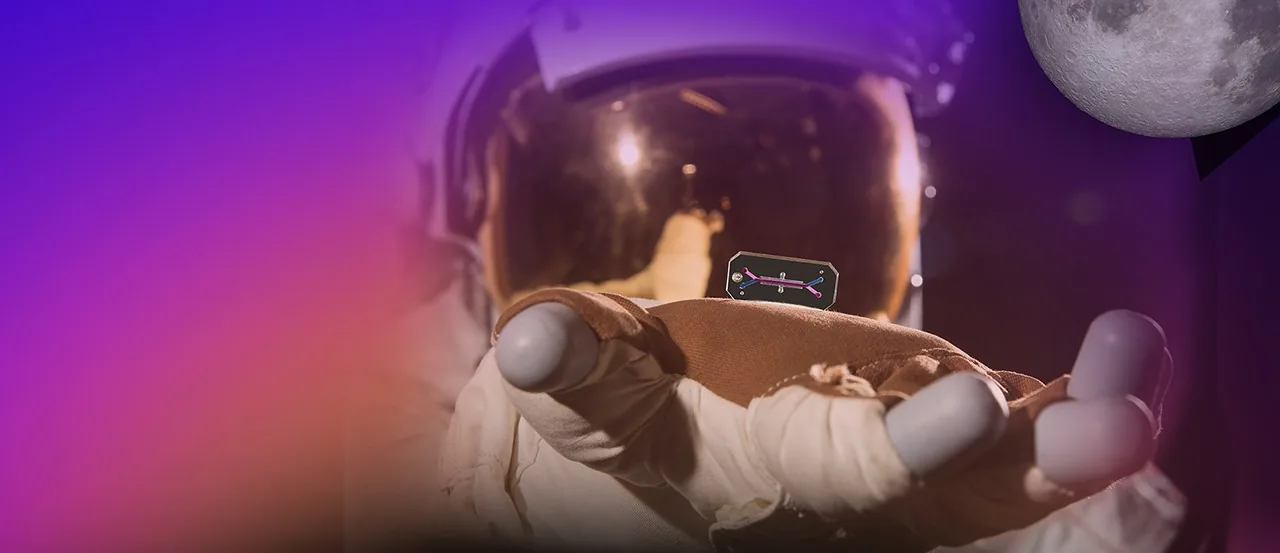
Manufacturing complex biological tissues and high-performance crystal lattices in microgravity represents an expanding frontier for low Earth orbit commercialization. Senior research scientist Fathi Karouia of the Blue Marble Space Institute of Science at NASA Ames Research Center presents the latest microgravity biotechnology benchmarks at the Antalya congress. Dr. Lisa Carnell, division director for Biological and Physical Sciences, outlines how specialized organ-chip platforms simulate human cellular functions in weightlessness, offering unprecedented pharmaceutical testing models [1].
Long-duration biological preservation and physical fitness regimens remain fundamental to astronaut survival on transit trajectories toward Mars. Aboard the International Space Station, four crew members from Expedition 75 conducted comprehensive vascular ultrasound scans and evaluated specialized compressive exercise suits before preparing their SpaceX Dragon spacecraft for return. Expedition 75 tested specialized workout gear. Crew members continuously monitor cabin air and water purification assemblies to ensure habitat life-support systems function without mechanical degradation [3].
Materials science breakthroughs achieved in microgravity environments open novel manufacturing possibilities for deep space construction. Metallurgists and material engineers at NASA’s Glenn Research Center in Cleveland developed an advanced synthetic material displaying an intricate kaleidoscope-like crystal structure under microscopic analysis. Advanced crystalline materials fabricated off-world offer superior thermal resistance and structural integrity for spacecraft docking mechanisms. Microgravity synthesis eliminates gravitational sedimentation defects that typically weaken terrestrial alloys [3].
Expanding Multilateral Accords and Commercial Space Logistics
Multilateral governance frameworks expand as additional nations pledge adherence to peaceful, transparent space exploration standards. During the Antalya conference, Deputy Administrator Matt Anderson conducts a joint press briefing with Major General Roberto Melgar Sheen, director of the Peruvian Space Agency (CONIDA), to highlight bilateral cooperation [1]. Four nations joined in September. The formal accession of Albania, Croatia, Côte d’Ivoire, and San Marino raises the Artemis Accords coalition to seventy-six participating nations [3].
Commercial launch contracts and private aerospace capabilities provide the logistics backbone required to sustain international space science missions. NASA integrated Blue Origin’s New Glenn 9×4 launch vehicle into the NASA Launch Services II contract to expand heavy-lift payload options for planetary probes. To safeguard congested orbital corridors, the agency awarded a $23.5 million contract over five years to Omitron Inc. for orbital safety analysis services [3]. These commercial partnerships directly support strategic cosmic origins observatory roadmaps, astrophysics initiatives like the Pandora exoplanet satellite, and the autonomous Dragonfly rotorcraft mission slated to explore Titan. Pandora will profile twenty worlds. [4] Falcon 9 stood at pad 40. [3] At the International Space Development Conference, mission commander Jared Isaacman affirmed, “We’ve got to go back to the space station and back to the Moon and Mars and beyond, because there is a lot of space out there and we know so little about it” [7].
Collaborative orbital governance balances technological expansion with space sustainability [7]. Ground tracking teams prepare for orbital rotations as the 45th Weather Squadron predicts favorable conditions for the launch of NASA’s SpaceX Crew-13 mission from Cape Canaveral Space Force Station. The weather probability reached sixty percent. [3] International symposiums unite aerospace visionaries, academic researchers, and governmental directors around shared operational principles. Global cooperation establishes the technical foundations needed for humanity’s permanent expansion into deep space [7].
- PRESS RELEASE Low, L. E. (2026, September 29). NASA features exploration, science at international space conference. National Aeronautics and Space Administration. [Article Link]
- PRESS RELEASE Dodson, G. Q. (2025, September 24). NASA highlights space innovation, exploration at space conference. National Aeronautics and Space Administration. [Article Link]
- WEBSITE Massengill, D. (2026, September 29). All NASA news. National Aeronautics and Space Administration. [Article Link]
- WEBSITE Belleville, M. (2026, September). NASA Science. National Aeronautics and Space Administration. [Article Link]
- ONLINE NEWS Worldnewsdotcom. (2026, September 29). NASA features exploration, science at international space conference. Worldnewsdotcom. [Article Link]
- ONLINE NEWS WorldBlink News. (2025, September 25). NASA showcases space exploration and innovation at international congress. WorldBlink News. [Article Link]
- CONFERENCE PAPER National Space Society. (2026, February 9). International space conference 2025 visionary voices of the present. National Space Society. [Article Link]
- CONFERENCE PAPER National Space Society. (2026, February 9). International space conference 2025 agenda. National Space Society. [Article Link]
APA 7: PerEXP Teamworks. (2026, September 30). How the International Space Conference Drives NASA Exploration. PerEXP Teamworks.


