




Cloud application hosting platform Northflank warned customers to rotate all stored secrets on October 30, 2026, after the Northflank security breach led to unauthorized use of customer AI API keys. The alert began when cloud security firm Wiz warned the company about abnormal activity on its shared network infrastructure. Within hours, Northflank told developers to assume that every stored environment variable had been decrypted, while multiple customers confirmed that outside parties had already run up charges on their artificial intelligence accounts [1].
Response to the Northflank Security Breach
The security incident began with an automated notification from cloud security firm Wiz at 11:43 UTC on October 30, which flagged anomalous network behavior inside Northflank’s cloud infrastructure. Engineers at the hosting provider reviewed the alert sixty seconds later, at 11:44 UTC, moving quickly to apply a network policy patch at 12:02 UTC to isolate suspicious connections. The internal engineering team deployed further network patches at 12:50 UTC and 13:05 UTC, but containment proved challenging as unauthorized activity persisted across platform systems [2].
At 13:00 UTC, Northflank formally requested assistance from Wiz’s dedicated Cloud Incident Response Team to help investigate the intrusion and trace the adversary’s path. Public advisories on the company’s status channel escalated rapidly over the next hour as technicians assessed the scope of the exposure. Northflank first published an advisory at 13:40 UTC telling customers to rotate environment variables as a standard safety precaution. Just eighteen minutes later, at 13:58 UTC, the platform raised its alert level and told all users to treat stored secrets as stolen, posting: “Assume all environment variables have been decrypted. Disable/rotate all keys” [3].
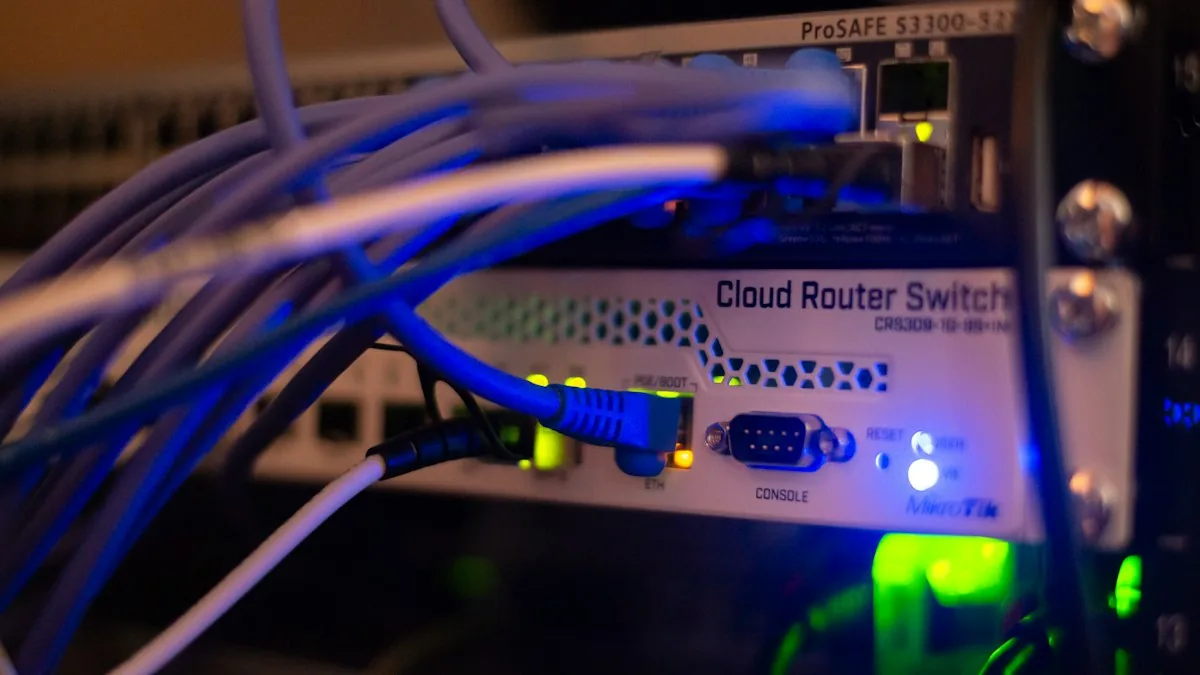
Northflank published an updated bulletin at 19:28 UTC, seven hours and 45 minutes after the initial alert, stating that its forensic review remained ongoing with no further confirmed findings. TrustList noted that the published timeline rested entirely on Northflank’s self-reported incident status page rather than independent third-party confirmation. Furthermore, BleepingComputer reached out to Northflank with detailed questions about the intrusion, but the cloud provider didn’t respond before publication [1].
Decrypted Variables and Platform Outages
Northflank operates as a platform as a service (PaaS) that lets software developers build containers, run managed databases, and deploy scheduled jobs without configuring complex Kubernetes clusters manually. To keep these automated applications running smoothly, engineering teams store sensitive database passwords, cloud tokens, and third-party credentials inside environment variables on the platform. While Northflank keeps these secrets encrypted in a database when at rest, the underlying platform system must decrypt them into plain text in server memory whenever an application launches, rebuilds, or scales out. Because that shared decryption layer handles configuration values across different customer accounts, an intrusion into the shared network boundary meant that attackers could potentially view decrypted secrets belonging to any hosted workload rather than a single isolated company. This design dilemma affects multi-tenant cloud platforms that must balance automated operations against secret isolation in memory [2].
The security incident disrupted core operations across the platform, knocking seven of Northflank’s eleven infrastructure components into major outages simultaneously. While the marketing site, public documentation, API, and central web dashboard stayed operational to maintain communication, systems handling networking, certificate issuance, application deployments, managed databases, cron jobs, container builds, and operational logs all went down. This component failure meant developers couldn’t deploy emergency code changes or inspect runtime error streams while the outage lasted. Northflank maintains an aggregate uptime of 99.65% across its 90-day history, but hours of widespread component downtime significantly eroded that availability margin for active teams [2].


Reports of Unauthorized AI Key Abuse
Customer reports quickly showed that attackers weren’t merely archiving stolen configuration strings for future use. At 15:12 UTC on October 30, Northflank updated its public status log to acknowledge that multiple users were confirming unauthorized activity on external AI services using keys hosted on the platform. The company issued an urgent advisory: “Users have reported unauthorised use of AI API keys supplied to the Northflank platform. If you have not already rotated your user-provided secrets stored in Northflank, please do so immediately” [1].
At 23:38 UTC, Northflank stated that customer abuse reports “may be consistent with the broader pattern of attacks targeting AI credentials,” noting that malicious IP addresses tied to the activity matched data published by Wiz researchers. Unlike standard user passwords that require interactive logins, an AI API key functions like a payment card that needs no PIN. Anyone who holds the programmatic string can query expensive machine learning models, running up unauthorized compute bills on the victim’s account without triggering typical login challenges [4].
Secondary security threats also emerged following the breach. Cybersecurity firm PhishPin scanned domain registries and identified 13 lookalike domains registered by third parties imitating Northflank. Seven of those copycat web domains had active email exchange records configured, creating ready-made infrastructure for email phishing and payment scams aimed at unsuspecting developers. PhishPin noted that one of the lookalike domains was listed for sale or parked, warning teams to monitor for impersonation attempts [5].

Targeting Across Cloud Developer Platforms
The Northflank security breach forms part of a wider wave of incursions hitting developer services that support artificial intelligence workloads. In a research publication titled Black October for AI Developer Platforms, Wiz documented at least nine security incidents affecting developer cloud services during October 2026. The targeted hosting environments included Northflank, Railway, Warp, Lightning AI, and OpenCode [1].
The nature of these October attacks highlights shared vulnerabilities across modern hosting platforms. Railway disclosed that customer environment variables in decrypted form might have been exposed during its breach, while Warp reported that intruders accessed internal telemetry data and AI agent logs. A parallel intrusion involving an OpenCode incident that exposed external AI provider keys demonstrated how threat actors systematically seek machine learning tokens across modern development platforms.
Security analysts refer to this specific exploitation tactic as LLMJacking, where adversaries use stolen API tokens to query high-end foundation models or resell access on unauthorized proxy markets. In two enterprise intrusions investigated by Wiz, attackers used stolen cloud credentials to execute roughly 2.5 million Amazon Bedrock API requests, racking up about $100,000 in unapproved AI usage. Defending cloud environments against stolen keys remains difficult because the tokens look legitimate to provider filters; daily.dev reported that once attackers hold valid credentials, automated security controls block only 37% of their actions [6].

Steps to Contain the Northflank Breach
Northflank implemented several platform-level remediations to help developers isolate their systems and halt unauthorized access. The provider enabled automated credential rotation for managed database add-ons, allowing customers to generate new passwords for PostgreSQL, MongoDB, MySQL, and Redis services without manual database restarts. Furthermore, at 01:04 UTC on October 31, Northflank switched on detailed audit logs for every account, extending event tracking to free tiers so developers could inspect unexpected deployment calls and container activities [3].
For organizations hosting projects on Northflank, mitigating the exposure requires rotating secrets across three platform storage tiers: workload secrets, secret groups, and global secrets. Rotating only workload values leaves shared variables accessible. Engineers must also disable public internet access on database add-ons, restricting traffic to internal networks [7].
Finally, development teams must inspect their external AI provider accounts for anomalous spikes in token consumption and unrecognized billing charges. Providers such as Anthropic, OpenAI, and Amazon Bedrock maintain detailed request logs showing request timestamps, model selections, and originating IP addresses. UNDERCODE NEWS recommended that teams establish strict spending caps on all AI API keys, enforce IP network restrictions, and quickly revoke existing tokens rather than assuming an incident is contained [7].
- ONLINE NEWS Abrams, L. (2026, October 31). Northflank security breach leads to abuse of customers’ AI API keys. BleepingComputer. [Article Link]
- ONLINE NEWS Vásquez, C. (2026, October 30). Northflank Breach: What Happened and How to Rotate Keys. El Solitario. [Article Link]
- WEBSITE TrustList Editorial. (2026, October 31). Northflank tells every customer to rotate secrets after a breach. TrustList. [Article Link]
- WEBSITE WebPulse. (2026, November 1). Northflank users report others used their AI keys after an incident. [Article Link]
- WEBSITE PhishPin. (2026, October 31). Northflank Breach Triggers Abuse of Customer AI Keys. [Article Link]
- WEBSITE daily.dev. (2026, October 31). Northflank security breach leads to abuse of customers’ AI API keys. [Article Link]
- ONLINE NEWS UNDERCODE NEWS. (2026, October 31). Northflank Investigates Security Breach After Customers Report Unauthorized Use of AI API Keys + Video. [Article Link]
- WEBSITE AI Understanding Editorial. (2026, October 31). Northflank breach leads to unauthorized use of customer AI API keys. AI Understanding. [Article Link]


