



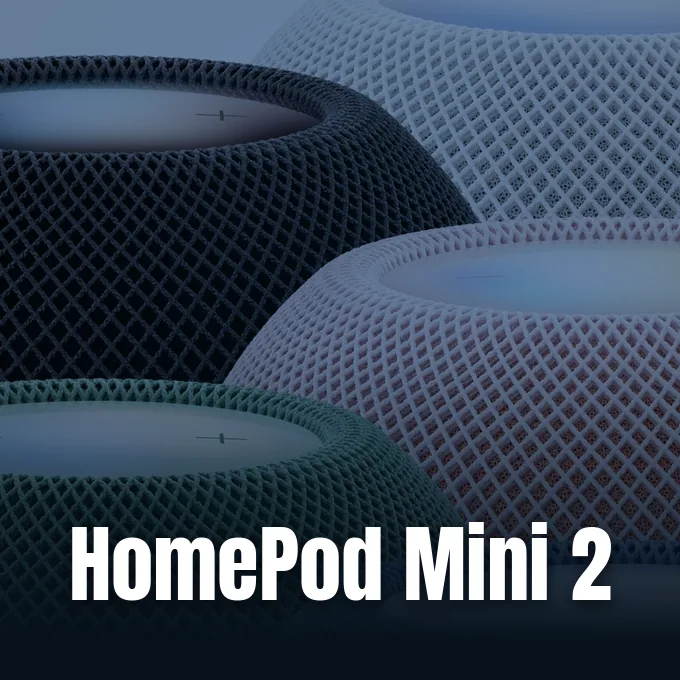
Apple refreshed its compact smart speaker lineup on October 13, 2026, introducing the HomePod mini 2 with an upgraded processor, responsive lighting, and multi-speaker theater pairing [5]. The new speaker debuted at the company’s “Welcome Home” media event in New York next to the newly announced HomeView display [1]. While the original 2020 model launched six years ago, the updated unit carries a $149 price tag [2]. Preorders opened right after the keynote address. Retail stores receive units on Friday, October 30 [5].
HomePod Mini 2 Hardware Upgrades and Apple S10 Silicon
The central upgrade inside the HomePod mini 2 is Apple’s S10 chip, replacing the older S5 silicon that powered the original release six years ago. That older S5 processor first appeared in the 2019 Apple Watch Series 5, so upgrading to the S10 gives the speaker a far more capable hardware foundation for audio processing [2]. Many buyers had wondered why Apple updates take so long for accessory hardware, especially after earlier leaks outlining a HomePod mini successor hinted that updated silicon was already in testing well before the official keynote presentation took place in New York [4]. Apple kept the familiar 4-inch spherical design intact while focusing changes on internal processing [3].
The S10 chip handles computational audio tuning in real time, analyzing incoming tracks to balance dynamic range, volume, and acoustic output without pushing small drivers into harsh distortion during loud listening sessions [5]. A single full-range driver works with dual passive radiators inside the sphere to deliver 360-degree sound into the surrounding room [3]. Engineers didn’t redesign the acoustic chambers, relying on the new processor to manage frequency output and keep playback balanced [2]. Sound radiates in all directions [3].
In daily listening, the upgraded chip helps the small enclosure push fuller audio across a wider volume span [5]. It also coordinates network handoffs over AirPlay when sending audio from iPhones or iPads [1]. The exterior mesh fabric keeps dust away from internal parts. It measures four inches across [3].

Sound Glow Lighting and Computational Audio Features
Beyond internal computing power, Apple added a visual feature named Sound Glow to the speaker’s top touch surface. The touch-sensitive glass still manages volume controls and playback taps, but it now functions as a dynamic visual canvas that reacts to sound [5]. When music plays, glowing lights pulse across the glass in sync with bass lines and high frequencies, pulling matching shades directly from active album artwork displayed on a paired iPhone [2]. The lights also animate when users play built-in soundscapes like rain drops or ocean waves, giving listeners subtle ambient feedback [1].
Sound Glow doesn’t operate entirely on its own, because personal artwork sync needs a connected iPhone or iPad running Apple Intelligence. Without that linked device, the top panel provides standard white volume markers and basic glowing animations [2]. TechCrunch reporter Ivan Mehta noted that the top surface turns into an active light display during playback, matching the mood of different music genres with dynamic backlighting [5]. However, Engadget reviewer Billy Steele observed that listeners sitting across a room might rarely notice the top surface while playing music. The lights dim when music stops [1].
Acoustic tuning balances frequencies so voices remain clear during podcasts and radio broadcasts. The speaker supports built-in playback for Apple Music, TuneIn, iHeartRadio, and Audacy over home wireless networks. Apple documentation omits Spotify and Tidal, leaving those subscribers to stream over AirPlay [3].

Multi-Speaker Theater Pairing and Mac Desktop Integration
The HomePod mini 2 introduces expanded home theater capabilities when paired with the fourth-generation Apple TV 4K, which Apple also introduced on Tuesday. While earlier setups limited users to a single stereo pair, the new system supports up to four linked speakers for spatial surround sound. Listeners can build an audio array using four HomePod mini 2 units, or place two full-sized second-generation HomePods in front and two minis behind the couch [1]. The speakers automatically sense their placement in the room, adjusting timing and output to envelop listeners. Calibration runs without manual measurements [2].
At the New York press gathering, CNET editor Ajay Kumar listened to the multi-speaker configuration inside Apple’s demo area. Kumar reported that four linked HomePods delivered surprisingly room-filling sound during movie clips, though he said it won’t fully replace a dedicated 7.1 surround sound home theater setup in a large room. Rear units toggled off during the demo, and the sound field contracted [3]. Steele tested the same demo and said a quartet of mini speakers held its own, providing clean dimensional sound that enveloped the sofa. The demo room was quiet [1].
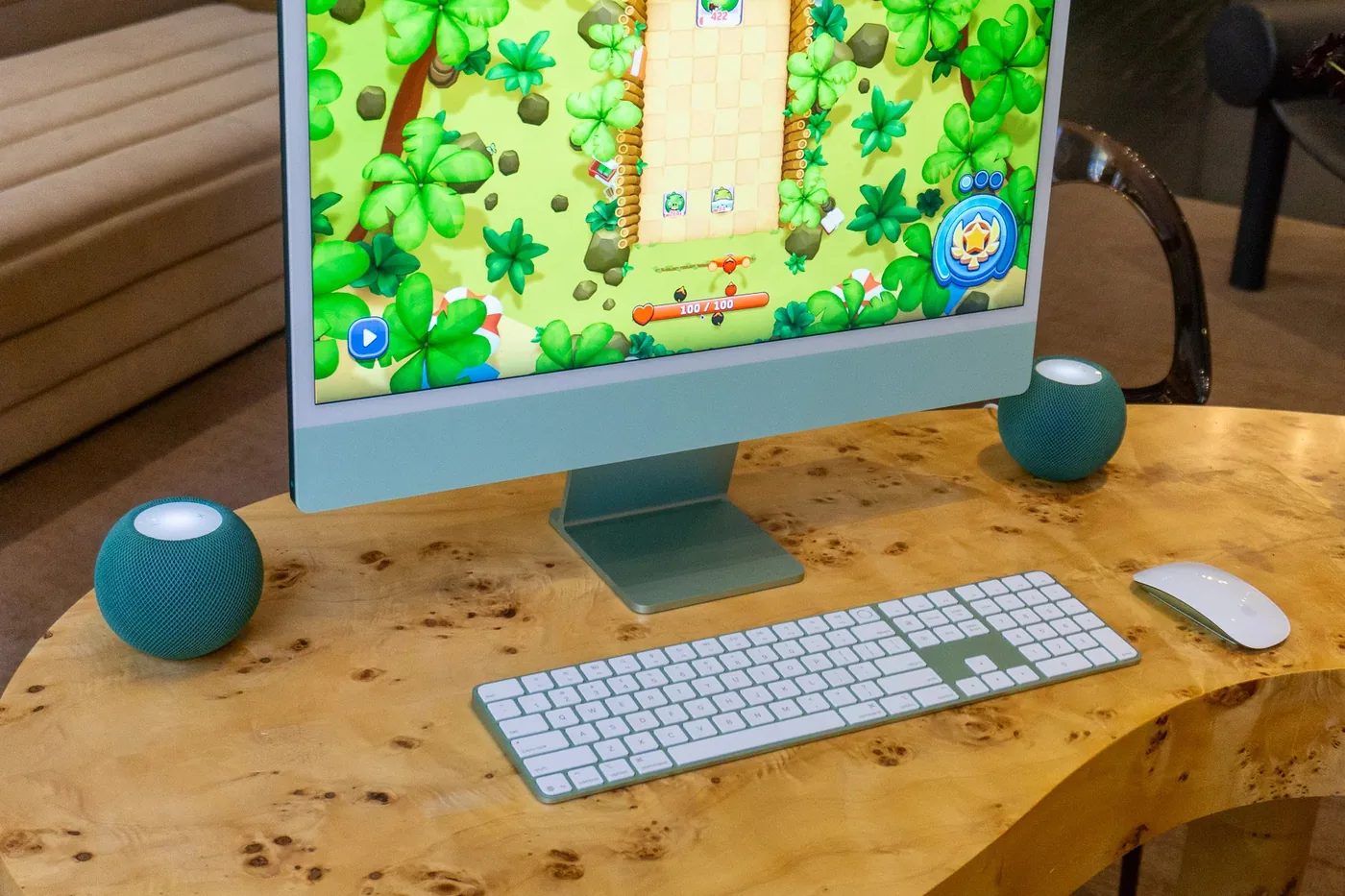
Apple also improved desktop integration by allowing Mac users to select a pair of HomePod mini 2 speakers as their default audio output with minimal latency [2]. Steele tested two speakers beside an iMac, noting that the stereo pair provided solid directional sound for games like Angry Birds and casual listening [1]. AirPlay handles the wireless link to macOS. FaceTime calls route through the internal microphones [2].

Why HomePod Mini 2 Delays Siri AI Support Past Launch
Although Apple marketed Siri AI as a tentpole feature for the HomePod mini 2, the intelligent assistant won’t be ready when hardware ships on October 30. Fine print on Apple’s product page confirms that Siri AI will arrive in “a future software update” rather than on launch day [4]. Both the $299 HomeView hub and the new Apple TV 4K ship on November 13 with Siri AI capabilities included at launch [6]. Bloomberg reporter Mark Gurman leaked several details earlier. MacRumors writer Joe Rossignol pointed out that HomePod buyers will receive the speaker two weeks before the assistant arrives [7].
When the update does arrive, Siri AI will let the HomePod mini 2 handle conversational prompts and answer general knowledge questions with greater conversational flexibility than the original assistant could provide during day-to-day smart home interactions [2]. Basic commands work out of the box, letting owners set kitchen timers, adjust connected lights, or ask for weather forecasts [3]. To access personalized context, however, the speaker needs a connection to an iPhone or iPad running Apple Intelligence [2]. With that link, users can ask Siri to play a song mentioned in a text message or pull ingredients from a recipe sent in an email. Local sensors handle standard voice commands [3].
The assistant can also interpret complex entertainment requests, such as asking to play only the surprise acoustic songs from The Eras Tour by Taylor Swift [2]. For home safety, the speaker continues to listen for smoke and fire alarms, sending an alert to the owner’s phone if a detector sounds while everyone is away [5]. Apple hasn’t announced a monthly subscription fee for these features [3].

HomePod Mini 2 Release Schedule and Color Options
The HomePod mini 2 costs $149, representing a $50 price increase over the original model’s launch price in 2020 [2]. Apple offers the speaker in five distinct colors: pink, green, blue, midnight, and white [6]. These colors match recent iMac finishes, helping buyers coordinate their desktop setups or home decor [1]. Preorders began immediately on October 13 through Apple’s online store, and deliveries start on Friday, October 30 [5].
The speaker arrives alongside broader smart home announcements from Apple, including the HomeView smart display and updated connected home accessories made with LG and Schneider [6]. Buyers considering an upgrade must weigh whether the S10 processor, Sound Glow lighting, and future Siri AI features justify paying $50 more than the original model. Owners of multiple first-generation speakers don’t need to rush to replace every unit, especially while Siri AI remains unavailable across the home ecosystem. However, anyone building a new surround system with Apple TV 4K or seeking desktop Mac audio will find the new capabilities compelling. The $50 increase reflects Apple’s S10 chip [2].
Preorders are available now through Apple’s online storefront and retail partners. With shipments scheduled for October 30, Apple positions the HomePod mini 2 as an entry point for buyers looking to expand smart home sound ahead of the holiday season [5]. The sphere remains central to Apple’s connected home strategy [1].
- ONLINE NEWS Steele, B. (2026, October 13). Apple TV 4K and HomePod mini 2 hands-on: A look at the audio updates and Siri AI. Engadget. [Article Link]
- ONLINE NEWS Espósito, F. (2026, October 13). Apple HomePod mini 2 vs. Apple HomePod mini: What do you get for the $50 increase? Engadget. [Article Link]
- ONLINE NEWS Lacoma, T. (2026, October 13). Apple HomePod Mini 2: Hands-On Impressions, Siri AI and More. CNET. [Article Link]
- ONLINE NEWS Christoffel, R. (2026, October 13). Apple confirms HomePod mini 2 won’t have Siri AI at launch. 9to5Mac. [Article Link]
- ONLINE NEWS Mehta, I. (2026, October 13). Apple refreshes its HomePod mini with a new chip and $149 price tag. TechCrunch. [Article Link]
- ONLINE NEWS Charlton, H. (2026, October 13). Apple Shares Videos for HomeView, Apple TV 4K, and HomePod Mini 2. MacRumors. [Article Link]
- ONLINE NEWS Rossignol, J. (2026, October 13). Apple Says HomePod Mini 2 Won’t Support Siri AI Right Away. MacRumors. [Article Link]


