





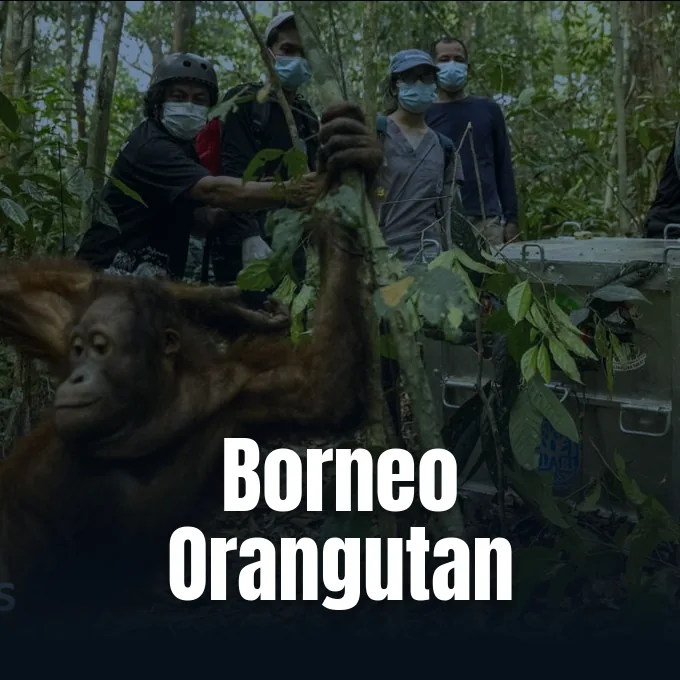
Eight orangutans rescued from seasonal forest blazes that swept through Borneo have returned to a safe canopy in West Kalimantan after receiving weeks of veterinary care from rehabilitation teams. Indonesian authorities and the wildlife rehabilitation foundation YIARI moved the primates to the Batu Nyambu Protected Forest on Friday. Summer blazes had cut off their foraging routes. Every orangutan released into wild reserves now has access to fruit trees, clean streams, and adjoining forest tracts [2].
- How Wildfires Sparked the Borneo Orangutan Rescue
- Surviving in Degraded Plantations Before Evacuation
- Why Batu Nyambu Was Chosen for Wild Orangutan Release
- How Each Orangutan Released into Wild Canopies Adapts
- Are There Any Orangutans Left in the Wild?
- Climate Pressures and Land Clearing in West Kalimantan
How Wildfires Sparked the Borneo Orangutan Rescue
Dry weather regularly turns peatlands and dense brush in Indonesia into ready fuel, but this summer brought intense fires that drove displaced wildlife straight toward human settlements. Between August and October 9, Indonesian authorities and the foundation YIARI saved 46 orangutans from patches of burning timber and isolated farm plots, local natural resources agency head Murlan Dameria Pane said. Flames destroyed leafy canopies. Apes lost the tall trees where they sleep and gather wild figs [2].
Smoke from these seasonal blazes blanketed rural villages and triggered wider public health alarms as thousands seek care as Indonesia wildfires spread through surrounding districts with breathing complaints. Plumes drifted over borders. They caused air pollution spikes in Singapore and Malaysia. For apes trapped in narrow forest strips, the thick haze made daily foraging difficult while cutting off canopy paths to safety [2]. YIARI teams tracked family groups that had taken refuge in roadside farms, where hunger brought them into contact with local workers [1]. The forestry ministry joined field teams to pull these animals out before moving fires harmed them [2].
Rescuers brought displaced animals to rehabilitation centers for medical checks. Teams focused on returning healthy primates to safe woodlands as soon as field conditions stabilized after weeks of emergency treatment. Eight orangutans were cleared for release first after staff confirmed they could climb and find wild fruit without human aid [2].
Surviving in Degraded Plantations Before Evacuation
Three family units formed the group. Among them was an adult female named Mama Nopi, who had stayed alive in a mixed coconut and rubber plantation alongside her three offspring, named Nopi, Naufal, and Nopan. The surrounding woodland had burned to ash in early September, leaving the mother and her young trapped on a tiny agricultural plot where natural fruit was scarce and humans worked nearby. Surrounding trees burned completely. This restricted their access to food and brought the apes closer to human settlements [1].
Mama Lifa faced similar danger with her child Lifa. Field teams located the pair in a small patch of acacia trees that was entirely encircled by oil palm plantations. Habitat degradation and a lack of wild food prompted their emergency rescue in mid-September [1].
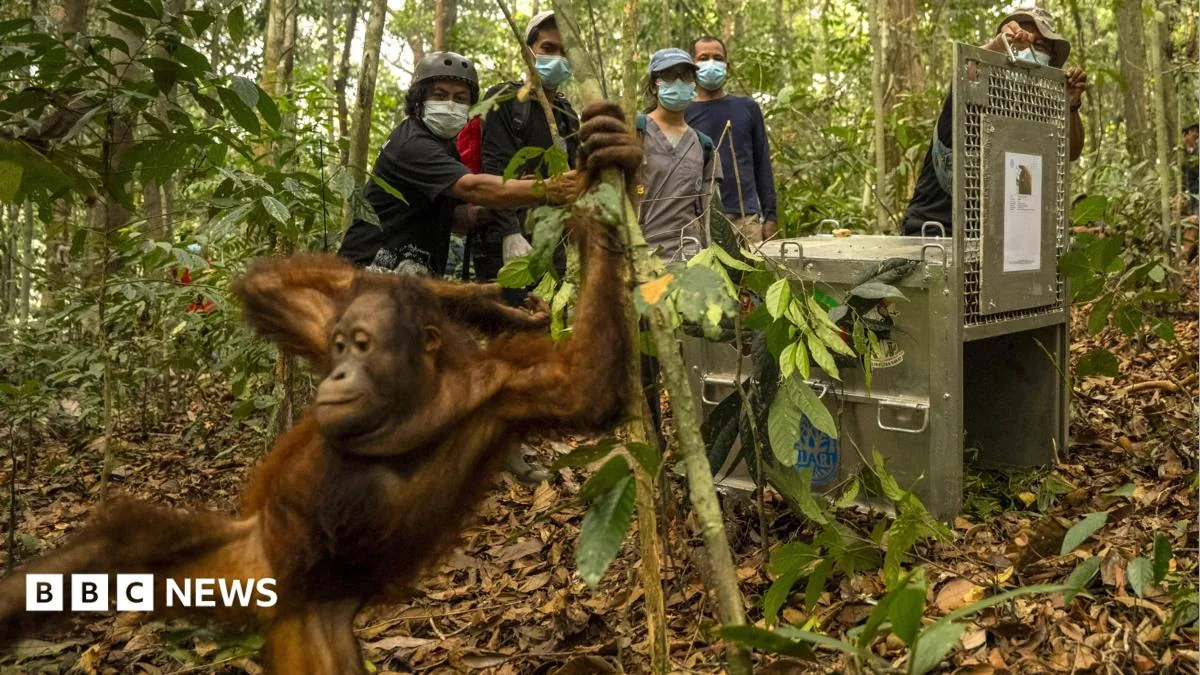
A third family group, Mama Man and her baby Man, had been on YIARI’s watch list since June when rescuers found them living in farmland next to a small forest pocket. Spreading blazes cut off their roaming area. Facing the threat of fire exposure, field workers evacuated the pair in early September so they would not starve in scorched fields. They had survived on agricultural crops before evacuation teams stepped in [1].
Why Batu Nyambu Was Chosen for Wild Orangutan Release
Selecting a new home for rescued apes demands careful habitat assessment because simply moving them to any random green patch does not guarantee their long-term survival in changing landscapes [1]. Rescuers chose the Batu Nyambu Protected Forest in West Kalimantan, a 23,000-hectare reserve (56,800 acres) that contains both primary and secondary forest cover. This reserve was chosen because it provides dependable food and water sources while maintaining open canopy links to other protected woodlands in the province [2]. Without wide corridors connecting tree canopies, released apes would quickly run out of territory and find themselves near plantation borders again [1].
Connecting forest tracts let orangutans roam freely to establish home ranges without competing with existing resident populations. Streams offer reliable water even during dry spells [2]. Food variety in Batu Nyambu helps newly arrived mothers feed their young year-round [1].
Argitoe Ranting, operational director at YIARI, explained the reasoning behind the release site choice. “We want to ensure that rescued orangutans are not simply moved from one place to another, but actually have a chance to survive in their natural habitat,” Argitoe said. Staff evaluated fruiting patterns before transport began [2].


How Each Orangutan Released into Wild Canopies Adapts
The eight animals released on Friday included three mother-and-child pairs and two male teenagers. Moving them into Batu Nyambu required boats and overland carrying teams [2]. Rescuers opened transport cages beneath tall trees, watching as mothers climbed upward with infants clinging tightly to their fur [1]. Young males explored the canopy within minutes [2].
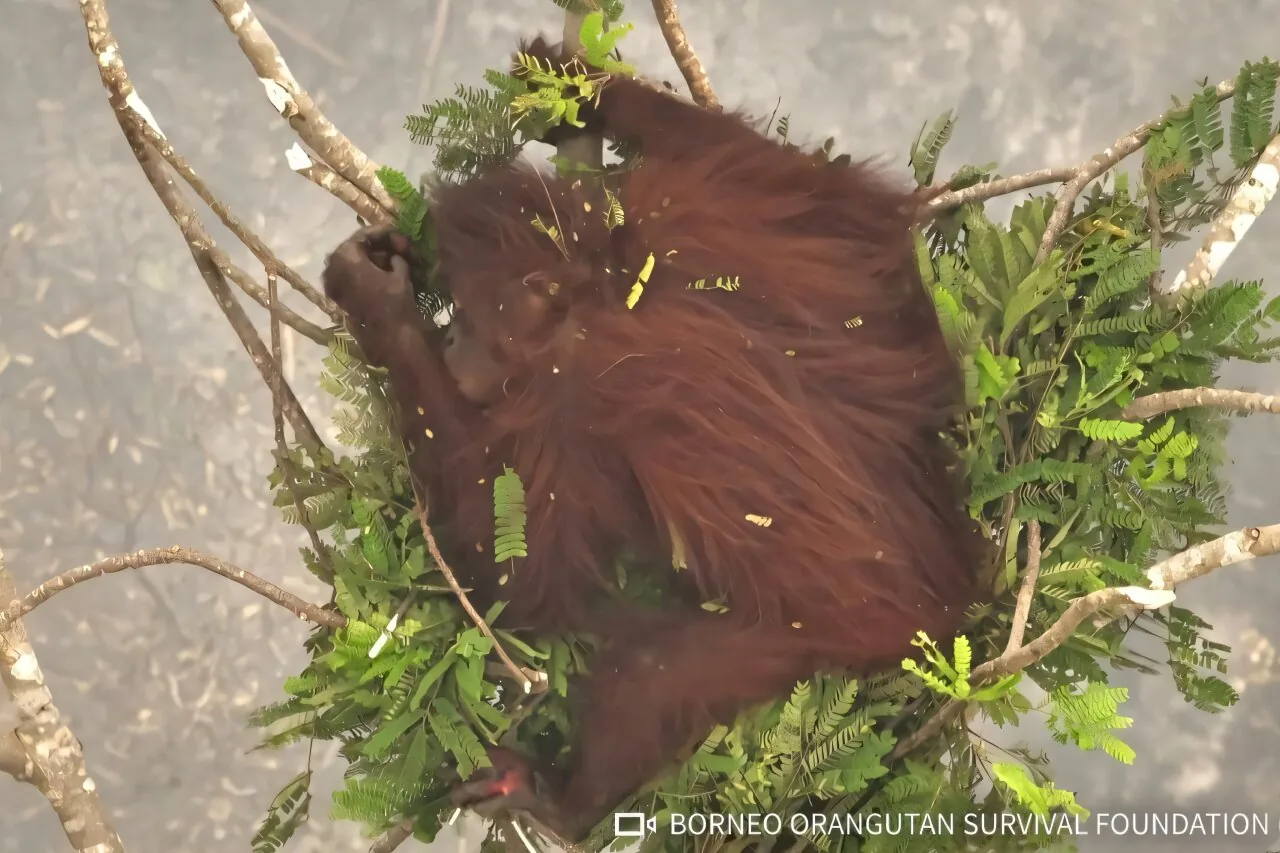
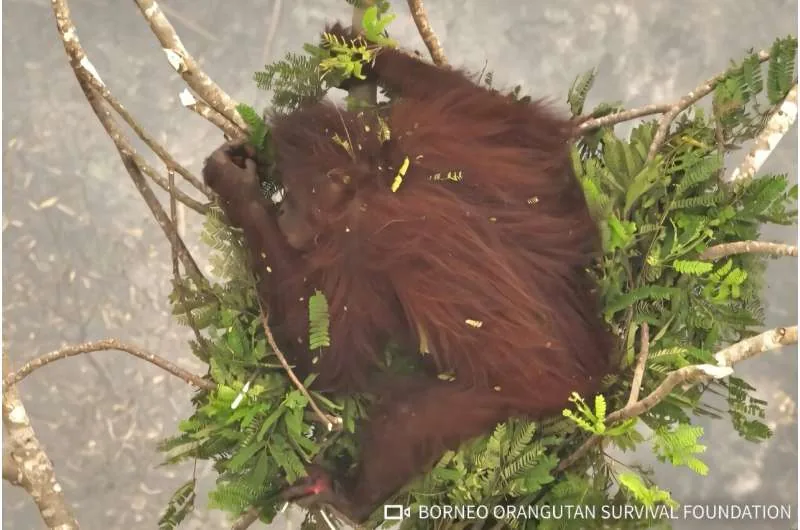
Field monitors track each orangutan released into wild reserves to ensure they resume natural feeding behaviors and build secure night nests in the high canopy. Young apes learn climbing and foraging skills from their mothers during their early developmental years in the forest. In a protected reserve with fruit-bearing trees, mothers can teach their offspring without facing the constant disturbance of plantation machinery or advancing summer blazes [1]. Rangers observe them from the ground to verify that infants nurse properly and that teenagers establish independent feeding patterns [2].
YIARI chief executive Karmele Llano Sanchez explained the necessity of these field interventions when habitats collapse. “Protection of habitats will always be a top priority to ensure orangutans continue to have safe forests to live in, but as long as their habitat remains threatened, rescue is one of the best options we can take to help them survive,” Sanchez said [2].
Are There Any Orangutans Left in the Wild?
Around 104,000 orangutans still live in the wild across Borneo and Sumatra, according to estimates from the conservation group WWF. That total represents a sharp drop from more than 230,000 apes that inhabited the islands a century ago. Both island populations face heavy habitat loss from agricultural expansion, road construction, and commercial logging, which has fragmented unbroken rain forests into small, isolated pockets surrounded by farming estates. The International Union for Conservation of Nature lists them as critically endangered [1].
Without large, connected forests, remaining ape populations face rising risks of localized extinction. When fire destroys a forest fragment, primates can’t easily cross cleared farmland to find new shelter [1]. Relocation helps maintain genetic diversity within protected areas [2].
Field surveys show that small, isolated populations living near oil palm estates are most vulnerable to displacement and conflict with humans [1]. Every orangutan released into wild habitats helps sustain breeding populations in protected provincial reserves. Conservation groups continue to push for tighter enforcement around protected forest boundaries to prevent further habitat loss in West Kalimantan [2].
Climate Pressures and Land Clearing in West Kalimantan
Regional wildfires this year were driven by a powerful El Niño weather phenomenon, which alters tropical ocean temperatures and makes dry seasons in the archipelago significantly longer and hotter [1]. Climate scientists note this year’s El Niño is one of the strongest since comparable records began four decades ago. As dry conditions intensify in equatorial regions, broader ecological studies show that global emissions rise as extreme forest fires increase across vulnerable tropical peat swamp zones [2].
Conservation assessments published last month by the International Union for Conservation of Nature showed blazes threatening forests where 52% of Borneo’s orangutan population lives. The conservation group cautioned that a large portion of the ape’s remaining range will become completely inhospitable if climate change and habitat degradation continue at their current pace [1]. Slash-and-burn practices used to clear land for palm and rubber plantations have stripped away naturally fire-resistant forests, leaving behind dry, open brush that ignites easily [2].
Safeguarding existing reserves remains the most reliable strategy for protecting Borneo’s wildlife. For the eight apes now climbing in Batu Nyambu, the reserve provides safety from fire lines and clear room to roam [2]. Long-term survival for every orangutan released into wild forest reserves depends on whether local governments and local communities can prevent seasonal fires from entering protected woodland boundaries [1].
- ONLINE NEWS Phillips, A. (2026, October 11). Orangutans released back into Borneo forest after devastating fires. BBC News. [Article Link]
- ONLINE NEWS Zinin, A. (2026, October 11). Indonesia releases eight orangutans rescued from fires to protected forest. Phys.org. [Article Link]
APA 7: TWs Editor. (2026, October 12). Borneo Orangutans Return to Protected Forest After Wildfires. PerEXP Teamworks. https://perexpteamworks.com/en/orangutan-released-into-wild-borneo/


