





NASA has released its final Request for Proposals inviting American aerospace companies to design, launch, and operate commercial space stations in low Earth orbit before the current orbital complex retires. Speaking on the release, NASA Administrator Jared Isaacman explained that the United States will not surrender its human presence above the atmosphere once legacy government operations conclude. “In alignment with the President’s National Space Policy, NASA is committed to maintaining a sustained American presence in low Earth orbit long after the International Space Station retires,” said Isaacman. Competitive proposals from private teams are due on Dec. 8, with contract awards scheduled for spring 2027 [1].
- Procurement Rules for Commercial Space Stations
- Why NASA Plans to Rely on Commercial Space Stations
- How Lawmakers Scrutinized the Space Station Core Module
- Why Private Builders Pushed for Independent Platforms
- Economic Hurdles Facing Commercial Space Stations
- When Will the International Space Station Retire?
Procurement Rules for Commercial Space Stations
Under the final solicitation, the space agency plans to award multi-award, firm-fixed-price contracts with indefinite-delivery and indefinite-quantity terms to support orbital outpost development, certification, and ongoing flight services. Officials intend to execute the acquisition through standard government procurement regulations (FAR-based) using full and open competition for American industry [2]. This strategy lets NASA pick two or more contractors during early development work, followed later by a second task order competition where finalists complete final design, test flights, and orbital certification [1].
This procurement follows months of dialogue between NASA and private habitat developers that began earlier this year. Building on discussions from the agency’s Ignition event, procurement teams published two Requests for Information on March 25 to collect detailed industry perspectives on orbital destinations and crew transport. Agency leaders then issued a draft Request for Proposals on July 6 to test their contracting model with private builders. On July 9, NASA hosted an informational briefing at Johnson Space Center in Houston, giving private aerospace engineers an overview of program expectations before written comments closed on July 27 [2].
Under the binding solicitation requirements, bidding firms must prove they can design, manufacture, test, and fly complete habitats capable of sustaining human crews in orbit. NASA wants private stations that provide end-to-end destination capabilities and reliable crew flight services. Aerospace contractors must submit all proposal packages on Tuesday, Dec. 8, while agency procurement contacts George Alderman and Joshua Finch field questions from Washington headquarters at telephone 202-358-1600 [1].

Why NASA Plans to Rely on Commercial Space Stations
NASA leaders view private orbital platforms as the only realistic way to sustain research in low Earth orbit while freeing up funding for deep space missions. Administrator Jared Isaacman explained that the agency cannot abandon orbital microgravity science while preparing astronauts for distant voyages. “We will continue to need a place to conduct research, develop technologies, train crews, and prepare for missions to the Moon and Mars,” Isaacman said. “Commercial space stations may provide that capability while creating new opportunities for American industry and allowing NASA to concentrate more of our resources on the near-impossible missions ahead” [1].
The orbital environment functions as a proving ground for life support systems, astronaut health countermeasures, and hardware reliability needed for long voyages. NASA intends to use these private platforms to support crew preparation for upcoming Artemis missions to the Moon and subsequent human exploration of Mars. By buying research space as a paying customer rather than building government outposts, the agency avoids carrying total station upkeep costs alone [2].
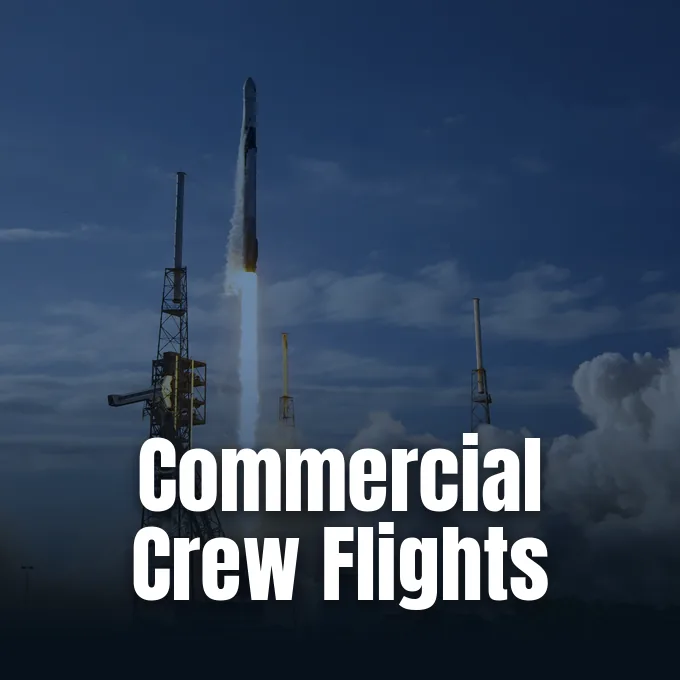
This purchasing model mirrors earlier agency shifts in orbital logistics. Rather than owning launch vehicles, the agency previously secured private transport, as seen when officials funded commercial crew flights to the space station from private vendors to maintain crew access. Buying station berths from private providers applies that same vendor strategy to orbital living quarters [1].
How Lawmakers Scrutinized the Space Station Core Module
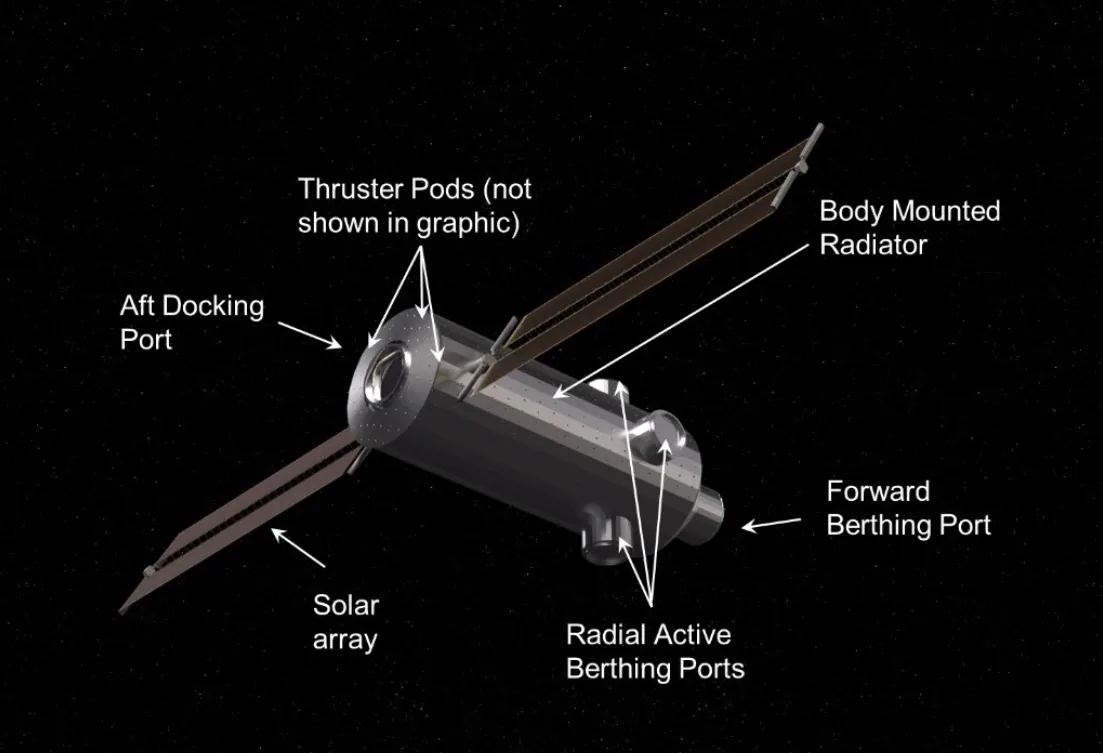
The path to the current solicitation was not straightforward, as NASA previously floated an alternative strategy that surprised lawmakers and private contractors alike. In March 2026, agency officials proposed adding a government-owned core module to the International Space Station. Under that alternative concept, private station builders would attach their private modules to the government hub before eventually detaching to fly as independent platforms [8].
The alternative plan drew scrutiny when Joel Montalbano, acting head of NASA’s Space Operations Mission Directorate, testified before the U.S. House Space and Aeronautics Subcommittee. Montalbano told lawmakers that under the original Commercial LEO Destinations program, the agency only had enough budget to fund a single private station builder. “And our opinion, that’s a very risky approach,” Montalbano told the subcommittee. “It’s risky for the committee, it’s risky for the agency, risky for the country. And what we introduced yesterday was an option” [8].
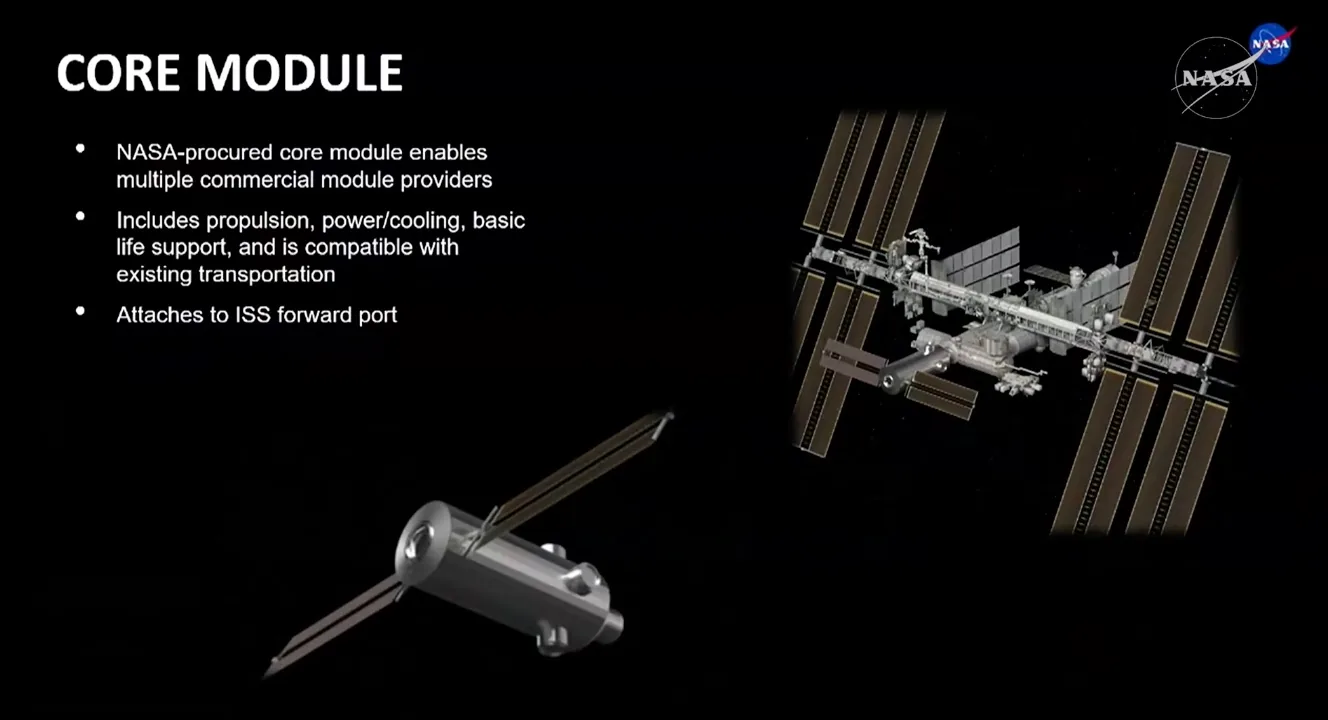
Montalbano defended the core module by arguing that piggybacking on existing orbital hardware would save private developers money on life support, propulsion, and electrical power. By tapping into legacy station systems, builders would not need to finance separate utility modules during early testing. Station builders could test their hardware in orbit without building standalone life support systems from scratch [8].
Why Private Builders Pushed for Independent Platforms
Private aerospace firms reacted with alarm to the government core module proposal, warning that altering NASA’s procurement approach threatened their private investment deals. Dave Cavossa, president of the Commercial Space Federation, told congressional leaders that the strategy shift caused broad disruption in the sector. Cavossa said the announcement was “sowing concern and really sowing confusion among the commercial space companies I represent” [8].
Lawmakers on the House subcommittee questioned whether NASA could afford to develop a custom government module while still funding station operations. U.S. Rep. George Whitesides challenged Montalbano during the hearing, questioning the fiscal logic of building new federal space hardware. “I just don’t see how it’s fiscally possible for NASA to afford the development and launch of a custom-built government core module, while maintaining ISS, while claiming at the same time it can’t afford to be a customer on a commercial station that is being privately financed,” said Whitesides [8].
Private companies were pursuing very different design architectures that made a government hub awkward. While Axiom Space of Texas had an existing agreement to dock a private module to the station, Colorado-based Starlab Space planned to launch straight into orbit as a free-flying platform [8]. Hearing industry pushback, NASA abandoned the core module concept and returned to its original strategy of buying private destination services [2].
Economic Hurdles Facing Commercial Space Stations
Beyond procurement mechanics, commercial station builders face a sluggish market for private microgravity activities. Montalbano told lawmakers that commercial low Earth orbit demand predicted a decade ago has failed to materialize. “We expected the private launch market to take off. We expected tourism to take off. We expected the ability to do research and technology development on the International Space Station, bring it down the earth and mass produce it,” Montalbano said. “We’re not seeing any of those three things” [8].
NASA Administrator Isaacman acknowledged that private stations cannot rely solely on government funding to remain solvent over the coming decades. “Since Ignition, we have spent a lot of time listening to industry and working through what it will take to make this transition successful,” Isaacman said. “The opportunity is significant, but the economics ultimately have to work. We want to see credible plans, strong technical execution, and companies prepared to invest in destinations that can serve NASA while developing additional customers and markets of their own” [1].
Can commercial station operators build a viable business model with NASA acting merely as one customer among many? Station builders must attract private capital to finance orbital manufacturing, private astronaut stays, and international research partnerships. This private market expansion parallels how NASA broadened industry participation through heavy commercial launch service contracts, seeking reliable suppliers that can operate without permanent taxpayer subsidies [2].
When Will the International Space Station Retire?
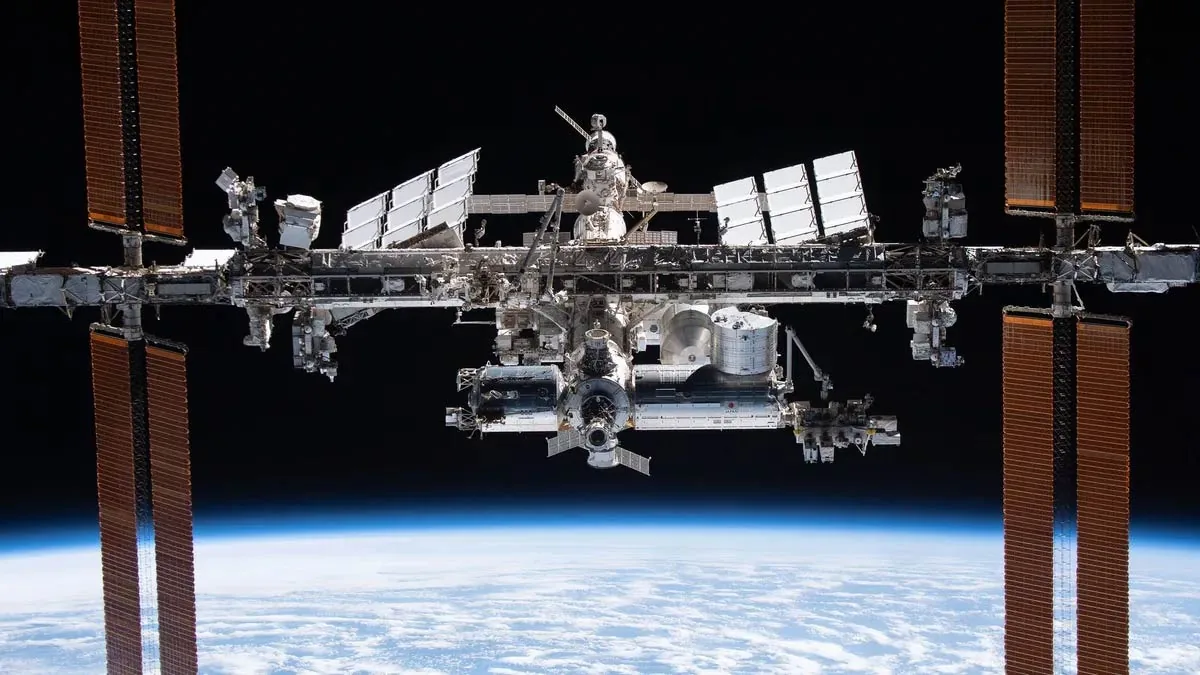
NASA plans to keep the International Space Station operating through 2030, marking three decades of unbroken human habitation in low Earth orbit. Under current federal planning, the complex will undergo controlled deorbit into the Pacific Ocean in 2031. To execute that guided atmospheric descent, NASA selected SpaceX through a 2024 award capped at $843 million to produce the U.S. Deorbit Vehicle, a propulsion tug designed to steer the football-field-sized station into oceanic destruction [8].
Safety watchdogs warn that keeping the aging orbital complex flying through 2030 carries growing risks for crews on board. The Aerospace Safety Advisory Panel (ASAP) has monitored wear on legacy modules, including air leaks in a transfer tunnel of the Russian Zvezda service module that engineers first detected in 2019. In meeting minutes from September, the advisory panel warned that hardware failures, aging spacesuits, and cargo resupply limits create mounting hazards. “Should an age-related failure exceed the program’s ability to manage it, the consequences could include an uncontrolled reentry with risks to both crew and the public,” the panel cautioned [8].
If private stations are not certified before 2031, American astronauts face a gap in low Earth orbit access that could cede space leadership to foreign rivals. With proposals due this December and contract awards scheduled for spring 2027, NASA and private builders have less than five years to construct, test, and fly functional habitats. The success of these private partnerships will determine whether the United States maintains an unbroken human presence above Earth or loses its foothold in orbit [1].
- PRESS RELEASE Taveau, J. (2026, October 9). NASA Seeks US Industry Plans for Commercial Space Stations. NASA. [Article Link]
- PRESS RELEASE Dooren, J. M. (2026, July 6). NASA Seeks Industry Input on Second Phase of Commercial Space Stations. NASA. [Article Link]
- ONLINE NEWS Foust, J. (2026, March 25). NASA proposes new strategy for commercial space stations. SpaceNews. [Article Link]
- ONLINE NEWS Foust, J. (2026, March 27). Industry says proposed NASA changes to commercial space station plans create confusion. SpaceNews. [Article Link]
- ONLINE NEWS Mirage News. (2026, October 9). NASA Seeks Industry Plans for Commercial Space Stations. Mirage News. [Article Link]
- ONLINE NEWS PressBee. (2026, October 9). NASA Seeks US Industry Plans for Commercial Space Stations. PressBee. [Article Link]
- ONLINE NEWS Jumpseat Aerospace News. (2026, July 6). NASA Seeks Industry Input on Commercial Space Stations. Jumpseat Aerospace News. [Article Link]
- ONLINE NEWS Brinkmann, P. (2026, March 25). U.S. lawmakers probe NASA’s revamped commercial space station strategy. Aerospace America. [Article Link]
APA 7: PerEXP Teamworks. (2026). NASA Seeks Private Bids for Commercial Space Stations. PerEXP Teamworks.


