






Pinterest shared an update to its account safety tools this week, letting parents curb how much AI-made media shows up in their children’s feeds [2]. The new feature builds on a redesigned dashboard, giving families direct options to dial down machine-made images and video clips in daily recommendation streams. By putting this slider into Pinterest parental controls, Pinterest becomes one of the first major social networks to let adults limit computer-generated media in general feeds instead of restricting chat apps alone [1].
How Families Set Up Pinterest Parental Controls
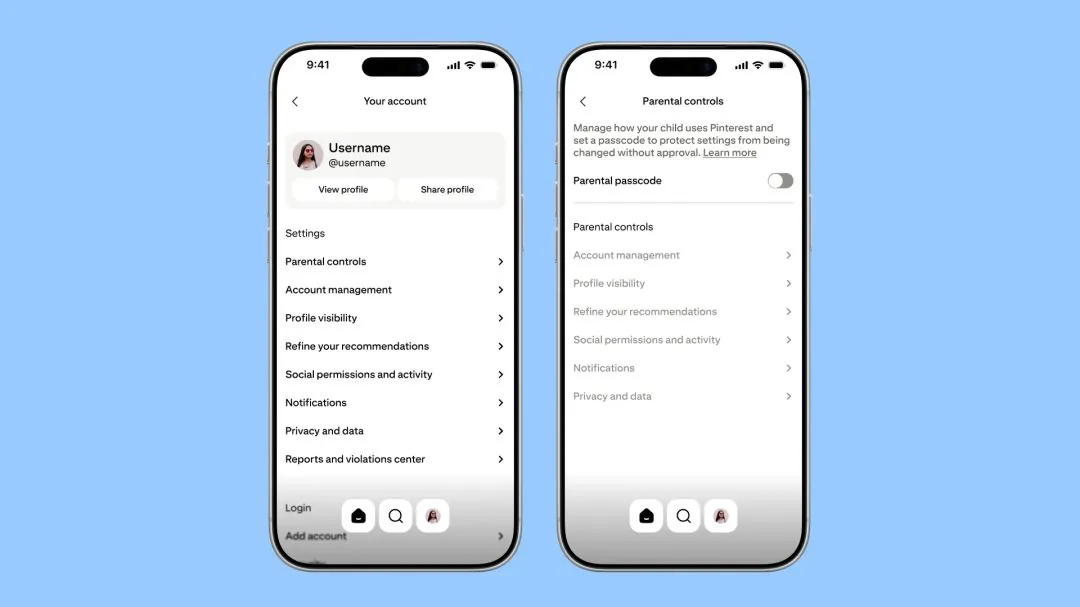
The update groups family options into one simple place. Through this hub, parents managing Pinterest parental controls can set four main areas covering media volume, alert timing, social permissions, and phone links. Setup takes seconds [1]. The Content & Media menu holds the new AI slider with a switch to stop video clips from playing on their own [2]. In Social & Ads, adults can manage user comments, account mentions, and ad tracking choices [1].
Teenagers can’t turn off these limits on their own. Every setting on the hub locks behind a four-digit Parental Passcode that only adults hold. Passcode locking strengthens baseline rules that Pinterest already uses for young people, like setting accounts for kids under 16 to private by default and pausing push notices late at night [1].
Company leaders said the change fits their broader safety work for younger crowds. “We’ve built Pinterest to be a positive, age-appropriate place for teens from the start, with protections built in, not bolted on,” Pinterest CEO Bill Ready said in a statement. Ready added that the company wanted the tools to remain simple to find and use for families wanting closer oversight of what their children browse every day [1].

Targeting Feeds Instead of Chatbots
Most tech firms have focused on conversational bots instead of tackling general picture feeds. Snap added parental controls that block its bot from chatting with minors, while WhatsApp lets adults limit how teens use Meta AI to write text or answer questions. Meta also paused teen access to custom virtual characters after family groups spoke out [2]. Child safety groups have raised concerns about AI chatbot risks for teens when young people talk directly with automated software agents.
Chat rules keep kids from talking to bots, but regular feeds still show endless AI-made posts [1]. In April, the child advocacy group Fairplay joined more than 200 groups in sending a letter to YouTube CEO Neal Mohan and Google CEO Sundar Pichai. The letter urged YouTube to take AI videos off YouTube Kids and stop recommending machine-made clips to teens under 18 [2]. Algorithmic recommendations continue serving synthetic media without clear warnings [1].
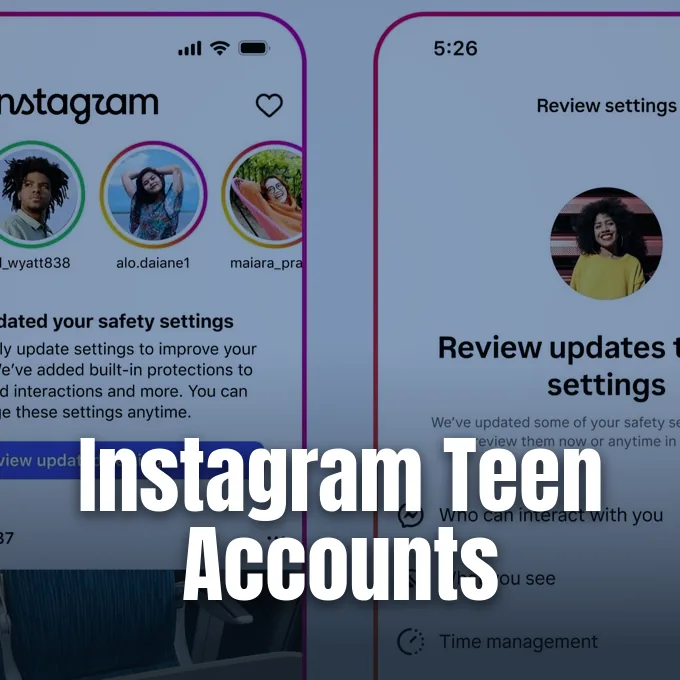
By going after its feed, Pinterest takes on passive viewing habits [1]. Other social networks enforce youth protections through dedicated account tiers, as seen with recent Instagram teen account protections that require private profiles and automated supervision settings for minors. Feed filtering remains an uncommon option [2]. The new slider gives families immediate help with AI clutter, yet filtering has clear limits [1].

Why Filtering Tests Pinterest Parental Controls
Filtering synthetic pictures is hard. Pinterest makes no claim that the new dial catches every artificial pin [1]. In 2025, Pinterest set up baseline rules to tag and curb AI-altered pins, but machine-made media kept slipping into discovery streams because modern image generators leave few obvious technical clues [2]. Generative tools like Midjourney, Stable Diffusion, DALL-E, and Adobe Firefly produce detailed images in seconds without leaving clear tags [4]. Parents using Pinterest parental controls should treat this tool as a way to lower volume, not as an airtight wall [1].
Generative systems trace their mathematical foundations to Andrey Markov’s language models from 1906 and Harold Cohen’s computer art program AARON in the 1970s. Modern models learn visual styles from vast collections of training artwork and photos, allowing them to output brand new pictures that easily bypass conventional web filters [4]. On Pinterest, craft and decor tags saw heavy waves of AI art. Parents trying the new setting should slide the control and immediately browse several favorite topics to evaluate whether unwanted synthetic pins disappear from their feed recommendations [1].
Engineers must prove that content filters work inside niche hobby tags rather than relying on broad sitewide averages that hide local failures. Synthetic clutter spreads fast without reliable filters. Showing that algorithms can prune machine-made pins without hiding authentic human creations remains the next major safety challenge for the industry [1].
From Pinboards to Visual Search
The new filter marks a shift for an app that started as an idea to replace paper catalogs. Founded in San Francisco by Ben Silbermann, Paul Sciarra, and Evan Sharp, Pinterest grew out of an earlier shopping app called Tote. That first venture struggled. Clunky phone payments in the late 2000s made mobile shopping hard. When Silbermann saw users saving collections of product photos, the founders pivoted to build an online pinboard [3].
Work on Pinterest began in December 2009 before a beta debut in March 2010. Nine months later, the site reached 10,000 users, leading Silbermann to personally call early members to gather feedback. Growth surged when an iPhone app launched in March 2011, quickly followed by an iPad app and Pinterest Mobile for non-Apple users. In August 2011, Time magazine named Pinterest one of the 50 best websites of the year. By December 2011, Hitwise tracked 11 million weekly visits, making it a top ten social network in America. In January 2012, comScore recorded 11.7 million unique domestic visitors, making Pinterest the fastest site ever to pass the 10 million visitor mark [3].
As user collections expanded, Pinterest focused on visual search tools. In April 2017, engineers removed the post liking button to center engagement on boards. On April 18, 2019, the company began trading on public markets at an opening price of $19 per share, closing its initial session at $24.40 after The Wall Street Journal reported a $12 billion valuation in earlier confidential filings. In 2020, annual ad sales grew 48 percent to hit $1.7 billion [3]. Those commercial recommendation systems now face synthetic images in youth feeds [1].
Mobile Screen Limits and Teen Safety
Beyond filtering feeds, Pinterest parental controls tie into phone software. The menu links into tools on Apple iOS and Google Android, connecting app rules with system Screen Time limits and device place tags. Putting these links in one spot helps parents check screen hours and alert counts without digging through separate phone menus [1].
For teenagers, the updated settings leave creative searches intact while giving families a tool to cut down on AI clutter. Young users keep access to regular search, personal boards, and pins, so long as an adult approves baseline rules [1]. Parents can also tune alert levels for push notices, browser pop-ups, emails, and in-app banners to keep notifications from waking teens at night or interrupting class [2].
Giving parents a feed slider sets a new precedent for other social networks. Rivals still focus almost entirely on chat bots, but families now want say over the visual feeds that teens scroll every day. Feed dials may soon become standard safety tools [1].
- ONLINE NEWS Abdullahi, A. (2026, November 25). Pinterest Gives Parents a Say in How Much AI Content Teens See. TechRepublic. [Article Link]
- ONLINE NEWS Perez, S. (2026, November 24). Pinterest will now let parents limit the AI-generated content their teens see. TechCrunch. [Article Link]
- WEBSITE Wikipedia contributors. (n.d.). Pinterest. Wikipedia, The Free Encyclopedia. [Article Link]
- WEBSITE Wikipedia contributors. (n.d.). Generative AI. Wikipedia, The Free Encyclopedia. [Article Link]


