






Google’s Pixel 11 Pro dropped to a record-low price of $749 during Black Friday sales at major retail stores, cutting $350 from its original launch cost. The temporary markdown on the 256GB phone brings high-end mobile hardware back to pricing levels common several years ago, before rising memory costs pushed premium devices well above a thousand dollars [1].
Black Friday Price Cuts
The holiday discount lowers the starting 256GB storage configuration from $1,099 down to $749 at Amazon, Best Buy, and the online Google Store. Allison Johnson wrote in The Verge that the price drop allows shoppers to “party like it’s 2019” by bringing flagship mobile power below typical premium tiers. Flagship phones often started well under $1,000 before component expenses drove standard launch prices higher for top mobile devices. Pro models in 2021 began at $899. The current sale marks the lowest recorded price to date for the device [1].
Other devices in the product family also received notable price cuts for the weekend. The larger Pixel 11 Pro XL received markdowns at Amazon and Best Buy, giving buyers a discount on a handset that carries a roomier 6.8-inch screen. Meanwhile, the budget Pixel 10A received a $100 price cut on Amazon, but other retailers didn’t match that sale. That cheaper phone keeps the Tensor G4 chip and dual-camera setup from the Pixel 9A, but it adds Satellite SOS along with faster wired charging. Amazon remains the sole retailer offering that entry-level discount [1].
Shoppers tracking price history have seen steady price shifts for the phone family during the autumn cycle. PerEXP Teamworks documented how the base Google Pixel 11 hit a record low $699 during earlier promotional rounds. Buyers who step up to the Pixel 11 Pro get better build quality, updated wireless charging standards, and a more versatile camera package for a modest price jump [1].
Design Changes on Pixel 11 Pro
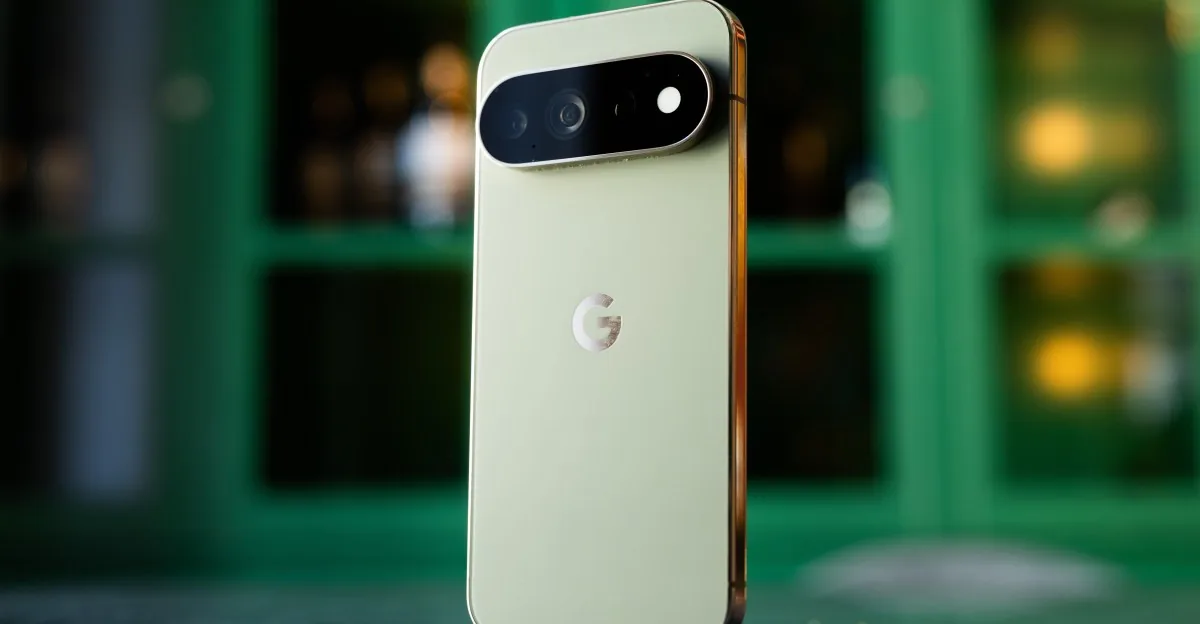
The Pixel 11 Pro keeps an exterior frame that echoes its predecessor, using flat metallic edges and rounded exterior corners. Google revised the rear camera bar so that the protective glass covering the lenses, microphone, and autofocus sensors now extends all the way to the right edge of the phone casing. That modification makes the raised camera bar completely symmetrical from side to side across the rear casing [2].
Hardware revisions on the rear panel also include the removal of the temperature sensor found on the Pixel 10 Pro. With that sensor gone, the camera flash occupies the same space next to the rear lenses at an equal height behind the shared glass cover. The flash sits level with the optical lenses [2].
Google sells the phone in four color options: Canyon, Olive, Fog, and Obsidian. Obsidian stands out as the only color choice featuring a matte finish on its aluminum frame, while the other three color options feature polished metal rails along the sides. The aluminum frame matches earlier dimensions [2].


Display and Processing Hardware
The display on the Pixel 11 Pro uses a Samsung M16 OLED panel designed to boost peak brightness levels while reducing battery consumption and improving color accuracy. It keeps the previous screen resolution alongside a 120Hz LTPO refresh rate that adjusts automatically to conserve energy during quiet viewing moments. The panel improves visibility under direct outdoor lighting [2].
Under the hood, Google equipped the device with its sixth-generation Tensor G6 custom System-on-Chip (SoC), marking the second consecutive year the company partnered with TSMC to fabricate its mobile silicon on a 3nm die size. Although several unverified reports prior to launch claimed the company was developing a 2nm processor, Google confirmed that the hardware stayed on 3nm. The underlying architecture contains seven CPU cores using the ARM Cortex C1-series, combining a single Cortex C1-Ultra core with six C1-Pro cores to balance processing demands. Visual rendering tasks run through an Imagination PowerVR CXTP-48-1536 graphics chip, delivering steady performance for demanding mobile applications without unexpected slowdowns. The custom silicon handles local computational workloads efficiently while maintaining reliable thermal limits. The die size remains unchanged at 3nm [2].
Thermal management and silicon efficiency help keep system performance stable during demanding mobile processing tasks. The Tensor G6 chip balances background workloads without producing excessive heat under regular operating conditions, allowing the handset to sustain reliable operation during prolonged usage sessions. The custom silicon handles local processing tasks without noticeable system stutter [2].
Upgraded Cameras and Faster Charging
On the back, the Pixel 11 Pro introduces a wide-angle 50MP main sensor paired with an upgraded 48MP telephoto camera that features larger optics and a larger sensor size. These optical changes allow the telephoto lens to capture more ambient light when shooting in dim or indoor environments. The upgraded glass lets users zoom up to 120x using Google’s AI-assisted Pro Zoom feature, surpassing the 100x zoom limit on the older Pixel 10 Pro. The secondary telephoto sensor gathers substantially more light [2].
Charging performance also received useful upgrades for both wired cables and wireless pads. The handset supports faster wired charging speeds alongside Qi2.2 magnetic wireless charging, which reaches power transfer rates of up to 25W on compatible charging accessories. The larger Pixel 11 Pro XL shares this triple-camera system, but it adds a bigger 6.8-inch display and faster wired charging speeds for users who want a larger screen [1].
Hardware improvements form the main appeal of the updated phone rather than software. Allison Johnson reported in The Verge that “the underlying hardware that makes it a stellar Android handset” matters more to buyers than flashy digital tools. The combination of faster charging speeds and upgraded camera optics gives the phone practical advantages during everyday handheld use without demanding steep price premiums [1].
Launch History for Pixel 11 Pro
Google officially announced the phone on August 12, 2026, during its Made by Google keynote in New York City after distributing press invites earlier that July. Comedian Trevor Noah hosted the main presentation, which featured guest appearances from basketball star Stephen Curry, cricketer Shubman Gill, and podcaster Alex Cooper. Noah’s appearance made him the second American comedian to host the annual showcase, following Jimmy Fallon in 2025. Teaser videos released in July showed the device alongside the company’s tagline “next obvious move”. Invitations for the keynote went out July 7 [2].
The announcement followed months of leaks and regulatory filings that revealed key details about the hardware. In July 2026, an image of the phone leaked onto the Google Fi website, and the Federal Communications Commission (FCC) granted regulatory approval that same month. Publication 9to5Google reported that an early display feature called Pixel Glow would arrive under the formal name HiLight. Preorders opened on launch day, leading to an official store release date of August 20 in the United States. Carrier demo units appeared online four days before launch. The phones debuted alongside the Pixel Watch 5 and Pixel Tag [2].
Long-term software support stands as a key selling point for Google’s premium handsets. Both Pro models come with a promised seven-year update window that guarantees operating system upgrades and ongoing security patches. PerEXP Teamworks previously reported how Google sets staggered lifespans for Pixel software updates across different hardware lines, providing context for the company’s multi-year maintenance promises. The seven-year policy matches the standard 11 Pro [1].
- ONLINE NEWS Johnson, A. (2026, November 28). You can get a Pixel 11 Pro for what flagship phones used to cost. The Verge. [Article Link]
- WEBSITE Wikipedia contributors. (2026). Pixel 11 Pro. Wikipedia, The Free Encyclopedia. [Article Link]


