





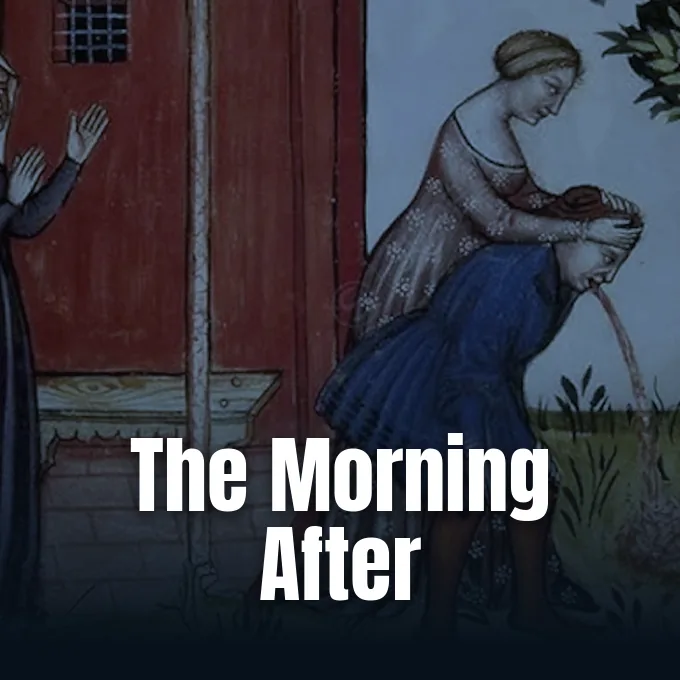
Hangover cures once included goat lungs, and modern research still offers no firm basis for a reliable remedy among the treatments discussed here. Writing in The Conversation, Joan Fitzpatrick traces hangover remedies through ancient drinking customs, medieval dietary advice and twentieth-century literature. A hangover combines physical discomfort with emotional distress (including regret and shame). The historical recipes are vivid; the clinical evidence for several modern candidates remains very weak. [1, 2]
Hangover Cures Before Clinical Trials
Joan Fitzpatrick published her historical account on September 11, 2026; Phys.org republished it the following day. Both versions follow the same argument, so they represent one account rather than two independent investigations. Fitzpatrick connects headache and nausea with the embarrassment that can follow intoxication, then asks how earlier societies understood excessive drinking and tried to manage its consequences. Her examples come chiefly from classical writing, scripture, English dietary guides and literature. [1, 3]
Historical authors described recognizable experiences. Andrew Boorde wrote about impaired senses, a diminished appetite and an aching head in the sixteenth century, long before the placebo-controlled trials considered by modern reviewers (comparisons against an inactive treatment). His descriptions establish that people noticed these symptoms; they cannot establish whether the remedies he and his contemporaries endorsed actually worked. A record of a treatment is evidence of its use or recommendation, not automatically its effectiveness.
Fitzpatrick’s account is historical commentary, not a peer-reviewed clinical experiment. Its DOI record accompanies the same titled work. [5]
Who Could Drink Without Blame?
Plato made drinking part of a philosophical scene. In Symposium, dated approximately 385–370 BC, guests discuss love at a drinking party until the intoxicated Alcibiades arrives and disrupts proceedings. Socrates, by contrast, appears capable of drinking heavily while retaining his composure and escaping a hangover. Fitzpatrick uses their contrasting behavior to show how ancient writers could admire exceptional self-control even within a setting devoted to alcohol. Plato supplies a literary example, not a physiological test. [1]
Dionysus offered another route. Worshippers of the Greek wine god associated intoxication with transcendence, and Orphic Hymn 29 asks him to grant abundant, blameless enjoyment. Greek and Roman attitudes nevertheless included boundaries: they regarded undiluted wine as dangerous and uncivilized. Herodotus attributed the madness of Sparta’s Cleomenes I to drinking it with Scythians (nomadic warrior peoples associated with ancient Siberia). The causal claim belongs to Herodotus. His story records an ancient explanation for behavior, without demonstrating the medical cause of Cleomenes’ condition.
Ancient writers thus attached different meanings to losing control: religious experience, disruptive conduct or a warning about foreign customs. The search for hangover cures developed within that wider culture of judgment.
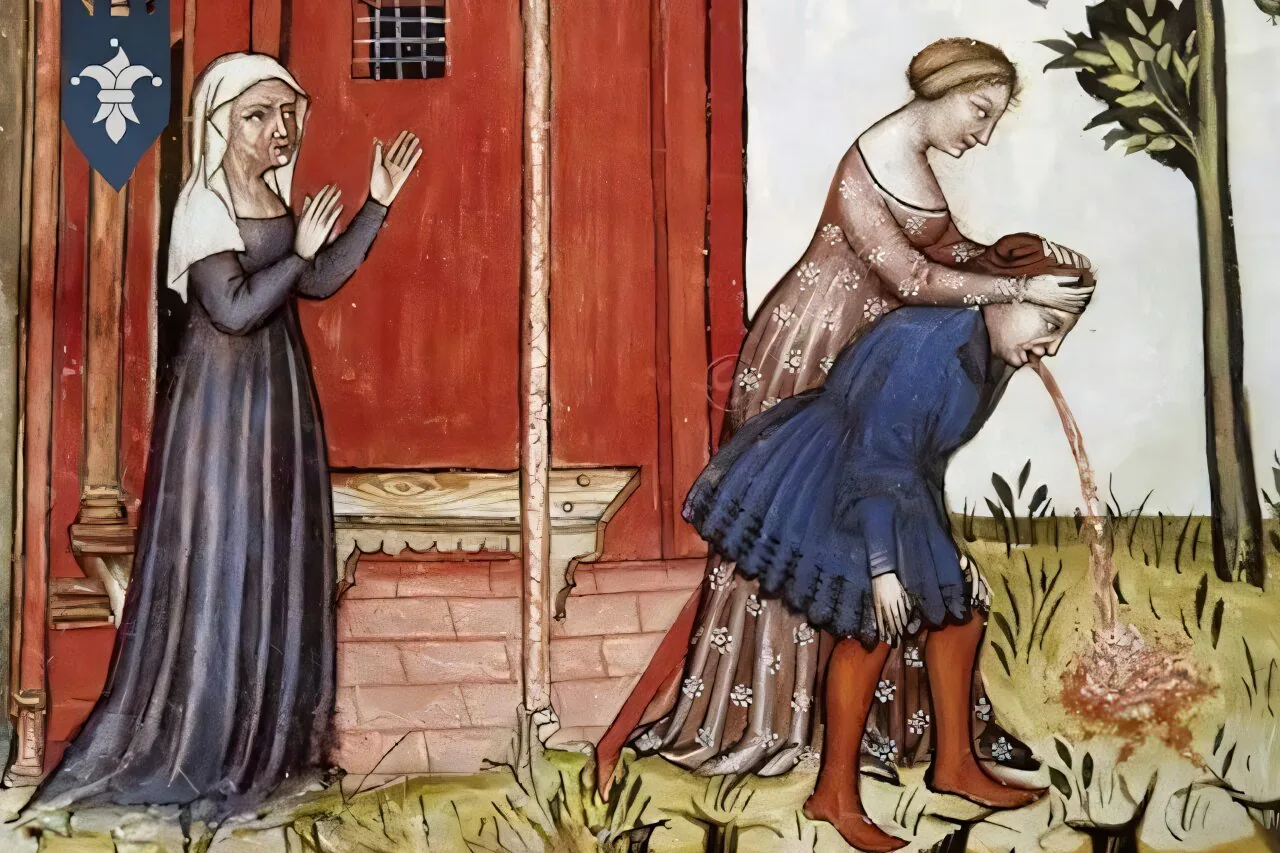
What Can Scripture Actually Establish?
Noah plants a vineyard after the flood, drinks its wine and lies naked in his tent. Ham sees him and tells his brothers; Shem and Japheth cover their father while avoiding the sight of his nakedness. Noah later curses Ham’s offspring. What exactly does the story attribute to Ham? Fitzpatrick describes several scholarly interpretations, ranging from seeing Noah naked to sexual violence, and draws attention to the gap between Noah’s intoxication and the blame he assigns. [1]
John Sietze Bergsma and Scott Walker Hahn offered a specific reading in the Journal of Biblical Literature in 2005. They interpreted the passage through maternal incest, connecting the father’s nakedness with the mother’s elsewhere in biblical language. Their subject is textual interpretation. Their article does not test alcohol’s effects or establish a diagnosis for Noah, and Fitzpatrick’s suggestion that his irritability resembles a hangover remains an inference about the narrative. [4]
Genesis also describes Lot becoming intoxicated on successive nights before his daughters have sex with him to conceive children. Neither account explicitly identifies a hangover. Biblical episodes can illuminate the moral history surrounding alcohol, but the search for hangover cures requires other kinds of evidence when the question becomes whether a treatment reduces symptoms.


Why Did Wine and Ale Differ?
Christianity accepted moderate drinking while treating drunken loss of control as gluttony. Wine also occupied a special place in medieval Britain and mainland Europe: priests consumed it in the Eucharist, where Christian belief understood it as Christ’s blood, and wealthier drinkers could afford it as a marker of status. Authorities more often associated the poor’s cheaper beer and strong ale with disorder, even though early modern guides also warned against drinking too much wine. Fitzpatrick’s history shows that judgments about drunkenness depended partly on the drink and the drinker’s social position, while religious practice gave wine a significance that extended beyond everyday refreshment. [1, 3]
William Langland dramatized the alehouse’s reputation. In his fourteenth-century poem Piers Plowman, Betty the Brewster diverts the character Gluttony while he is heading toward church. Andrew Boorde later gave intoxication a bodily vocabulary in A Compendious Regiment, or A Dietary of Health, describing a head that aches and a world apparently spinning around the sufferer. Boorde invoked the malt worm. The expression named both a brewing-grain weevil and a heavy drinker.
Why does this history matter? It separates observations of suffering from judgments about deserving it. The authors recognized bodily distress, but their explanations also reflected religious obligations and unequal social standing.
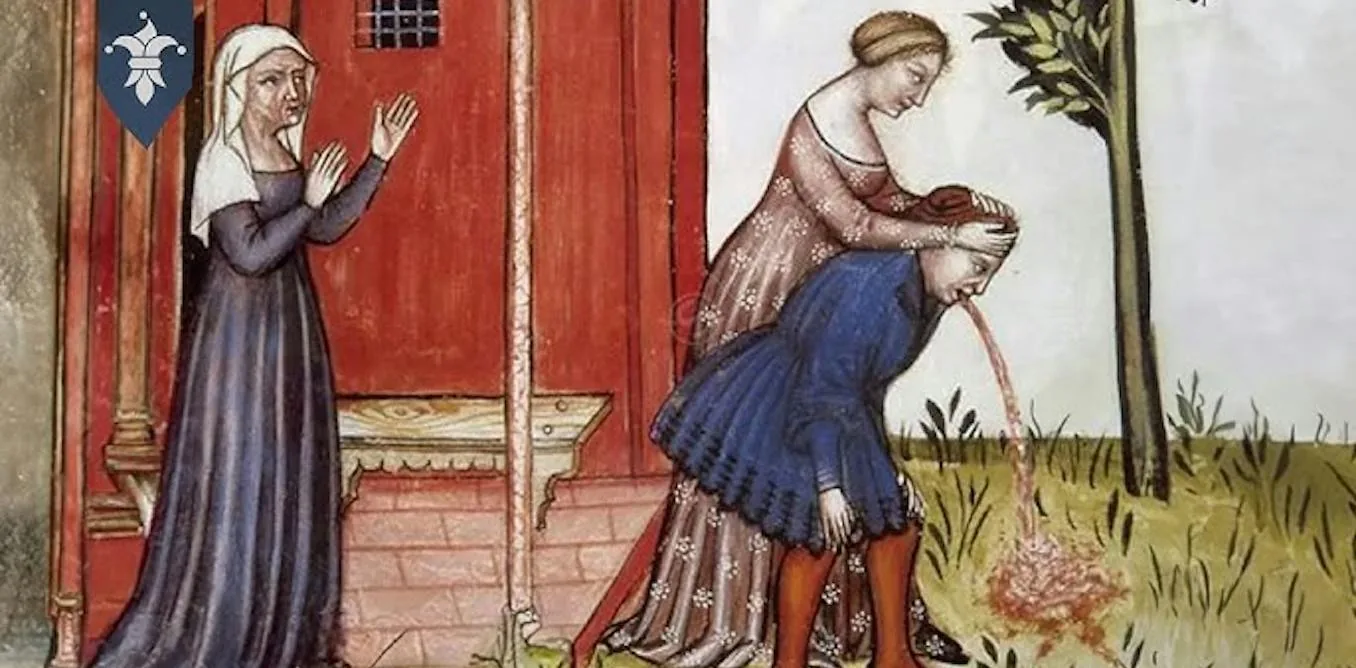
Which Foods Promised Relief?
Boorde and other dietary authors borrowed from classical authorities when recommending foods before drinking. Their lists included cabbage, almonds, baked quinces, wormwood and goat lungs, a mixture that makes sense as a historical repertoire of proposed preventives rather than a menu of validated hangover cures. Prevention came first. Fitzpatrick also records advice for the aftermath: walking, sleep and, as a last resort, deliberately vomiting. These are historical recommendations, not treatment instructions. [1]
Medieval dietary writers valued cloves for stomach complaints and restoration. Clove extract later appeared among the candidates singled out for further investigation in the 2022 review by E. Roberts, R. Smith, M. Hotopf and C. Drummond. An old reputation does not validate a modern preparation. The connection is historically interesting because the same plant appears in both discussions; it does not establish that an old recipe and a studied extract have equivalent effects. [1, 2]
Food history also asks what people ate, a related question covered in PerEXP Teamworks’ account of seaweed and freshwater plants in ancient European diets. Food consumption and medicinal recommendation answer different questions. A remedy’s presence in a guide shows what an author advised; even a long tradition of recommendation cannot replace a test of its claimed benefit.
What Does Modern Evidence Support?
Roberts and colleagues reviewed randomized placebo-controlled trials of pharmacologically active interventions for hangover symptoms in Addiction. Tolfenamic acid, pyritinol and clove extract emerged as candidates worth investigating further, but the supporting evidence was of very low quality. The review appeared in 2022. It provides no sound basis for presenting those candidates as established hangover cures. Fitzpatrick’s 2026 discussion revisits that finding; it does not report a newly demonstrated treatment. [1, 2]
Kingsley Amis approached the problem differently in his 1972 book On Drink. He distinguished bodily symptoms from a metaphysical hangover (emotional and psychological distress), suggesting books and music as ways of moving through the latter. His phrases included “hangover reading” and “hangover listening.” Fitzpatrick connects his emphasis on enduring discomfort with older ideas of penance. PerEXP Teamworks’ coverage of the relationship between the stomach and mental health considers another aspect of bodily and emotional experience; Amis’s advice belongs to literature, not clinical validation. [1]
Researchers assessing hangover cures still have to distinguish an improvement in particular symptoms from broader claims about reversing the consequences of heavy drinking. Fitzpatrick questions that broader promise. The unresolved clinical task is to establish whether the candidates identified by Roberts and colleagues provide dependable benefits in better evidence, rather than letting the familiarity of a plant or the persistence of a recipe stand in for a result.
- ONLINE NEWS Fitzpatrick, J. (2026, September 11). A brief history of the hangover and its cures – from cabbages to cloves and the lungs of a goat. The Conversation. [Article Link]
- ACADEMIC JOURNAL Roberts, E., Smith, R., Hotopf, M., & Drummond, C. (2022). The efficacy and tolerability of pharmacologically active interventions for alcohol-induced hangover symptomatology: A systematic review of the evidence from randomised placebo-controlled trials. Addiction, 117(8), 2157–2167. [Article Link]
- ONLINE NEWS Fitzpatrick, J. (2026, September 12). A brief history of the hangover and its remedies—from cabbages to cloves and the lungs of a goat. Phys.org. (Republished from The Conversation). [Article Link]
- ACADEMIC JOURNAL Bergsma, J. S., & Hahn, S. W. (2005). Noah’s nakedness and the curse on Canaan (Genesis 9:20–27). Journal of Biblical Literature, 124(1), 25. [Article Link]
- PREPRINT Fitzpatrick, J. (2026). A brief history of the hangover and its cures – from cabbages to cloves and the lungs of a goat [Non-peer-reviewed historical account; DOI record for source 1]. [Article Link]
APA 7: TWs Editor. (2026, September 13). Hangover cures through history: Cabbage, cloves and doubt. PerEXP Teamworks. https://perexpteamworks.com/en/hangover-cures-history/


