





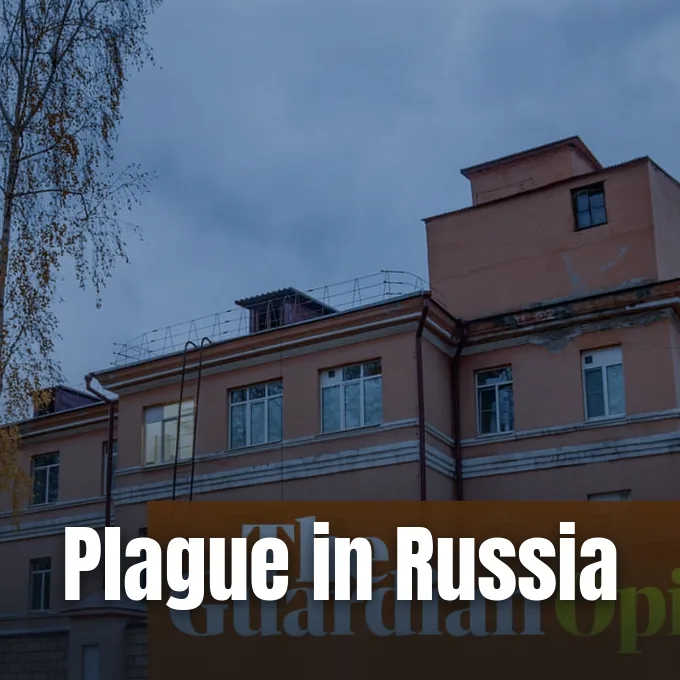
A research worker at a Siberian plague lab died from an unexplained lung illness nearly three weeks ago, prompting global health officials to seek answers from Moscow. Russian officials stayed silent about the fatality, refusing to share genetic data or lab tests with outside monitors. The lack of open news about possible plague in Russia has caused deep worry inside the World Health Organization, because stopping dangerous bacterial threats needs fast global cooperation. Medical treatments can cure plague when doctors act early. But prolonged state silence leaves global health teams blind to dangerous biological risks. Trust breaks quickly [1].
A Siberian Lab Worker Dies
The crisis started when a Siberian plague research unit worker fell ill with lung distress and died shortly after entering a local clinic, leaving medical staff with unanswered questions about pathogen exposure. Moscow gave no answer. State spokespeople later claimed that the staff member died of a pneumonia of unknown origin [1].
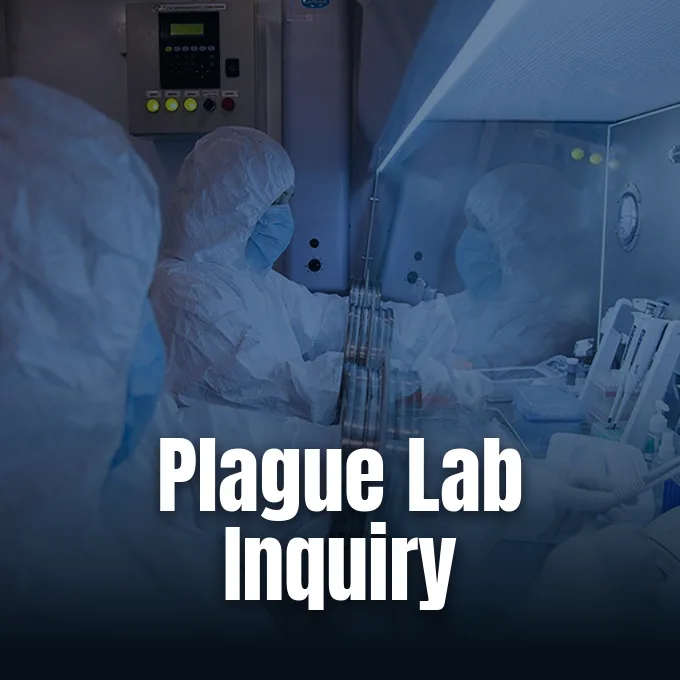
Plague is treatable. If clinics give common antibiotics quickly, patients recover without lung damage. The chance of an outbreak is tiny. Biosecurity questions also arose during an earlier Russian plague lab emergency inquiry, where investigators studied safety gaps in Siberian facilities after local officials concealed facility worker exposures. Without open laboratory reports from Moscow, foreign doctors and World Health Organization epidemiologists can’t verify whether containment measures inside the Siberian clinic stopped secondary bacterial transmission [1].
Tracking Plague in Russia and Patient Contacts
Behind their public silence, Russian authorities took swift emergency steps. Health leaders held high-level meetings to coordinate quarantine, locked down the hospital where the worker died, and traced about 200 contacts to stop community spread across the Siberian district. That swift mobilization suggested that Russian doctors believed the illness was plague. Officials treated the case as a top health crisis. Yet they sent no notice to the World Health Organization [1].
Lab workers in Siberia collected patient samples and genetic data. Sharing those genetic sequences would show whether the germ came from wild rodents in Siberia or represented an engineered pathogen grown inside a classified research laboratory. The data stayed hidden. The world handled other scares far better. Earlier this year, medical teams halted a hantavirus event on the MV Hondius cruise ship by sharing test results without delay, proving that global health defense functions effectively when sovereign states cooperate. When a state hides lab results, it puts every neighbor at risk [1].
Missing Lab Sequences from Siberia
Under international law, sovereign governments must immediately notify the World Health Organization about unusual infections that could spread across international borders and threaten vulnerable populations in Europe and Asia. When a government hides an active disease inquiry, global alert systems lose lead time. Officials at the World Health Organization worry that geopolitical friction between Washington and Moscow is breaking the multilateral treaties created to prevent catastrophic global pandemics. Global readiness depends on trust. That trust breaks when states hide lab tests [1].
Silence feeds rumors. Because Russian agencies hid clinical proof for nearly three weeks, foreign scientists debated whether the fatal illness came from an ordinary rodent infection in Siberia or an accidental bioweapons research leak. Analysts view a bioweapons leak as unlikely, but total secrecy prevents scientists from checking the facts. On 7 October, the United States state department asked Moscow to share its Siberian lab data with the WHO. President Trump announced during the same Washington briefing that bilateral talks with President Vladimir Putin would address the Siberian situation, though American diplomats shared no subsequent details with international health monitors. That bioweapon leak theories can spread three weeks after a death shows how badly the global reporting system broke down, allowing fear and speculation to fill the scientific void [1].

Could fast public updates stop global panic? Early facts prevent rumors from spreading online. When state bulletins say nothing, experts use social listening during health crisis communication to track public fear and answer false claims spreading across digital networks before misinformation causes widespread panic. Real test facts keep trust alive [1].

Treaty Rules and Multipolar Diplomacy
Rules need enforcement. Enforcing global health rules is harder today because world powers are divided. Earlier this year, the United States formally withdrew from the World Health Organization, although Washington stayed bound to select international health pacts that govern cross-border disease outbreaks (though enforcement remains limited). That diplomatic exit weakened the institutional leverage that World Health Organization officials previously exercised when requesting immediate access to closed biological research facilities in Eastern Europe. Without backing from the United States, the WHO avoids public fights with Moscow. Countries obey health pacts when they fear penalties or want scientific cooperation. When those ties weaken, multilateral bodies can’t force closed facilities to open their files [1].
Washington’s diplomatic request for Siberian lab records reflected an ad hoc political step rather than a sustained commitment to binding multilateral treaties governing global biosecurity and infectious disease surveillance. Western capitals have little sway over Moscow today. If the WHO wants Siberian lab facts, help must come from Brics partners. Other Brics members trade closely with Russia and share transport links with Siberia. Those Brics partner countries maintain active travel routes with the Russian Federation and share a direct practical interest in stopping contagious illnesses before pathogens cross international boundaries [1].
State Secrecy in Russian Governance
To understand why Siberian lab data stays hidden, observers look at the structure of the Russian state. Touching fourteen border states across eleven time zones, the Russian Federation covers the largest land territory in the world, stretching from Eastern Europe to North Asia. Home to more than 140 million residents, Russia maintains the highest population count among European nations, with approximately three-fourths of its citizens residing in dense urban metropolitan centers. Moscow is the capital and largest city, while Saint Petersburg is the second-largest city and main cultural center [2]. Health policy and lab oversight across Siberia remain controlled by central ministries based in Moscow.
Centralized control grew across centuries. Kievan Rus’ took Christianity from the Byzantine Empire in 988, Moscow became the Tsardom of Russia in 1547, and the realm expanded into the Russian Empire in 1721. After the 1917 revolution, Russia formed the Soviet Union in 1922 under communist rule. When the Soviet Union dissolved in 1991 and a new constitution passed in 1993, Russia retained its permanent seat on the United Nations Security Council with direct control over vast microbiological installations. Under Vladimir Putin, state secrecy deepened around military and biological research. That political habit clashes with the open data sharing needed to control diseases today [2].
Plague in Russia Tests World Safety
The case in Siberia shows how one secretive state can weaken global health defenses. When reports of plague in Russia appear without public lab tests, neighbors must make contingency plans in the dark. The World Health Organization can’t rely on trust alone during disease events. While medical experts believe this single Siberian fatality may not trigger an active community outbreak, ignoring World Health Organization reporting treaties sets a dangerous precedent for future global epidemics. Early facts save lives [1].
Pandemic defense needs cooperation. The world depends on fast warning networks to stop deadly germs before they travel across borders. When a sovereign state holds a permanent veto on the United Nations Security Council and spans millions of square kilometers, political isolation effectively shields its domestic research facilities from external scientific review. The Siberian death shows why the World Health Organization must build cooperative diplomatic ties with Brics member states when Western negotiations with Moscow reach an impasse. Scientists must exchange genetic records during health alarms. Hiding lab facts endangers everyone [1].
- ONLINE NEWS The Guardian. (2026, October 18). The Guardian view on plague in Russia: what is most worrying is the lack of information. [Article Link]
- WEBSITE Wikipedia contributors. Russia. Wikipedia, The Free Encyclopedia. [Article Link]
APA 7: PerEXP Teamworks. (2026, October 19). Plague in Russia Sparks WHO Alarm After Siberian Lab Fatality.


