





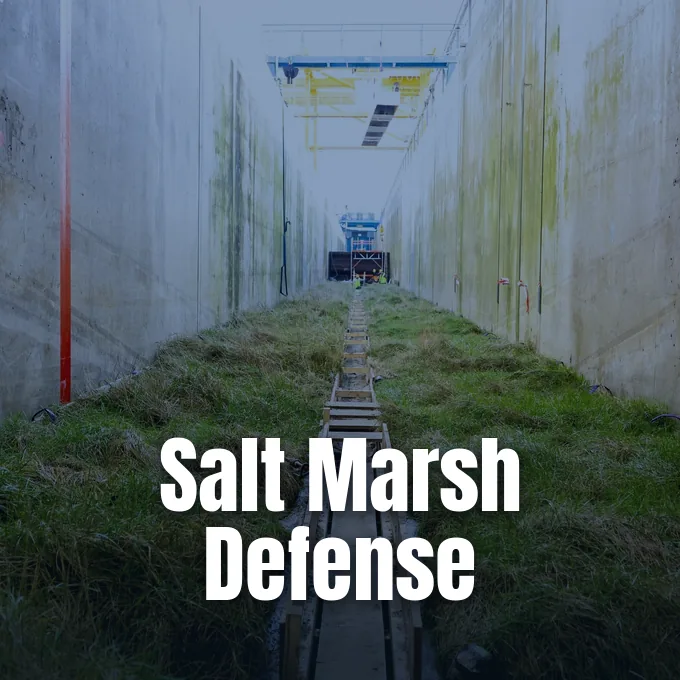
Dutch coastal researchers placed living wetland turf into a salt marsh wave machine to discover how well natural vegetation protects shores during violent storms. Water engineer Pim Willemsen and colleagues transported intact blocks from the Wadden Sea coast to Deltares in Delft, where they subjected the plants to artificial sea surges. The trial aimed to test conditions so rare that field measurements can take centuries to record. Instead of waiting for a disaster to hit the coast, the team brought the shore straight into the laboratory [1].
Why Researchers Used a Salt Marsh Wave Machine
Coastal defense in the Netherlands relies on tall concrete dikes engineered to survive extreme North Sea storms that statistically occur only once in a thousand years. Because such extreme weather strikes so infrequently along the coastline, scientists can’t easily measure how wild plants behave when massive storm surges push against the shore. Waiting for natural gales would leave flood models untested for generations. Willemsen and his colleagues chose to run a salt marsh wave machine test in Delft to observe turf under known storm pressures. Planners design those barriers to withstand rare surge events with statistical return periods of a thousand years or more. They wanted to learn whether flexible stems could absorb water power before surges hit earthen dikes. Bringing the wetland indoors allowed the team to measure wave forces with laboratory precision [1].
Rising seas and shifting storm patterns add urgency to flood defense research along low European coasts. As burning fossil fuels warms the atmosphere and pushes coastal ocean levels higher, static concrete seawalls face much heavier loads than original nineteenth-century builders ever planned. Willemsen said that hard engineering structures can’t adapt to changing marine environments on their own [1]. Marshes offer a flexible buffer that repairs itself between storms [2].
Prior laboratory work had looked only at modest waves below one meter in height. Those earlier laboratory trials confirmed that flexible stems dampen routine tides, but they left open whether wild vegetation snaps when water piles four meters deep during extreme weather. The test in the Delta Flume at Deltares closed that gap by testing North Sea gale conditions [2].
Moving 306 Square Meters to Delft
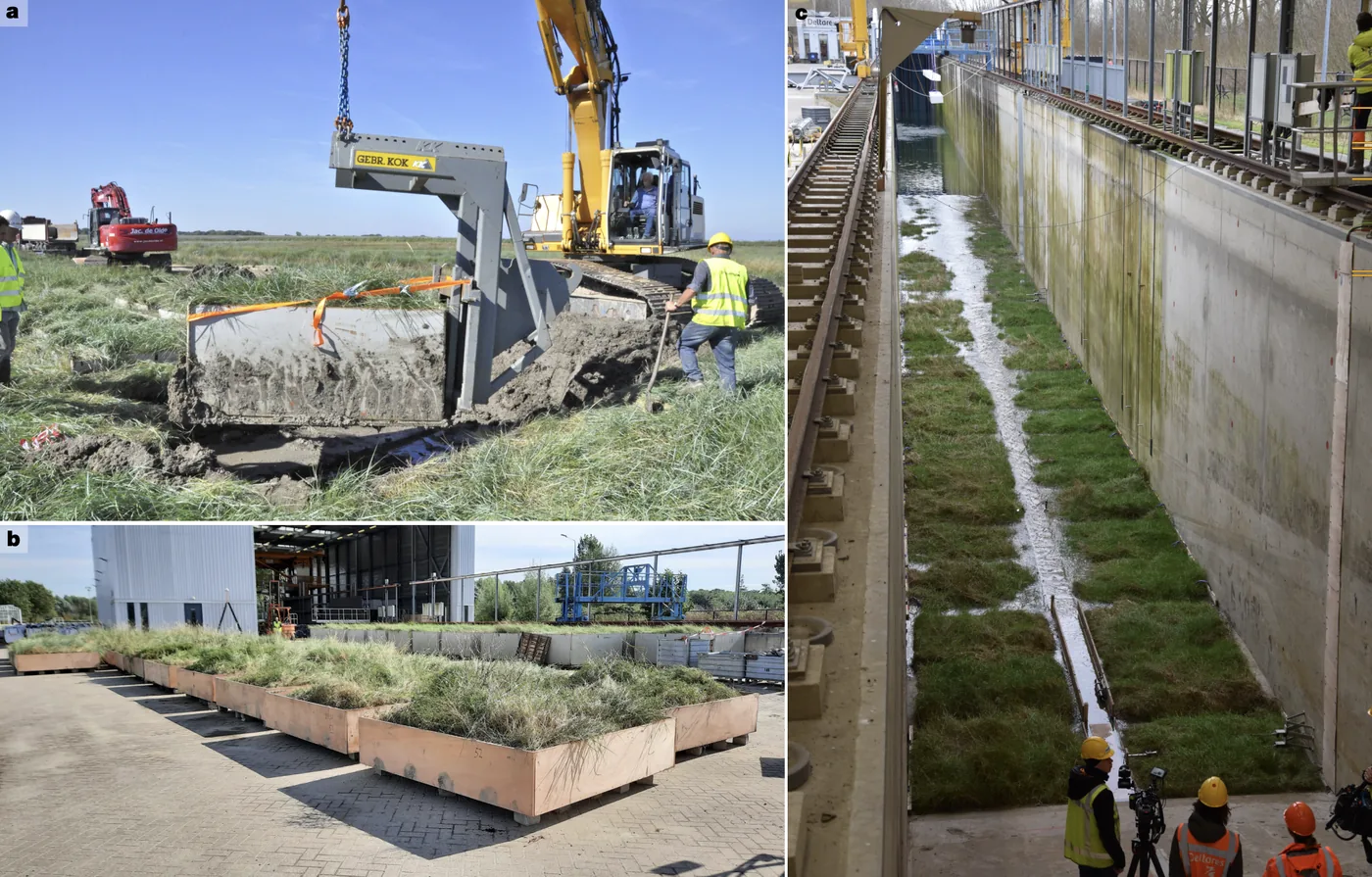
Extracting hundreds of tons of wild marsh without destroying the root network required weeks of careful labor in northern Friesland. In September and October 2023, the research team dug up 306 square meters of intact salt marsh from the Peazemerlannen nature reserve along the Dutch mainland Wadden Sea. Workers cut the ground into large sections, each including a soil chunk between 0.4 and 0.7 meters deep. They wanted the underground root mat and soil microbes to stay as undisturbed as possible. Preserving that natural soil density ensured the plants would react in the laboratory just as they do on wild tidal mudflats [1].
The excavated blocks were heavy, weighing between 3,000 and 6,000 kilograms apiece. Most of the green surface cover consisted of dense sea couch grass (Elymus athericus), with saltmarsh aster (Aster tripolium) and several hardy species of the genus Atriplex. The team loaded the heavy blocks into closed trucks for the 250-kilometer journey to Delft, protecting leaves from highway winds that could snap fragile stems before testing began [1].
Researchers weighed the turf blocks at regular intervals during transport to ensure the soil retained moisture. If the mud dried out during transit across the country, root grip would weaken and produce false readings inside the flume channel during high-velocity wave runs [1]. The blocks arrived in Delft with native vegetation intact, ready for installation on the tank floor [3].

Simulating Super-Storms in the Delta Flume
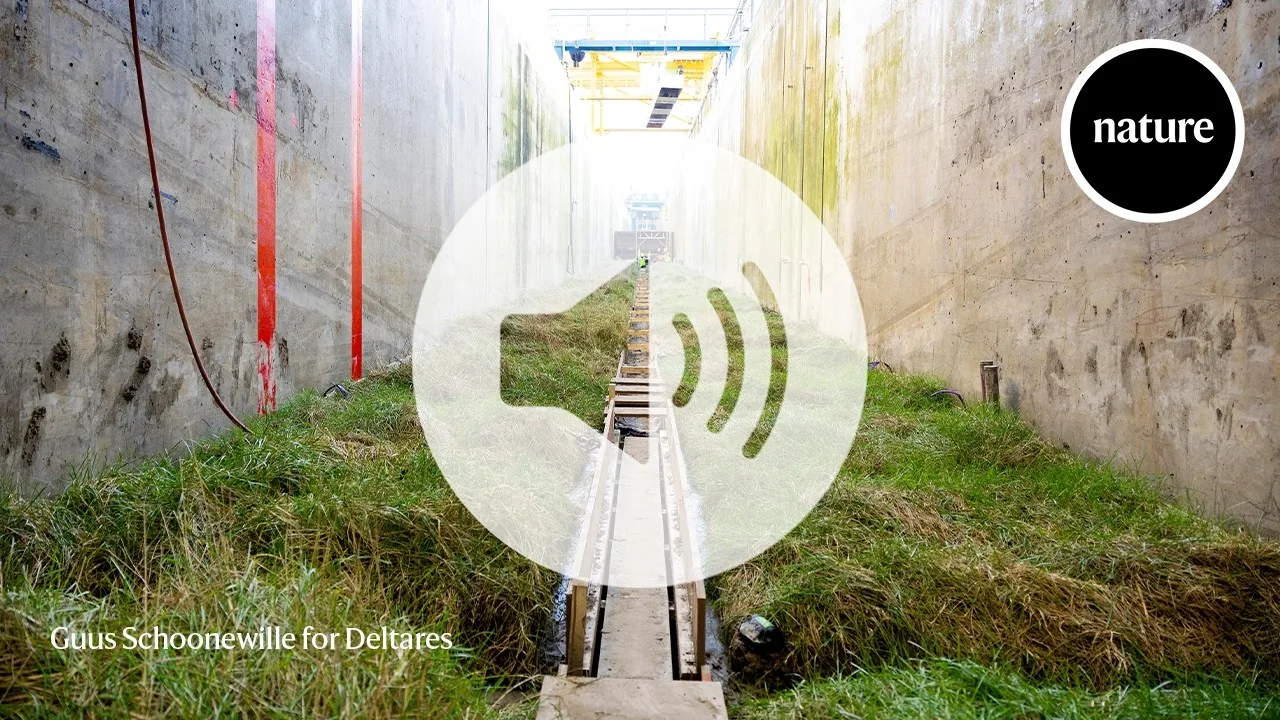
The Delta Flume at Deltares is a concrete channel 300 meters long, designed to produce the largest artificial storm waves of any marine research facility on Earth. Technicians installed the 306 square meters of living turf along the tank floor, positioning it to face simulated water depths of four meters [2]. A hydraulic wave paddle pushed water forward, generating wave heights that began at 0.75 meters and steadily grew to two meters. Because water levels and wave forces in the channel matched 100-year and 1,000-year storm surges, the experiment pushed the transplanted wetland into conditions that rarely occur in nature [1]. The flume allowed the team to witness extreme hydrodynamic forces under steady scientific monitoring [2].
Testing continued for 21 hours across multiple test runs, subjecting the turf to an unrelenting battery of artificial swells. Willemsen said the team had to recreate conditions that dikes are built for: “The dikes are designed to withstand a storm statistically occurring once every thousands of years. We cannot wait for that to happen in the field, so we had to bring the salt marsh to the storm” [1].
Instruments tracked wave velocity and surface height both upstream and downstream of the wetland patch. By comparing those synchronized wave measurements, scientists isolated the drag created by plant stems from the natural shoaling caused by the elevated mud platform beneath the canopy. That separation produced clear numbers on what live plants contribute when waves grow large [2].



Vegetation Damage Inside the Salt Marsh Wave Machine
Hours of pounding water caused damage inside the salt marsh wave machine, but the root foundation held firm against the surge. After the first wave run, the marsh lost about 33 percent of its above-ground plant biomass as stems snapped under the sudden impact of fast-moving water. By the end of the 21-hour test program, only 20 to 25 percent of the original above-ground biomass remained attached to the soil. Average stem lengths had dropped by 47 percent across the test beds [1]. High waves sheared off tender foliage and snapped older stalks, proving that storm vegetation suffers heavy physical strain when water depths increase [2].
Yet the most striking result came from the muddy ground beneath the battered vegetation. Despite enduring nearly a day of two-meter waves, the marsh platform lost only seven millimeters of sediment. The root network of Elymus athericus and companion species bound the silt together. Willemsen said the marsh bed proved even stronger than anticipated [1].
Live plants also carry a distinct advantage over concrete because damaged wetlands can regrow after winter storms pass. While cracked stone walls require heavy machinery and fresh cement to repair, marsh species like Aster tripolium sprout new leaves when warm spring weather arrives. The living buffer restores its canopy through natural growth [1].
Wave Attenuation Limits in Rough Water
The Deltares trial established clear boundaries for natural coastal buffers under different sea conditions. When incoming waves remained below one meter in height, the marsh absorbed up to 50 percent of total wave energy [1]. In those moderate conditions, intact stems created friction that blunted incoming swells and reduced wave heights by 15 to 20 percent before water reached the back of the tank. This performance confirms that healthy marshes offer effective defense against routine gales and smaller winter storms. But that protection depends on having an unbroken canopy of leaves to slow rushing water [2].
Protection weakened noticeably when waves climbed toward two meters. Once turbulent water snapped leaves and flattened stems, vegetation could no longer absorb energy at the same rate. For waves exceeding one meter, energy reduction dropped to ten percent or less [1]. The study in Nature shows that wetlands can’t provide an unlimited shield against super-storms [3].
Global hydrodynamic models based on the flume data show that local geography determines how much protection marshes deliver. On sheltered coastlines where wave heights stay modest during 100-year events, marshes cut incoming energy by 10 to 50 percent. On open shores exposed to deep ocean swells, vegetative dampening falls below ten percent [2].
Hybrid Coastal Defense for Rising Seas
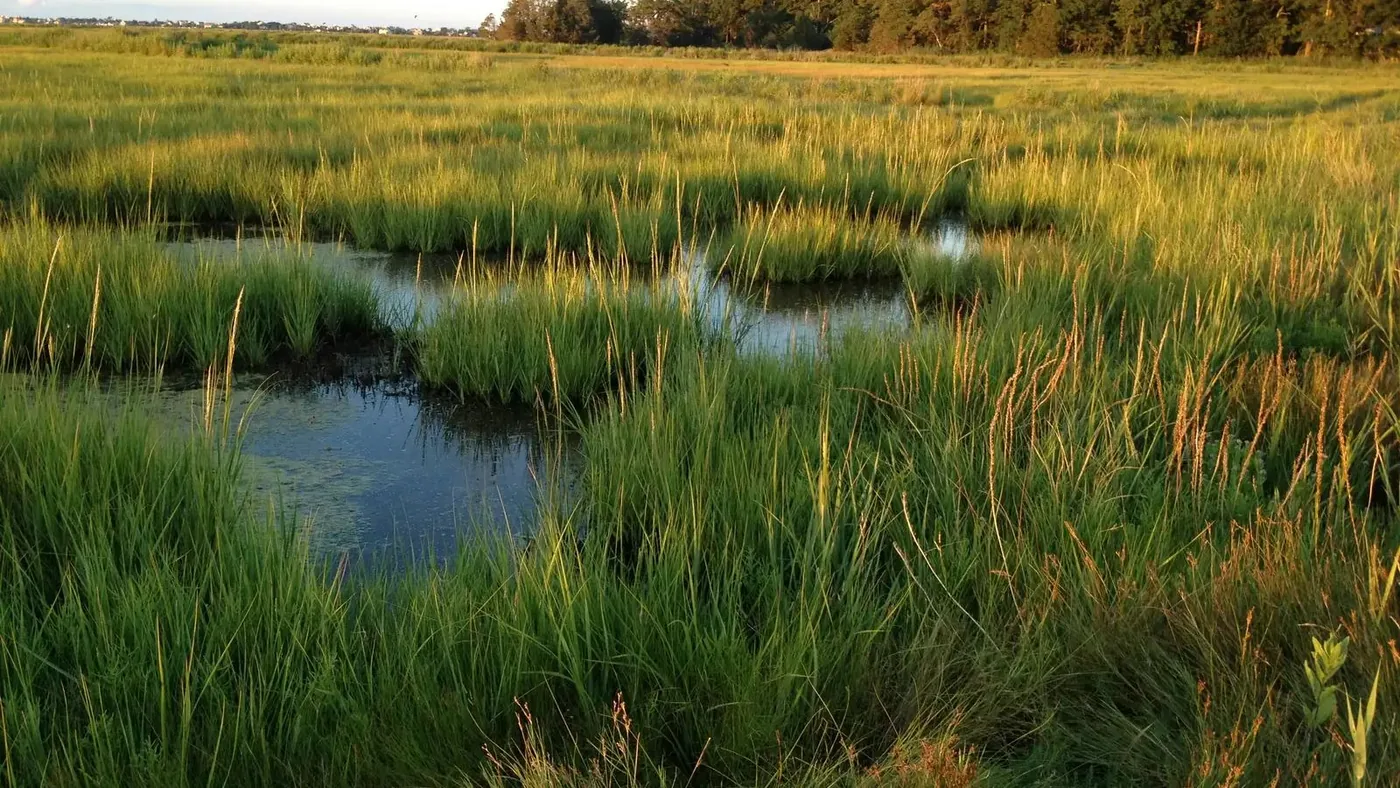
Rather than viewing nature and concrete as competing approaches, researchers advocate combining them into hybrid coastal defenses. Dikes remain necessary to stop high storm surges, but a healthy marsh sitting in front of a dike absorbs wave shock and lowers water velocity [1]. By shaving energy off incoming waves, the wetland reduces the force that concrete structures must withstand during a storm [2]. Willemsen said that pairing marshes with seawalls creates a flexible defense where dikes and wetlands reinforce each other. This combined approach gives coastal planners more options than relying solely on taller stone walls [1].
This hybrid strategy can also generate financial savings for low-lying nations. Raising dikes by several meters is costly, especially along densely populated shorelines where land is scarce. If a wide salt marsh reduces incoming wave heights by fifteen percent, governments might avoid adding height to existing dikes [1]. Preserving native wetland zones lowers maintenance budgets while protecting wildlife habitat [2].
The experiment proves that natural systems have measurable value when evaluated under realistic storm stresses. Empirical records from the salt marsh wave machine now give coastal engineers reliable numbers for flood planning [3]. As sea levels rise across the globe, restoring lost wetlands will help coastal communities adapt [1]. Even though wetland plants can’t stop extreme storm surges on their own, they give hard concrete defenses a much better chance of holding the line during catastrophic floods [2].
- ONLINE NEWS Cockerill, J. (2026). Scientists Transplanted 306 Square Meters of Wild Salt Marsh Into The World’s Largest Wave Machine And Let a Simulated Extreme Storm Rip. ScienceAlert. [Article Link]
- ONLINE NEWS Binder, M. (2026). Giant Flume Test Shows Salt Marshes Can Still Dampen Extreme Storm Waves. Travelbinger. [Article Link]
- ACADEMIC JOURNAL Willemsen, P. W. J. M., Mason, V. G., Zelst, V. v., van Bergeijk, V. M., Breteler, M. K., Muller, J. R. M., Dermentzoglou, D., Vouziouris, A., van Veelen, T. J., Dzimballa, S., Wijnberg, K. M., Hoitink, A. J. F., Buring, P., Paul, M., Antonini, A., Bouma, T. J., & Borsje, B. W. (2026). The contribution of salt marshes to wave attenuation during extreme storms. Nature. [Article Link]
- ONLINE NEWS Thompson, B. (2026). Scientists put a salt marsh in a giant wave-machine: here’s what they learned. Nature. [Article Link]
APA 7: PerEXP Teamworks. (2026, October 22). Deltares Tests Salt Marsh Wave Machine in Giant Flume Study. PerEXP Teamworks. https://perexpteamworks.com/en/salt-marsh-wave-machine-storm-test/


