



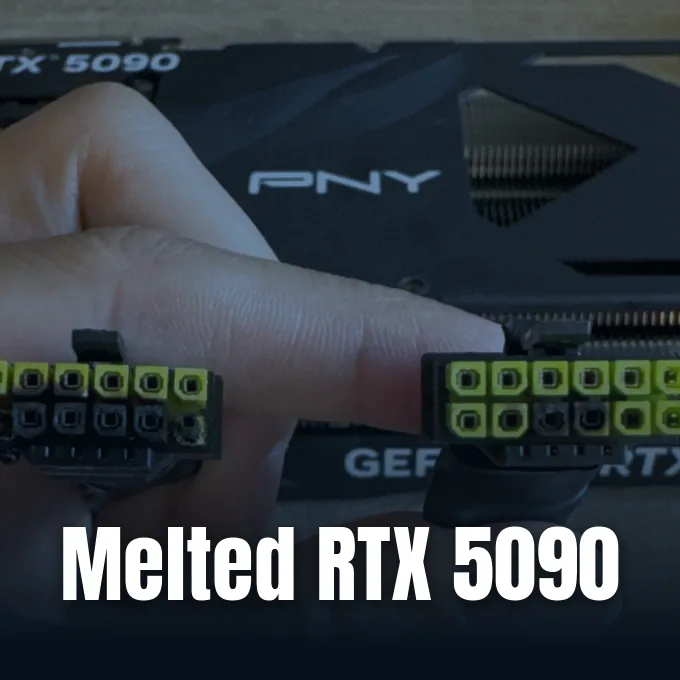
When a PC builder purchases a multi-thousand-dollar flagship graphics card, comprehensive warranty service is universally expected. That baseline confidence deteriorated rapidly for one desktop enthusiast when PNY reportedly refused a warranty return for a melted RTX 5090 on the grounds that the system utilized a native modular power cable. Reddit user /u/Melodic_Initial_1767 publicized the denial after discovering catastrophic connector damage despite operating the graphics card with factory firmware settings and a manually restricted power ceiling [2].
Reddit Report Details a Melted RTX 5090 Failure
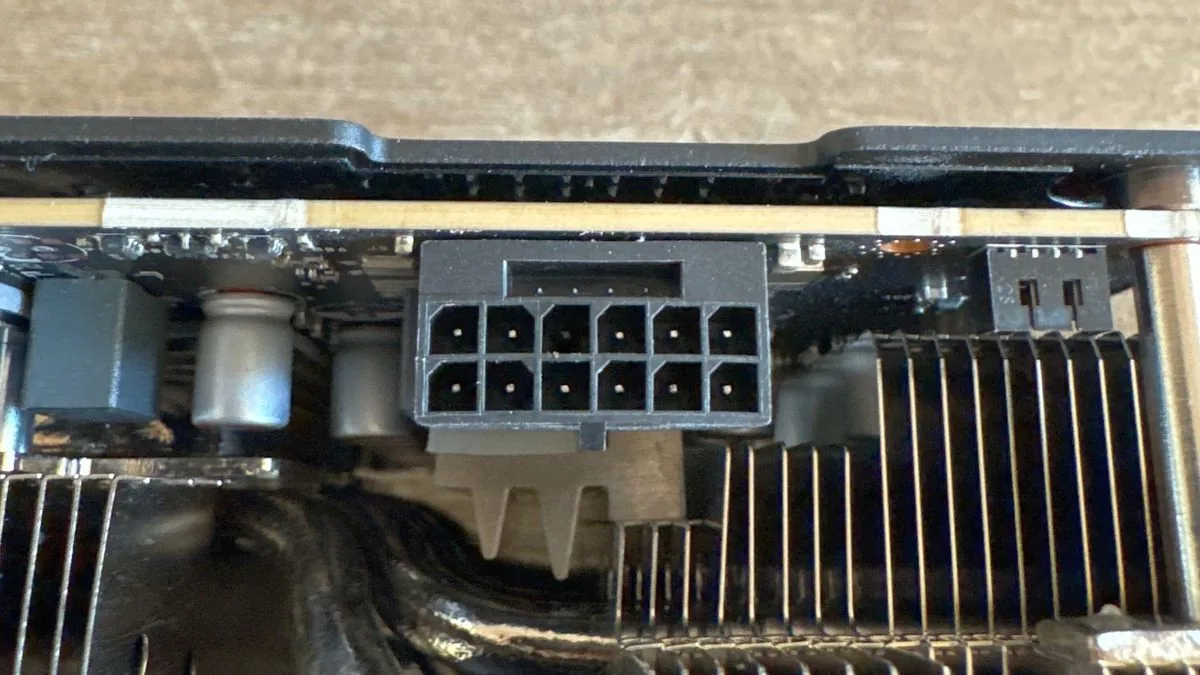
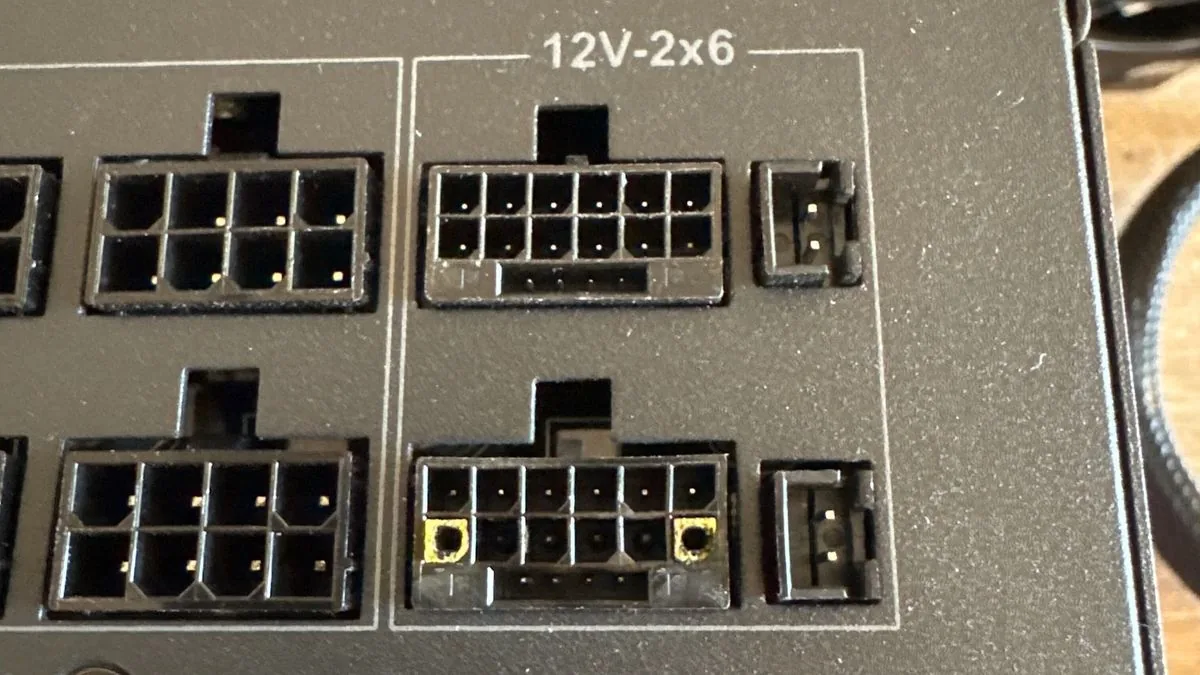
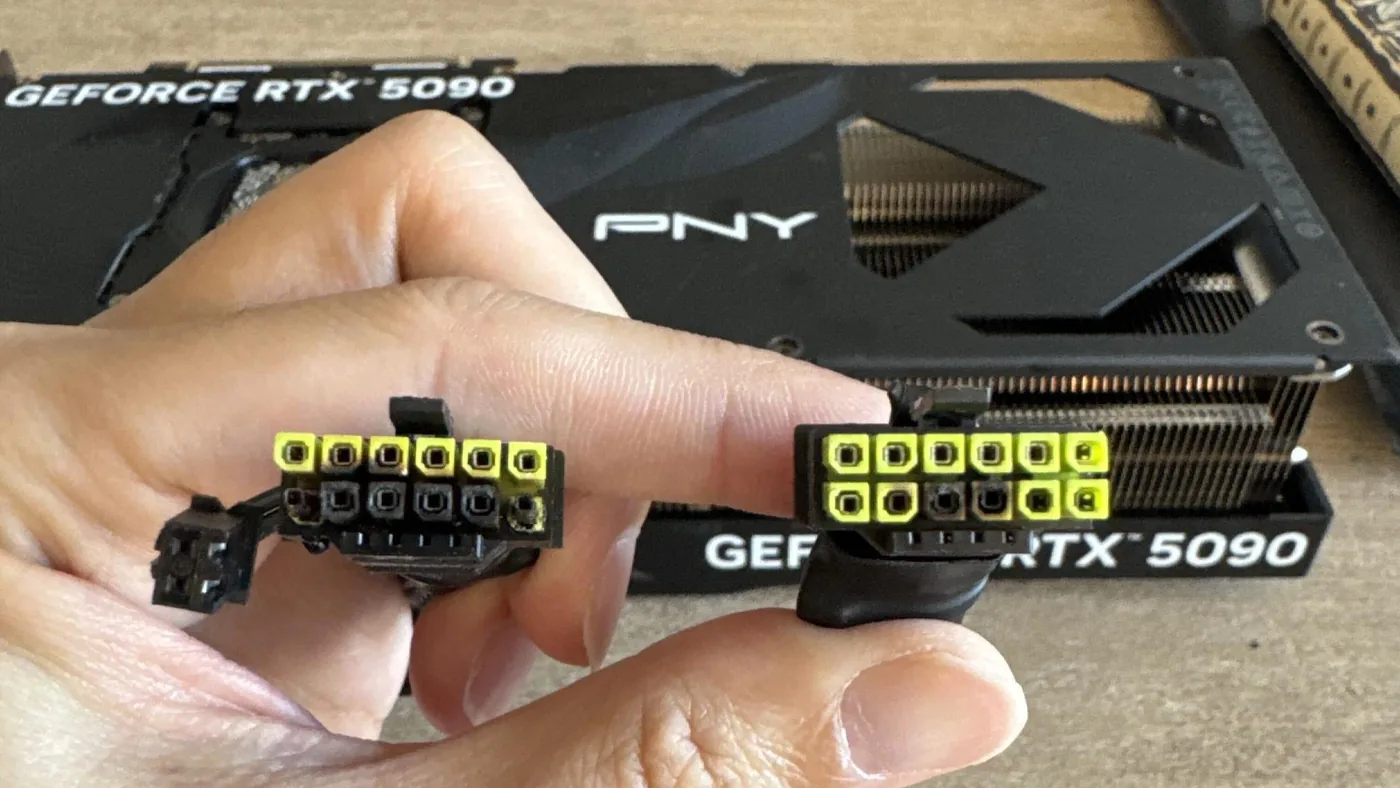
The customer purchased the PNY GeForce RTX 5090 in September 2025 before the hardware abruptly stopped operating in August 2026 after experiencing a melted RTX 5090 failure that disabled the entire rig. Upon disassembling the workstation chassis, the builder observed severe thermal distortion across the 16-pin power interface (the 12V-2×6 interface). Both cable connectors had melted. Heat degradation affected both the graphics card socket and the modular port on the power supply itself, leaving the motherboard entirely unable to detect the GPU [1].
According to the documentation shared on Reddit, the system remained at complete idle when the component failure occurred, eliminating concerns regarding extreme gaming loads or prolonged stress testing. The builder emphasized that the GPU ran exclusively on stock BIOS settings without custom voltage modifications or overclocking profiles, documenting how a melted RTX 5090 occurred without active software overclocking. The graphics card was completely dead. Under standard warranty procedures, catastrophic electrical failures generally prompt an expedited replacement from the board manufacturer, yet the initial support exchange yielded an unexpected refusal [2].
The user opened a formal support ticket with PNY the following morning. The company offered no replacement [2].
PNY Support Mandates Bundled Power Adapters
PNY customer support responded to the RMA submission by issuing an outright rejection based entirely on the specific power delivery mechanism used in the desktop build. The technical representative informed the customer that every PNY graphics card requiring a 16-pin input includes a manufacturer-approved bundled adapter inside the retail box (12VHPWR / 12V-2×6), designating that specific accessory as the sole configuration recognized under active warranty coverage. According to the official support message reproduced on Reddit, PNY explicitly refuses to accept graphics cards under warranty if thermal damage occurs while using third-party cables, adapters, or native power supply leads, asserting that connector melting or pin deformation falls under the sole legal responsibility of the power supply manufacturer [1].
Hardware enthusiasts across online communities questioned that restrictive justification because modern PC building conventions strongly favor high-efficiency native modular cables over unwieldy multi-plug adapter dongles. Why would an enthusiast invest in an ATX 3.1 modular power supply only to rely on an unwieldy adapter dongle? When the customer examined PNY’s official warranty terms and product literature, as reported by Tom’s Hardware, the documentation contained zero mention of any requirement to rely exclusively on bundled adapters. The included installation sheet simply directs builders to locate an available power lead within the chassis and plug it into the corresponding graphics card connector [2].
Seeking administrative clarification, the customer asked customer support which published contractual provision authorized the warranty denial, disputing PNY’s handling of the melted RTX 5090 warranty submission. A PNY Senior Technician replied that the corporate determination was final and dismissed the inquiry without citing an applicable contractual clause. The ticket was closed immediately [2].
Contradictory Guidance Over RTX 5090 Cable Melting
The customer dispute widened significantly after a second Reddit participant submitted an inquiry to clarify PNY’s policy before completing a new system build. As detailed by HotHardware, the prospective buyer asked whether running a native 12V-2×6 cable supplied by a brand-new modular power unit would invalidate their warranty coverage. A PNY support representative replied with direct permission: ‘You can use it if you wish’ [1].
A stark disparity between separate help tickets underscores an absence of unified internal guidance regarding RTX 5090 cable melting claims across company support channels. PNY’s public warranty portal guarantees graphics cards against manufacturing defects when used under normal operating parameters, yet representatives disagree on whether modular power leads satisfy that baseline standard, addressing the broader problem of a melted RTX 5090 across enthusiast builds [1]. Forcing customers to employ octopus-style adapter dongles introduces additional contact resistance and cable clutter, contradicting modern power delivery practices endorsed by leading enthusiast publications [2].
Public discussion accelerated rapidly as the Reddit thread approached 1,200 replies within days of the initial posting. The Reddit thread neared 1,200 replies. Experienced builders cataloged previous warranty friction with the brand, suggesting that undocumented technicalities unfairly penalize consumers during unexpected hardware failures. Without formal public clarification from corporate leadership, owners of a melted RTX 5090 face genuine confusion regarding their legal protections and repair entitlements [2].
Power Supply Protections Fail Under Scrutiny
Technical scrutiny throughout the community also focused heavily on the specific power hardware involved in the component breakdown. The Reddit user operated an ASRock PG-1600G power supply (a modular 1600-watt unit) designed specifically to handle high-wattage computing platforms. The unit incorporates dedicated hardware monitoring on the 12V-2×6 interface, marketed as TempGuard to halt electrical delivery if terminal temperatures exceed safe operational thresholds [2].
Despite those integrated thermal sensors, melting occurred on both ends of the modular cable without triggering an automated safety shutdown. Community members including Reddit contributor /u/dusto_man noted that ASRock provides a ten-year warranty on the PG-1600G, prompting recommendations that the owner file an RMA claim with the power supply maker directly, identifying root causes behind a melted RTX 5090 powered through native leads. If mechanical crimping defects or sensor failures caused the thermal spike, ASRock might possess the corporate leverage to challenge PNY over the damaged graphics processor [2].
The incident highlights the growing complexity of modern power standards across high-draw enthusiast components. When physical terminals burn on both ends, isolating whether the fault originated in socket pin alignment, terminal tension, or board trace layout proves extraordinarily difficult for consumers. The customer remains caught between competing hardware manufacturers while holding a melted RTX 5090 that cost thousands of dollars [2].

Market Shortages Complicate High-End Hardware Replacements
Beyond technical warranty wording, economic realities heavily influence how board partners handle catastrophic returns for flagship silicon. Retail availability for the GeForce RTX 5090 remains constrained globally, pushing street prices far beyond recommended manufacturer levels. Retail pricing currently sits at $4,400. Tech journalist Zak Killian observed that PNY may lack replacement stock, creating financial disincentives to fulfill customer claims when available inventory commands exorbitant market premiums [2].
Even if legal statutes limit vendor exposure to the original retail purchase figure (MSRP), issuing a cash refund of $2,000 or more represents a substantial expense for the graphics distributor. Tech analysts note that similar RMA denial patterns emerged across storage and memory sectors during historical component shortages [2]. While software developers concentrate on optimizing software workflows for the broader RTX 50 GPU generation, persistent hardware reliability concerns continue to dominate enthusiast forums [1].
Neither PNY nor Nvidia has issued a formal public statement clarifying whether third-party native cables officially invalidate warranty coverage for enthusiast graphics cards. Until manufacturers publish unequivocal, documented guidelines regarding power configurations, consumers operating a melted RTX 5090 face severe financial risks when navigating warranty claims. Preserving original adapters and documenting every step of hardware assembly remains essential for protecting multi-thousand-dollar PC investments [1].
- ONLINE NEWS Lilly, P. (2026, September 27). PNY Reportedly Denies Melted RTX 5090 Warranty Claim Over Lame Cable Rule. HotHardware. [Article Link]
- ONLINE NEWS Killian, Z. (2026, September 26). PNY allegedly refuses to cover melted RTX 5090 powered by native power supply cable — company closes user’s ticket when questioned on policy. Tom’s Hardware. [Article Link]


