





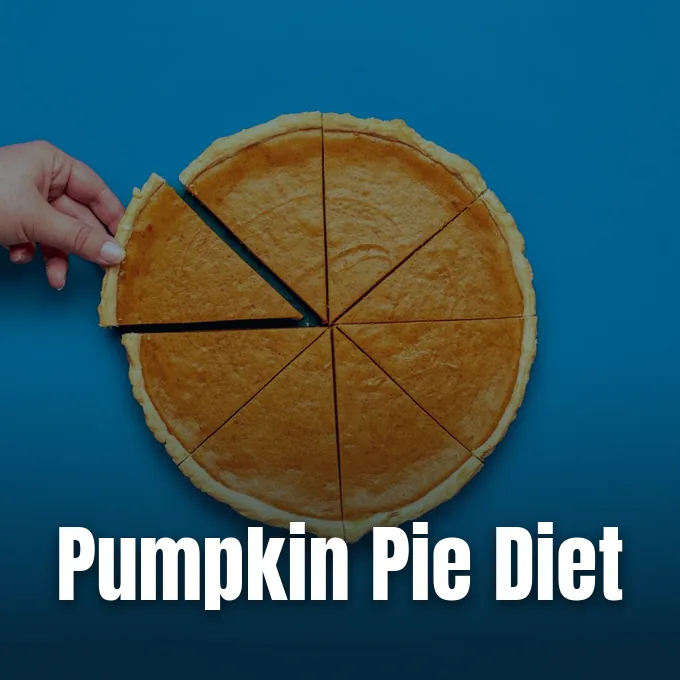
Holiday leftovers often tempt people into eating dessert for consecutive meals, but subsisting solely on baked goods produces measurable physiological strain. Medical specialists evaluated what occurs when an individual consumes an exclusive pumpkin pie diet for seven straight days, examining how concentrated sugar and fat alter basic organ function. While pumpkin pie provides certain plant pigments, relying on this single baked dessert disrupts daily glucose regulation, alters the intestinal microbiome within days, and promotes fat storage inside the liver [1].
Daily Calories and Added Sugar
A standard dietary model analyzed by medical researchers assumes an adult eating six slices of pumpkin pie each day to meet baseline caloric needs. According to nutritional data from the U.S. Department of Agriculture (USDA), one standard slice contains 323 calories and about 25 grams of sugar. Consuming six slices in twenty-four hours delivers 1,938 calories with 150 grams of daily sugar [1].
That volume of sugar diverges from accepted public health thresholds. The American Heart Association recommends that adults limit daily added sugars to no more than 6 percent of total caloric intake, which equals roughly 25 to 36 grams per day. Six slices exceed that clinical ceiling by four to six times, turning seasonal pastries into a persistent metabolic burden. Babak Orandi, an associate professor of surgery and medicine at NYU Grossman School of Medicine, explained that high-sugar and high-carbohydrate eating habits create recognized hazards for human health. “Broadly speaking, the metabolic effects of a high-sugar, high-carbohydrate diet is well established to be very unhealthy for cardiovascular health, liver health and overall well-being,” Orandi said, noting that such diets disrupt metabolic balance across several organ systems [1].
Nutritional Deficits on a Pumpkin Pie Diet
Beyond surplus sugar, an exclusive pumpkin pie diet creates nutritional deficits because the pastry lacks fundamental macronutrients. Christopher Damman, an associate professor of gastroenterology and medicine at the University of Washington, told Scientific American that recipes vary widely between bakeries and home kitchens, yet people still struggle to meet baseline nutritional needs on this regimen. USDA measurements show that one slice yields only 5.2 grams of protein and 2.4 grams of dietary fiber [1].
Eating six slices each day supplies 31.2 grams of protein and 14.4 grams of fiber, which falls far below daily targets for most adults. Pumpkin filling does provide specific micronutrients in high amounts. Damman said that people on this regimen get certain compounds “in spades,” pointing to vitamin A and carotenoids, the natural pigments responsible for giving pumpkin flesh its yellow-orange hue. But those specific gains do not compensate for deep deficits in other micronutrients. A diet built solely on pumpkin pie lacks vitamin C, vitamin B6, and vitamin B12, while providing very little magnesium, potassium, or zinc. Damman pointed out that while consumers receive plenty of saturated fat, they miss the fiber and protein necessary for tissue maintenance and digestive health [1].
Insulin Responses to Sugar Surges
Flooding the digestive tract with 150 grams of sugar each day forces the pancreas to react swiftly. As refined sugars from pie filling and sweetened crust enter the bloodstream, blood glucose concentrations climb quickly. The body must secrete large quantities of insulin to clear sugar from the circulation and transport it into body tissues. Orandi said that “your body is going to have to pump out a lot of insulin to bring that blood sugar down” [1].
This sharp hormonal demand sets off what clinicians describe as a blood sugar roller coaster. When heavy insulin surges pull glucose out of circulation quickly, circulating sugar plunges, causing acute fatigue and physical discomfort. Orandi noted that rapid rises and falls in blood sugar throughout the day leave individuals feeling tired and generally “lousy.” Because pumpkin pie contains minimal fiber to slow down carbohydrate absorption, glucose enters the system in steep spikes rather than the steady stream that complex meals produce. Eating six slices spaced throughout the day repeats this sequence after every meal, preventing blood sugar levels from ever reaching a calm baseline. Over seven consecutive days, constant hormonal cycling exhausts normal regulatory mechanisms, leaving people physically drained despite consuming abundant dietary calories across each morning and afternoon [1].


Liver Fat Accumulation via Lipogenesis
Surplus sugar that cannot be used right away for energy is diverted to hepatic tissue for chemical processing. Inside the liver, excess carbohydrates undergo a biochemical conversion known as lipogenesis, where liver cells convert circulating sugar into fatty acids. Orandi explained that during high-sugar intake, the liver works continuously to turn surplus carbohydrates into fat droplets that get deposited into liver tissue [1].
This accumulation happens much faster than many people assume. Orandi noted that if one were to examine hepatic tissue with a microscope, the earliest observable change on a pumpkin pie diet would be extra fat deposited inside the liver. Damman added that while a single week causes acute metabolic strain, maintaining such an unbalanced eating pattern over the long term could contribute to chronic disease. The heavy concentration of saturated fats in pie crust reinforces this risk by adding dietary fats on top of new lipids formed through lipogenesis. When an individual consumes 150 grams of sugar each day, the liver cannot process the surplus cleanly, initiating early structural shifts toward fatty liver changes within seven days [1].
Microbiome Shifts on a Pumpkin Pie Diet
The digestive tract houses trillions of microbes whose community composition mirrors what an individual eats every day. Damman said that “your gut bacteria reflects the diversity of your diet,” explaining that diverse foods foster diverse microbes while repetitive foods homogenize the microbiome. On a continuous pumpkin pie diet, bacteria that thrive on simple sugars and starches multiply quickly, while microbes requiring complex plant fibers wither away. Damman said this shifts internal flora toward what he termed a “pumpkin pie microbiome” [1].
These bacterial reorganizations take place surprisingly fast. A 2013 study published in the journal Nature showed that human gut microbes can undergo measurable population shifts in just a few days following a sudden change in diet. As sugar-loving strains displace fiber-fermenting bacteria, intestinal fermentation patterns change, leading directly to physical symptoms. Damman warned that “as those microbes shift, you’re going to feel some GI side effects,” citing bloating and diarrhea as likely digestive outcomes. A standard pumpkin pie lacks the varied fibers needed to nourish protective commensal bacteria, leaving the digestive tract prone to irritation and loose stools. When individuals eat only pie for a week, their internal bacterial ecosystem loses the resilience that comes from balanced, varied nutrition [1].
Sensory Fatigue from Monotonous Meals
Physical discomfort is not the only obstacle that emerges during a week of single-food eating. The human brain quickly tires of uniform flavors through a behavioral phenomenon known as sensory-specific satiety. Orandi described how initial pleasure deteriorates during consecutive meals, remarking, “I think the very first meal and maybe the second meal of pumpkin pie, you’ll be like, ‘Oh, this is great! This tastes so good! I’m happy’” [1].
That pleasure vanishes as repeated exposure dulls the reward response. Orandi noted that with each subsequent meal, individuals become sick and tired of the flavor and begin craving other foods. This psychological aversion works together with nutritional cravings as the body signals its need for sodium, protein, and savory nutrients. Even enthusiastic dessert lovers find that eating six slices of pumpkin pie each day turns a favorite holiday treat into an exhausting dietary challenge. Ultimately, seven days on this dessert-only regimen shows why seasonal pies belong as occasional holiday treats rather than the foundation of human nutrition [1].
- ONLINE NEWS Mogensen, J. F. (2026). What would happen to your body if you ate only pumpkin pie for a week? Scientific American. [Article Link]
APA 7: PerEXP Teamworks. (2026, November 29). Gut Microbes and Liver Fat Shift on a Pumpkin Pie Diet. PerEXP Teamworks. https://perexpteamworks.com/en/pumpkin-pie-diet-metabolic-effects/


