





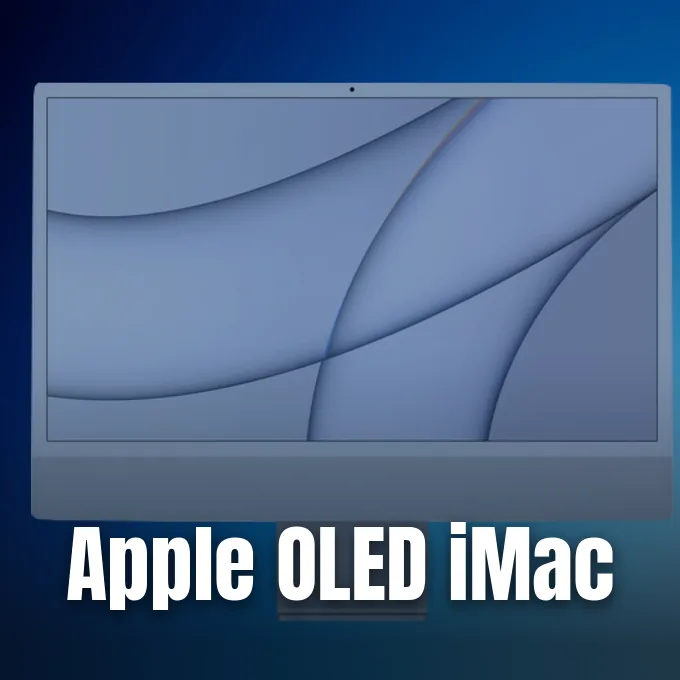
Apple is rethinking its display roadmap for an Apple OLED iMac, opening talks with Samsung Display about delaying or abandoning the desktop project as component costs stay high [2]. The review follows slower sales for OLED tablets and comes shortly after the company released its touchscreen MacBook Pro PROLED models in October. Supply chain reports indicate that Apple may postpone the all-in-one computer well past its earlier 2029 target or scrap the project altogether [1].
Supply Chain Talks over OLED iMac Delays
Talks between Apple and Samsung Display have centered on whether to postpone or shelve the desktop project, according to Korean industry publication The Elec. The situation remains fluid. While earlier roadmaps pointed toward a launch in 2029 or 2030, one industry official said talks about an Apple OLED iMac are currently “focused on delaying it while Apple determines demand” [1].
Apple originally planned a phased transition to organic diodes for its entire computing catalog. As reporter Ben Lovejoy outlined for 9to5Mac, Apple began its OLED transition with the Apple Watch before expanding the display panels to premium iPhones and iPads [2]. Yet all-in-one desktop systems face unique economics. Because the iMac sells in far smaller volumes than MacBook Pro laptops or smartphones, Apple can’t easily amortize custom fabrication tooling across tens of millions of retail shipments. If panel manufacturers construct dedicated assembly lines without guaranteed mass orders, each glass module carries a hefty price premium that could make consumer desktop computers prohibitively expensive [1].
Apple has now asked display suppliers, including Chinese manufacturer BOE, to prepare updated liquid-crystal display components for an iMac refresh expected around 2029. Sticking with LCD screens provides a stable supply chain while avoiding risky investments in oversized diode panels [1].
High Panel Costs and Weaker Tablet Demand
The main obstacle blocking the transition is the price of large glass substrates paired with rising memory costs in the personal computer sector. Apple launched its first tandem OLED tablet in 2024 with the iPad Pro, but higher retail prices discouraged buyers and led to immediate production cuts [1].
Production cuts followed shortly after the tablet arrived on store shelves. By October 2024, Apple slashed build targets from an initial peak of 10 million units down to 6.7 million units as consumer demand softened. That decline has rippled through Asian factories ever since. Industry forecasts compiled by MacRumors writer Hartley Charlton show Samsung Display and LG Display delivering roughly 4.9 million iPad Pro screens together in 2026, representing an 18% decrease compared to six million units in 2025. Separately, Samsung’s individual allocation will tumble from 2.1 million to 1.5 million panels, while shipments from LG Display are expected to slide from 3.9 million to 3.4 million units [1].
Apple previously expanded its display transition by preparing an OLED iPad Mini powered by the A20 Pro chip for compact tablet users. But seeing buyers hesitate before expensive screens has made executives cautious about bringing similar glass to consumer desktops [1].


Technical Hurdles in Apple OLED iMac Panels
Apple first approached Asian display suppliers in 2025 with precise hardware parameters for a 24-inch Apple OLED iMac panel. The specifications called for 600 nits of brightness with a sharp pixel density of 218 pixels per inch. In response, Samsung Display began engineering a quantum dot OLED panel at roughly 220 pixels per inch on its large-substrate fabrication lines, incorporating five separate light-emitting layers to boost panel longevity [1].
Manufacturing such complex glass proved daunting. While Samsung Display scheduled initial prototype shipments for late 2026, the high cost of multilayer quantum dot fabrication quickly alarmed product managers in Cupertino. Rival manufacturer LG Display had been preparing a competing white OLED panel with five emitting layers, but development work for the iMac has reportedly stopped. Without rival bids from LG Display to check component pricing, Apple lost vital supplier leverage [1].

Bloomberg analyst Mark Gurman reported that Apple continues experimental testing for both iMac and MacBook Air displays, without committing to an official release window. Laboratory evaluations continue even while commercial assembly plans stall [1].
Display Strategy Shifts Under John Ternus
The strategic rethink gained momentum after John Ternus took over as Apple chief executive officer in September [1]. Since assuming the leadership role, Ternus has scrutinized major hardware programs to determine whether costly component upgrades deliver sensible commercial returns [2].
Desktop computers occupy a sensitive spot in Apple’s portfolio. Earlier product strategies envisioned replacing IPS LCD panels with organic diodes throughout the Mac lineup, with an Apple OLED iMac targeted for creative professionals [2]. However, lukewarm demand for the OLED iPad Pro proved that consumers will not readily pay steep premiums merely for deeper contrast [3]. When a desktop machine serves primarily as a shared family appliance or school workstation, sharp price hikes inevitably depress hardware sales [2]. Ternus appears unwilling to burden consumer products with low profit margins [1].
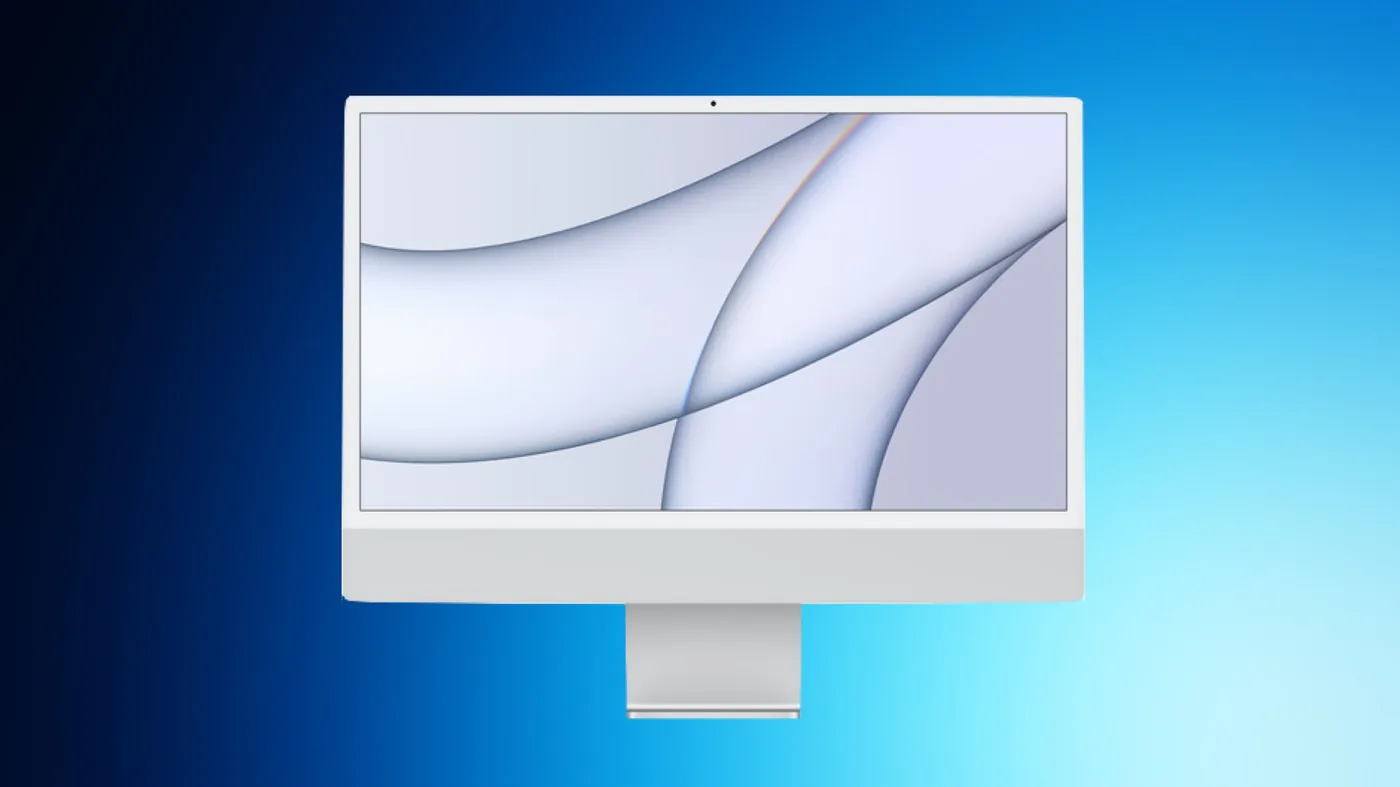
Apple is prioritizing practical retail pricing over luxury display technology. Turning to BOE for refreshed LCD panels allows Apple to preserve healthy operating margins while protecting entry-level buyers from unnecessary price spikes [1].
The Long Road from Kodak Research
The diode displays that Apple is evaluating trace their scientific lineage back through decades of laboratory research. Electroluminescence in organic materials was first documented during the early 1950s by French chemist André Bernanose and colleagues at Nancy-Université using acridine orange dye. In 1960, researcher Martin Pope and his team at New York University developed dark-injecting electrode contacts, later demonstrating direct-current electroluminescence on anthracene crystals doped with tetracene at 400 volts in 1963 [5].
Research advanced in international laboratories during the 1960s. In 1965, Canadian scientists Wolfgang Helfrich and W. G. Schneider at the National Research Council produced double-injection electroluminescence, while Dow Chemical patented phosphor configurations using anthracene, tetracene, and graphite powder. British researcher Roger Partridge built the first polymer diode at the National Physical Laboratory in the United Kingdom using polyvinylcarbazole films. A major practical development occurred at Eastman Kodak in 1987. There, chemists Ching Wan Tang and Steven Van Slyke devised a multilayer organic architecture that emitted bright light under low voltages, establishing the fundamental mechanism where individual pixels illuminate themselves without needing any liquid-crystal backlight. Pioneer deployed the technology for a car stereo in 1997, followed by Kodak launching a full-color digital camera display in 2003 [5].
Scaling that emissive diode technology up to a 24-inch computer panel requires complex active-matrix backplanes driven by millions of individual thin-film transistors [5]. Because manufacturing costs escalate with panel size, Apple remains reluctant to abandon reliable LCD displays until consumer demand justifies the expense [1].
- ONLINE NEWS Charlton, H. (2026, November 19). Apple May Cancel OLED iMac. MacRumors. [Article Link]
- ONLINE NEWS Lovejoy, B. (2026, November 19). OLED iMac plans may be cancelled by Apple for two reasons. 9to5Mac. [Article Link]
- ONLINE NEWS AppleInsider. (2026, November 19). iMac may never get an OLED screen as Apple reconsiders cost. AppleInsider. [Article Link]
- ONLINE NEWS HotHardware. (n.d.). Apple Could Cancel Its OLED iMac Over One Painful iPad Pro Lesson. HotHardware. [Article Link]
- WEBSITE Wikipedia. (n.d.). OLED. Wikipedia. [Article Link]


