






People receiving rituximab for relapsing-remitting multiple sclerosis face an increased risk of inflammatory bowel disease compared with patients on alternative disease-modifying therapies, according to a Swedish register study reported by Medical Xpress. Researchers led by Sandra Kallin examined nationwide health registers across Sweden over more than a decade, evaluating rituximab bowel disease occurrences among Swedish adults who had no previous history of intestinal inflammation. While relative odds climbed noticeably against comparator treatments, absolute incidence stayed low. Fewer than two in one hundred participants developed gut disorders over ten years of observation [2].
Swedish Registry Findings
The investigation, published in JAMA Neurology by scientists at Karolinska Institutet, provides the first systematic population-based cohort data tracking long-term gastrointestinal outcomes among individuals taking anti-CD20 biologics for multiple sclerosis throughout Sweden. Sandra Kallin led the analysis. Researchers gathered clinical files from the Swedish MS register between January 2011 and December 2023. They evaluated nearly 14,000 separate treatment episodes in adults aged 18 to 55 years, matching each participant to general population comparators while verifying ten years of hospital lookback records and five years of dispensed drug history [1].
Swedish neurologists Anders Svenningsson and Jan Lycke noted that clinicians frequently choose rituximab because the monoclonal antibody suppresses circulating B cells with durable efficacy. As rituximab became Sweden’s most prescribed therapy for relapsing disease, doctors began noticing unexpected cases of severe bowel inflammation. Previous medical literature offered only isolated case reports. Karolinska Institutet researchers Ola Olén and Charlotte Hedin joined Kallin to determine whether these gut complications represented coincidences or genuine drug risks [3].

Rituximab Bowel Disease and Other Therapies
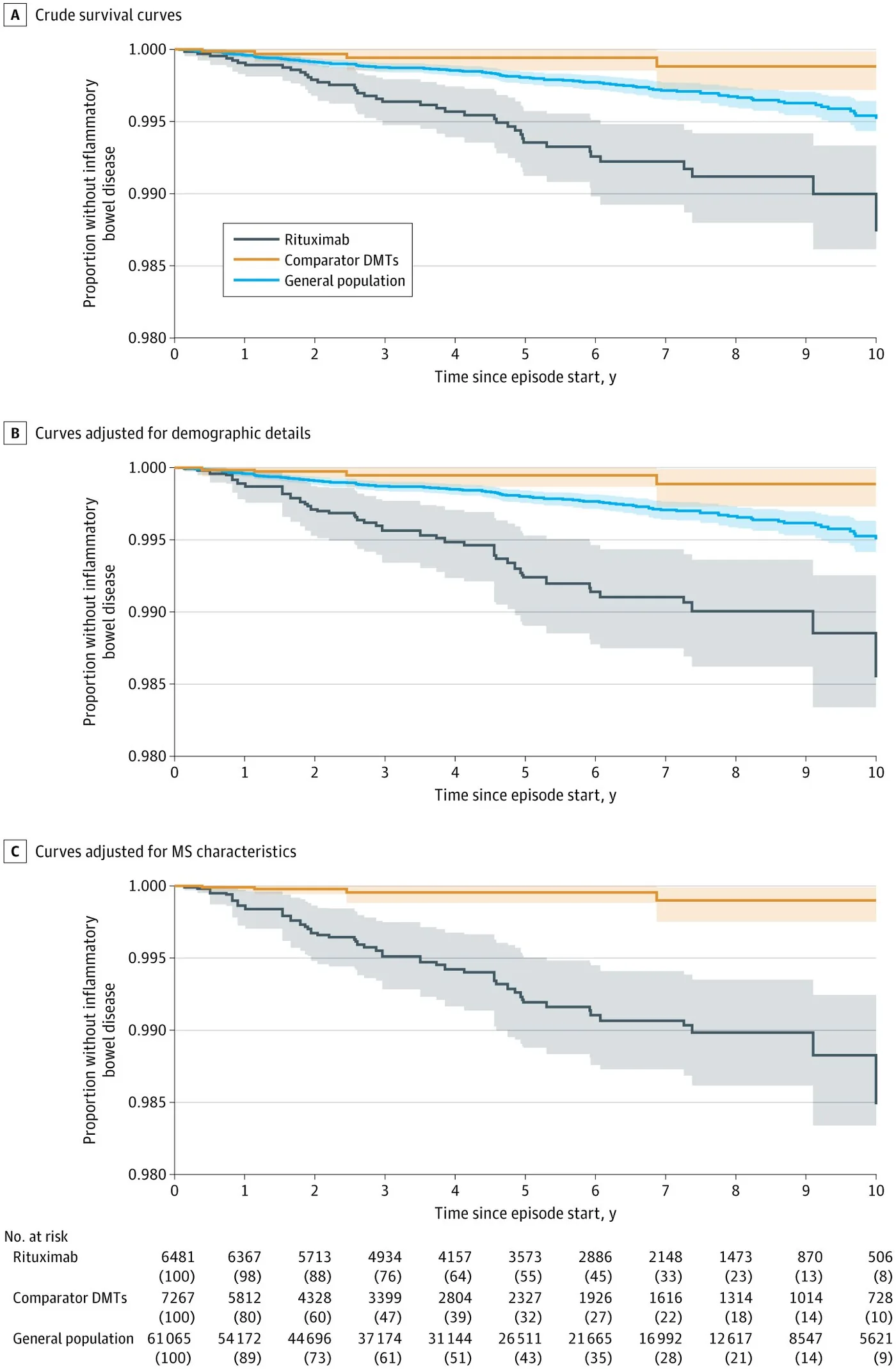
To evaluate whether elevated gut risks were unique to rituximab, the Swedish team examined three active comparator therapies: natalizumab, dimethyl fumarate, and fingolimod [3]. Each comparator agent works through separate biological mechanisms to protect the central nervous system against inflammatory attacks. When Kallin and her colleagues analyzed the register data, rituximab bowel disease occurrences emerged far more frequently than events documented in any alternative medication group, even after adjusting for differences in total patient follow-up duration [1].
After controlling for baseline health variables, the Karolinska Institutet team determined that rituximab carried a ten times higher relative risk of inflammatory bowel disease than comparator drugs [2]. This tenfold hazard surprised neurologists because natalizumab, dimethyl fumarate, and fingolimod produced no similar clusters of intestinal illness. The gap persisted across multivariable models. Swedish researchers concluded that B-cell depletion might alter mucosal barrier defenses in ways that alternative MS treatments do not [1].
Low Absolute Incidence and Crohn’s Cases
The absolute risk remained low. In the Swedish cohort, fewer than 2% of patients in any treatment group developed diagnosed inflammatory bowel disease (IBD) over ten years of follow-up [2]. In clinical terms, treating 131 people with rituximab instead of another medication over five years generated roughly one extra case of intestinal illness [3].
Most diagnosed cases involved Crohn’s disease [2]. This condition can strike anywhere along the alimentary canal from the mouth down to the rectum, causing deep transmural inflammation that triggers persistent diarrhea, sharp abdominal cramping, systemic fatigue, and unintended weight loss. Ulcerative colitis behaves differently. Damage from ulcerative colitis concentrates along the mucosal lining of the large intestine, whereas immunologists at Karolinska Institutet still seek to understand why B-cell depletion tilts intestinal inflammation toward Crohn’s pathology [1].


Why Do MS Patients Face Bowel Troubles?
Gastrointestinal complications trouble many people living with relapsing-remitting multiple sclerosis long before they ever begin disease-modifying therapy. Why do MS patients experience such frequent digestive disorders? Demyelinating lesions disrupt chemical and electrical messages passing between the brain, spinal cord, and enteric nervous system. When neural transmission falters, pelvic floor muscles fail to coordinate relaxation, and the colon suppresses its normal postprandial contractions [4].
Nerve signaling damage frequently produces chronic constipation, while impaired sphincteric reflexes can trigger sudden fecal urgency. Clinical records show that multiple sclerosis raises personal odds of an inflammatory bowel disease diagnosis by up to 50%, while people who first develop gut disease face matching odds of contracting multiple sclerosis later in life. Shared genetics offer another clue. Epidemiologists suspect shared hereditary traits and environmental triggers, including cigarette smoking and cold northern climates, foster this dual vulnerability [4].
Irritable bowel syndrome (IBS) affects approximately 20% of MS patients, a prevalence more than twice that observed across the general population. This functional disorder produces alternating bouts of diarrhea and constipation accompanied by painful bloating and intestinal spasms. Distinguishing pre-existing neurologic bowel dysfunction from newly emerging drug-induced mucosal inflammation remains an ongoing diagnostic challenge for clinicians managing Swedish MS patients [4].

Practical Steps for Rituximab Bowel Disease
Open communication between patients and clinical care teams matters when monitoring rituximab bowel disease symptoms during routine checkups. WebMD highlights structured guidance designed to get bowel movements back to normal and control diarrhea when digestive symptoms flare. Neurologists urge patients to report persistent changes in stool frequency, severe abdominal cramps, or unexpected weight loss. When loose stools occur, clinicians recommend oral rehydration using water, broth, or diluted fruit juices, alongside bland foods such as yogurt and pudding to protect sensitive intestinal tissues [4].
Simple daily adjustments often alleviate constipation without requiring immediate prescription laxatives. Gastroenterologists recommend drinking generous amounts of fluids throughout the day, noting that morning drinks like warm water, apple cider, or half a cup of prune juice gently stimulate peristalsis. Adding dietary fiber from fresh fruits, vegetables, and whole-grain breads expands stool volume, and patients can mix two to four tablespoons of unprocessed wheat bran into morning cereal, applesauce, or casseroles [4].
Routine bathroom timing helps. Neurologists recommend visiting the toilet shortly after meals because eating activates the natural gastrocolic reflex that prompts spontaneous colon contractions. Specialists advise patients against letting more than two to three days pass between bowel movements, noting that gentle physical activity stimulates gut motility, while persistent difficulties warrant a gastroenterology consultation rather than stopping MS prescriptions unassisted [4].

Treatment Choice in Clinical Practice
The Swedish register data provides neurologists with concrete evidence to weigh adverse gut events against proven neurological benefits. Study senior author Peter Alping, a clinical researcher at Karolinska Institutet’s Department of Medicine, Solna, addressed this balance in comments released through The National Tribune [3]. “This is the first large study to quantify the risk of inflammatory bowel disease associated with anti-CD20 treatment for MS,” Alping said. “The results show that this is a potential adverse effect that should be considered when choosing an MS treatment. At the same time, the increased risk needs to be weighed against the benefits for the individual patient. Anti-CD20 drugs are among the most effective treatments for preventing MS relapses,” he added [2].
Because rituximab offers robust protection against clinical relapses and disability progression, neurologists in Sweden and internationally do not recommend discontinuing anti-CD20 therapies over modest absolute bowel risks. Instead, Kallin and Alping suggest that clinical teams should screen patients for family histories of Crohn’s disease before starting therapy, while investigating persistent digestive complaints without delay. By combining strong neurological protection with alert gastrointestinal surveillance, doctors can continue using rituximab effectively while minimizing serious intestinal harm [1].
- ACADEMIC JOURNAL Kallin, S., Svenningsson, A., Olén, O., Hedin, C., Lycke, J., & Alping, P. (2026). Risk of Inflammatory Bowel Disease After Anti-CD20 Treatment in Multiple Sclerosis. JAMA Neurology. [Article Link]
- ONLINE NEWS Karolinska Institutet. (2026, October 22). Common multiple sclerosis treatment linked to bowel disease risk. Medical Xpress. [Article Link]
- ONLINE NEWS The National Tribune. (2026, October 22). Common MS Treatment Linked To Bowel Disease Risk. [Article Link]
- WEBSITE WebMD Editorial Contributors. (2024, December 12). Bowel Problems Linked to Multiple Sclerosis. WebMD. [Article Link]
APA 7: PerEXP Teamworks. (2026, October 23). Karolinska Researchers Link Rituximab to Bowel Disease in MS. PerEXP Teamworks. https://perexpteamworks.com/en/rituximab-bowel-disease-ms-risk/


