



Does advanced genomic sequencing finally resolve one of the earliest paternity disputes in American history? For more than two centuries, scholars fiercely debated whether Thomas Jefferson fathered children with Sally Hemings at his Monticello plantation. Now, a comprehensive fifteen-year investigation conducted by researchers at the Smithsonian Institution reports extraordinary genomic proof connecting Jefferson to living descendants through Sally Hemings DNA comparisons. Statistical modeling evaluated by the laboratory demonstrates that the odds surpass 99.9 percent that Jefferson fathered Madison and Eston Hemings [1].
The Deathbed Hair Lock and Follicle-Free DNA
Smithsonian investigators directed by Richard Kurin of the Smithsonian’s National Museum of American History initiated their project with three light-red hairs. Those three strands were preserved within Jefferson’s personal Bible and offered an initial opportunity to recover authentic genetic material. Subsequent mitochondrial testing rapidly proved that those specific Bible specimens did not belong to Jefferson or to any member of his immediate maternal lineage. Researchers immediately sought alternative historical specimens. Curators subsequently located a separate, well-documented lock of hair reputedly clipped directly from Thomas Jefferson at his Monticello residence following his death in 1826 [1].
Historical hair shafts rarely retain the root follicles necessary for conventional genomic extraction methods. Standard crime laboratories and academic facilities routinely depend on the follicular tag to isolate nuclear DNA (the comprehensive genetic blueprint housed inside the cellular nucleus), leaving rootless shafts severely constrained. To circumvent this biological limitation, geneticists implemented advanced extraction protocols engineered to recover damaged, low-quantity nuclear sequences from degraded keratin shafts without requiring intact cellular root structures. Such methods revolutionize forensic science. Applying these sensitive protocols to the 1826 deathbed artifact, the Smithsonian research team successfully reconstructed Jefferson’s complete nuclear genome for scientific comparison [1].
Genomic baseline data established the foundation for evaluating surviving family lineages. Laboratories could now compare ancient presidential chromosomes with living descendants through Sally Hemings DNA lineages [1].
Simulating Paternity Across Five Generations
Geneticists assembled a descendant cohort spanning more than a dozen individuals across fifth-generation branches of the Jefferson and Hemings family trees. Fifth-generation relatives represent the outer boundary of genealogical feasibility for autosomal detection, retaining an average of approximately 3.1 percent shared ancestry with their eighteenth-century ancestors. The investigative cohort incorporated nine direct descendants traced to Sally Hemings through her sons Madison and Eston, as well as two descendants of Jefferson’s daughter Maria. Investigators also gathered comparative genetic samples from two descendants of Thomas Jefferson’s brother, Randolph Jefferson [1].
Computational analysts evaluated these biological relationships by running more than 20,000 simulated paternity scenarios across varying inheritance models. These exhaustive mathematical simulations revealed that the empirical probability that Thomas Jefferson was not the biological father of Madison and Eston Hemings fell below 0.1 percent. The statistical proof was overwhelming. Intriguingly, the specific descendant who exhibited the greatest proportion of Jefferson-like genetic sequences traced their lineage directly through Sally Hemings rather than through Jefferson’s marriage to Martha Wayles [1].
How do geneticists ensure that intricate ancestral signals are not distorted by random generational drift across two centuries of biological inheritance? Statistical algorithms clarify complex organic patterns across modern life sciences, functioning much like computational inquiries where Alan Turing’s mathematics describes microscopic movement to interpret physical structures that cannot be analyzed through simple observation alone. By testing thousands of alternative familial configurations, the algorithmic model eliminated chance matches and confirmed direct paternal transmission from Jefferson [1].
Evaluating Sally Hemings DNA Evidence at Monticello
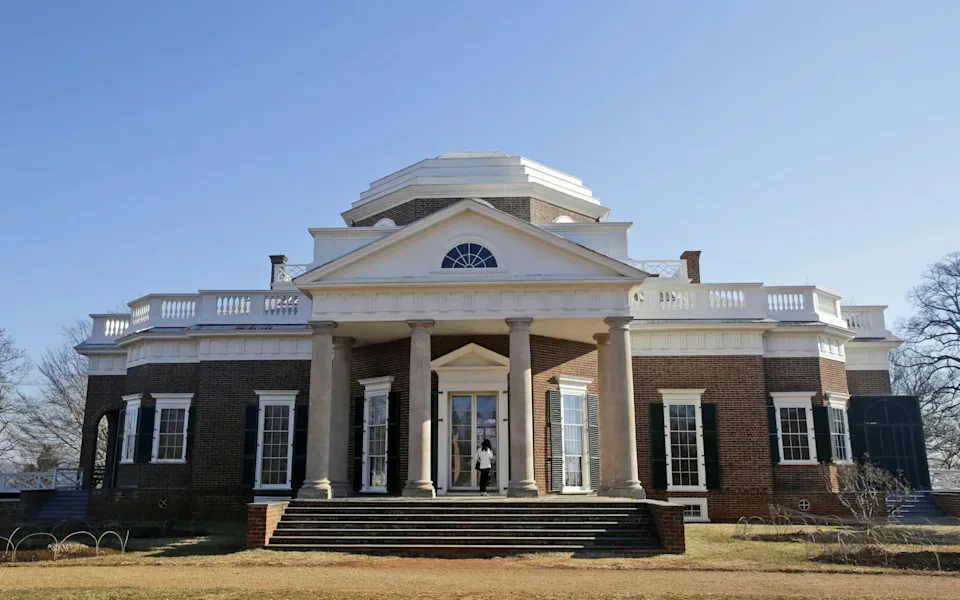
Interpreting Sally Hemings DNA discoveries demands rigorous historical context regarding the institutional power imbalances of chattel slavery in early Virginia. Thomas Jefferson held hundreds of human beings in bondage at Monticello, commanding complete authority over their bodies and family lives. Historical archives confirm that Sally Hemings lived as an enslaved domestic worker who possessed no civil rights, was reportedly sixteen when impregnated, and remained legally unfree until her death. Under colonial Virginia legislation, children born to enslaved mothers automatically inherited their mother’s unfree legal condition [1].
For generations, political biographers resisted claims of presidential paternity, presenting Jefferson’s private life through sanitized portraits that omitted enslaved families. That institutional stance shifted fundamentally in 2018 when the Thomas Jefferson Foundation officially declared that Jefferson fathered Sally Hemings’s children, designating the relationship a settled historical matter. Smithsonian genomic evidence now substantiates that administrative consensus by supplying molecular measurements where scholars previously depended on fragmented plantation ledger entries [1]. Molecular biology transformed an ideological argument.

Rigorous biological verification parallels protocols applied in modern tissue laboratories, comparable to investigations in cellular analysis of mammalian tissue where physical specimens provide empirical grounding that documentation alone cannot supply. By anchoring historical narratives in verifiable molecular facts, the Smithsonian analysis links plantation archives with twenty-first-century genomic technology at Monticello [1].


Oral Histories and Early Genetic Precedents
Long before modern genomic laboratories extracted DNA from degraded keratin fibers, living descendant testimony preserved the true history of Monticello. In an 1873 newspaper interview, Madison Hemings explicitly documented his parentage, recording that his mother gave birth to five children fathered by Thomas Jefferson. Despite this unambiguous firsthand testimony from an educated descendant, conventional twentieth-century historians systematically dismissed the narrative, attributing paternity to other white plantation overseers or Jefferson’s nephews without supporting documentation. Scholarly resistance fractured in 1998 when a milestone genetic investigation published in the prominent journal Nature analyzed Y-chromosome markers obtained from surviving Jefferson and Hemings family lineages. A subsequent investigative report issued by the Thomas Jefferson Foundation in 2000 affirmed that Jefferson was likely the biological father of Hemings’s youngest son, Eston [1].
Nevertheless, the pioneering 1998 Y-chromosome analysis suffered from inherent biological limitations that left room for persistent scholarly skepticism. Because male Y-chromosomes pass across generations without genetic recombination, that early investigation could not distinguish Thomas Jefferson from his brother, Randolph Jefferson, who shared identical paternal markers. Skeptics seized upon that ambiguity. They argued that other male Jefferson relatives residing in Albemarle County could have fathered the children during visits to the Monticello estate [1].

Autosomal sequencing resolves that generational debate by comparing non-sex chromosomes that recombine in every reproductive cycle (halving maternal and paternal contributions). Because autosomal chromosomes dilute systematically across generations, the high percentage of shared Jefferson DNA identified in Sally Hemings DNA samples excludes distant uncles or collateral relatives. This comprehensive nuclear analysis elevates ancestral oral history into an empirically verified genealogical record recognized across major historical institutions [1].
Peer Review Debates and Descendant Withdrawal
Despite the triumphant announcements surrounding the Smithsonian discovery, serious ethical and procedural controversies emerged behind the institutional fanfare. The research findings are slated to appear in a trade publication titled History by a Hair: Thomas Jefferson, Sally Hemings & Solving a 200-Year-Old Mystery. Written by Richard Kurin and published through Crown (a commercial imprint of Penguin Random House), the volume carries prominent endorsements from historians Jon Meacham and Annette Gordon-Reed. The Smithsonian organized an official launch celebration with invited descendants to coincide with the book’s scheduled release on September 22 [2].
However, Sally Hemings’s oldest living descendant, Mary Brady-Atkins, abruptly withdrew her participation and legal consent from the Sally Hemings DNA study on August 24. Brady-Atkins is a 98-year-old great-great-great-granddaughter of Sally Hemings and a retired Michigan State University professor with a doctoral degree in psychology. Drawing on five decades of professional academic experience, Brady-Atkins criticized the Smithsonian leadership for releasing startling scientific claims in a commercial book before completing independent journal peer review. She condemned this reversed sequence. Standard scientific convention dictates submitting primary data to peer-reviewed journals so outside scholars can test methodology before marketing conclusions to the public [2].

Why should scientific institutions bypass peer-reviewed journals when publishing monumental discoveries that rewrite the genealogical heritage of enslaved American families? Brady-Atkins voiced profound disappointment that Kurin withheld an advance copy of the text, leaving her uninformed regarding how her family narrative was framed. Separately, a Jefferson descendant voiced similar misgivings regarding publication strategies to the nonprofit association managing the Monticello family graveyard [2].
Historical Reckoning and the Limits of Ancestry
Scholars and descendant communities continue to evaluate the technical boundaries inherent in two-hundred-year-old biological reconstruction projects. Independent researchers emphasize that working with degraded keratin specimens clipped in 1826 introduces delicate provenance questions, particularly when calculating faint autosomal signals (averaging roughly 3.1 percent) across five generations of descent. While statistical simulations demonstrate high mathematical confidence, genealogical genetics invariably operates through probability thresholds rather than absolute certainty regarding individuals who lived centuries ago [1]. Historical genetics requires ongoing scholarly caution.
Beyond the immediate paternity debate, the technological achievement of extracting nuclear DNA from rootless hair carries transformative implications for historical anthropology and modern forensic investigation. Museums worldwide house centuries-old locks of hair from prominent historical figures, relics that may now yield complete genomes without suffering physical destruction. These laboratory advances allow researchers to investigate enigmatic historical lineages while shedding empirical light on long-suppressed chapters of the American past [1].
Ultimately, the genomic examination of Sally Hemings DNA transcends individual presidential biography to illuminate how institutional slavery shaped the foundational fabric of the United States. By confronting molecular evidence of paternity together with archival records, American historians must reconcile celebrated ideals of universal liberty with the lived realities of enslaved human beings. As cutting-edge genomic tools continue to mature, the physical remnants of the past will increasingly demand an unsparing historical reckoning [1].
- ONLINE NEWS Blumenthal, E. (2026, September 19). Smithsonian DNA Study Says Jefferson Likely Fathered Sally Hemings’s Children — Book Details 15-Year Investigation. CRBC News. https://www.crbcnews.com/articles/6aae220ee6331080d88c5e84 [Article Link]
- ONLINE NEWS Lee, S. M. (2026, September 17). Sally Hemings’s oldest descendant gave the Smithsonian her DNA. Stephanie M Lee. https://stephaniemlee.substack.com/p/sally-hemingss-oldest-descendant [Article Link]
- ONLINE NEWS The New York Times. (2026, September 18). Two Centuries On, Smithsonian Connects Jefferson’s Hair to Hemings’s Children. The New York Times. https://www.nytimes.com/2026/09/18/arts/thomas-jefferson-sally-hemings-smithsonian-hair.html [Article Link]
- ONLINE NEWS Jarayid. (2026, September 18). Smithsonian links Jefferson’s hair to Hemings’s descendants. Jarayid. https://jarayid.com/en/america/1737434/smithsonian-links-jeffersons-hair-to-hemingss-descendants [Article Link]
APA 7: TWs Editor. (2026, September 20). Smithsonian Links Sally Hemings DNA to Thomas Jefferson. PerEXP Teamworks.


