






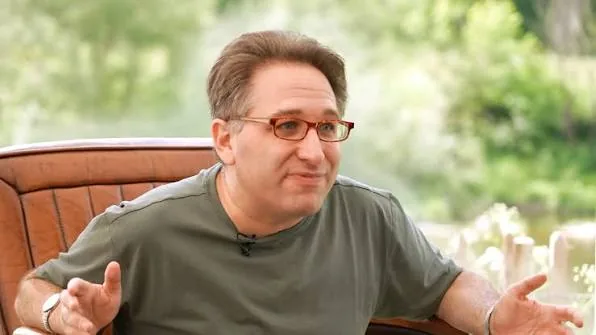
Theoretical computer scientist Scott Aaronson stated on Wednesday that he is “virtually certain” leading AI laboratories hold undisclosed results capable of breaking widely deployed cryptography [1]. Aaronson, a professor at the University of Texas at Austin and director of its Quantum Information Center who spent two years researching AI safety theory at OpenAI, posted the comments on his blog, Shtetl-Optimized [4]. The debate around Scott Aaronson RSA remarks quickly spread as researchers debated whether unreleased algorithms could threaten public-key infrastructure [2]. Aaronson said he feels confident major discoveries exist, but cautioned that he has not reviewed technical details from lab staff [1].
Scott Aaronson RSA Claims
The debate grew when Aaronson published a blog post on November 25 titled with repeated expletives, telling readers that new math results from frontier teams would include algorithms capable of breaking current cryptosystems [4]. Colleagues had spent days asking him about rumors circulating through the computing field. “Because people have been hounding me about it: yes, I’m virtually certain, from multiple reliable sources, that the AI labs are now sitting on one or more bombshells in that area,” Aaronson wrote. He added that he feels “much, much less confident” about the exact nature of those discoveries until he sees full papers or speaks in person with laboratory staff [1]. Aaronson also warned that specific claims may have been distorted through informal industry chatter [4].
He worried that key algorithmic details had been mangled in a game of telephone [4]. The public chatter began after a comment Aaronson left on his blog on Tuesday, where he mentioned persistent rumors about factoring large numbers [1]. Andrew Curran posted on X that such a result would crack RSA encryption, sparking debate. That single post sent the Scott Aaronson RSA rumor across developer feeds [2].
Aaronson quickly updated his post to push back against extreme interpretations. “A rumor is a rumor is a rumor, and the parts that I’m ‘virtually certain’ about fall well short of Factoring in P,” he wrote [1]. His reputation for deflating overhyped claims about quantum computing gave his caution unusual credibility among mathematicians [4]. Rumors are not proofs [1].
Prime Factors and Web Security
The concern surrounding integer factorization stems from its role as the mathematical backbone of digital security. RSA encryption protects banking systems, online shopping portals, and government communication networks by relying on the difficulty of finding prime factors for very large numbers. A classical polynomial-time algorithm, often called Factoring in P, would allow standard computers to solve that problem quickly without needing quantum hardware. Public web security assumes that finding those prime factors takes centuries [3].
Google published a paper on Wednesday through its Cogentic system presenting a proven fast factoring algorithm, but Aaronson said it offered theoretical interest instead of a practical decryption tool [1, 4]. Other scientists reported hearing broader claims. Ledger Chief Technology Officer Charles Guillemet said he had heard accounts of three separate cryptographic breakthroughs circulating through the industry. Guillemet said those accounts pointed to integer factorization, elliptic curve cryptography, and Ring-LWE [3].
The mention of Ring-LWE raised particular concern because the mathematical framework underpins next-generation encryption schemes designed to resist future quantum attacks. If researchers discover fundamental flaws in Ring-LWE, efforts to secure global communications against quantum computers could suffer setbacks [3]. Anthropic has already shown that AI systems can find structural weaknesses in encryption. The firm revealed that Claude Mythos found a technique that cuts the security margin of a post-quantum signature method in half, while also solving a 25-year-old puzzle about NIST elliptic curve seeds [4].


Risks for Elliptic Curve Cryptography
Elliptic curve cryptography protects digital signatures on the internet and secures major blockchain networks, including Bitcoin and Ethereum [3, 4]. Systems using the Elliptic Curve Digital Signature Algorithm (known as ECDSA) let users prove ownership of digital assets through private keys [4]. Vulnerable cryptocurrency wallets could be drained if attackers derive private keys from public addresses [3].
Such an attack would not compromise Bitcoin’s SHA-256 hash function or affect network mining [3]. Glassnode analysts calculated that over 7.12 million BTC, which equals roughly 35.4% of all circulating Bitcoin, could face security risks if attackers crack elliptic curve cryptography. Despite that calculation, neither OpenAI nor Anthropic has published any method to break Bitcoin [2]. Aaronson dismissed inquiries from crypto investors seeking trading tips. “If, in these days of long-prophesied revelation and wonders and terrors, your main worry is your Bitcoin wallet, then go somewhere else for rumors about whether or not ECDSA is broken or whatever,” he wrote [2, 4].
Cryptocurrency foundations are treating AI as a pressing challenge, with the Ethereum Foundation already preparing to replace elliptic curve algorithms with hash-based alternatives after identifying AI as a more urgent threat than quantum computing. Ethereum researcher Justin Drake warned in October that AI-assisted attacks on ECDSA could arrive in months. Crypto developers are acting early [2]. Worries over fast capability gains parallel wider industry unease seen when Anthropic warned AI models could self-replicate across smart devices under autonomous conditions.

New Math Proofs from Frontier Labs
Aaronson urged scientists not to let crypto rumors overshadow the math breakthroughs achieved by AI systems [1]. While hosting friends and colleagues for dinner on Tuesday night, he tracked paper uploads on phones and laptops as research teams shared discoveries directly to public repositories without news releases. Aaronson compared the fast pace of discoveries to Antonie van Leeuwenhoek first observing microbes or Galileo turning his telescope toward the stars. The dinner conversation shifted constantly [4].
The run of results began when Anthropic mathematician Levent Alpöge reported an AI-assisted proof of the Generalized Riemann Hypothesis using an unreleased edition of Claude over six weeks. The Lean FRO and the Mathlib Initiative certified the 17.4 million lines of Lean code, which Anthropic researchers later compressed to about 76,000 lines [2, 4]. Mathematician Abhishek Saha said no single living mathematician may possess the range to verify Alpöge’s entire proof manually [4]. Both Anthropic and OpenAI also released competing proofs of the VP versus VNP conjecture, an algebraic cousin to P versus NP [1, 2].
OpenAI brought another surprise to the dinner table with a 111-page draft arguing that multiplying two matrices requires a computational exponent of exactly 9/4, or n^2.25 operations, which established a lower bound that settled a question open since Volker Strassen’s work in the late 1960s [1, 4]. The lab also showed the Fourier Transform needs N (log N)^(1/2+o(1)) linear gates. That runtime beat the Fast Fourier Transform known since the 1960s. “I now feel in my bones, for the first time ever, that a proof of P ≠ NP is not far,” Aaronson wrote [1, 4].
Evidence for the Scott Aaronson RSA Claims
Despite the excitement surrounding these mathematical papers, neither OpenAI nor Anthropic has confirmed the existence of algorithms that threaten current cryptography. No papers showing practical attacks on RSA, elliptic curves, or lattice frameworks have been made public [3]. Aaronson said that while he trusts mathematical proofs backed by Lean formal certificates, cryptographic upper bounds require concrete code and open scrutiny before being accepted [1, 4].
The practice of holding back mathematical techniques reflects how frontier AI developers manage sensitive research capabilities. Similar caution appeared when AI labs shield world models behind commercial secrecy to protect proprietary architectures from competitors. Aaronson said he operates on the working assumption that proofs coming directly from OpenAI or Anthropic are correct unless proven otherwise, placing him at odds with groups like the Association for Human Mathematics. Mathematician Terence Tao previously criticized OpenAI’s mass release of 722 manuscripts, while Fields Medalist Richard Borcherds recently remarked that AI systems now outperform him in both research and teaching [4]. Without verified manuscripts, researchers cannot confirm whether rumors reflect genuine breakthroughs or exaggerated laboratory chatter [2].
Aaronson said the fast emergence of AI proofs resembles what he always imagined the beginning of an AI singularity would feel like. He hoped that such fast progress would stay confined to theoretical math rather than disrupting digital networks [4]. The core of the Scott Aaronson RSA warning focuses on potential future risks. Debate over the Scott Aaronson RSA claims shows that while AI labs produce genuine math advances, unverified rumors about breaking encryption require patience and independent testing [1, 4].
- ONLINE NEWS Popa, D. (2026, November 26). AI labs sit on ‘one or more bombshells’ in cryptography, Aaronson says. The Next Web. [Article Link]
- ONLINE NEWS NewsCord. (2026, November 26). Scott Aaronson Warns AI Labs May Hold Cryptography Breakthroughs That Could Threaten RSA. NewsCord. [Article Link]
- ONLINE NEWS Deka, C. (2026, November 26). Scott Aaronson Is ‘Virtually Certain’ OpenAI or Anthropic Has Cryptography ‘Bombshells’. CryptoPotato. [Article Link]
- ONLINE NEWS OfficeChai Team. (2026, November 26). Virtually Certain That AI Labs Are Sitting On Bombshells On Algorithms That Could Break Currently Deployed Cryptosystems: Computer Scientist Scott Aaronson. OfficeChai. [Article Link]


