





GitHub and Microsoft ran an experimental security project named Codename MDASH to deliver verified patches to open source maintainers on November 17, 2026. Instead of handing project leads thousands of raw automated warnings that drain maintenance time, the pilot screened six popular repositories, filtered results through AI agents and human researchers, and delivered 99 private reports containing workable fixes. Maintainers resolved more than half of those issues within days. As automated scanners make finding potential flaws fast and cheap, developer teams face a growing flood of unvetted reports. The pilot tests whether tool makers can shoulder the triage burden so maintainers receive finished fixes rather than extra unpaid work [1].
Testing Codename MDASH on Critical Repositories
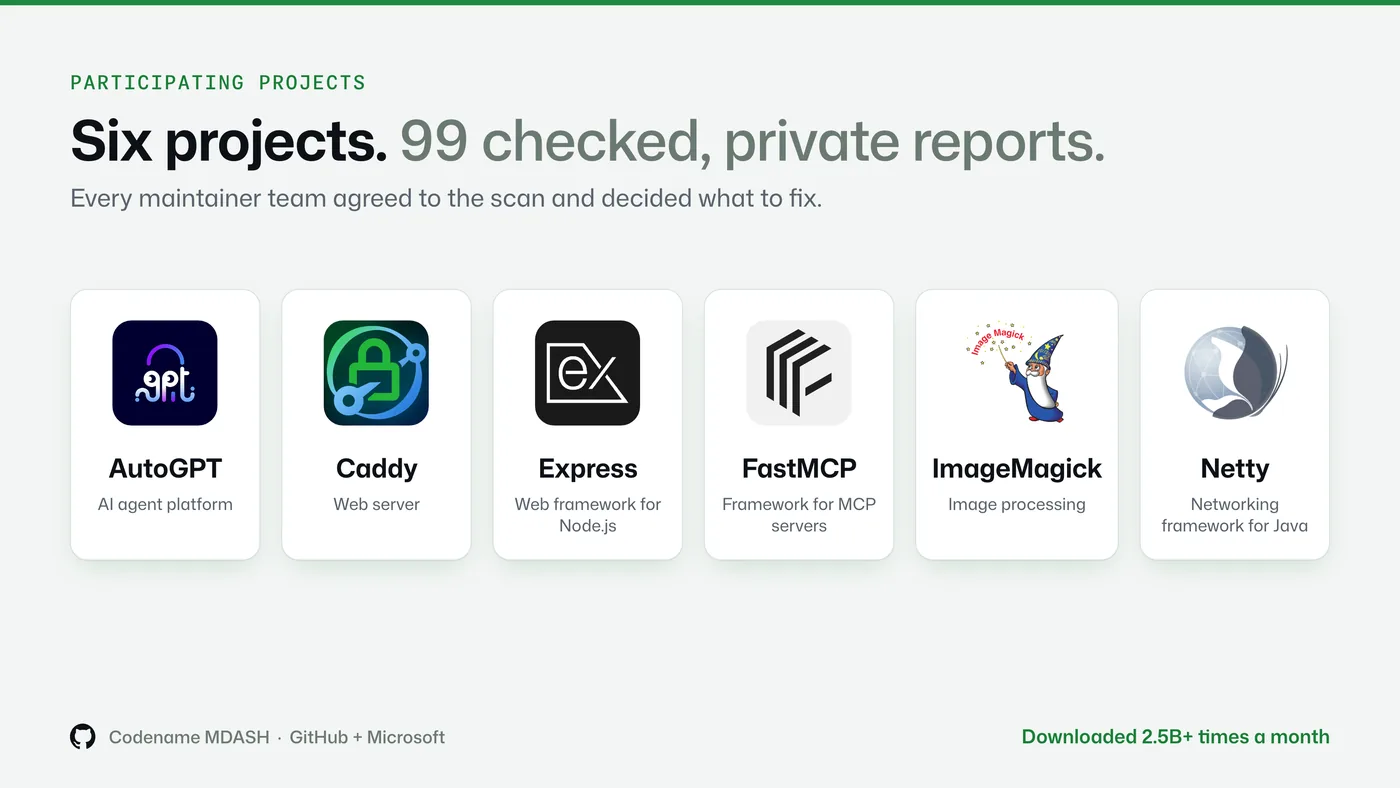
The pilot focused on six foundational repositories: AutoGPT, Caddy, Express, FastMCP, ImageMagick, and Netty. These open source codebases run beneath web servers, image pipelines, and AI frameworks that power everyday digital services. Securing them protects millions of downstream users who rely on stable software packages [1].
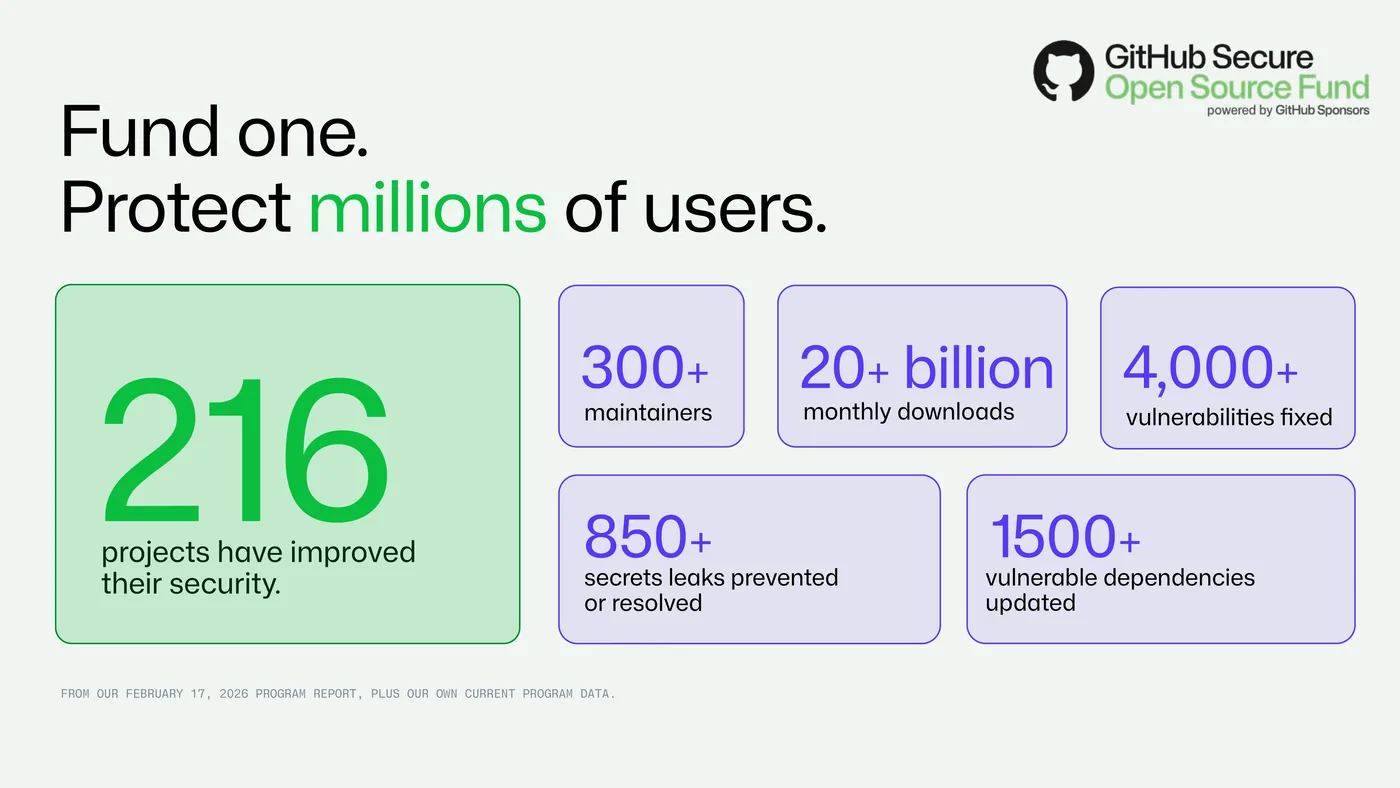
All six projects share a common background as alumni of the GitHub Secure Open Source Fund, which grants selected teams $10,000 in funding through GitHub Sponsors plus security training and Azure credits from Microsoft for Startups. The fund has backed 216 projects so far, helping more than 300 maintainers fix over 4,000 vulnerabilities in software that sees over 20 billion monthly downloads. When automated tools scan these repositories without human review, they often drown small teams in noisy alerts. In this pilot, Microsoft Security deployed its MAI Cyber model to inspect each project and suggest preliminary code updates [1].
The automated scanner flagged 9,791 potential weaknesses across the six projects during its initial pass. Dumping thousands of unverified alerts onto maintainers would halt normal feature development. Open source developers face mounting volumes of automated findings, echoing issues seen when AI auditors catch misbehavior but flood reviewers with excess alerts. The organizers chose to treat raw findings as an unfinished rough draft [1].
How the Triage Pipeline Filters Findings
The organizers organized their workflow around four distinct stages: find, filter, report privately, and fix. The pilot had two core rules from the start: send only findings that matter, and never send a maintainer an unverified finding. The first phase relied on Codename MDASH and the MAI Cyber model to detect suspect code patterns and draft initial patches. Once the scanner finished its pass, an automated triage agent developed by the GitHub Security Lab stepped into the pipeline. Built with tailored Copilot skills, this triage agent checked the validity of each alert, removed duplicate entries, and discarded low-impact noise so maintainers never had to inspect raw scan outputs [1].
Software filters alone could not guarantee complete accuracy. Seven researchers from the Microsoft FORGE Lab spent about two days on each project manually validating candidate issues. They confirmed that every reported bug posed a genuine risk, filtering thousands of machine outputs into 99 verified, high-value reports sent to project leads [1].
Verified findings were delivered through GitHub Private Vulnerability Reporting (PVR), keeping sensitive discussions out of public view. Each notification arrived with a clear proof of concept and a suggested patch that maintainers could review on their own schedule. Maintainers kept full authority over what code entered their main branch, deciding what to fix and when to ship. Because the reports arrived inside the existing GitHub interface, developers could inspect code diffs, run private tests, and merge finished fixes without switching tools or adopting unfamiliar communication workflows [1].


Maintainer Responses Across Six Projects
Maintainers moved quickly once actionable patches replaced ambiguous bug alerts. By November 15, teams had fixed 55 of the 99 reported issues, with 14 patches already published in official releases. The first fixes shipped roughly a week after the scan. For Caddy, maintainers resolved all 22 reports in a week or less [1].
A Caddy maintainer said: “Codename MDASH was able to find unknown, obscure security bugs in our project with succinct reports, and it filled in gaps from some prior reports that hadn’t been noticed.” In the AutoGPT repository, maintainers had recently shipped a new check that was broken. The report arrived three days later, pinpointed the faulty line, and provided a starting patch. Developers expanded the solution, wrote the final patch in a day, and pushed it to production in under a week. An AutoGPT maintainer said: “Features are easier and easier to ship, but in the future maintaining software will probably come down to who cares enough to manage the security” [1].
ImageMagick, maintained by a two-person team, received 22 reports. One report looked like an issue seen before, but the summary proved it was distinct and cited the exact code lines. The team pushed a fix in 15 minutes, down from the usual 30 to 60 minutes needed for advisories. An ImageMagick maintainer said: “Normally, a security advisory would take us around 30 minutes to 1 hour on average to read, understand, and make a fix. It is a huge difference.” Express maintainers said the reports cut through noise, and a Netty maintainer said: “Finding vulnerabilities is no longer our bottleneck. Fixing them is the hard part, and that depends on maintainers” [1].
Limits of Codename MDASH and Manual Review
The pilot showed that high quality still relies on intensive manual labor that cannot easily scale to thousands of projects. Seven researchers spent roughly two days per repository reviewing candidate bugs by hand. Without that human validation, many unverified or noisy AI alerts would have reached maintainers anyway [1].
For FastMCP, the automated scan uncovered deeper issues than previous tools had managed to detect. A FastMCP maintainer said: “The Codename MDASH scan provided unique insights into the security of our project above and beyond what AI scanners have provided us in the past” [1]. Yet turning raw insights into dependable code still demands considerable developer effort. Low-quality reports still reach maintainers every day, adding friction to daily development. The organizers argued that anyone aiming AI scanners at open source repositories should ask maintainers first, deliver suggested patches, and let maintainers set their own pace for review.
Open source workflows still need better infrastructure to support defensive AI tooling at scale. To close the gap between defenders and attackers, maintainers need safe mechanisms to deliver patches via private vulnerability reporting. They also need to run continuous integration tests on private forks, plus access to cyber-capable models to verify proofs of concept before and after applying a fix [1].

Next Steps for Open Source Security
GitHub and Microsoft are expanding the initiative into broader production tooling. Microsoft recently announced MAI Cyber 2, the successor to the model that ran during the earlier pilot. The partners plan to offer AI security scans to every alumni project in the GitHub Secure Open Source Fund, ensuring that findings receive expert review before landing in private developer inboxes. Participating maintainers will also gain access to GitHub Copilot Max to assist with code reviews and remediation tasks, helping teams address security alerts without losing momentum on routine feature work [1].
Downstream software ecosystems gain compounding benefits when open source maintainers resolve security flaws at the root. When a maintainer publishes a security advisory on GitHub, the report enters the GitHub Advisory Database, enabling Dependabot to alert repositories that rely on that package. Automated remediation has also advanced across other platforms, visible as Canonical rolls out AI-generated Ubuntu security fixes to protect enterprise operating systems.
GitHub recommends several immediate actions for open source teams seeking to protect their repositories. Maintainers can turn on private vulnerability reporting so external researchers can submit issues confidentially. Projects hosted on GitHub can enable baseline protections in about two minutes using the gh-secure tool, while development teams building on open source can configure Dependabot alerts to track vulnerable dependencies. For repositories with GitHub code security enabled, agentic autofix with Copilot can help automatically remediate incoming alerts before they become active threats [1].
- ONLINE NEWS Wolf, A., & Cochran, G. (2026, November 17). Maintainers don’t need more AI bug reports. They need fixes. The GitHub Blog. [Article Link]


