





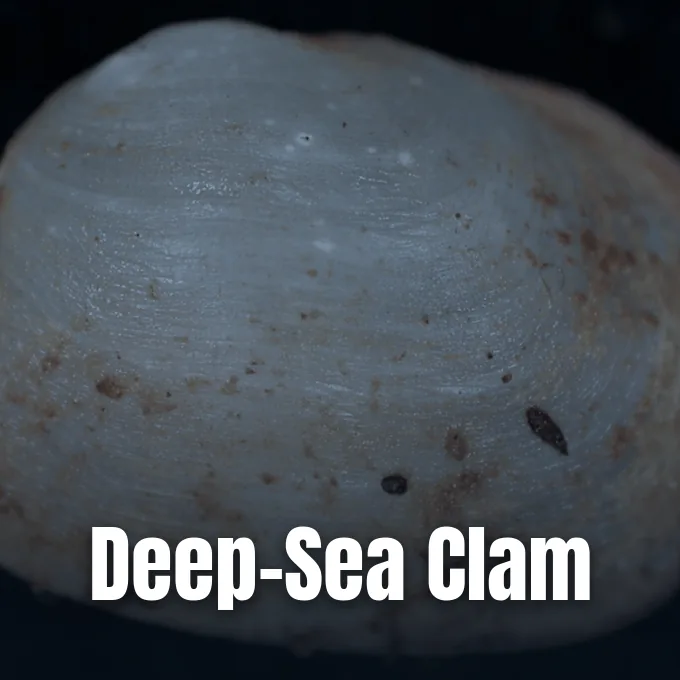
Marine biologists exploring the Great Australian Bight have identified a new bivalve living inside the digestive tract of a deep-sea urchin off southern Australia [3]. Named Vaticinaria gulicola, the animal inhabits the esophagus of the abyssal urchin Carnarechinus clypeatus at depths between 4,000 and 5,000 meters, which corresponds to 13,000 to 16,400 feet beneath the surface of the Pacific and Southern oceans [2]. Most related bivalves in the superfamily Galeommatoidea attach to the exterior spines or skin of other marine invertebrates [1]. In sharp contrast, this creature makes its home inside the throat of its host [2].
Discovery of Vaticinaria Gulicola
An expedition across the Great Australian Bight brought the bivalve to light during deep sampling operations conducted off southern Australia [3]. The biological survey examined the ocean floor from 200 to 5,000 meters, an interval equal to 656 to 16,404 feet, collecting 66,721 invertebrates representing 1,267 species [2]. Roughly one-third of the recovered species were new to science [3]. When sorting through the deepest catches taken along the dark abyssal seafloor, researchers found small bivalves equipped with byssal threads meant for attachment, but they found no hosts in the net [2]. Follow-up dissection work on slippery tissue tubes solved the puzzle [3]. Biologists discovered more bivalves lodged securely inside the tubes, which DNA analysis proved were the esophagus of the deepwater urchin Carnarechinus clypeatus [1].
Finding a bivalve residing inside the throat of an echinoderm came as a surprise to the scientific team [2]. The study was carried out by malacologist Paul Valentich-Scott of the Santa Barbara Museum of Natural History, Hugh MacIntosh of the Royal British Columbia Museum, and Ryutaro Goto from the Seto Marine Biological Laboratory at Kyoto University [3]. They published their formal description of Vaticinaria gulicola in the open-access journal ZooKeys [1]. “We were absolutely stunned to find this bivalve living inside the throat of a deepwater sea urchin,” Valentich-Scott said [2].
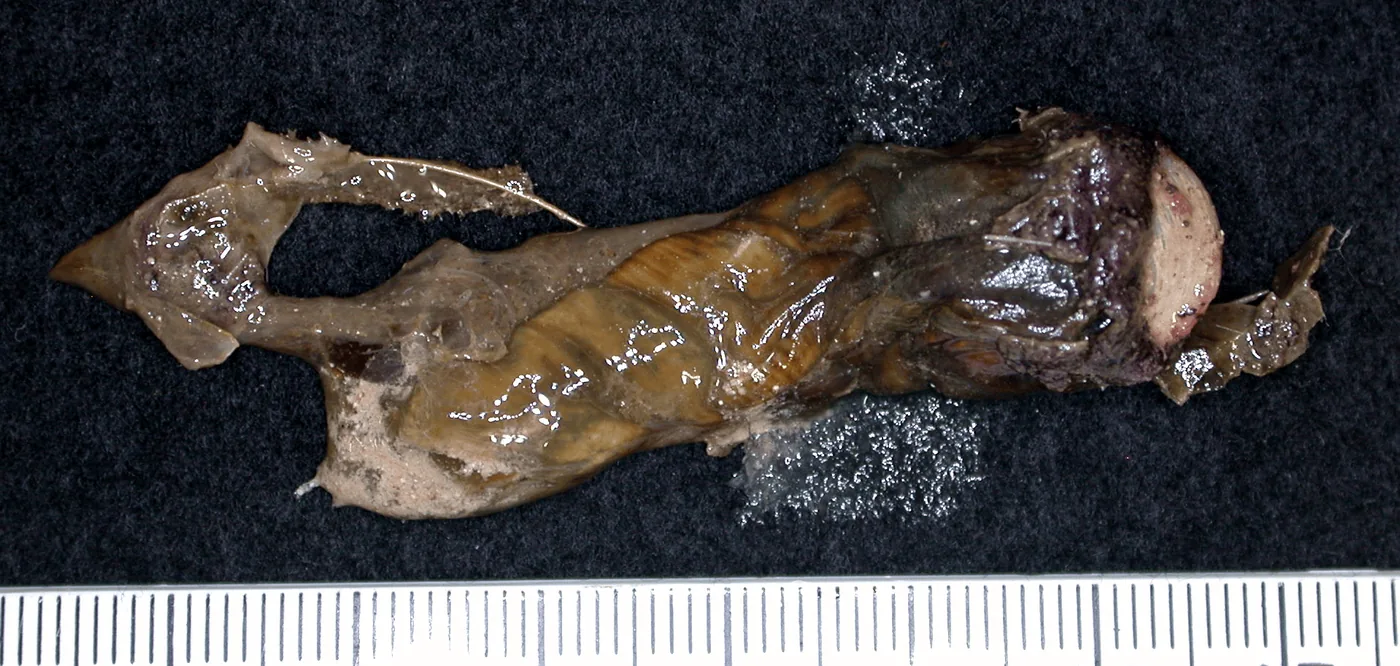
Trawling the Great Australian Bight
The specimens were gathered from the abyssal seafloor of the Great Australian Bight at depths of about 4,000 to 5,000 meters, which spans 13,100 to 16,400 feet [3]. At these depths, sunlight cannot penetrate the water column, leaving the seabed in complete darkness under heavy pressure. The ocean floor consists of soft mud where food depends on organic particles drifting from surface waters [2].
The deep sampling program recovered 66,721 invertebrates representing 1,267 species across the southern margin of Australia. Field crews collected specimens between 200 and 5,000 meters, spanning 656 to 16,404 feet [2]. Taxonomic analysis by museum researchers showed that roughly one-third of all collected invertebrate species had never been described in scientific literature, illustrating the vast unknown biodiversity inhabiting abyssal sediment [3]. Working in these cold waters miles beneath the ocean surface, the team demonstrated that unusual symbiotic associations can survive even in deep-sea habitats where sunlight never arrives [1].
A Century of Overlooked Clues
The presence of bivalves inside sea urchins is not without precedent in deep-sea biology [3]. In the 1970s and 1990s, Russian marine biologist Alexander Mironov documented small bivalves lodged inside the digestive tracts of abyssal urchins [2]. However, Mironov concluded that the clams were merely food items swallowed by the echinoderm while feeding on seafloor mud [3]. New DNA testing and anatomical examinations proved that the bivalves were living residents rather than digested meals [1].
“A Russian scientist originally thought these clams were being eaten by the sea urchin, but we later determined that it was actually living inside the oesophagus,” Valentich-Scott said in Popular Science. Historical archives provided further proof that these bivalves have inhabited urchins for generations [2]. While inspecting archival material, the team examined a specimen of Carnarechinus clypeatus collected during the famous Challenger Expedition (1872 to 1876), discovering related bivalves that had remained unnoticed on museum shelves for about 150 years [3]. This historical finding proved that endocommensal relationships in abyssal urchins represent a persistent biological habit that endured unobserved through a century and a half of ocean research [1].
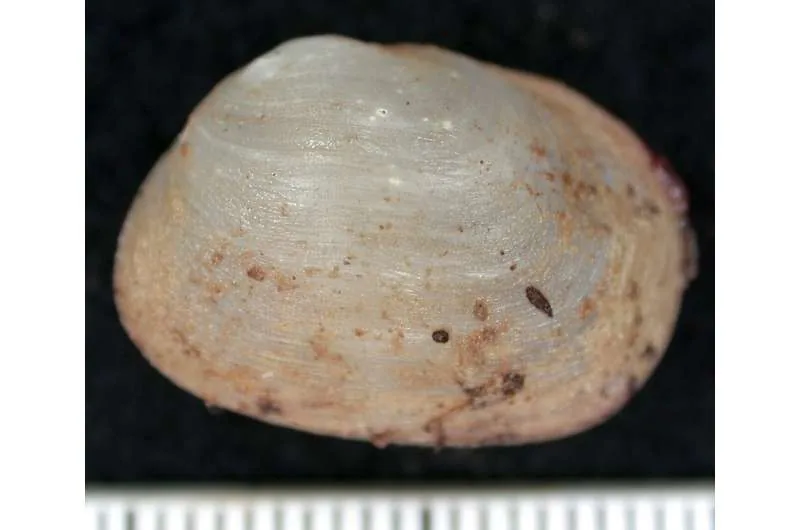

Vaticinaria Gulicola and Endocommensal Life
Most bivalves that associate with other marine invertebrates practice ectocommensalism by clinging to the exterior spines, carapaces, or shells of their hosts [2]. In contrast, Vaticinaria gulicola practices endocommensalism by living inside the esophagus of Carnarechinus clypeatus [3]. “Endocommensalism is extremely rare in galeommatids and all bivalves,” Valentich-Scott said [2]. “Most commensal bivalves attach to the outside of their host. This new species lives inside its throat.” By sheltering in the host esophagus, the clam gains shelter from bottom predators while intercepting food moving through the urchin digestive canal [1].
The study published in ZooKeys formally reinstated the genus Vaticinaria Dall, 1901, classifying the newly identified clam as sp. nov. within Galeommatoidea [1]. Within this superfamily, Vaticinaria represents only the second genus known to practice endocommensalism, following a group found in sea cucumbers. The Australian discovery marks the first time any bivalve has been confirmed living inside the digestive system of a sea urchin [3]. Because irregular urchins feed on organic sediment, researchers suspect that the bivalve filters detritus directly from ingested mud, though live feeding has not yet been directly observed [2]. The clam appears to share nutrients without inflicting damage on the host echinoderm [1].
Physical Traits in the Abyss
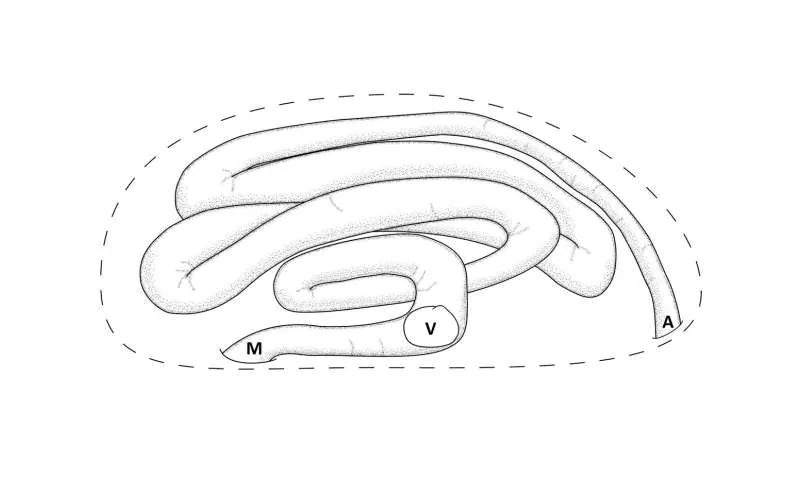
Unlike many internal symbionts that undergo anatomical degeneration, Vaticinaria gulicola retains normal bivalve morphology [3]. It measures up to 0.74 to 0.75 inches (19 millimeters) in length [2]. That size is considered large for galeommatids [3]. Its protective shell closes completely, showing that the animal preserves functional valves despite living inside the throat of another creature [2]. In contrast, galeommatid bivalves living inside sea cucumbers often display reduced shells and modified mantles, whereas this species maintains standard bivalve architecture as the second-deepest clam of Galeommatoidea on record [3].
The scientific designation links the biology of the organism with the taxonomy of the genus [3]. The genus name Vaticinaria was established in 1901 by Dall, but saw little attention in scientific literature for over a century [1]. The species name gulicola combines Latin words for throat and inhabitant, describing the habitat where Valentich-Scott and his colleagues located the mollusk [3]. In their anatomical reconstruction, the research team placed the species into an updated phylogenetic tree of Galeommatoidea [1].
Unanswered Questions in the Deep
Key aspects of the biology of Vaticinaria gulicola remain unresolved. “We know very little about this new species or its sea urchin host,” Valentich-Scott said [2]. “The host sea urchin has never been collected intact, so we really don’t even know what it looks like. We have no idea how this bivalve can live inside the throat of the urchin, or what it eats.”
Because deep-sea trawling nets routinely damage fragile sea urchins during recovery from depths of 5,000 meters, researchers have only inspected fragmented body parts and disconnected digestive tubes from Carnarechinus clypeatus [3]. Future oceanographic expeditions to the Great Australian Bight will need to deploy submersibles or specialized robotic imaging systems to capture intact host urchins in their natural seafloor habitat. Marine biologists hope that observing living animals in the abyss will clarify how free-swimming larval clams locate host urchins and enter the esophagus [2]. Further phylogenetic research may reveal whether other bivalve lineages have evolved similar endocommensal relationships in the deep southern ocean [1]. For now, Vaticinaria gulicola confirms that unexplored abyssal habitats continue to yield unexpected ecological partnerships [3].
- ACADEMIC JOURNAL Valentich-Scott, P., MacIntosh, H., & Goto, R. (2026). Life in a sea urchin esophagus: a new endosymbiotic bivalve (Galeommatida, Galeommatoidea) from abyssal depths off southern Australia. ZooKeys, 1297, 23-42. [Article Link]
- ONLINE NEWS Baisas, L. (2026). Clam discovered living inside of a sea urchin’s throat. Popular Science. [Article Link]
- ONLINE NEWS Pensoft Publishers. (2026). Deep-sea clam discovered living inside the throat of a sea urchin. Phys.org. [Article Link]
APA 7: PerEXP Teamworks. (2026, November 25). Vaticinaria Gulicola Lives Inside Deep-Sea Urchin Throat. PerEXP Teamworks. https://perexpteamworks.com/en/vaticinaria-gulicola-deep-sea-clam/


