




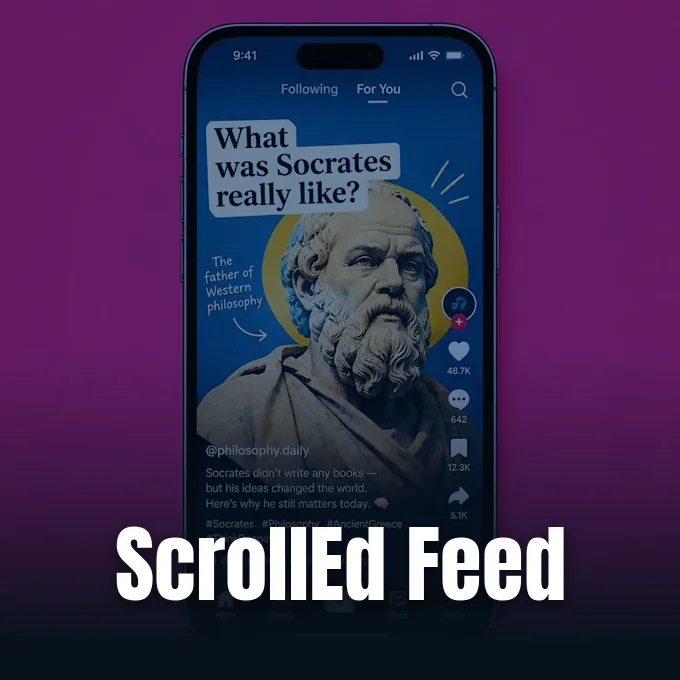
College students routinely abandon 400-page academic reading assignments after minutes of skimming, losing the battle against algorithmically optimized social media feeds. The ScrollEd app enters that attention struggle by reformatting static textbooks and PDF documents into vertical multimedia feeds featuring artificial intelligence video, spoken audio drops, and interactive comprehension checkpoints [1]. Founded by Stanford and University of Pennsylvania student spouses Utsav Gupta and Rebecca Neff, the Palo Alto startup is pitching its mobile learning architecture at TechCrunch Disrupt 2026 in San Francisco (a competitive showcase for emerging ventures) [2].
Rebuilding Textbooks as Algorithmic Feeds
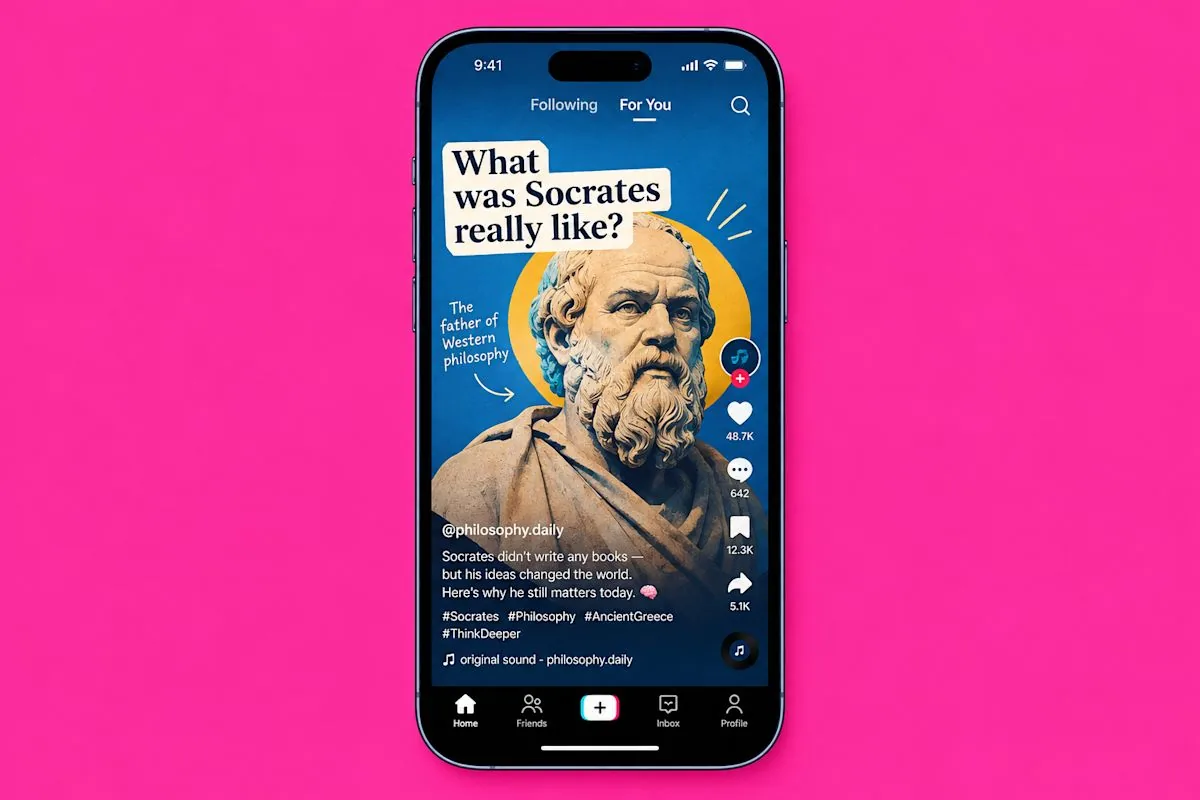
Instead of forcing learners to parse dense chapters, the ScrollEd app rebuilds syllabus materials into vertical streams that mirror Instagram Reels and TikTok. Swiping up surfaces a completely new curriculum topic, whereas swiping sideways lets students delve deeper into an ongoing lesson [1]. Short video lessons condense complex concepts into 45 to 90-second vertical presentations with captions and diagrams [2]. Content formats include artificial intelligence video, audio, text segments, and integrated quiz modules, offering alternative pathways through dense learning materials [4].
Can algorithmic feeds turn passive digital consumption into academic mastery? Co-founder Utsav Gupta argues that traditional educational media fails because 18-year-old students spend over four hours daily consuming short-form vertical video, creating an undeniable mismatch with lengthy printed volumes [2]. Rather than demanding total digital abstinence, the startup deploys algorithmic microlearning to meet learners on familiar interfaces without engineering compulsive retention traps. ‘We want to meet them where they are,’ Gupta explained regarding the younger generation (especially 18-year-olds accustomed to vertical media), noting that moving deeper into academic subjects must become as effortless as flicking to the next video clip. Curiosity sparks initial exploration. Following that intellectual thread within the interface replaces aimless internet browsing [1].
Every module concludes with an interactive quiz checkpoint rather than open-ended video autoplay [1]. Commuters can switch the feed into Audio Drops to hear podcast-style lesson breakdowns with variable playback speed. The interface halts scrolling every four or five posts, requiring students to answer conceptual questions before unlocking additional material. Creators also receive Instagram-style analytics showing watch duration, rewatch rates, and quiz failure percentages across specific lessons [2].

The ScrollEd App and Dorm-Room Origins
The concept originated from personal academic frustration rather than corporate product incubation. Utsav Gupta, an engineering student investigating artificial intelligence and human purpose at Stanford, partnered with his wife Rebecca Neff, who studies computer science at the University of Pennsylvania [1]. The pair met as undergraduates while studying late at night from a shared, worn biology textbook. Gupta spent hours highlighting dense paragraphs while Neff drafted paper flashcards. The Palo Alto startup incorporated this spring after the founders realized that standard study guides failed to engage modern undergraduates [2].
Both founders experienced intense nightly dissatisfaction after doomscrolling on their smartphones before sleep. They resolved to fix it [1].
Gupta began chopping his own technical notes into vertical video clips, while Neff tested the prototypes on undergraduate peers preparing for examinations. The dorm-made study reviews rapidly outperformed the official course study guides in midterm review groups. Working from a compact apartment near Stanford with whiteboards covered in retention graphs, the founders built the ScrollEd app around active recall. An integrated Focus Mode locks out recreational social mechanics during active study intervals, preventing digital drift [2].


Pilot Metrics Across Bay Area Classrooms
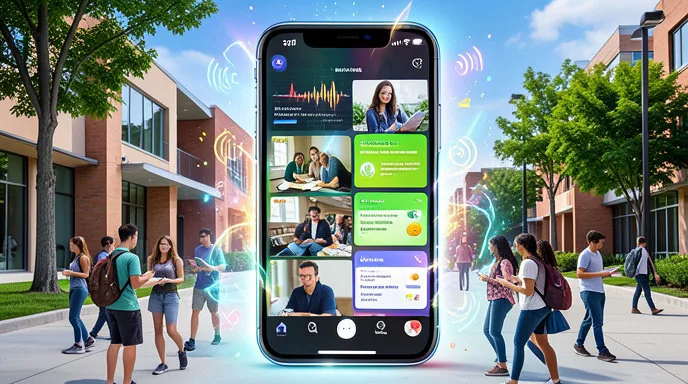
Initial classroom deployments yielded measurable performance advantages over traditional digital reading tools. Summer pilot programs across several Bay Area high schools and community college study groups showed that students completed 2.3x more modules when utilizing the feed format compared to standard electronic textbooks. Furthermore, test groups registered significant gains in conceptual recall during follow-up evaluations administered 48 hours later. In testing conducted across Northern California, students interacted with vertical video units covering biological and mathematical principles [2].
The interactive pacing relies on constant, gamified verification checkpoints. Feed algorithms present vertical explanations such as a 60-second summary of photosynthesis or a spoken breakdown of the Pythagorean theorem. Every four or five slides, the feed halts for quick interactive evaluations (such as drag-to-label diagrams and speak-the-answer prompts). Correct responses unlock the next topic sequence, whereas incorrect answers trigger an algorithmic loop that surfaces targeted refresher explanations. Instructors gain granular analytics detailing watch duration, rewatch frequencies, and specific drop-off locations. If learners answer incorrectly, the algorithmic recommendation engine loops back a refresher clip to reinforce the core principle before allowing further navigation [2].
Teachers participating in the pilot praised the system as an introductory tool rather than a comprehensive replacement for seminars. One Bay Area biology teacher characterized the feed as an appetizer rather than the main entree, highlighting its strength in priming students for next-day classroom discussions. Modern learners increasingly favor graphic summaries and visual study breakdowns, a dynamic also evident when analyzing independent creative media like the Hobie Brown sketch exploration. The ScrollEd app concentrates on building immediate familiarity with difficult terminology before students tackle comprehensive textbook passages [2].
Microlearning Rivals and Pedagogical Doubts
Can bite-sized vertical videos preserve the analytical depth required for complex coursework? Education specialists warn that slicing demanding disciplines like organic chemistry or constitutional history into minute-long reels threatens context collapse, encouraging superficial familiarity rather than genuine synthesis [2]. Format conversion does not automatically ensure instructional efficacy, because mere exposure to algorithmic snippets cannot substitute for deliberate pedagogical design. Well-established platforms already dominate adjacent corners of digital microlearning: Duolingo gamifies language acquisition, Blinkist compresses nonfiction books into summaries, and Quizlet provides active recall study aids. Social video networks, notably TikTok itself, have also piloted educational content initiatives with mixed instructional results. Competitors move fast. Establishing measurable academic superiority remains an essential hurdle for the platform [3].
The automated generation of voiceovers and visual explainers creates substantial provenance and fidelity risks. Without a rigorous source-checking workflow, artificial intelligence pipelines risk embedding factual inaccuracies across distributed curriculum modules. Repackaged text must remain faithful to source scholarship [3]. Neff emphasizes that the ScrollEd app avoids third-party advertising algorithms that optimize solely for prolonged screen time, choosing instead to measure verified knowledge retention [2]. Source verification remains paramount because unchecked synthetic summaries can rapidly propagate misconceptions across school networks [3].
Institutional data governance presents another hurdle for commercial expansion. University administrators require strict compliance regarding how learner tracking metrics and quiz performance statistics are handled under institutional licensing contracts. Engineering adaptive assessment infrastructure represents an intricate operational commitment (requiring personalized feedback algorithms tailored to diverse student needs). The coming months of institutional testing will establish whether feed mechanics genuinely foster critical thinking or merely satisfy momentary digital habits [3].
Commercial Roadmap and Classroom Integration
ScrollEd addresses a lucrative market opportunity. Textbooks represent a $10 billion-plus textbook market that remains largely anchored to legacy print formatting and static documents [2]. To capture this audience, the ScrollEd app deploys a dual revenue structure combining a freemium consumer tier with paid ScrollEd Pro subscriptions and institutional contracts. Enterprise packages grant schools and training departments detailed progress reporting dashboards [1]. The founders also envision an educator marketplace where teachers can design and monetize specialized curriculum channels [2].
Following its presentation in the Startup Battlefield 200 at TechCrunch Disrupt in downtown San Francisco, the startup intends to launch ScrollEd 2.0 [1]. The upcoming software upgrade introduces artificial intelligence study buddies capable of converting uploaded textbook chapters into customized feeds. It also incorporates collaborative class feeds where students publish peer explainers for academic credit, accompanied by planned administrative integrations with Canvas and Google Classroom platforms [2].
By selling per-student seats to academic institutions, corporate training programs, and tutoring centers, the startup seeks to demonstrate that short-form video feeds can deliver measurable pedagogical value [2]. The broader ambition is establishing an educational social network that respects student attention while improving comprehension across complex curriculums. As founders Utsav Gupta and Rebecca Neff prepare their public debut at TechCrunch Disrupt from October 13 to 15, the ScrollEd app faces its decisive test in proving that swiping through textbooks can foster durable scholarship [1].
- ONLINE NEWS Bellan, R. (2026, September 20). ScrollEd wants to turn textbooks into TikTok. TechCrunch. [Article Link]
- ONLINE NEWS AndroGuider Team. (2026, September 21). ScrollEd turns textbooks into TikTok with Instagram-style learning feed. AndroGuider. [Article Link]
- ONLINE NEWS Newsgab. (2026, September 21). ScrollEd plans to turn textbooks into TikTok lessons. Newsgab. [Article Link]
- ONLINE NEWS Printing Press AI. (2026, September 20). ScrollEd wants to turn textbooks into TikTok. Printing Press AI. [Article Link]
- ONLINE NEWS Bellan, R. (2026, September 20). ScrollEd wants to turn textbooks into TikTok. Yahoo Tech. [Article Link]
- WEBSITE Bellan, R. (2026, September 20). ScrollEd wants to turn textbooks into TikTok. Aventure. [Article Link]


