





Prescription availability of the peptide epitalon in the United States has revived interest in the complex record of Soviet science [2]. While epitalon originated inside a Soviet meat-processing facility during the Cold War, its journey into American pharmacies points back to a massive state-funded research complex that once rivaled Western powers. Elena Aronova, a historian of science at the University of California, Santa Barbara, lived through the final years of that system as a chemistry researcher in Moscow. Aronova documented how state support enabled large research projects while political dogmatism crippled several fields. The December anniversary marking 35 years since the collapse of the Soviet Union provides an occasion to examine how that vast network of laboratories rose, functioned, and disintegrated [1].
From Meat Processing to American Prescriptions
The peptide epitalon recently reached American pharmacies as a prescription treatment. Soviet researchers originally isolated the compound using animal tissues from a state-run meat-processing plant during the Cold War, reflecting an industrial origin that began far from academic medical centers [2]. That setup was typical for biological research in Soviet science, where central planners routinely linked livestock facilities with chemical institutes to extract active biological compounds. Aronova observed those links firsthand as a student before completing her master’s degree in chemistry at Moscow State University in 1991, working in a Moscow laboratory where facilities depended on state allocations for glassware and basic reagents [1].
When the Soviet Union disintegrated in December 1991, scientific institutions lost their operating budgets. Laboratories could no longer pay electric bills or buy supplies for basic experiments. “We all talked about what to do,” Aronova said to Undark Magazine. “What is the future like for us as scientists?” Thousands of researchers chose to leave the country as public funding evaporated [1].
Scale of Soviet Science
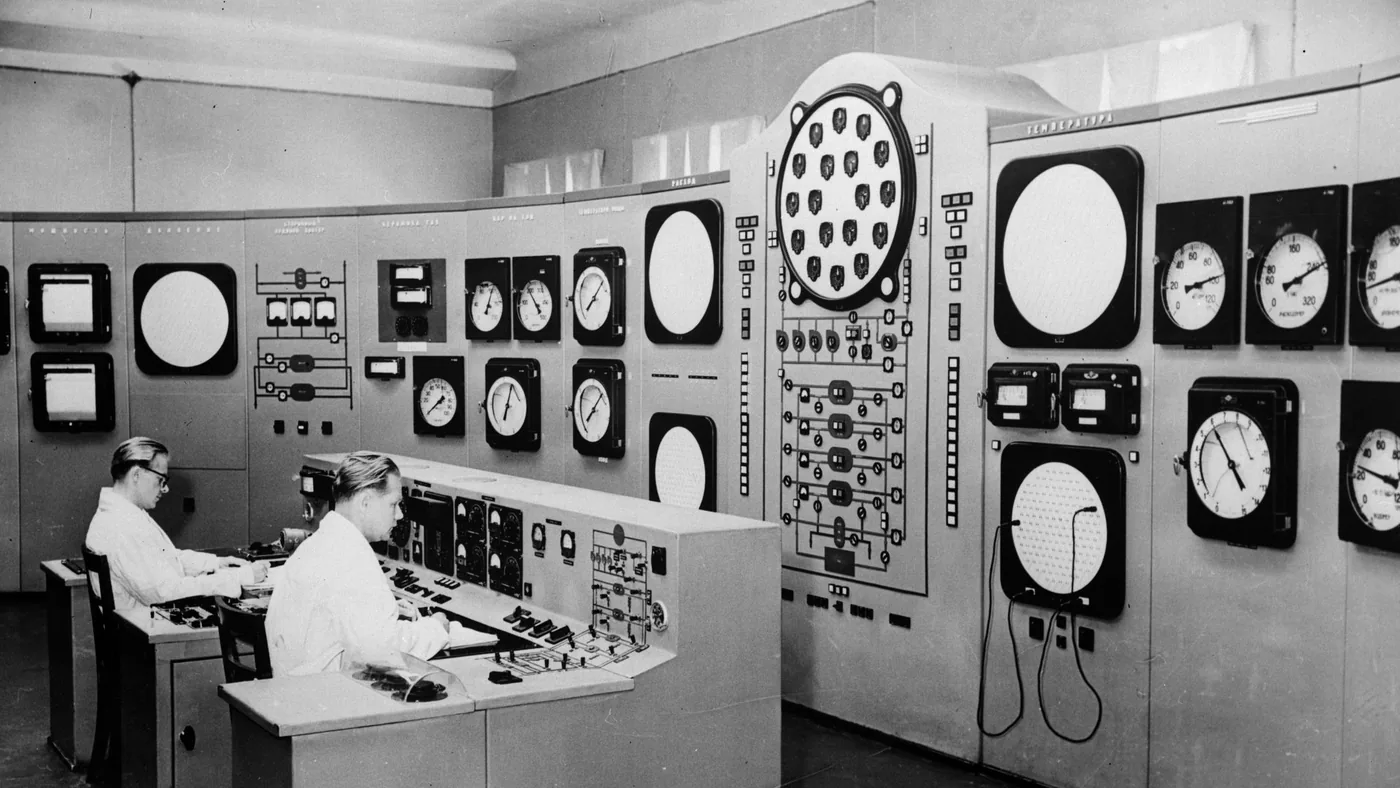
The Soviet system organized scientific research on a scale that few other nations could match. Rather than depending on private companies or university endowments, the Soviet state funded fundamental science through central ministries that distributed resources among thousands of research institutes. Aronova pointed out that this structure mirrored Cold War defense spending in the United States, where the federal government financed basic research through the Department of Defense and the Atomic Energy Commission. Between the 1950s and the 1970s, 90 percent of American scientific funding flowed through those two defense and energy agencies. The United States used defense budgets to support fields as varied as anthropology, physics, and history [1].
That concentration of public money gave Soviet science an enormous footprint. The state built research towns, staffed remote observation posts, and trained thousands of specialists in physical and mathematical sciences. When state priorities favored defense goals, researchers received generous funding and political prestige. But when political ideology clashed with empirical evidence, the government could suppress major scientific disciplines for decades [1].
Lysenko and Ideological Control
The system produced startling contradictions. Cosmonaut Yuri Gagarin became the first person to orbit Earth, proving the strength of rocketry and mathematics, yet agricultural and biological research simultaneously remained under the control of Trofim Lysenko. Lysenko won the support of Joseph Stalin by rejecting genetics as a bourgeois invention developed in Western capitalist countries for reactionary purposes. In a letter to Stalin, Lysenko attacked genetic theory while promising rapid agricultural gains that never materialized. Modern historians consider Lysenko a brazen charlatan. His influence delayed Soviet genetics for generations because ideological loyalty took priority over empirical testing in civilian academies [1].
The official ban on genetics had pragmatic limits inside classified military institutes. Aronova explained that researchers working on biological weapons could not rely on Lysenko’s doctrines. Developing bioweapons required molecular genetics, and classified laboratories quietly promoted the discipline. By the time James Watson and Francis Crick received a Nobel Prize in the early 1960s for discovering the structure of deoxyribonucleic acid (DNA), Soviet universities were still forced to teach Lysenko’s ideas. Military necessity protected genetics behind closed doors while civilian classrooms fell decades behind international standards [1].
Vladimir Mannar and Citizen Seismology
Soviet science also accommodated unusual amateur contributors who bypassed standard academic channels. While searching the Communist Party archives in Moscow, Aronova discovered a large file of microfilmed letters from a man named Vladimir Mannar. In 1948, an earthquake destroyed Ashgabat, the capital of Turkmenistan, leveling the city and causing heavy casualties. In the aftermath of the catastrophe, Mannar sent a telegram to the Central Committee of the Communist Party proposing a novel system for earthquake prediction. He criticized academic and capitalist seismology for failing to protect citizens and proposed collecting reports of abnormal animal behavior across earthquake zones [1].
Mannar collected reports from villagers who noticed cats panicking and dogs howling hours before ground tremors struck, arguing that vernacular observations provided clues that formal geophysics missed. Aronova called his framework citizen seismology. The Soviet geophysics establishment hired Mannar to run a remote monitoring station, a posting that proved strategically valuable because frontier seismic equipment helped the state detect foreign underground nuclear explosions [1].
How Did Soviet Science Lose Funding?
The economic breakdown of the 1990s erased the financial base of Soviet science in months. Laboratories lost electricity, supplies, and wages. Thousands of researchers faced an abrupt choice between moving abroad or leaving scientific work behind. Aronova said that her husband’s cohort of mathematicians and physicists used their analytical training to build private banks, outperforming Soviet-trained economists who had never worked with market systems. Other former scientists entered software development and helped create the infrastructure for Runet, the Russian-language internet [1].
Aronova entered graduate school at the Institute for the History of Science and Technology in Moscow because it offered a small stipend. Her husband received no salary. That stipend kept the household afloat until Aronova earned her doctorate in 2003 and moved to California in 2006 to study Cold War science. She considered studying the history of Cold War bioweapons programs before shifting to broader institutional history, while the departure of researchers during that decade left deep gaps across Russian laboratories [1].
The Second Exodus of Scholars
Institutional decline accelerated after Russia’s invasion of Ukraine. While the brain drain of the 1990s primarily drew away natural scientists seeking working facilities abroad, the wartime exodus hit historians and humanities scholars who could no longer pursue international collaborations. International scientific organizations and academic societies actively discouraged joint projects with researchers affiliated with Russian state institutions. At the same time, the state transformed independent scholarship into an ideological weapon, forcing critical historians to leave the country [1].
Prominent research centers lost their independence. The Poletayev Institute for Theoretical and Historical Studies in the Humanities at the Higher School of Economics shifted from an autonomous intellectual space into a tightly controlled environment under Vladimir Putin’s direct interventions into historical interpretation. Aronova characterized this political tightening and wartime exodus as the final blow to Soviet science, ending the legacy of a former scientific powerhouse [1]. Today, the prescription availability of epitalon in the United States stands as an unusual relic from that vanished Cold War biochemical complex [2].
- ONLINE NEWS Talpos, S. (2026, November 27). Interview: How the Cold War brain drain upended Soviet science. Undark Magazine. [Article Link]
- ONLINE NEWS The New York Times. (2026, November 28). How a Cold War peptide landed on the F.D.A.’s agenda. [Article Link]
APA 7: PerEXP Teamworks. (2026, November 29). Prescription Epitalon Recalls the Legacy of Soviet Science. PerEXP Teamworks. https://perexpteamworks.com/en/soviet-science-cold-war-epitalon/


