





Western Australian Museum curator Dr Kenny Travouillon and his colleagues identified new bandicoot species after spending a decade examining historical specimens held in museum collections across Australia, Europe, and the United States [3]. The findings appeared on October 14, 2026, in a 53-page revision published in the Australian Journal of Taxonomy. By pairing physical measurements with nuclear gene sequencing, the team reorganized the short-nosed genus Isoodon into seven species rather than five [1]. This taxonomic reassessment reveals that one newly named animal vanished a century ago, while another distinct marsupial survived undetected on New Guinea [2].
Decades in Unnoticed Museum Drawers
The investigation began in 2016 when Dr Travouillon received a Churchill Fellowship from the Winston Churchill Memorial Trust. That grant enabled him to study Australian marsupial specimens collected more than a century ago and preserved in overseas museums [3]. Comparing those overseas bones with material held in Australian institutions suggested that existing species boundaries were flawed [2].
To resolve the mammal group, Travouillon partnered with evolutionary biologist Dr Steve Cooper and bioinformatics researcher Dr Terry Bertozzi at the South Australian Museum [7]. The team secured research funding from the Australian Biological Resources Study and Bioplatforms Australia through the Commonwealth Government National Collaborative Research Infrastructure Strategy to sequence historical bandicoot specimens using high-throughput genomic platforms [4]. Collaborators joined through the OZ Mammals Genomics initiative, extracting DNA from thousands of nuclear gene loci using exon capture techniques [1]. Older specimens often sit in storage drawers for generations before scientific advances allow staff to test their origin. For instance, Field Museum interns identified Jeanerpeton mazonensis by re-evaluating long-stored fossil material from earlier digs. The bandicoot project brought together hundreds of skulls, skins, and tissue records to build an accurate family tree [2].
Identifying the New Bandicoot Species
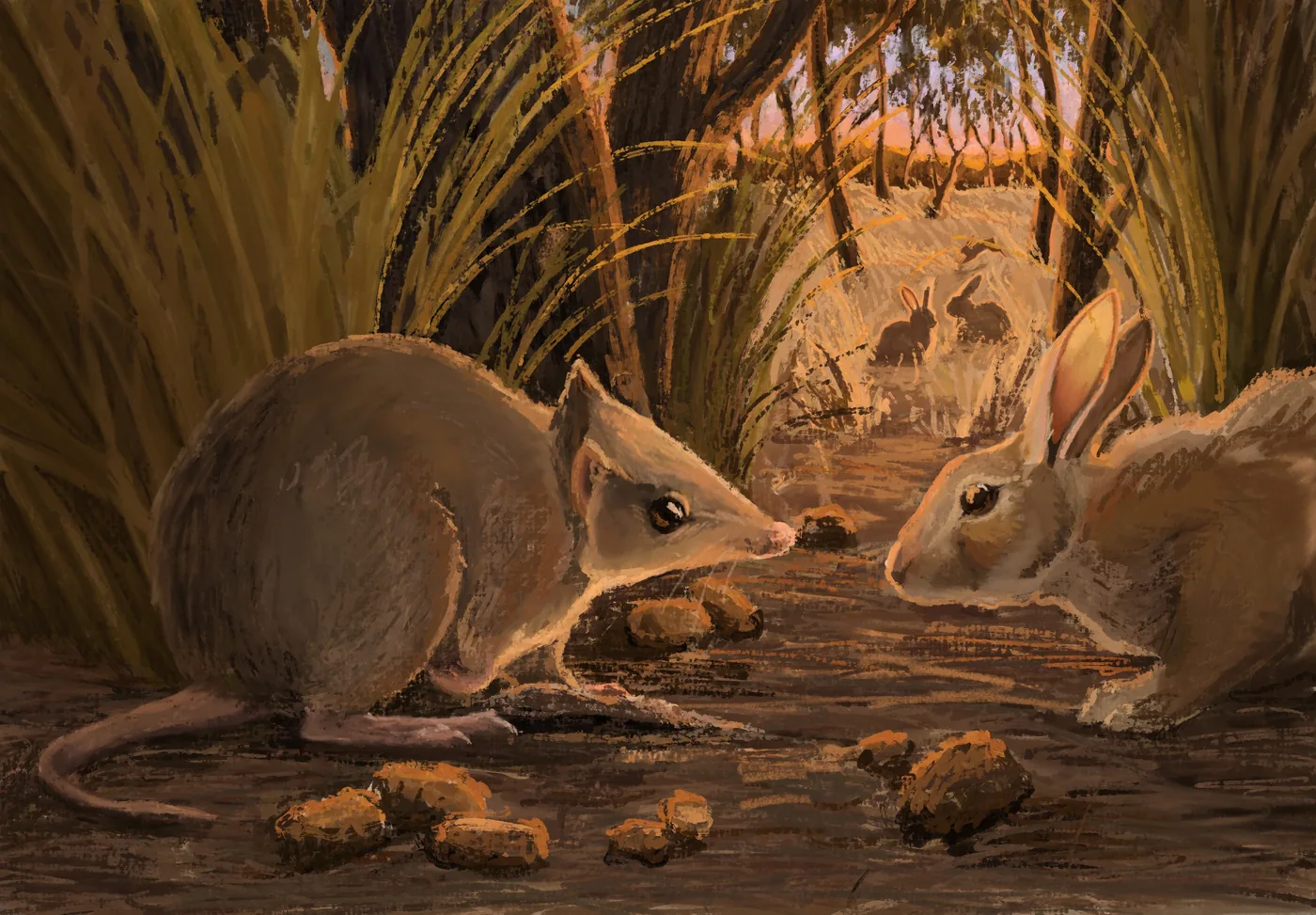
The main discovery in the project was recognizing the little brown bandicoot, scientifically designated as Isoodon microtis [1]. Travouillon found three mystery skulls in museum storage that did not match any known marsupial. One skull came from the South Australian Museum, while two others were housed at Museum Victoria. All three skulls reached museums by 1920 [5].
A second new bandicoot species gained formal recognition when researchers re-evaluated northern populations. Scientists previously treated the New Guinea brown bandicoot, Isoodon moresbyensis, as a local subspecies of the northern brown bandicoot [2]. Genetic data and skull anatomy confirmed that the New Guinea mammal forms an independent lineage worthy of full species rank [1]. Beyond these two species, the team described seven new subspecies in Australia, including Isoodon auratus bundilarri, which carries an Indigenous Uunguu name from Wunambal Gaambera Country [3]. The Uunguu Rangers of the Wunambal Gaambera Aboriginal Corporation assisted with fieldwork in the Kimberley [4]. The revision formally lifts the number of recognized Isoodon species from five to seven [1].
Why Bullae Size Solved the Mystery
The three mystery skulls closely resembled the golden bandicoot in overall size, but their ear anatomy told a different story. In bandicoots, auditory bullae are rounded bony chambers beneath the skull that enclose the middle ear. These chambers amplify low-frequency sounds, helping small marsupials detect hunting owls and other predators in open terrain [5].
Golden bandicoots possess small skulls paired with unusually large bullae, whereas the Eyre Peninsula skulls featured miniature chambers. “The bullae were really small too, which made it obvious to me that this was a different species,” Travouillon said. This anatomical trait inspired the specific name microtis, which derives from Greek words meaning small ear. Because reduced ear chambers offer less benefit in open grasslands, anatomists infer that the animal lived in dense forests where low-frequency hearing plays a lesser role in evading predatory birds like hunting owls. The team attempted to extract DNA from the bone fragments, but centuries of degradation left no viable genetic sequences [5]. The formal species description rests on detailed skull morphology and jaw shape alone [1].


Farming and Predators on Eyre Peninsula
Archival records show that the three skulls entered museum collections between the 1860s and 1920. Archival records indicate that Frederick George Waterhouse, who served as the first curator of the South Australian Museum, sent two of the skulls to Museum Victoria during the 1860s without a formal species identification. Mrs Symonds Clark donated the skull. She delivered the specimen in October 1920 following the death of her husband, an ornithologist who had collected on Eyre Peninsula [5].
No living specimen of Isoodon microtis has ever been documented by modern biologists. “Our best guess is that it disappeared in the late 1800s to early 1900s,” Travouillon said. Settlers cleared native mallee and woodland on Eyre Peninsula to create wheat fields and livestock pastures. Introduced European rabbits competed for native food plants, while feral cats and red foxes preyed heavily on small marsupials that lacked defenses against non-native carnivores. These combined pressures match the documented impact of invasive species in Australia on vulnerable marsupials. A 2015 study in PNAS calculated that more than 10 percent of Australia’s 273 endemic land mammals died out over two centuries following European arrival. The new bandicoot paper counts 42 Australian mammal species lost since European colonization, with bandicoots and bilbies representing nearly 20 percent of those extinctions [5].
Skull measurements show that the little brown bandicoot coexisted with a larger relative, Isoodon fusciventer terrenus, on the peninsula. Travouillon suggested that the two animals avoided direct competition by using different local habitats and eating different roots, fungi, and invertebrates. No skins survive today [5].

Quenda Distribution in South Australia
The revision reshaped the geographic boundary of the quenda, scientifically known as Isoodon fusciventer [2]. Zoologists previously classified the quenda as an animal found only in the southwest of Western Australia [3]. The new museum data and genetic sequencing revealed that quenda populations historically inhabited the Adelaide region, the Mount Lofty Ranges, Kangaroo Island, and the Nuyts Archipelago in South Australia [2].
Before this study, wildlife managers assumed that South Australia supported only a single short-nosed bandicoot species, the southern brown bandicoot [2]. The new data shows that the state once supported three distinct species: the southern brown bandicoot, the quenda, and the extinct little brown bandicoot [3]. Identifying South Australian quendas as Isoodon fusciventer terrenus shifts the conservation outlook for both surviving marsupials [5]. Because quendas occupy a much wider historical range than biologists realized, the full species appears less vulnerable to extinction as a whole across Australia. Even so, isolated populations in the Adelaide Hills and on Kangaroo Island remain small and need ongoing habitat protection to survive [2].
While the quenda gained a larger historical map, the southern brown bandicoot faced the opposite outcome [2]. All South Australian records west of Melbourne previously assigned to Isoodon obesulus now belong to the quenda instead [5]. That taxonomic shift shrinks the confirmed geographic territory of the endangered southern brown bandicoot to a narrower band running from Sydney through Victoria to southeastern South Australia [2].

What New Bandicoot Species Mean for Protection
Museum drawers have also yielded new mammal records beyond the genus Isoodon. In March 2026, Dr Kenny Travouillon and Dr Kristofer Helgen described Peroryctes trigonodon from an adult female specimen collected in 1994 by mammalogist Tim Flannery in the high-altitude village of Kwiyawagi in West Papua [6, 8]. The specimen was an adult female. The bones had remained unstudied in a box at the South Australian Museum for nearly 30 years until researchers identified its unique triangular molars. In the local Lani language of West Papua, hunters knew the high-mountain bandicoot as wablo. Dr Steve Cooper and Dr Terry Bertozzi attempted to sequence DNA from tissue samples, but storage conditions had degraded the material. “Terry and I did the analysis but couldn’t find enough viable DNA sequences to accurately place the specimen into the bandicoot family tree,” Cooper said [7].
Recent satellite imagery confirms that the remote mountain settlement of Kwiyawagi no longer exists as a civilian township, having been completely replaced by an Indonesian military installation in the high West Baliem Valley. The village no longer exists [7]. Because Peroryctes trigonodon is known from only a single mountain valley at an elevation of nearly 3,000 meters, biologists caution that the animal may be vulnerable to habitat disturbance. Estimates suggest that up to 30 percent of small mammal species on New Guinea remain undescribed [6].
With the Isoodon revision complete, Travouillon and his collaborators are turning their attention to the long-nosed bandicoots of the genus Perameles [2]. Five species have already died out [3]. Investigating old museum collections provides the baseline taxonomy needed to protect living populations before they slip away unnoticed [2]. “While it is sad that the Little Brown Bandicoot disappeared more than a century ago, recognising its existence helps tell its story and strengthens our efforts to protect the bandicoot species that remain,” Dr Travouillon said [3].
- ACADEMIC JOURNAL Travouillon, K. J., Cooper, S. J. B., Bertozzi, T., MacDonald, A. J., Roycroft, E., Phillips, M. J., Dahl, S., Comer, S., & Stemmer, D. (2026). Genetic and morphological reassessment of the genus Isoodon (Marsupialia: Peramelemorphia) and description of new species and subspecies. Australian Journal of Taxonomy, 1-53. [Article Link]
- ONLINE NEWS Travouillon, K., Phillips, M., Cooper, S., & Bertozzi, T. (2026). Two new bandicoot species discovered after trawling through museum drawers. The Conversation. [Article Link]
- PRESS RELEASE Western Australian Museum. (2026). Decade-Long Research Reveals Two New Bandicoot Species and Rewrites Australia’s Brown Bandicoot Family Tree. [Article Link]
- WEBSITE Touffu, A. (2026). Two new species of short-nosed bandicoot identified. Bioplatforms Australia. [Article Link]
- ONLINE NEWS Jayakrishna, A. (2026). A Museum Skull Revealed a New Bandicoot Species That Vanished a Century Ago. BioExplorer. [Article Link]
- WEBSITE Western Australian Museum. (2026). First new Peroryctes bandicoot in a century discovered in West Papua. [Article Link]
- WEBSITE South Australian Museum. (2026). Forgotten specimen reveals rare new species. [Article Link]
- ACADEMIC JOURNAL Travouillon, K. J., Bertozzi, T., MacDonald, A. J., Cooper, S. J. B., Flannery, T. F., & Helgen, K. M. (2026). A new species of bandicoot in the genus Peroryctes (Marsupialia: Peramelemorphia) from Kwiyawagi, West Baliem Valley of Papua Province, Indonesia. Records of the Australian Museum, 78(1), 51-66. [Article Link]
APA 7: PerEXP Teamworks. (2026, November 2). Museum Skulls Reveal New Bandicoot Species in Australia. PerEXP Teamworks. https://perexpteamworks.com/en/new-bandicoot-species-museum-skulls/


