





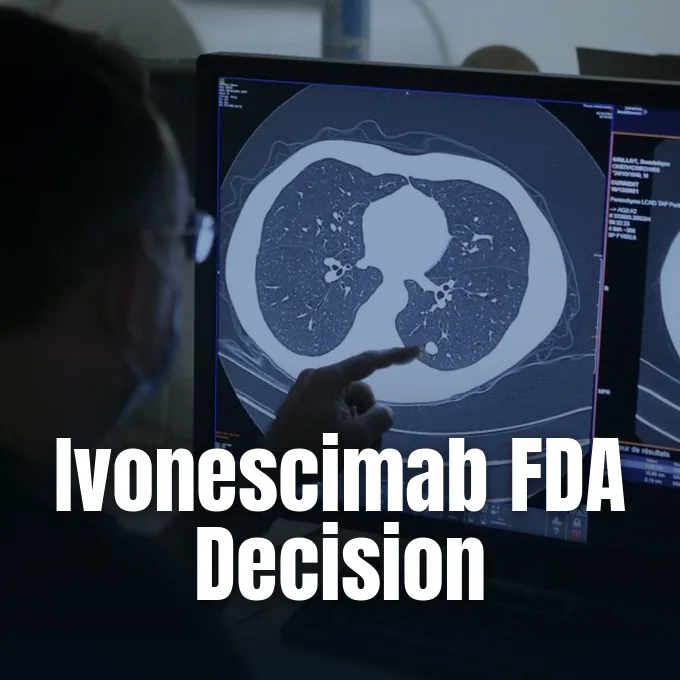
Federal health officials have turned down a licensing bid for Summit Therapeutics ivonescimab, an experimental antibody designed to treat advanced lung tumors. The Food and Drug Administration issued a complete rejection letter on Sunday after clinical trial results failed to confirm that the therapy helps patients live longer [1]. While the regimen delayed disease progression in patients with non-small cell lung cancer, FDA regulators concluded that tumor stabilization without survival gains could not justify market clearance [3]. The decision halts the arrival of a medicine that had emerged as a symbol of China’s expanding role in global oncology development [2].
- The Regulatory Decision on Overall Survival
- Why Regulators Demanded Definitive Survival Evidence
- Combining Dual Targets in Summit Therapeutics Ivonescimab Regimens
- Clinical Data from the Global HARMONi Study
- Market Outlook for Summit Therapeutics Ivonescimab Regimens
- What Lies Ahead for Bispecific Antibodies
The Regulatory Decision on Overall Survival
The FDA formalized its decision through a complete response letter delivered to Summit Therapeutics and Akeso on Sunday after agency reviewers concluded that clinical data failed to satisfy statutory efficacy benchmarks [5]. Regulators stated that the biologics license application lacked sufficient proof of clinical benefit because the treatment did not extend patient lives by a statistically meaningful margin during randomized testing [6]. In their written review, FDA officials concluded that slowing tumor worsening “does not support the positive benefit-risk profile in support of approval” when survival metrics remain flat [1]. That regulatory stance matches previous FDA practice where prolonging patient survival outweighs temporary tumor shrinkage on radiological scans [5]. Agency reviewers prioritized overall survival over scan delays, as reported by STAT [1].
Florida-based Summit Therapeutics licensed commercial rights outside China from Akeso Biopharma, which created ivonescimab in its laboratories [2]. The application sought approval for patients whose EGFR-mutated lung tumors had spread after previous tyrosine kinase inhibitor therapy. Akeso launched ivonescimab in China in May 2024 for this indication. Yet FDA regulators in the United States insisted that domestic clearance needs independent survival evidence showing that Western patients live longer when taking ivonescimab alongside platinum chemotherapy [6].
Summit Therapeutics leadership voiced disappointment following the FDA ruling. “We are disappointed for patients and their families awaiting additional treatment options in this setting,” said Robert Duggan, Co-CEO of Summit, in a Sunday statement [3]. Ivonescimab has no marketing clearance in the United States or Europe [6].

Why Regulators Demanded Definitive Survival Evidence
In oncology drug reviews, the FDA distinguishes between progression-free survival and overall survival when determining whether an experimental medicine offers genuine clinical value to patients. Progression-free survival tracks the number of months a patient lives before radiological scans reveal new tumor growth or physical disease progression. In contrast, overall survival measures total lifespan from the start of therapy until death, representing the definitive gold standard that FDA reviewers demand before clearing new oncology treatments [5]. Tumor shrinkage alone cannot substitute for extended lifespan. When a therapy halts tumor growth for a few months without helping patients live longer, FDA reviewers hesitate to grant marketing clearance [1].
Tumors classified as non-small cell malignancies represent about 85 percent of global lung diagnoses. Because this patient group is so large, federal scrutiny on efficacy is rigorous. Federal drug regulators maintain strict verification procedures when safety signals emerge, such as when the FDA evaluated potential avacopan withdrawal amid evolving clinical trial doubts. That same regulatory rigor applies to efficacy claims in late-stage oncology trials evaluated by the FDA [5].
Summit Therapeutics tried to bolster its file by submitting unprespecified survival calculations to the FDA [2]. These post-hoc reviews revealed a hazard ratio of 0.76 throughout the full patient group [6]. Regulators at the FDA rejected the supplementary analyses because Akeso and Summit had not outlined those calculations in their original trial protocol. FDA reviewers held that retrospective subgroup estimates cannot replace prespecified trial endpoints [2].
Combining Dual Targets in Summit Therapeutics Ivonescimab Regimens
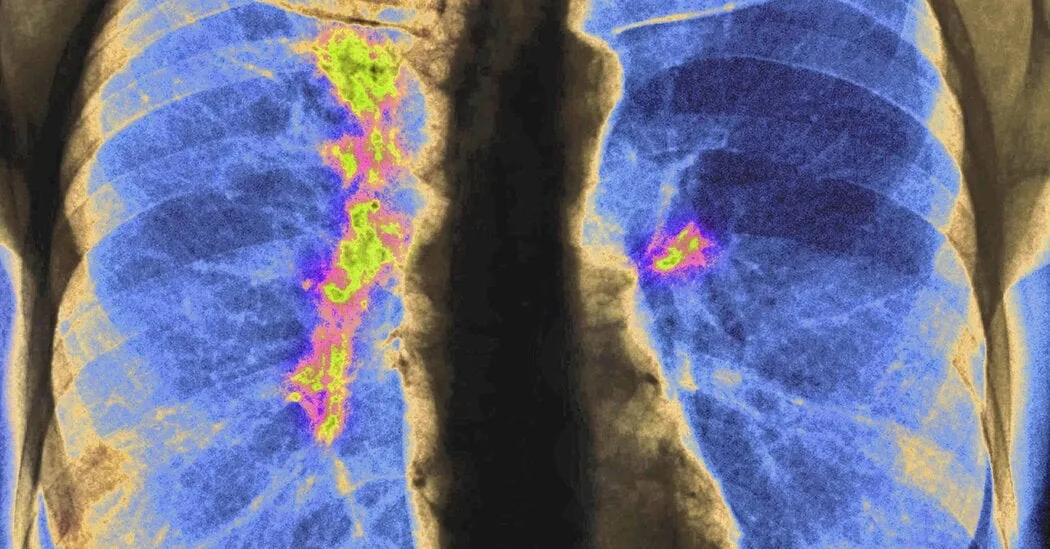
The molecular design of Summit Therapeutics ivonescimab sets it apart from standard oncology treatments currently used in clinical oncology. Most existing immunotherapies rely on conventional monoclonal antibodies that attach to a single disease target on immune cells or tumor tissue. In contrast, ivonescimab is a bispecific antibody engineered to bind two separate cellular targets at the same time. Researchers at Akeso designed the single molecule to attack cancer growth on two biological fronts. By linking two separate therapeutic mechanisms in one engineered protein, developers hoped to overcome treatment resistance that often blunts single-agent drugs during prolonged therapy [5].
Ivonescimab binds first to PD-1, an inhibitory checkpoint receptor located on immune T-cells. Malignant cells often use the PD-1 pathway to evade detection and suppress immune activity. By blocking this receptor, ivonescimab strips away that camouflage so that human T-cells recognize and attack malignant tissue, while its second arm simultaneously binds VEGF to halt the formation of new blood vessels that tumors require to deliver oxygen and nutrients as they expand. Blocking VEGF starves the tumor microenvironment [5].
In overseas head-to-head testing, the bispecific antibody achieved a 34 percent improvement in progression-free survival compared to standard regimens [5]. That performance sparked enthusiasm among oncology specialists looking for alternatives to standard checkpoint inhibitors [3]. The biological concept is compelling even if regulatory hurdles persist [5].


Clinical Data from the Global HARMONi Study
Summit Therapeutics built its biologics license application around clinical data gathered from the multinational Phase 3 HARMONi trial [3]. The clinical study evaluated ivonescimab combined with platinum-based chemotherapy against chemotherapy alone in patients with advanced non-small cell lung cancer [6]. Investigators enrolled clinical trial participants at medical centers in the United States, Canada, Europe, and Asia to assess efficacy in multinational patient groups [2]. The study aimed to test whether the progression-free survival results first documented in China could be replicated in Western patient populations [3]. The trial showed clear delays in disease progression for patients receiving the experimental drug combination [2].
Despite meeting its main progression endpoint, HARMONi ran into severe regulatory trouble when analysts evaluated total patient lifespans [3]. The overall survival curves showed a favorable directional trend, but the difference between treatment arms never achieved statistical significance in the planned analysis [6]. Summit executives argued that sluggish patient enrollment had weakened the statistical power of the trial, obscuring what they believed was a genuine therapeutic benefit [2]. Company leaders traveled to FDA headquarters in September to present updated survival calculations from longer patient follow-up, yet regulators remained unconvinced that the data proved true efficacy [3]. The agency held firm that retrospective analyses cannot rescue a missed survival goal [2].
Trial design hurdles often challenge other experimental therapies as well, illustrated by recent evaluations where a pelacarsen study missed primary endpoints despite positive biomarker trends. In lung cancer, failing to meet an overall survival goal creates a regulatory barrier that supplemental charts cannot overturn [5].
Market Outlook for Summit Therapeutics Ivonescimab Regimens
The regulatory rejection brought a check on market expectations surrounding Summit Therapeutics ivonescimab in the pharmaceutical industry. Wall Street analysts had previously described the drug as “the next major backbone” of cancer medicine, as Graig Suvannavejh, managing director at Mizuho Securities, told BioSpace earlier this month. Industry observers had even dubbed it a potential “Keytruda killer” after Chinese trial data showed it outperforming Merck’s blockbuster immunotherapy pembrolizumab in a direct head-to-head comparison. Keytruda currently holds more than 40 separate indications across different tumor settings, representing a massive commercial footprint that competitors must navigate [3].
Financial stakes tied to the PD-1xVEGF class are massive across the biotechnology sector. Market forecasters at major investment banks expect the global market for these bispecific therapies to reach $30 billion by 2032, while analytics group Evaluate projected that ivonescimab alone could generate $4.4 billion for multiple cancer types by 2030 [3]. The regulatory rejection also carries implications for AstraZeneca, a major corporate backer that has monitored Summit Therapeutics closely [4]. On Wall Street, Summit Therapeutics shares closed Friday at $14.15 before edging up to $14.17 in after-hours trading. The stock dropped 6.14 percent [6].
Chinese drugmakers accounted for 56 percent of all biopharma licensing deal value worldwide so far this year, compared to just 10 percent in 2021 [3]. This rapid expansion shows how Western biotechs have increasingly looked to China for innovative oncology candidates [2]. Summit Therapeutics built its corporate model on this cross-border strategy [3].
What Lies Ahead for Bispecific Antibodies
The complete response letter leaves Summit Therapeutics with a complicated path forward to win American marketing authorization for its oncology candidate. Industry analysts suggest that rescuing the drug will require new clinical trials designed from the ground up to capture overall survival in varied patient groups [5]. In China, partner firm Akeso continues to test ivonescimab in small cell lung cancer, biliary tract tumors, head and neck cancer, and gastroesophageal junction cancer. But Summit Therapeutics did not outline next steps for the EGFR lung cancer indication in its Sunday statement, leaving its regulatory timetable uncertain [3].
For patients with advanced lung tumors, standard treatments are unaffected by the regulatory decision. Existing immunotherapies and targeted kinase inhibitors remain widely accessible through standard oncology practices nationwide, meaning that oncologists will continue relying on genetic biomarker testing to match patients with approved therapies. Patients currently participating in clinical trials can continue their regimens under existing trial protocols. The FDA decision applies solely to commercial licensing. Investigational hospital trials continue uninterrupted [5].
The FDA decision establishes an uncompromising benchmark for the next generation of dual-targeting cancer drugs. Developing bispecific antibodies demands multi-regional clinical trials that demonstrate tangible life extension rather than scan-based tumor delays alone [5]. Bringing those scientific ideas to American patients will demand survival evidence that leaves no statistical doubt [3].
- ONLINE NEWS Feuerstein, A. (2026, November 15). FDA Rejects Lung Cancer Treatment Ivonescimab From Summit Therapeutics. STAT. [Article Link]
- ONLINE NEWS Robbins, R. (2026, November 15). F.D.A. Rejects Closely Watched Lung Cancer Drug From China. The New York Times. [Article Link]
- ONLINE NEWS Armstrong, A. (2026, November 15). Summit’s PD-1xVEGF Rejected by FDA in Lung Cancer. BioSpace. [Article Link]
- ONLINE NEWS Carson, E. (2026, November 15). FDA Doesn’t Approve Summit’s Lung Cancer Drug From China. Investor’s Business Daily. [Article Link]
- ONLINE NEWS Delgado, S. (2026, November 15). FDA Rejects Summit Therapeutics’ Lung Cancer Drug Ivonescimab Over Survival Data. Factlen. [Article Link]
- ONLINE NEWS RTTNews Staff Writer. (2026, November 15). Summit Therapeutics: FDA Rejects Ivonescimab BLA For EGFR-mutated NSCLC. RTTNews. [Article Link]
- ONLINE NEWS Feuerstein, A. (2026, November 15). FDA Rejects Lung Cancer Treatment Ivonescimab From Summit Therapeutics [Syndicated Feed]. STAT. [Article Link]
APA 7: PerEXP Teamworks. (2026, November 16). FDA Rejects Summit Therapeutics Ivonescimab in Lung Cancer. PerEXP Teamworks. https://perexpteamworks.com/en/summit-therapeutics-ivonescimab-fda-decision/


