





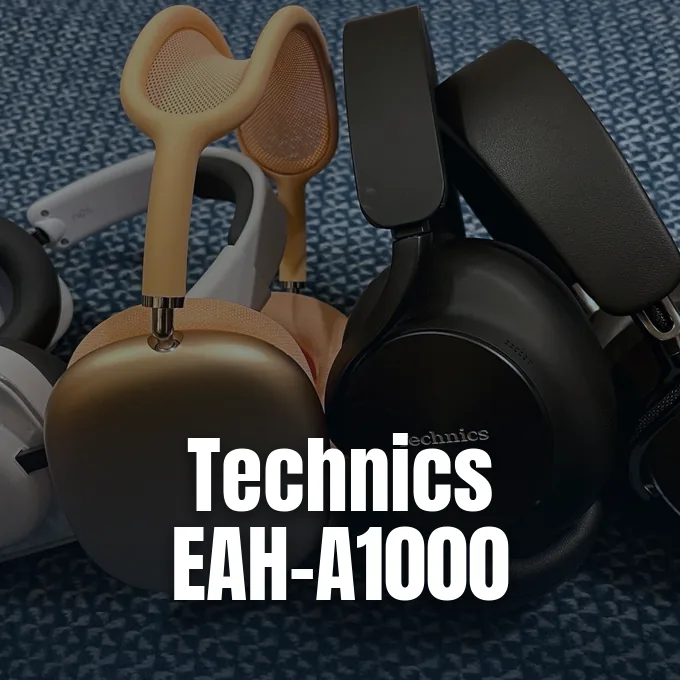
TechRadar audio editor Becky Scarrott tested four prominent wireless noise-canceling headphones ahead of Black Friday shopping, putting the Apple AirPods Max 2 and Technics EAH-A1000 against the Bowers & Wilkins Px8 S2 and Nothing Headphone (a). The evaluation compared comfort, active noise cancellation, playback controls, and battery stamina across models priced between $199 and $799. Scarrott gave every pair either a 4.5-star or 5-star rating. Functional differences stood out in everyday listening [1].
Testing Four Flagship Over-Ear Models
The four headphones in this group test cover distinct price tiers and launch schedules across personal audio. Apple introduced its AirPods Max 2 on March 16, 2026, with an opening price of $549 (£499 / AU$999), but Technics brought the EAH-A1000 to market on September 29, 2026, at $449 (£399 / AU$699). Nothing entered the comparison at a lower budget with its Headphone (a), unveiled on March 13, 2026, for $199 (£149 / AU$329). The oldest contender in the test is the Bowers & Wilkins Px8 S2, which debuted on September 24, 2025, carrying an MSRP of $799 (£629 / AU$1,299). That price spread means shoppers must decide whether luxury styling justifies spending four times the price of an entry pair [1].
Seasonal discounts highlighted cheaper options as well. Tom’s Guide writer Tammy Rogers tracked headphone deals at Amazon, noting that “physical controls are better” on sub-$50 models like the JLab JBuds Lux ANC discounted from $99 to $39, the Sony WH-CH530 at $38, the JBL Tune 530BT at $29, and the CMF Headphone Pro at $49 [2].
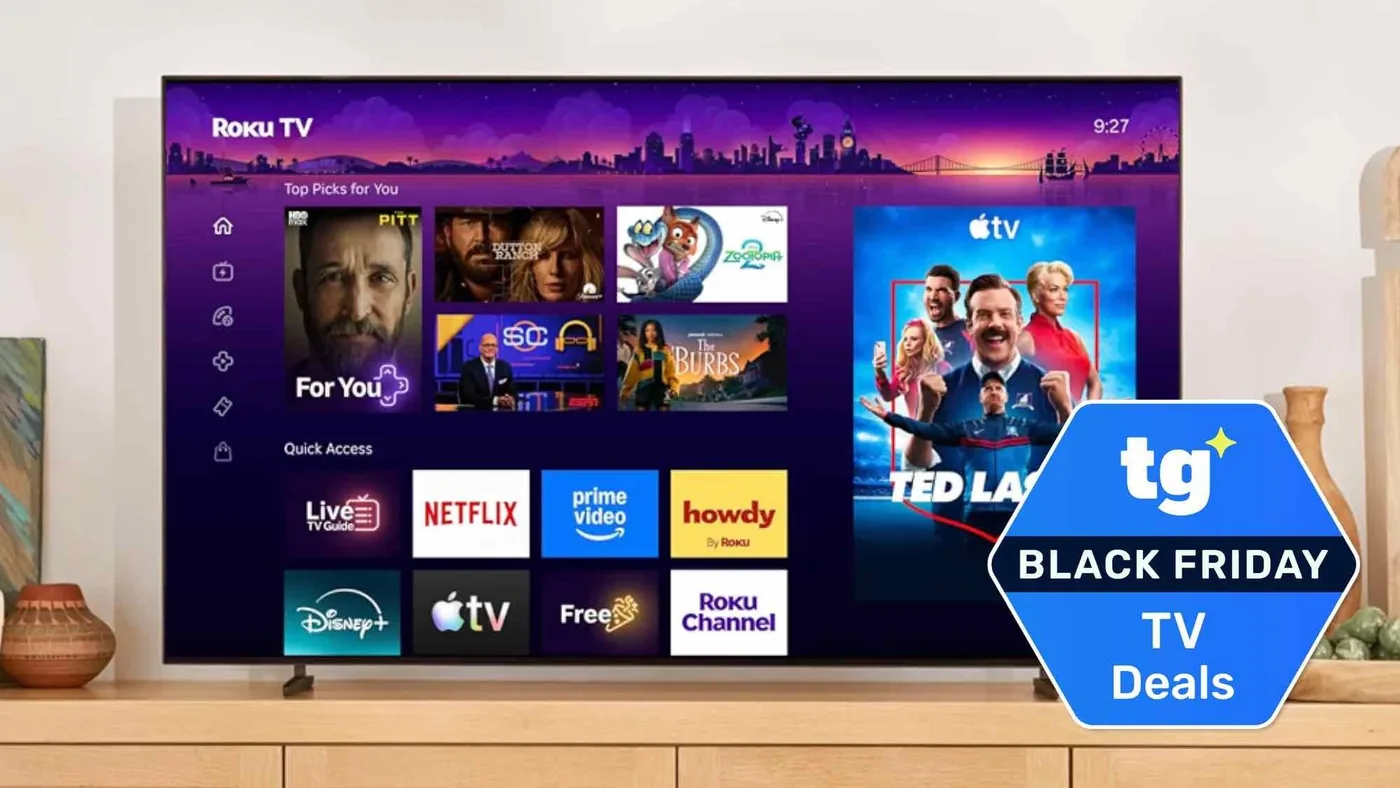
Early Best Buy sales also cut prices on connected living room gear, with Madeline Ricchiuto reporting for Tom’s Guide that Roku Ultra streaming players fell to $89 [3]. Shoppers comparing Apple hardware discounts during holiday promotions also saw early AirPods Pro 3 deals reducing prices on mobile earbuds. That retail background gave context to premium pricing as buyers decided whether over-ear cans justified extra cost over pocket-friendly earbuds.
Evaluating Technics EAH-A1000 Comfort and Design
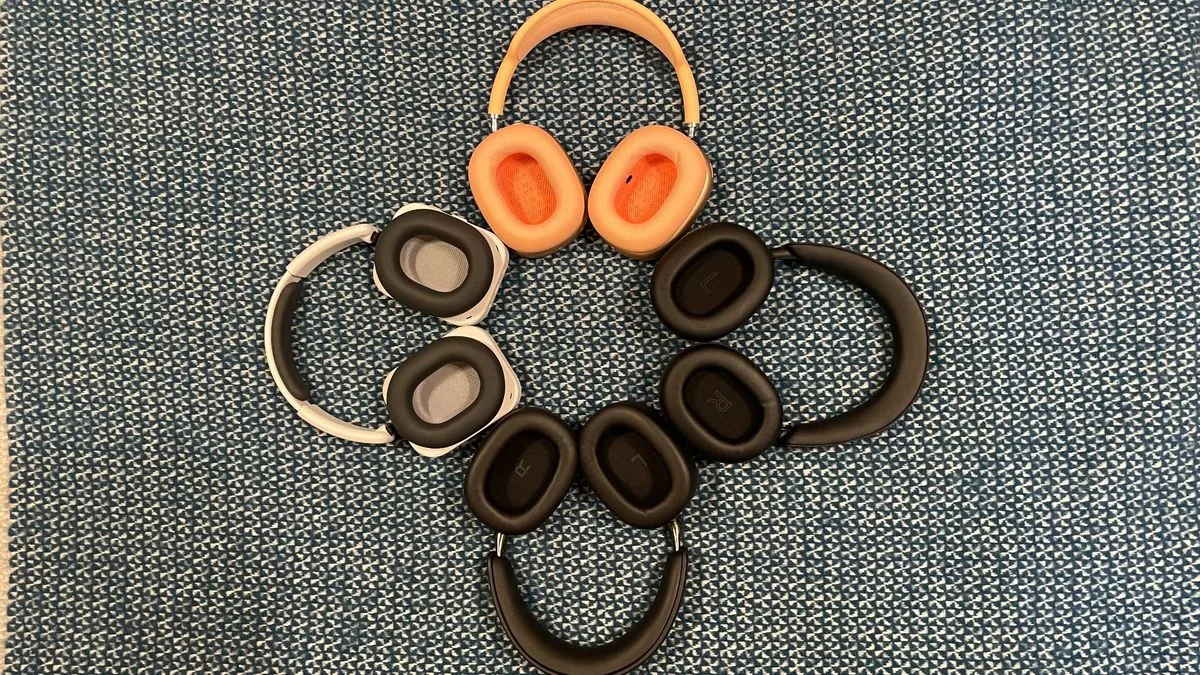
The Technics EAH-A1000 weighs 306g. It arrived as the lightest model in the group test and combined a lightweight frame with soft vegan leather cushions. The Technics earcups angle at 18 degrees. A female design engineer shaped that angled orientation to provide a natural resting position during long listening sessions. By contrast, Apple built the AirPods Max 2 at 386.2g, which ranked as the heaviest pair in the test by a wide margin. Even so, Apple’s mesh headband distributed that mass smoothly across the crown of the head to minimize pressure points. Scarrott chose the AirPods Max 2 as the comfort winner of the test, though its bundled case remains a flimsy sleeve that offers little real protection [1].
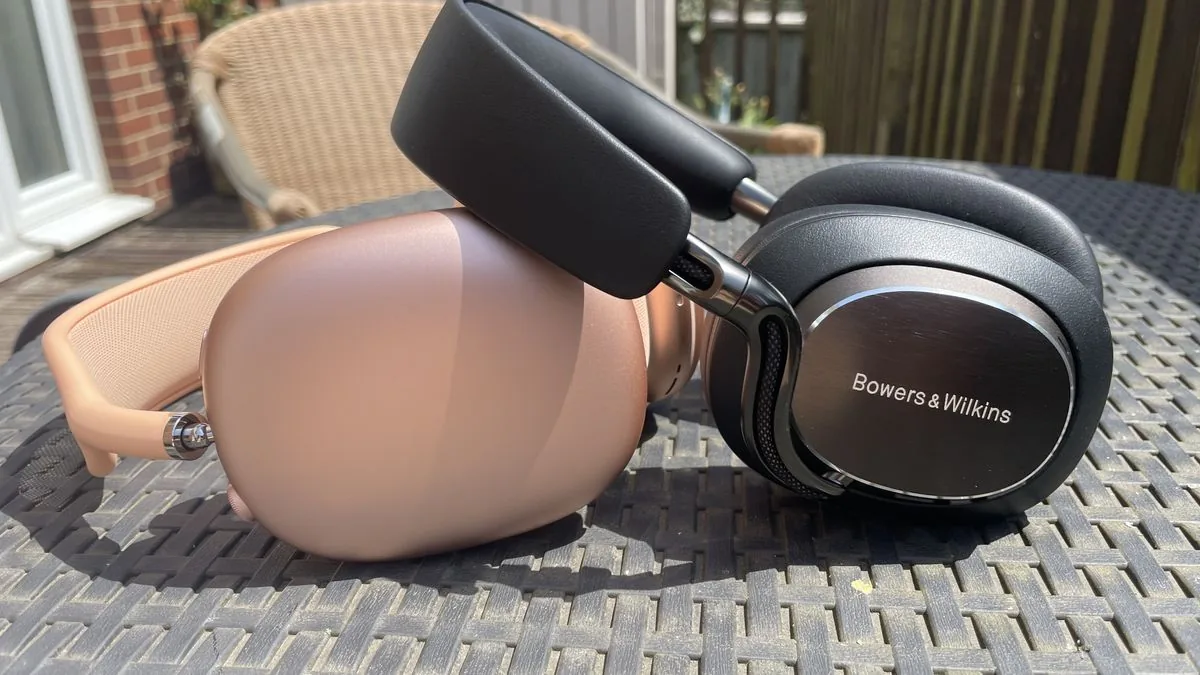
Scarrott picked the Bowers & Wilkins Px8 S2 as the design winner. It features burnished aluminum arms, exposed yoke cables, and Nappa leather. The 310g chassis includes replaceable memory foam beneath the headband. A qualified technician can service that padding when it wears down [1].
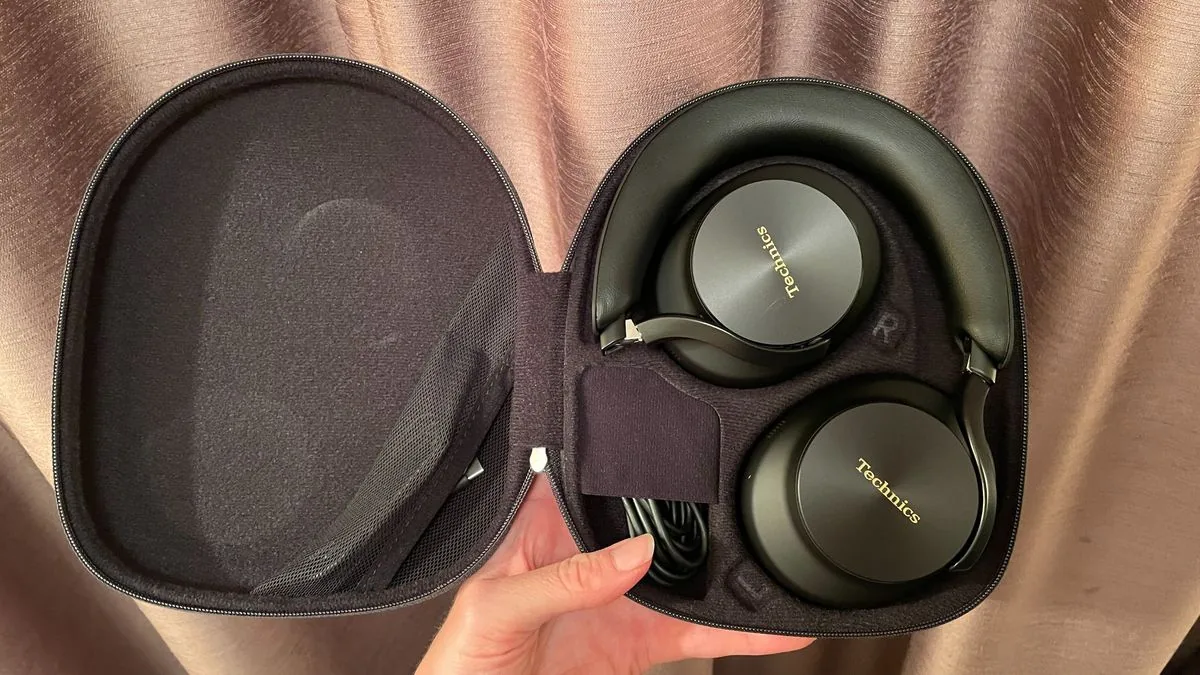
Nothing matched that 310g weight with its Headphone (a) and showcased distinct transparent accents. It comes with only a soft pouch. Technics took a safer route by including a compact hard-shell case that shields the EAH-A1000 during travel. It also supports USB-C wired audio playback, matching capabilities on the Px8 S2 and Nothing Headphone (a) when wireless battery power runs dry [1].


Active Noise Cancellation Performance
Noise cancellation results split sharply by operating system. Apple took the top spot for iPhone owners, combining strong acoustic silencing with ecosystem software tools like Conversation Awareness, which automatically drops volume and activates transparency mode when the wearer speaks. The Digital Crown handles quick commands. When paired with newer iPhones running Apple Intelligence, users can deploy Live Translation directly from that dial. Scarrott noted that Apple’s Spatial Audio with dynamic head-tracking created a convincing cinema feel when streaming Gravity on an iPad, but Apple omitted hearing tests found on AirPods Pro earbuds [1].
On Android devices, the Technics EAH-A1000 proved to be the strongest noise-canceling performer. Listeners can set attenuation manually or choose an adaptive mode inside the Technics AudioConnect app. Cranking the virtual dial to maximum provided better noise reduction than Bowers & Wilkins or Nothing delivered in tests [1].
Technics also added dependable wearer detection to pause audio when removing the headphones. Ambient transparency mode felt slightly undercooked, letting in less outside speech than Apple’s system. Meanwhile, the Bowers & Wilkins Px8 S2 handled ambient noise adequately rather than spectacularly, but its Wear Sensing feature paused and resumed music smoothly. Nothing provided respectable noise cancellation for a $199 headset, including custom Concert and Cinema spatial modes, but it skipped auto-pause sensors to reduce manufacturing costs [1].
Battery Life and Playback Controls
Stamina winner honors went to Nothing. The Nothing Headphone (a) delivers up to 135 hours of playback with active noise cancellation turned off, far outlasting every competitor in Scarrott’s test. Hardware controls also impressed. Nothing placed an intuitive roller on the right earcup for volume adjustments and added a snappy rocker switch for track skips alongside a round multi-function button for custom shortcuts. Onboard LDAC codec support lets compatible Android handsets stream high-resolution music files wirelessly. Scarrott wrote that the on-ear controls “have no business being this good at this level” and favored the physical roller over costlier alternatives [1].
Technics secured second place in battery endurance. It delivers 45 hours with noise cancellation on and up to 90 hours with it off. However, its physical control buttons proved less dependable, occasionally failing to register presses when skipping tracks or powering down [1].
Bowers & Wilkins delivered 30 hours of battery life on the Px8 S2, supporting Qualcomm aptX Adaptive and aptX Lossless codecs for high-bitrate streaming. Apple finished last in stamina with only 20 hours of playback when noise cancellation is active. That shorter runtime requires frequent recharging even if the Digital Crown roller provides smooth volume adjustments [1]. Broader audio sales reflected similar buyer choices as Sonos cuts speaker and soundbar prices for Black Friday across home theater lineups.
Comparing Technics EAH-A1000 Sound Profiles
Acoustic tuning varied widely across the quartet. The Technics EAH-A1000 relies on magnetic fluid driver technology, which is a design first in the over-ear wireless category. That hardware delivers controlled lower frequencies and clear instrument separation without bloated bass, which keeps vocal nuances intact across acoustic recordings. Apple tuned the AirPods Max 2 for energetic listening. The drivers produce punchy bass response and sharp timing that Scarrott highlighted when streaming Bad Bunny’s Tití Me Preguntó. The AirPods Max 2 soundstage feels open and lively, making it an engaging option for modern pop and film soundtracks during daily commutes [1].
Listeners seeking neutral accuracy found greater fidelity in the Bowers & Wilkins Px8 S2. With active noise reduction switched off, the headphones revealed an uncolored sound profile that resolved subtle instrumental details with higher loyalty to original master tracks than Apple’s warmer, bass-forward presentation [1].
These audio profiles demonstrate why the four headphones target distinct buyer priorities rather than a single model sweeping every category. Apple remains the natural choice for iPhone owners who want top comfort and spatial audio, while the Technics EAH-A1000 serves Android users needing strong noise cancellation and long battery life. At $199, Nothing delivers exceptional value, and Bowers & Wilkins rewards audiophiles who prioritize luxury materials and acoustic accuracy [1].
- ONLINE NEWS Scarrott, B. (2026, November 22). I tested four of the best wireless noise-canceling headphones in 2026, and there’s only one pair I’d buy on Black Friday. TechRadar. [Article Link]
- ONLINE NEWS Rogers, T. (2026, November 22). There are loads of headphones for under $50 this Black Friday — here are the pairs I’d recommend you buy. Tom’s Guide. [Article Link]
- ONLINE NEWS Ricchiuto, M. (2026, November 22). 6 Black Friday Roku deals at Best Buy I’d buy right now. Tom’s Guide. [Article Link]


