





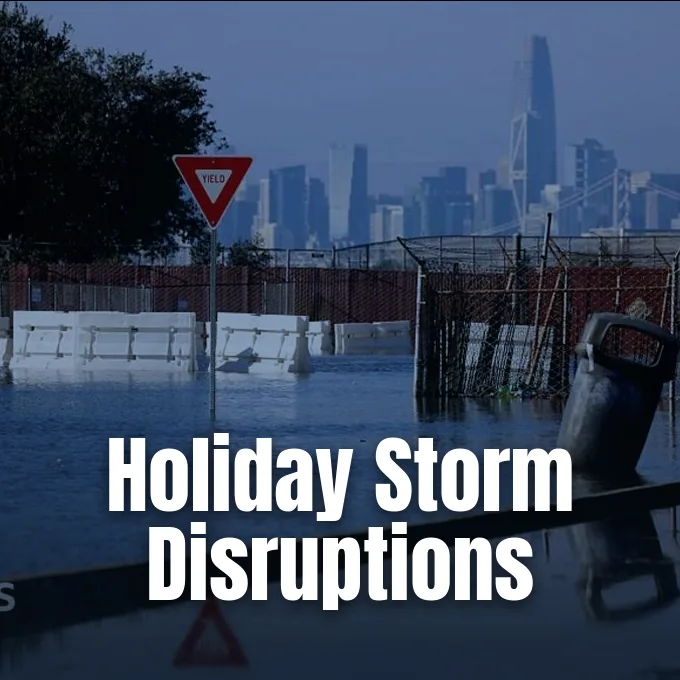
Rough coastal weather disrupted holiday travel during Thanksgiving 2026 across the United States as twin storm systems brought heavy rain, gusty winds, and coastal flooding. Tracking service FlightAware recorded hundreds of flight cancellations and thousands of delays while more than 80 million travelers moved through airports and highways. The Federal Aviation Administration warned that weather-related flight delays could persist throughout the week as stormy conditions affected both coasts. In New York City, parade organizers postponed the annual Macy’s Thanksgiving parade to Saturday to protect spectators and balloon handlers from high winds. The stormy weather coincided with one of the heaviest transit periods of the year across North America [1].
Flight Disruptions During Thanksgiving 2026
Airlines cancelled nearly 400 flights across the country on Thursday as heavy rain and gusty winds battered major transit hubs. FlightAware tracked another 1,200 delayed flights into, out of, or within the United States during the holiday. Disruptions had already mounted on Wednesday, when the tracking site reported more than 6,800 delays and more than 160 cancellations nationwide. These cancellations left holiday travelers waiting in crowded concourses while airline gate agents managed rebooking queues under difficult conditions [1].
Holiday travel estimates from the American Automobile Association (AAA) projected that 81.5 million Americans would travel at least 50 miles (80km) from home over a seven-day holiday window. The Federal Aviation Administration (FAA) issued advisories warning that storm activity along both coasts would disrupt flight schedules throughout the week. Ahead of Thanksgiving 2026, passenger numbers reached peak holiday volumes. Roadways and airport security checkpoints experienced heavy congestion despite advance warnings from the National Weather Service [1].
Major connecting airports struggled to maintain regular flight intervals as incoming aircraft encountered holding patterns over saturated air corridors. Storm cells forced route adjustments across the Midwest and Atlantic seaboard, compounding ground delays for inbound flights. Ground crews worked through heavy rain to service aircraft and transfer baggage between delayed connections [1].
Miami Airport Runway Investigation
On Wednesday evening, federal regulators briefly grounded all flights bound for Miami International Airport after a FedEx cargo aircraft overran a runway upon touchdown. The incident forced airport authorities to close all but one runway while emergency crews responded on the airfield. FedEx confirmed that its flight experienced an issue upon landing, stating: “We are grateful that our crew is safe and there are no reported injuries. We are coordinating closely with investigating authorities, and any additional questions should be referred to the FAA.” The agency opened an inquiry into the runway excursion [1].
An airport employee who spoke anonymously to CBS News raised the possibility that adverse weather played a role in the accident. “They tried as hard as they could to stop, but I don’t know if it was the weather because the rain and the wind were really bad, and they just couldn’t stop in time and went right off the runway and veered off into the grass,” the worker said. Wednesday’s runway incident occurred 11 weeks following an earlier cargo plane accident at the Miami facility that left five people dead and five motorists injured [1].
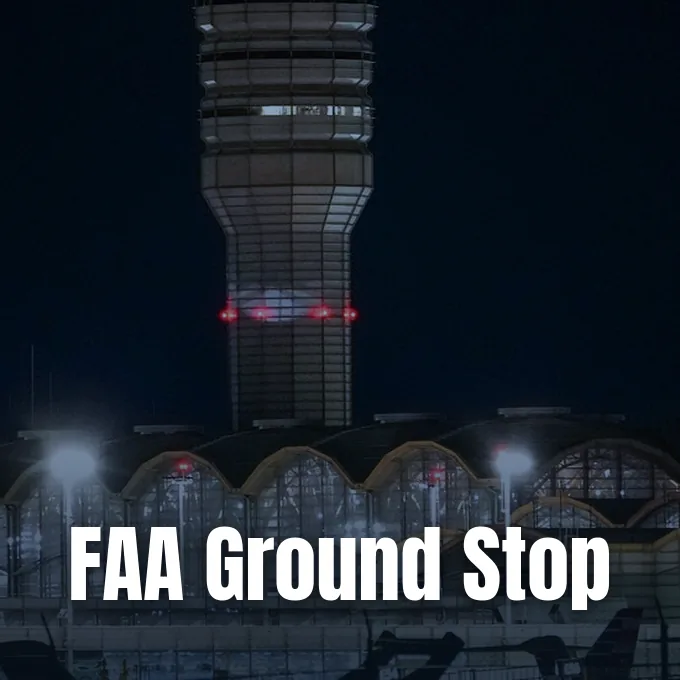
Miami International Airport ranks among the top five domestic destinations for travelers during Thanksgiving 2026, according to AAA travel records. Wednesday’s localized grounding differed from wider airspace interruptions examined in reporting on how an FAA ground stop sparked public alarm after network failure, as air traffic managers responded to an active runway blockage. Residual delays lingered into Thursday morning while maintenance teams inspected runway surfaces [1].
Storm Surges Affecting Thanksgiving 2026
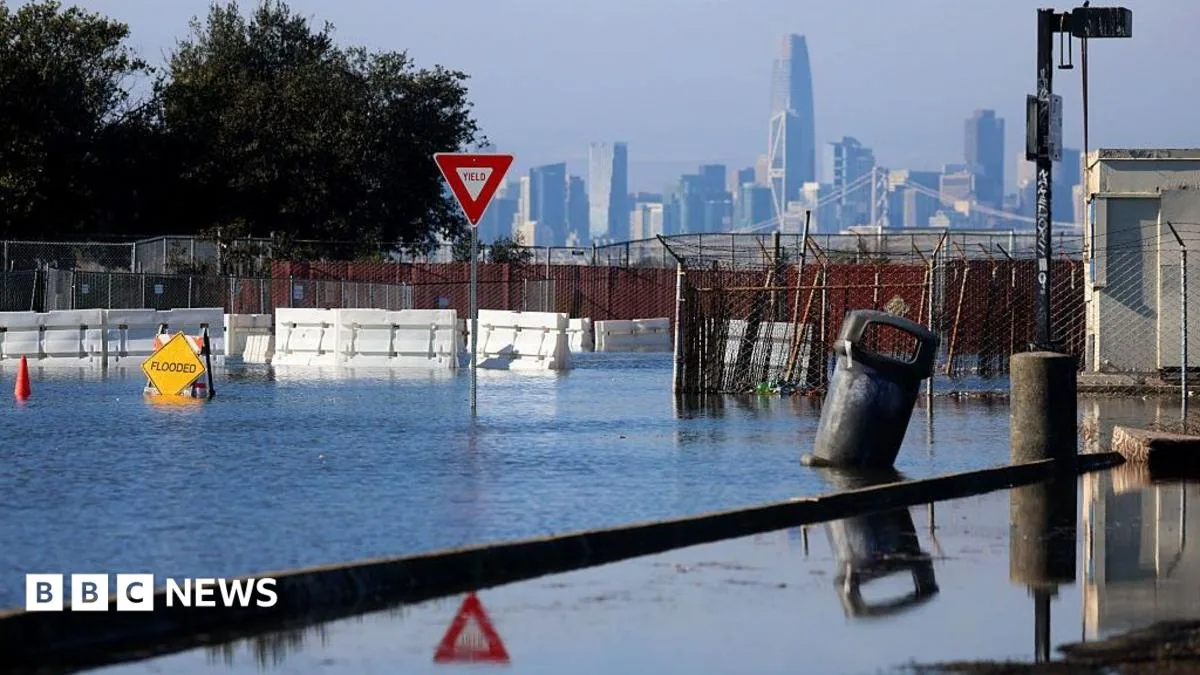
Along the Atlantic coast, the National Weather Service forecast strong storm activity bringing high winds, heavy rainfall, and coastal flooding from New England down through the mid-Atlantic. New Jersey Governor Mikie Sherrill declared a state of emergency ahead of the storm to coordinate emergency response efforts across flood-prone coastal counties. Coastal communities that suffered flooding earlier this autumn prepared for renewed inundation as strong onshore winds pushed tides inland. In New York City, organizers moved the Macy’s Thanksgiving Day Parade to Saturday because high winds created unsafe conditions for flying signature giant balloons along city avenues [1].
Storm conditions also descended on the West Coast, where the National Weather Service warned of a series of Pacific storms expected to deliver rain, mountain snow, and strong winds. Water levels along the California coastline were forecast to reach over 8ft (2.4 metres) on Thursday, breaking water level records set just last month as king tides peaked along the shore. Storm systems also moved across the Pacific Northwest, extending into the Canadian province of British Columbia [1].
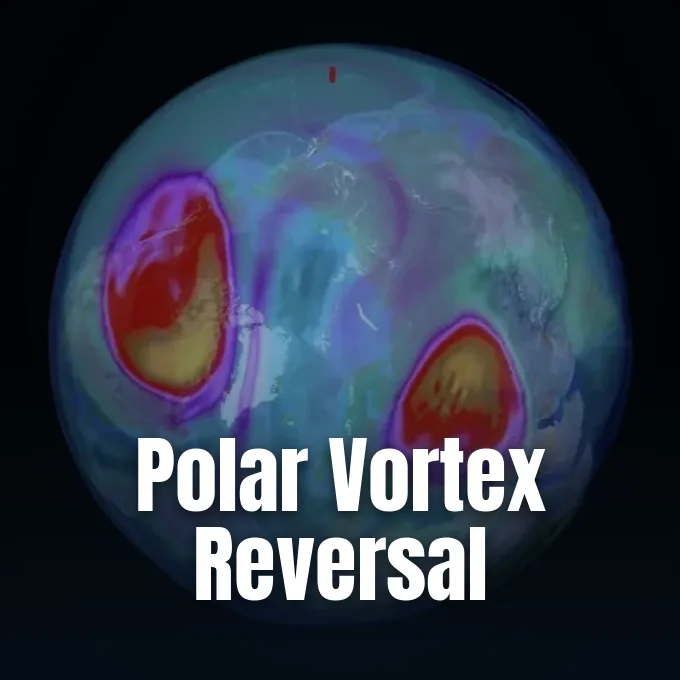
Ocean research teams study how such coastal conditions connect to larger seasonal weather patterns examined in research on how Arctic winds reverse in early polar vortex breakdown observations. Local emergency management agencies along coastal highways kept water rescue crews on standby as king tides peaked near oceanfront communities [1].
Reformation Roots of Harvest Holidays
Holiday travel disruptions interrupt autumn customs rooted in centuries of communal gatherings. Thanksgiving is recognized as a national holiday across the United States, Canada, Saint Lucia, and Liberia, and it is also observed in the Australian territory of Norfolk Island. The observance originated as a day of giving thanks for the blessings of the harvest and the preceding year. While harvest festivals occurred across ancient agrarian societies, the North American holiday took shape through specific religious and civic developments in early modern Europe [2].
In English tradition, days of thanksgiving and dedicated religious services gained prominent standing during the English Reformation in the reign of King Henry VIII. Before 1536, the calendar contained 95 Church holidays, in addition to every Sunday, when people were required by law to attend church and forego manual work. The Church of England introduced ecclesiastical reforms in 1536 that reduced the number of official holidays in the liturgical calendar to 27 [2].
Church calendar reductions altered labor routines across farming villages. Reducing the number of holy days gave farming communities more uninterrupted time to complete seasonal planting and autumn harvesting before winter frost set in [2].
Puritan Days of Thanksgiving
The Puritan faction within the Anglican Church pushed for more thorough reforms, seeking to eliminate all traditional feast days except for the weekly Lord’s Day. Puritans argued that annual holy days like Christmas and Easter lacked direct scriptural authorization and encouraged idle revelry. In their place, church authorities instituted specially proclaimed Days of Fasting and Days of Thanksgiving, which believers viewed as direct responses to acts of divine providence. Communities gathered for solemn prayer during crises or shared feasts when fortunes improved [2].
English authorities proclaimed Days of Thanksgiving following notable military victories, including the triumph over the Spanish Armada in 1588 and the safe deliverance of Queen Anne in 1605. Following the failure of the Gunpowder Plot in 1605, an annual Day of Thanksgiving was established in 1606, which gradually evolved into Guy Fawkes Day on November 5 [2].
Civic and royal leaders proclaimed Days of Fasting to address plagues in 1604 and 1622, prolonged drought in 1611, and damaging floods in 1613. These proclamations linked communal welfare directly to public displays of humility and gratitude, creating a template for civic holidays that later traveled with English migrants to the Americas [2].
Early Observances in North America
English colonists brought these providential customs directly to colonial settlements in North America. In 1619, the charter of English settlers upon their landing at Berkeley Hundred in Virginia formally required an annual day of thanksgiving to commemorate their safe arrival. In New England, colonists established autumn harvest gatherings that combined religious services with shared feasts following successful crop seasons, even though local harvests in New England occurred well before the late-November date observed today. Why did these gatherings endure as permanent civil holidays? Settlers found that regular days of gratitude helped sustain social cohesion amidst isolated frontier settlements facing harsh winter months [2].
Canada developed distinct thanksgiving origins through early northern expeditions and French settlements. Some historians trace the earliest celebration in North America to the 1578 voyage of Martin Frobisher from England in search of the Northwest Passage, where his crew gave thanks for surviving the Atlantic crossing. French settlers who arrived in New France during the 17th century held feast gatherings at the conclusion of the harvest season, often sharing food with local indigenous peoples throughout the winter months [2].
Thanksgiving customs expanded across Canada after 1700 as settlers from New England arrived in Nova Scotia, while subsequent waves of Irish, Scottish, and German immigrants added cultural harvest traditions. United Empire Loyalists who fled the United States during and after the American Revolution introduced familiar American elements, including roast turkey, to Canadian celebrations. Today, as millions of travelers navigate storm-swept airports and coastal highways during Thanksgiving 2026, these journeys continue a centuries-old tradition of gathering family and friends together for the autumn holiday [2].
- ONLINE NEWS Faguy, A., FitzGerald, J., & Habeshian, S. (2026, November 26). More than 1,000 flights cancelled or delayed in US as weather disrupts Thanksgiving travel. BBC News. [Article Link]
- WEBSITE Wikipedia contributors. (n.d.). Thanksgiving. Wikipedia. [Article Link]
APA 7: PerEXP Teamworks. (2026, November 27). Thanksgiving 2026 Travel Stalls Under Severe Coastal Storms. PerEXP Teamworks. https://perexpteamworks.com/en/thanksgiving-2026-travel-storm-disruptions/


