




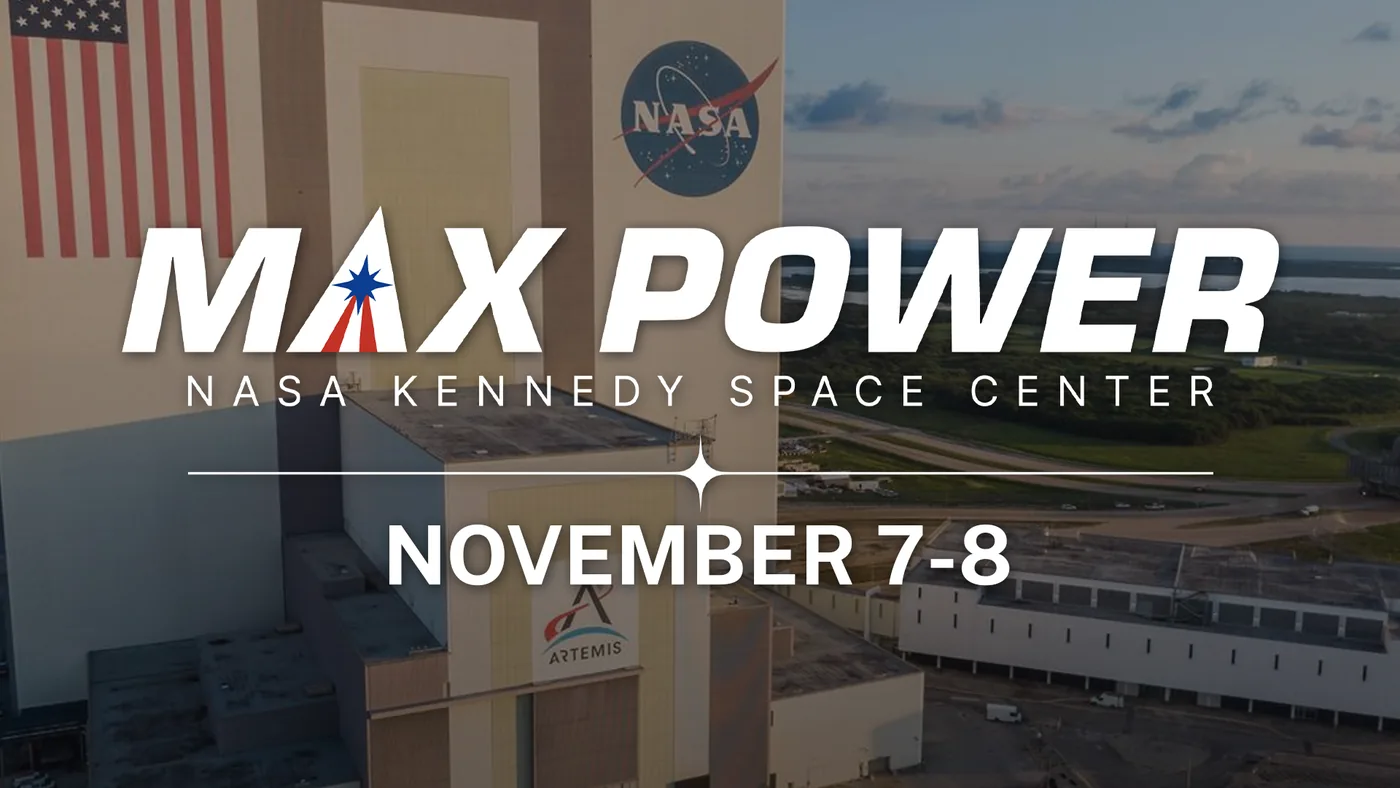
NASA has released the event schedule for NASA MAX POWER, an aerospace technology expo and air show running from November 6 to November 8 on and near Kennedy Space Center in Florida [1]. The gathering brings together agency leaders, flight test crews, and private industry collaborators to present new developments in aeronautics and space exploration. While early media preview sessions begin on Friday afternoon, public gates open over the weekend at 9 a.m. Eastern Standard Time [5]. Visitors can inspect prototype hardware, listen to program briefings, and watch demonstration flights along Florida’s Space Coast.
Three Venues at Kennedy Space Center
The event organizes public programming into three separate park experiences situated near Space Commerce Way in Merritt Island, Florida. Each location focuses on one part of aeronautical engineering, from runway passes to ground exhibitions. The Air Dot Show takes place near the Shuttle Landing Facility for fast jet operations [2].
To handle the scale of the gathering, NASA partnered with several outside event organizations including Space Florida, Air Dot Show, UP.Summit, Delaware North, and Purpose Entertainment. Because these non-governmental groups manage site operations, ticketing runs through their independent web portals so they can cover setup expenses without relying on federally appropriated agency tax dollars. This setup lets civil aeronautics teams present research work while private vendors oversee crowd logistics, bus loops, and entry gates near the Merritt Island facilities. Shuttle buses will link designated pick-up points for guests holding tickets to multiple parks during the two-day public schedule [2].
Activities begin for credentialed journalists on Friday, November 6, between 2 p.m. and 4 p.m. at the NASA Press Site. NASA public affairs officers George Alderman and Cheryl Warner coordinated media access from headquarters in Washington. Reporters booked interview slots before the weekend opened [1].
Flight Demonstrations in the Air Show
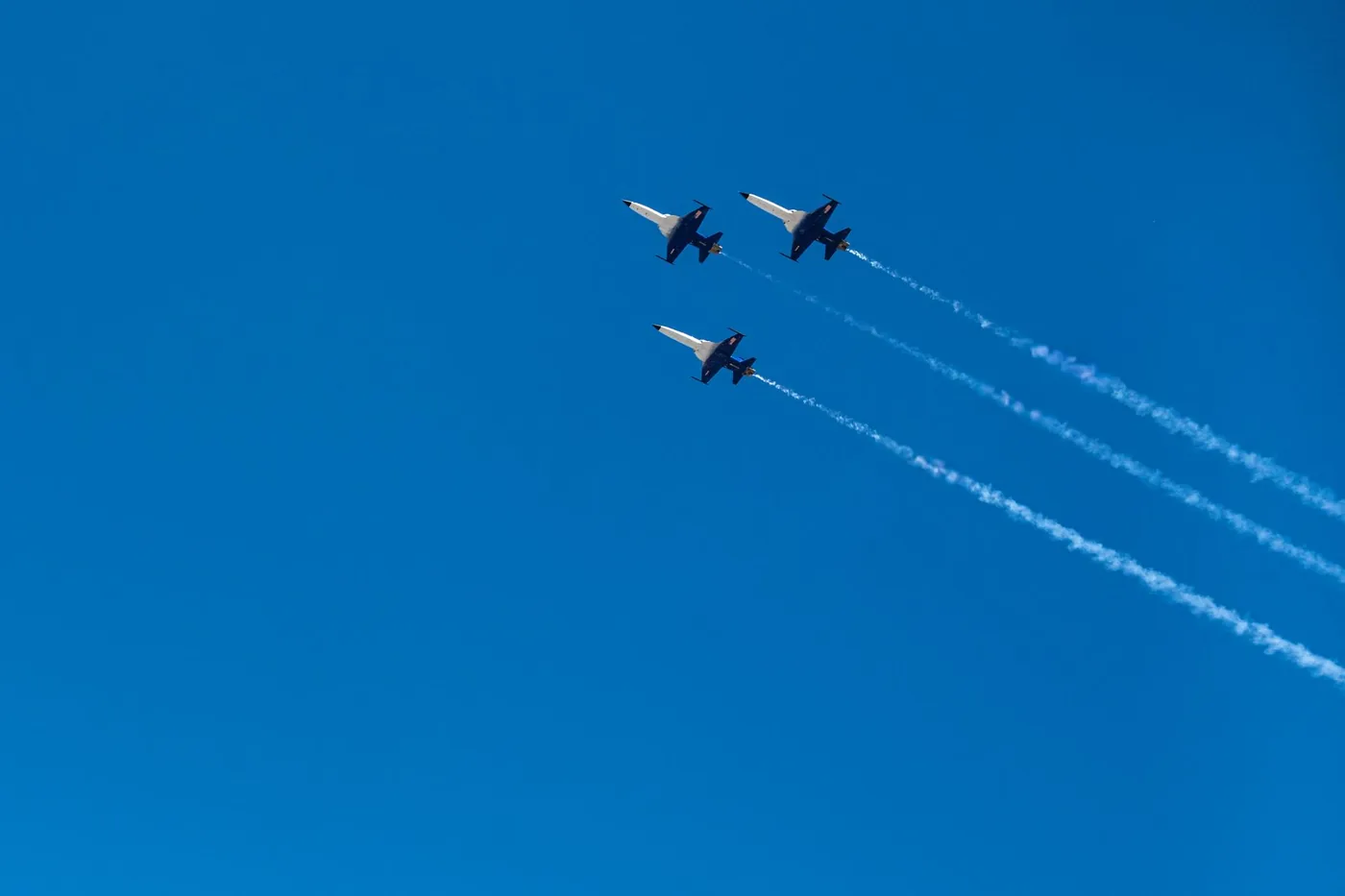
The Air Dot Show serves as the main flight venue, opening its gates at 9 a.m. near the Shuttle Landing Facility with aerial demonstrations scheduled from 1 p.m. to 4:30 p.m. each afternoon [2]. Saturday proceedings start on the Air Dot Show Main Stage at 11:30 a.m. with opening remarks delivered by NASA Deputy Administrator Matt Anderson. Shortly after, at 11:58 a.m., NASA Administrator Jared Isaacman takes to the skies for an F-5 jet flyover above the airfield. Isaacman returns to the flight pattern at 1:31 p.m. in a MiG-29 fighter, repeating both flight runs during the Sunday program [1].
Astronaut meetups form another central element of the air show stage. On Saturday at 12:45 p.m., the public can hear from members of the Artemis III crew, including mission commander Randy Bresnik, European Space Agency pilot Luca Parmitano, mission specialist Frank Rubio, and backup crew member Bob Hines. Sunday brings SpaceX Crew-12 astronauts Jessica Meir and Jack Hathaway [1].
Flight panels at the air show feature experimental aeronautics, including updates on the quiet supersonic X-59 Quesst plane [1]. Quesst mission manager Peter Coen from NASA Langley joins Ron Fehlen of Lockheed Martin Skunk Works for a Saturday briefing titled “The X-59 Takes Flight: How We Got Here and What Comes Next”. On Sunday at 3 p.m., NASA test pilots Troy “Trasher” Asher, Jim “Clue” Less, and Kirt “Skirt” Stallings discuss flight tests [2].
NASA MAX POWER Exhibits at UP.Summit
Inside the UP.Summit tech showcase, visitors at NASA MAX POWER can inspect autonomous drones, robotic rovers, and flight concepts between 9 a.m. and 4 p.m. [2]. Sunday morning opens with a 9 a.m. press gathering focused on supersonic flight, bringing together Laurie Grindle, director of the NASA Aeronautics Division, Quesst manager Peter Coen, and test pilot Jim Less [1].
Space power systems take center stage on Saturday at 10 a.m. during a media discussion with Cynthia Simmons, director of the Space Reactors Division [1]. Simmons discusses fission power technology, including the SR-1 Freedom reactor concept intended to supply surface electricity on planetary bodies. Surface reactors could supply steady electricity during the two-week lunar night when solar cells stop producing power [2]. Aerospace technologist A. C. Charania pointed out that bringing space nuclear reactors, Artemis crews, and supersonic aircraft to one forum gives the public a clear look at upcoming missions [7]. Testing compact reactors is part of agency preparations for deep space journeys [1].
Interplanetary science and flight training round out the UP.Summit stage schedule. Dr. Nicky Fox, associate administrator for Science, joins Dr. Lori Glaze on Saturday at 12:30 p.m. for a talk titled “Science and Exploration: NASA’s Interplanetary Survival Guide: Science and Exploration” [2]. On Sunday at 12:45 p.m., Deputy Administrator Matt Anderson provides an update on the United States Space Academy [1].


Moon Base Briefings and Mission Milestones
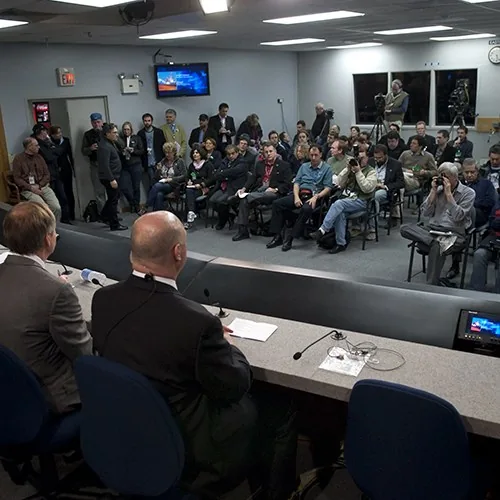
The main media briefing of the weekend takes place on Saturday, November 7, at 5 p.m. in the Press Site Auditorium, where agency leadership will present plans for humanity’s first permanent lunar outpost. The Moon Base project focuses on building surface infrastructure near the lunar South Pole, where shadowed craters contain water ice reserves needed for future crews. NASA Administrator Jared Isaacman will lead the briefing with Moon Base Program manager Carlos García-Galán, Science Associate Administrator Nicky Fox, and Dayna Ise, acting director of the Utility and Infrastructure Office. The team will outline engineering work on power grids, habitat modules, and rover routes [1].
Because on-site capacity inside the Press Site Auditorium is limited, NASA arranged live digital streaming of the Moon Base briefing on agency online channels. Journalists unable to travel to Florida can join virtually and ask questions through phone lines coordinated by Lauren Low in the NASA Headquarters newsroom [1]. Mirage News reported that the briefing provides a direct public update following the recent Inspiration Tour flyovers [5].
Public visitors can also learn about lunar living earlier in the weekend at the Kennedy Space Center Visitor Complex. On Saturday from 1:00 p.m. to 1:30 p.m., researcher Suzanne Bell speaks in the Journey to Mars Theater on how the agency prepares crews to live and work on the Moon. Carlos García-Galán follows at 1:30 p.m. on the UP.Summit stage with a presentation titled “Moon Base: Humanity’s First Deep Space Outpost” [2].
Roman Space Telescope and Flight Panels
Astrophysics forms another pillar of the weekend programming, centered on the upcoming Nancy Grace Roman Space Telescope. On Saturday at 2 p.m., Dr. Julie McEnery, senior project scientist for the mission at NASA Goddard, speaks inside the Journey to Mars Theater [1]. McEnery’s talk, “The Nancy Grace Roman Space Telescope: A Revolutionary New Wide-eyed View of the Universe,” details how the observatory’s wide field of view will survey exoplanets and distant galaxies [2]. Discussions led by McEnery connect with deep space research shared under the NASA Cosmic Origins planning framework, which sets science goals for future space observatories.
NASA Science records link these observatory briefings to ongoing research conducted by the agency fleet. While Roman prepares for future surveys, station astronauts on Expedition 75 have tested space crops and power upgrades in orbit. Earlier missions like Voyager 1 and Voyager 2, launched in 1977 during a rare 175-year alignment of outer planets, show how deep space planning unfolds over decades [4].
Interactive events at the Visitor Complex translate complex astrophysics and rocketry topics for younger students. The resident S.T.E.A.M. Team hosts hands-on building tables, while the WeFlip acrobatic duo uses acrobatics to explain physics concepts to families. Students and young builders also encounter wider agency challenges, such as the NASA Space Apps event that brings open data to teams around the world. Inside the Space Shuttle Atlantis facility, visitors can view “NASA Art from the Vault,” a curated exhibit of aviation and space paintings shown before returning to storage [6].
Ticket Options for NASA MAX POWER
Members of the public planning to attend NASA MAX POWER need individual tickets for each park venue they wish to enter. Because the three zones are managed by separate partner groups, guests can choose to visit only the air show, inspect tech exhibits at UP.Summit, or spend the day at the Visitor Complex. Visitor Complex gates open from 9 a.m. to 5 p.m. on Saturday and until 6 p.m. on Sunday, while UP.Summit runs from 9 a.m. to 4 p.m. both days. Air Dot Show parking is based at the Shuttle Landing Facility, where gates open at 9 a.m. for afternoon flight schedules [2].
In honor of the upcoming 250th anniversary of the United States, the Kennedy Space Center Visitor Complex offers a $17.76 discount on single-day admission during the event. Guests can watch the daily MAX POWER Parade, which features off-Earth rover models, astronauts, costumed characters, and a marching band [6].
Visitors can plan their weekend using the MAX POWER mobile application, which supplies live schedule updates, venue maps, and bus stop details. Questions about event access or collaborations can be sent to agency project inboxes at maxpower@mail.nasa.gov or nasa-brand-partnerships@mail.nasa.gov [2]. Media credentialing for the weekend is closed, but approved journalists can arrange interviews through Lauren Low at lauren.e.low@nasa.gov. With supersonic flights, rover exhibits, and Moon Base announcements on the schedule, the event offers a broad look at upcoming aerospace projects [1].
- PRESS RELEASE NASA. (2026, October 30). NASA releases MAX POWER key events for media, participants. [Article Link]
- WEBSITE NASA. (2026, August 14). NASA MAX POWER. [Article Link]
- WEBSITE NASA+. (2024, March 14). News & events. [Article Link]
- ONLINE NEWS NASA Science. (2023, April 24). Latest news, missions and discoveries from NASA Science. [Article Link]
- ONLINE NEWS Mirage News. (2026, October 30). NASA announces key events for MAX POWER participants and media. [Article Link]
- WEBSITE Kennedy Space Center Visitor Complex. (2026, October 29). MAX POWER. [Article Link]
- WEBSITE Charania, A. C. (2026, October 30). NASA releases MAX POWER key events for media, participants. LinkedIn. [Article Link]
APA 7: PerEXP Teamworks. (2026, October 31). NASA MAX POWER Unveils Supersonic Flights and Moon Outpost Plans. PerEXP Teamworks. https://perexpteamworks.com/en/nasa-max-power-events-schedule/


