



TP-Link announced on Monday, October 19, that it signed a letter of intent with contract hardware maker Key Tronic to begin assembling routers at a Mississippi plant, aiming to recover US market access after federal regulators blocked imported models. The deal follows official action by the Federal Communications Commission, which banned new foreign-made consumer routers earlier this year over national security concerns. While stores can still sell stock imported before the rule took effect, the company wants US assembly to regain access to American buyers. Under the proposed plan, new TP-Link routers could roll off factory lines as early as 2027 if officials approve the pact [1].
The Key Tronic Assembly Agreement
The partnership pairs TP-Link Systems Inc. with Spokane-based hardware maker Key Tronic to move final device assembly into an existing factory located in Mississippi. Company leaders framed the plan as a way to expand local output while satisfying federal security rules. “This LOI with Key Tronic demonstrates our firm commitment to expanding domestic advanced manufacturing, and establishing America as our base for delivering secure, reliable connectivity solutions to households and businesses around the world,” Jeffrey Chao, Chief Executive Officer of TP-Link Systems Inc., said. Yet signing the letter of intent does not guarantee that officials will let the finished units be sold in the United States [1].
Next-generation hardware stands at the center of the plan. TP-Link explained that the pact is part of its “long-term effort to accelerate US investment in high-tech manufacturing and job creation, designing and assembling next-generation products for American consumers here on American soil”. If federal officials clear the arrangement, new Wi-Fi 8 routers will likely be among the first products put together in Mississippi [2]. Those high-speed models would serve as the opening wave of stateside work under the Key Tronic deal [1].
Both TP-Link and Key Tronic must wait for official approval from government watchdogs before factory changes and trial runs can get underway in Mississippi, meaning routers won’t hit store shelves overnight. TP-Link estimates that new devices could start rolling off the line as early as 2027. That multi-year timeline lets technicians configure assembly lines and test factory workflows before high-volume runs begin [2]. The window also gives the brand a path to restore product launches that stalled when federal agencies cracked down on imported router hardware [1].

National Security Concerns Behind the Import Ban
Scrutiny surrounding foreign router gear escalated in December 2024 when The Wall Street Journal revealed that federal agencies were preparing an import ban. Government officials pointed to TP-Link’s base in Shenzhen, raising concerns about links between tech vendors and the Chinese government. Unnamed security officials argued that Chinese intelligence laws could require Chinese firms to help state security services. They warned that foreign-made routers might be used to push malicious software updates to American devices and network systems. The warnings echoed earlier disputes over foreign communications tech, prompting federal watchdogs to examine whether household routers from overseas posed a risk to digital privacy [1].
The regulatory campaign culminated on March 23 of this year when the Federal Communications Commission prohibited imports of foreign-built consumer routers. The agency designated all consumer routers made outside the United States as a security hazard, barring firms from shipping new unapproved hardware to American retail stores [2].
Stores faced no immediate shelf bans, allowing retailers to sell off whatever router stock they had already imported before the March cutoff. Furthermore, regulators approved software updates for those older units through 2027 to protect current buyers while new hardware submissions stayed frozen. The 2027 cutoff date created a pressing challenge for TP-Link [1].

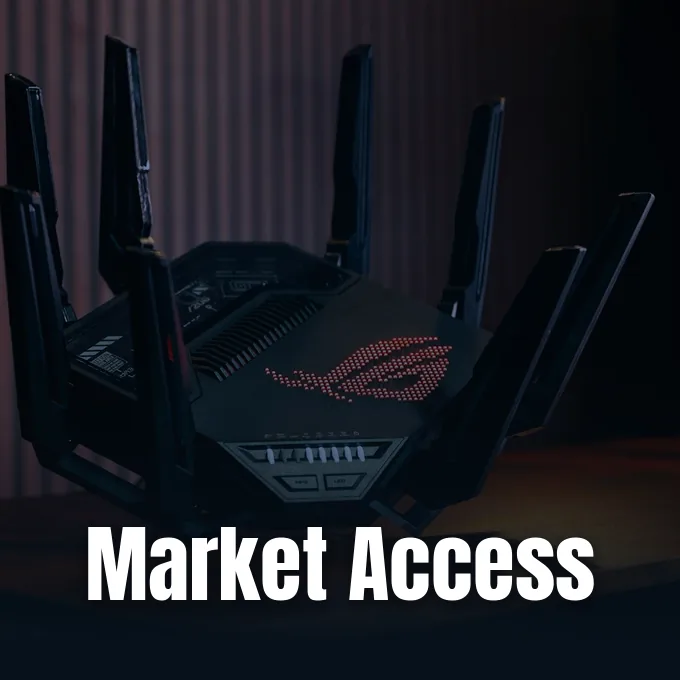
Component Supply Constraints in the United States
Assembling routers in Mississippi solves only part of the build challenge, as networking gear relies on silicon chips, radio frequency modules, and circuit boards that aren’t made inside the country. Steve Kovsky, who handles public affairs for TP-Link, spoke candidly with PC Mag about the supply hurdles facing hardware makers trying to move work to American soil: “Many [components] are just not available from a domestic source, and this is not a TP-Link issue,” Kovsky said [1]. Kovsky added that the shortage of American parts creates obstacles for all manufacturers attempting to onshore assembly, noting that wireless parts have been made almost exclusively in Asian supply hubs for the past three decades [2].
The component crunch mirrors other electronics onshoring efforts, including the push to build SK Hynix memory chips at Intel factory sites in Ohio. Until American chip foundries can produce router silicon, assembly lines will continue to rely on imported parts [1].
Unclear official guidance creates an additional hurdle for TP-Link. The FCC treats production as any major stage in device creation, including assembly, industrial design, engineering development, and the fabrication of core hardware pieces. Yet the commission hasn’t stated whether a firm must shift 15% or 25% of its overall build process to satisfy the rules. Without clear threshold numbers from agency officials, TP-Link can’t know for certain whether Mississippi assembly alone will be enough to bypass import limits [1].
Why TP-Link Routers Still Lack FCC Waivers
When the FCC implemented the import ban, it included a conditional waiver route for manufacturers willing to invest in American plant work. Hardware makers could apply for exemptions if they submitted credible commitments to move assembly work onto American soil [2].
Several rival brands moved fast to secure those federal waivers, keeping their product lines flowing to American stores. Asus, Netgear, and Amazon all obtained conditional approvals from federal officials after presenting stateside plans. These passes let them release updated models while competing hardware faced import blocks at the border. The regulatory decision created an 18-month US opening for Asus routers. Rival vendors gained a head start in retail shops while TP-Link routers stayed barred from new product approvals. The FCC has not granted a similar waiver to TP-Link, leaving the router maker in a difficult spot as store shelves gradually run out of approved foreign stock [1].

In a notice sent to customers, TP-Link addressed the regulatory delay directly: “TP-Link supports efforts to strengthen security standards and is actively pursuing Conditional Approval for new products and advancing plans for U.S.-based manufacturing,” the company said [1]. Executives hope that the signed Key Tronic partnership will persuade watchdogs to grant an exemption before Mississippi factory lines begin operating in 2027 [2].
Price Impacts on Upcoming TP-Link Routers
Making hardware inside the United States involves higher wages, facility leases, and compliance expenses than running Asian plants, meaning those overhead costs will almost certainly push finished shelf prices higher for American buyers. Consumer tech hardware has already grown more expensive across global markets, so moving assembly to Mississippi won’t come cheap [1].
Kovsky spoke about those financial realities during his conversation with PC Mag. “It can mean higher quality, but it can also mean higher price points,” Kovsky said. The shift to stateside work changes retail economics for buyers shopping for home Wi-Fi gear. His comments tie into a wider trend across the consumer tech market, where rising part costs and supply chain shifts have made new computing gear noticeably more expensive over the past two years. Shoppers who previously chose budget-friendly Wi-Fi devices may soon find that American-assembled models carry price tags closer to premium networking gear [1].
In Canada, TP-Link’s latest flagship Archer model recently opened for pre-order at $999 CAD, which works out to about $705 USD. If Mississippi assembly adds further build costs, upcoming Wi-Fi 8 models could command even higher prices at checkout. For households that have long relied on TP-Link routers for affordable home connectivity, the transition to American factory assembly will likely bring a noticeable change in shelf pricing [1].
- ONLINE NEWS Younker, S. (2026, October 19). TP-Link routers could soon be ‘Made in America’ thanks to new partnership — but does it avoid the ban? Tom’s Guide. [Article Link]
- ONLINE NEWS Holt, K. (2026, October 19). TP-Link moves to assemble routers in the US following an import ban. Engadget. [Article Link]


