





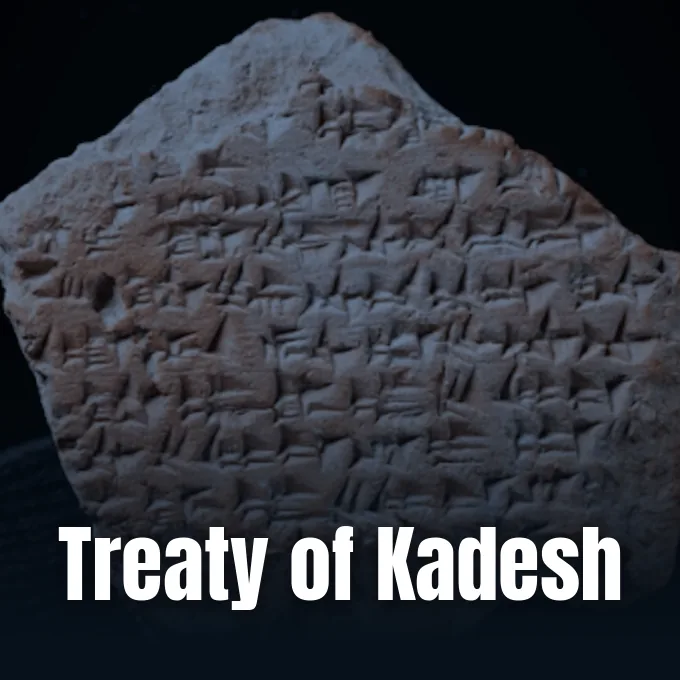
Can an inscribed lump of Bronze Age clay still teach modern civilizations how to resolve geopolitical conflict? When diplomatic emissaries negotiated the Treaty of Kadesh in the thirteenth century B.C., they produced the earliest known bilateral peace accord in recorded human history. Archaeologists excavating the ancient Hittite capital of Hattusha in Central Anatolia have now unearthed a 3,400-year-old cuneiform tablet fragment containing crucial clauses from this historic pact [1], [2]. The Turkish Ministry of Culture and Tourism announced the recovery of the artifact on September 21 to coincide with the International Day of Peace [1], [2].
What Is the Treaty of Kadesh?
The Treaty of Kadesh is the earliest known formal peace treaty in world history, concluded between Egyptian Pharaoh Ramesses II and Hittite King Hattusili III to end two centuries of intermittent warfare across the Eastern Mediterranean [1], [2]. Although modern historians refer to the document by the name of the Syrian border city where a catastrophic chariot clash occurred fifteen years earlier, the text itself never mentions the Battle of Kadesh [1], [2]. Instead, royal scribes drafted an enduring military détente known alternatively as the Egyptian-Hittite peace treaty, the Silver Treaty, or the Eternal Treaty. Egyptian records place the royal settlement around 1269 B.C., while related Near Eastern chronological models date the ratification near 1259 BCE [1], [2]. As science writer Kristina Killgrove reported for Live Science, the accord established lasting peace between rival Bronze Age superpowers [1].
Archaeologists first recognized the monumental agreement during the early nineteenth century, when epigraphers identified Egyptian hieroglyphic inscriptions carved into the stone temple walls of Pharaoh Ramesses II at Thebes (modern Luxor). Decades later, excavations during the early twentieth century at Hattusha revealed that imperial Hittite chancellors preserved their own copies on baked clay tablets [1], [2]. The inscribed language was Akkadian. Akkadian served as the earliest documented Semitic language and functioned as the standard diplomatic medium throughout the Eastern Mediterranean during the Late Bronze Age [1]. Because these complementary Egyptian and Anatolian versions survived intact across thousands of years, UNESCO inscribed copies of the diplomatic tablets onto the Memory of the World Register in 2001 [2].
Cuneiform Excavations at the Royal Palace of Hattusha
The Hittite Empire dominated Central Anatolia from roughly 1650 to 1200 B.C., administering a sprawling administrative network from their fortified mountain citadel at Hattusha. Turkish excavation teams working under the authority of the Turkish Ministry of Culture and Tourism recovered the newly identified tablet fragment within the Büyükkale Royal Palace quarter in Northern Anatolia [1], [2]. This prominent administrative acropolis previously yielded thousands of cuneiform records documenting state treaties, religious rituals, legal codes, and royal correspondence [1], [2]. Hattusha was their royal capital. The site continues to expand scholarly understanding of imperial Bronze Age governance [1].
The artifact is clay. Epigraphers confirmed that baked earth kept the Akkadian script legible across three millennia [1], [2].
While earlier sensational claims such as the ancient pyramid that could be 27,000 years old stirred intense debate regarding dating methodologies, cuneiform epigraphy at Hattusha rests upon secure stratigraphic and historical horizons. Archaeologists study stratified Near Eastern materials in similar fashion to how ancient bricks from Mesopotamia uncover the force of Earth’s past magnetism, correlating fired clay artifacts with documented historical chronologies. Culture Minister Mehmet Nuri Ersoy emphasized the profound symbolic resonance of the Anatolian discovery during a formal briefing on September 21 [1], [2]. “We have found traces of peace, thousands of years old, in the soil of Anatolia,” Ersoy announced, noting that ongoing palace excavations may uncover remaining tablet portions [1], [2].
Ancient Refugee Protections in the Cuneiform Fragment
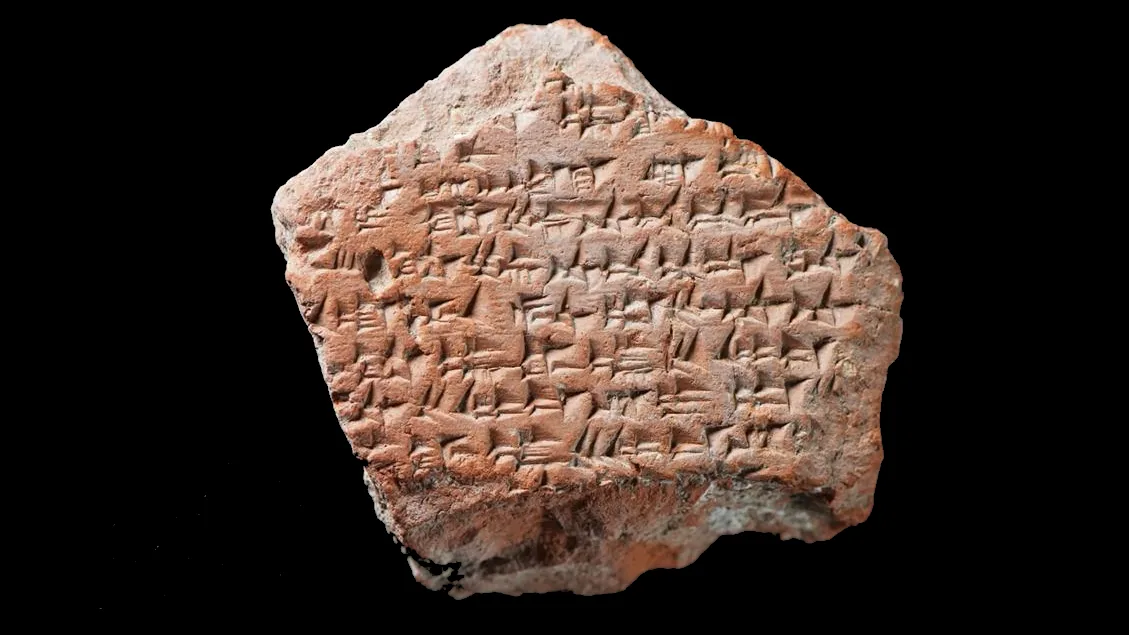
The newly recovered cuneiform tablet fragment corresponds to Articles 12 through 20 of the broader accord, detailing strict legal frameworks for handling political fugitives and displaced populations [1],. Journalist Andrew Paul reported in Popular Science that the recovered clay tablet details mutual obligations between ancient realms [2]. Across Bronze Age empires in the Eastern Mediterranean, fleeing across imperial frontiers without official authorization was regarded as a serious crime against royal authority. The accord established mutual extradition procedures: any Egyptian subject fleeing northward to Hittite territory had to be returned to Egypt, while any subject escaping from Hattusha southward into Egyptian lands had to be extradited back to Anatolia [1], [2].
Unlike modern human rights conventions, the accord prioritized royal sovereignty, yet it instituted extraordinary humanitarian stipulations forbidding physical retaliation against returned individuals [1], [2]. Scribes carved explicit restrictions into the clay: “Their tongue and their eyes are not to be pulled out; their ears and their feet are not to be cut off; their houses with their wives and their children are not to be destroyed.” Ministry officials confirmed that the newly recovered fragment preserves provisions protecting citizens’ households from demolition [1], [2]. By prohibiting mutilation and familial destruction, the text instituted the earliest recorded standard of physical immunity for repatriated refugees [1], [2].
Fleeing was then deemed a crime. Yet both monarchies bound themselves before their respective pantheons to respect the sanctity of the refugee’s family home [1], [2]. Ersoy observed that this ancient humanitarian provision offers a poignant ethical lesson for contemporary global diplomacy [1], [2]. “This legacy, which has survived from thousands of years ago to the present day, reminds us of our responsibility to protect human life and dignity,” the cultural minister stated in his translated remarks [1], [2].


Diplomatic Fraternity in the Kadesh Peace Treaty
Beyond legal mechanisms governing fugitives, the Kadesh Peace Treaty established a permanent ideological brotherhood between two rival superpowers that had expended vast blood and treasure during two centuries of imperial friction [1], [2]. Bronze weapons shaped that era. Rather than imposing victor’s justice after inconclusive border clashes in Syria, Pharaoh Ramesses II and King Hattusili III framed their bilateral alliance around perpetual fraternity. The treaty proclaimed that the rulers had formed a solemn fraternal bond, stating: “He is a brother to me and he is at peace with me; and I am a brother to him and I am forever at peace with him [1].”
The Akkadian text affirmed that the kingdoms of Egypt and Hatti would remain in an unbroken state of mutual brotherhood and peace across future generations. In addition to nonaggression pledges, the accord mandated mutual military assistance whenever foreign adversaries threatened either sovereign power. If a third power invaded Anatolia, Pharaoh Ramesses II agreed to dispatch Egyptian infantry and chariot divisions to support King Hattusili III, while the Hittite Great King bound himself to march southward should Egypt confront domestic insurrection or foreign invasion [1].

Why Did Ramesses II and Hattusili III Agree on Extradition?
Pharaoh Ramesses II and King Hattusili III agreed on comprehensive extradition clauses because internal political instability and shifting geopolitical alignments threatened the domestic security of both imperial courts [1], [2]. King Hattusili III seized the Hittite throne from his nephew Urhi-Teshub, creating dangerous dynastic rivalries that prompted disaffected Anatolian nobles to seek refuge in neighboring lands [1], [2]. Fearing that political exiles might gather foreign backing to mount a rebellion, the Hittite ruler prioritized guaranteed extradition above territorial conquest [1], [2]. For Egypt, securing northern borders allowed Pharaoh Ramesses II to stabilize vital trade corridors across the Levant without maintaining costly military garrisons in contested border provinces [1], [2].
Diplomatic parity formed the core foundation of this agreement [1], [2]. Instead of demanding tribute or territorial concessions, both monarchs negotiated as sovereign equals, addressing each other as beloved royal brothers under the witness of their deities. The Treaty of Kadesh codified these mutual obligations into reciprocal legal guarantees, demonstrating that durable peace required both powers to surrender opportunistic expansion [1], [2]. By transforming volatile frontier skirmishes into codified legal protocol, the monarchs created a diplomatic model that endured until the regional Bronze Age collapse around 1200 B.C. [1].
The Eternal Treaty and Modern Principles of Lasting Peace
Centuries after the Hittite capital collapsed into ruin, the diplomatic principles codified in the Eternal Treaty continue to shape modern international law [1], [2]. Today, a prominent copper replica of the tablet discovered at Hattusha hangs in the United Nations Conference Building in New York City. That replica still stands in New York City. The United Nations honors the agreement because its ancient covenants pledge lasting friendship, mutual aid, territorial integrity, and peaceful dispute resolution. As international representatives walk past the display, the bronze plaque reminds diplomats that bilateral security frameworks existed millennia before the United Nations Charter [1], [2].
The recent recovery at the Büyükkale Royal Palace proves that ancient soil still conceals foundational chapters of diplomatic history [1], [2]. Excavations across Hattusha are ongoing, and Turkish archaeologists anticipate uncovering supplementary cuneiform fragments that will illuminate the remaining articles of the pact [1]. In his address marking the International Day of Peace, Culture Minister Mehmet Nuri Ersoy connected this archaeological milestone to current global crises, expressing the hope that all vulnerable communities, particularly Palestinian families enduring regional conflict, will ultimately attain lasting security and tranquility [2]. As field researchers piece together the fragile Akkadian tablets from Anatolia, the 3,400-year-old accord confirms that human survival has always depended upon the courage to negotiate common ground [1], [2].
- ONLINE NEWS Killgrove, K. (2026, September 22). ‘We have found traces of peace, thousands of years old’: Fragment of world’s oldest known peace treaty found in Turkey. Live Science. [Article Link]
- ONLINE NEWS Paul, A. (2026, September 21). Fragment of oldest known peace treaty discovered in Turkey. Popular Science. [Article Link]
APA 7: PerEXP Teamworks. (2026, September). The Treaty of Kadesh: Ancient Peace Tablet Found in Turkey.


