






Preliminary talks between SK hynix and Intel could bring the South Korean memory giant’s fabrication operations to American soil for the first time. Reuters reported that discussions explore producing SK hynix memory chips inside Intel’s under-construction Ohio manufacturing campus. Can an alliance between the two semiconductor titans resolve persistent supply bottlenecks across artificial intelligence infrastructure? SK hynix cautioned that no commercial arrangements have been finalized, but the prospect of domestic wafer fabrication has already sent ripples across the global hardware sector. [1, 2]
Ohio Proposals for SK Hynix Memory Chips
According to people familiar with the negotiations cited by Reuters, SK hynix is evaluating two primary operating models in the United States: leasing cleanroom space at Intel’s planned Ohio factory or establishing an equity joint venture with major cloud-service providers. HotHardware’s Paul Lilly reports that an agreement would represent the Asian memory supplier’s debut chip production inside the United States. Talks remain preliminary. [1, 2]
Commercial collaboration between both chipmakers has precedent. Intel sold its entire NAND flash-memory business (the solid-state storage unit) to SK hynix for $9 billion in 2020. [2]
Tom’s Hardware’s Jowi Morales reports that an agreement could potentially establish the first high-bandwidth memory fabrication plant in the United States. Modern artificial intelligence accelerators rely on vertical stacks of high-bandwidth memory to supply massive compute clusters, creating persistent hardware pinches that disrupt data center expansion across the technology sector. Producing SK hynix memory chips on American soil would complement ongoing packaging initiatives in Indiana while insulating component distribution from overseas shipping snags and international trade barriers. Talks between Intel and SK hynix remain active as Silicon Valley tech giants seek stable domestic memory allocations from the Ohio One site. [1, 3]
Indiana Packaging and AI Demand
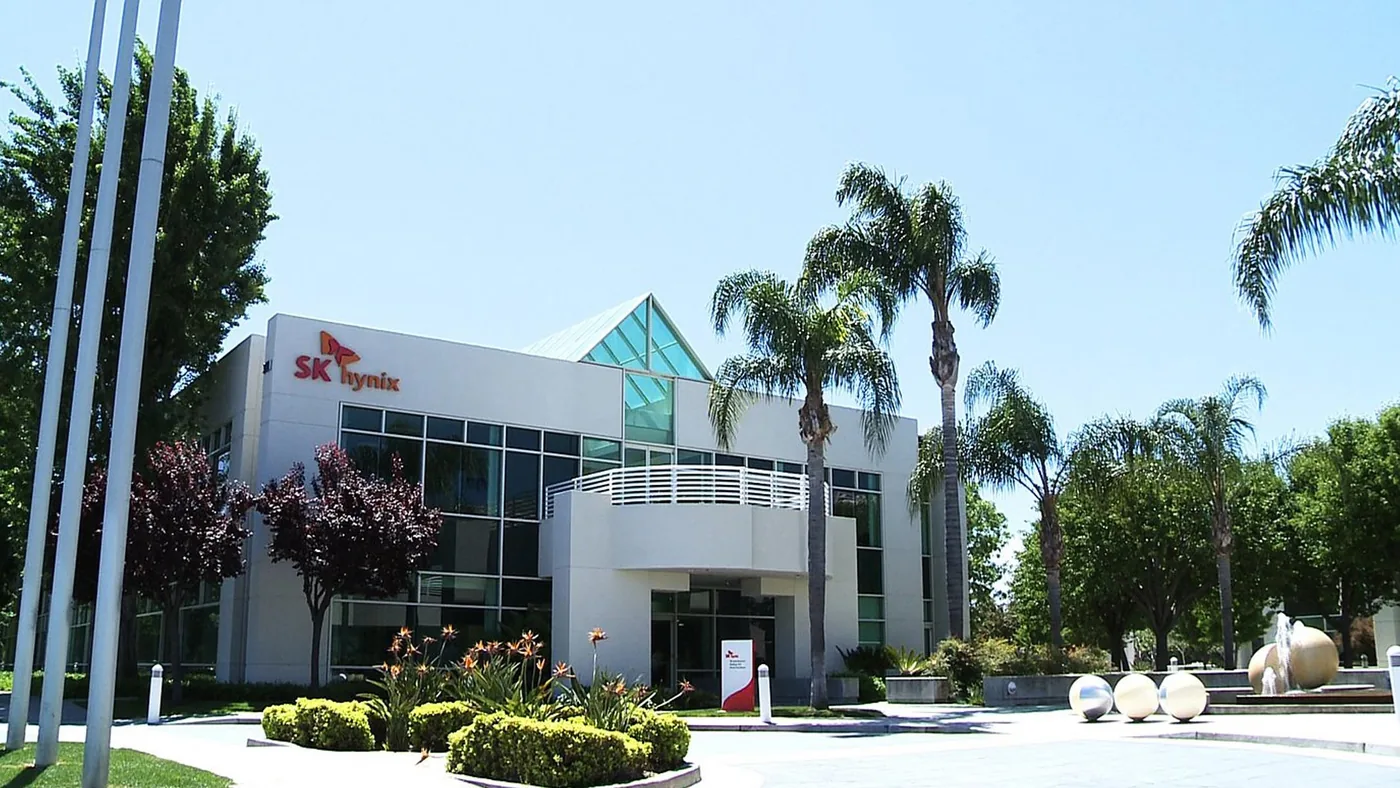
Global appetite for high-bandwidth memory and advanced dynamic random-access memory (DRAM) continues to surge across hardware markets as technology firms construct artificial intelligence data centers. SK hynix is already building a $3.8 billion advanced packaging facility in West Lafayette, Indiana, with mass production scheduled to begin in 2029. That Indiana site will receive processed DRAM wafers fabricated in South Korea and package them into finished high-bandwidth memory stacks for global AI customers. [1, 2]
Silicon investments take time. Packaging alone leaves front-end wafer fabrication across the Pacific. As explored in discussions regarding how memory supply pinches hit consumer hardware, concentrated manufacturing centers leave international supply lines fragile during regional crises. [2, 3]
Capital markets have responded sharply to these strategic moves. In July, SK hynix completed a historic $26.5-billion Nasdaq listing of American depository receipts, broadening its direct access to United States investors. Market commentators frequently examine those financial inflows when explaining why SK Hynix is up today during hardware rallies, even as investors keep close track of why SK Hynix stock is down whenever trade rhetoric threatens memory margins. The memory manufacturer must balance aggressive American expansion against domestic capital commitments overseen by South Korean authorities in Seoul. [2, 3]


Intel Foundry Seeks Strategic Validation
For Intel, hosting SK hynix memory chips at its Ohio complex would deliver substantial operational validation for Intel Foundry under new executive leadership. HotHardware highlights that contract foundry execution has become a focal point since Lip-Bu Tan stepped in as chief executive officer following Pat Gelsinger’s abrupt departure. Securing a manufacturing pact with a leading global memory supplier would demonstrate that domestic fabs can reliably handle high-volume fabrication for external customers beyond Intel’s proprietary processor lines. [1]
Intel Foundry needs external tenants to help offset massive construction costs. Signing an established Asian memory leader would validate federal manufacturing subsidies, proving that American facilities can compete for international business. Domestic execution remains crucial. [1, 3]

Corporate representatives maintain an official posture of caution. When asked about potential memory partnerships, Intel described the reports as speculation and declined to comment further, reiterating only that construction proceeds on its Ohio One complex. Tom’s Hardware reports that commercial operations at the Ohio campus are projected to commence across 2030 and 2031, aligning with long-term advances in 3D stacked semiconductor packaging. [3]
Tariff Pressures and Washington Mandates
Corporate discussions surrounding Ohio unfold against intensifying political pressure in Washington. As international semiconductor shortages persist, the Trump administration has moved aggressively to expand manufacturing on American soil. Executive statements issued by the White House in January indicated that imported microchips could encounter steep trade penalties unless foreign manufacturers construct operational facilities within United States borders. The United States Commerce Department subsequently warned of additional tariffs on South Korean and Taiwanese technology companies that fail to invest directly in American manufacturing. [2, 3]
SK Group Chairman Chey Tae-won signaled direct support for American factories during a July press conference, stating that the company should build facilities in the United States in addition to production in South Korea’s Honam region. Can multinational chipmakers satisfy protectionist trade mandates without fracturing their existing manufacturing hubs? [2, 3]

Those competing demands place corporate executives in a delicate position between the White House and the Blue House (the executive office of the South Korean presidency). South Korea recently announced a $520 billion investment blueprint to expand domestic chipmaking capacity and maintain national competitiveness in artificial intelligence hardware. Simultaneously, government officials in Seoul are negotiating a $350 billion bilateral investment commitment to Washington to mitigate punitive import duties, of which $200 billion remains unassigned to specific industrial manufacturing projects. Reconciling those massive overseas capital outlays with domestic manufacturing priorities requires careful diplomatic balance between Seoul and Washington, especially as the United States Commerce Department increases pressure on international semiconductor suppliers to establish operational facilities on American soil. [3]
Export Scrutiny Under Technology Laws
Intel declined further comment. Even if Intel and SK hynix resolve commercial terms, cross-border technology transfers face stringent regulatory oversight in South Korea. Authorities in South Korea classify advanced memory architectures as national core technology, requiring government reviews under statutory provisions designed to prevent sensitive semiconductor intellectual property (the proprietary multi-layer circuit designs that power high-density DRAM) from leaving the country without explicit export clearance. [1, 2]
TechCrunch reporter Kate Park noted that SK hynix addressed the persistent rumors in a formal statement provided on Wednesday: “SK Hynix is exploring various options to strengthen its global competitiveness, but no specific plans or arrangements have been finalized at this time.” The South Korean semiconductor firm emphasized that no decisions have been reached regarding either leasing Intel’s Ohio plant or launching a joint venture, while telling Reuters that it continues reviewing measures to support long-term memory competitiveness. [2, 3]
Export approvals remain essential. With operations at the West Lafayette, Indiana packaging site scheduled for 2029 and Intel’s Ohio One campus targeting activation between 2030 and 2031, physical wafer production in the United States remains a distant prospect. The ultimate fate of SK hynix memory chips on American soil rests on statutory licensing in Seoul and binding manufacturing contracts between both semiconductor giants. [1, 2, 3]
- ONLINE NEWS Lilly, P. (2026, September 16). SK Hynix May Tap Intel’s Ohio Fab To Make Memory Chips In The USA. HotHardware. [Article Link]
- ONLINE NEWS Park, K. (2026, September 16). SK Hynix reportedly in talks with Intel to build memory chips in US. TechCrunch. [Article Link]
- ONLINE NEWS Morales, J. (2026, September 16). SK hynix reportedly discussing US memory chip manufacturing with Intel — options include leasing Ohio plant or forming joint venture with other AI hyperscalers. Tom’s Hardware. [Article Link]


