






Marine heatwaves threaten to push tropical coral reefs into ecological collapse within fifty years, according to a global scientific evaluation released by the International Union for Conservation of Nature (IUCN). The comprehensive assessment reviewed shallow marine habitats across 127 tropical and subtropical ecoregions to measure how persistent warming affects survival. Researchers found that 96 percent of surveyed reef systems face critically endangered conditions by 2075 if fossil fuel emissions continue on their current trajectory [1]. The findings show that ocean warming is outpacing the natural resilience of marine species [2].
Why Shallow Coral Reefs Face Risk
More than 250 marine experts contributed to the evaluation, examining warm-water habitats across the globe for the IUCN. The scientific project serves as the first coral reef assessment conducted under the IUCN Red List of Ecosystems (RLE) framework, which defines objective criteria to measure ecological collapse risk across marine regions including Australia and Southeast Asia [1].
Twenty-four percent of shallow coral reefs are critically endangered today without any future warming. When researchers incorporated projected heat stress from unabated global emissions into their climate models, the share of critically endangered ecosystems surged to 96 percent across the globe [1]. “All coral reef ecosystems that we assess, they are all critically endangered, and that’s really surprising,” said Marcos Valderrábano, who leads the RLE team at the IUCN [2].
Valderrábano presented the IUCN evaluation at the biannual UN biodiversity summit now taking place in Armenia. The assessment shows how quickly and massively reef die-offs could unfold if surface waters continue to warm across the planet. Some ocean regions currently experience less bleaching than others, but long-term climate projections indicate that severe heat stress will eventually affect all shallow coral ecosystems on the planet in the next 50 years. Valderrábano said governments must lower catch limits for coastal fisheries and curb land-based runoff to relieve local stress on marine habitats [2]. Local management helps, but global heat remains the dominant threat [1].
Biodiversity in Marine Havens
Shallow coral reefs cover less than 1 percent of the ocean floor, yet they support approximately 25 percent of all marine species worldwide. The Coral Triangle across Southeast Asia and the Great Barrier Reef in Australia stand as prime examples of this marine diversity, hosting thousands of interconnected fish and invertebrates [1].
These warm underwater communities shelter thousands of species, including sea turtles, reef sharks, molluscs, elkhorn corals, pillar corals, and clownfish made famous by the animated film Finding Nemo. Corals build complex calcium carbonate structures that create protective hiding spaces and feeding grounds for marine life. Cold-water reefs also exist in deep seas around the UK coast, but they lack symbiotic algae and host far less biodiversity [2].
Human societies rely on shallow reefs for basic sustenance. Up to 1 billion people depend on these coastal systems for daily food, tourism income, and protection from coastal erosion during powerful storms, while formations like Australia’s Great Barrier Reef sustain vital regional economies through maritime recreation and diving [2]. Healthy barrier reefs absorb offshore wave energy. If shallow reefs collapse, hundreds of millions of people who live along tropical coasts in Southeast Asia and the Pacific will lose both their primary source of animal protein and their natural defense against rising seas [1].
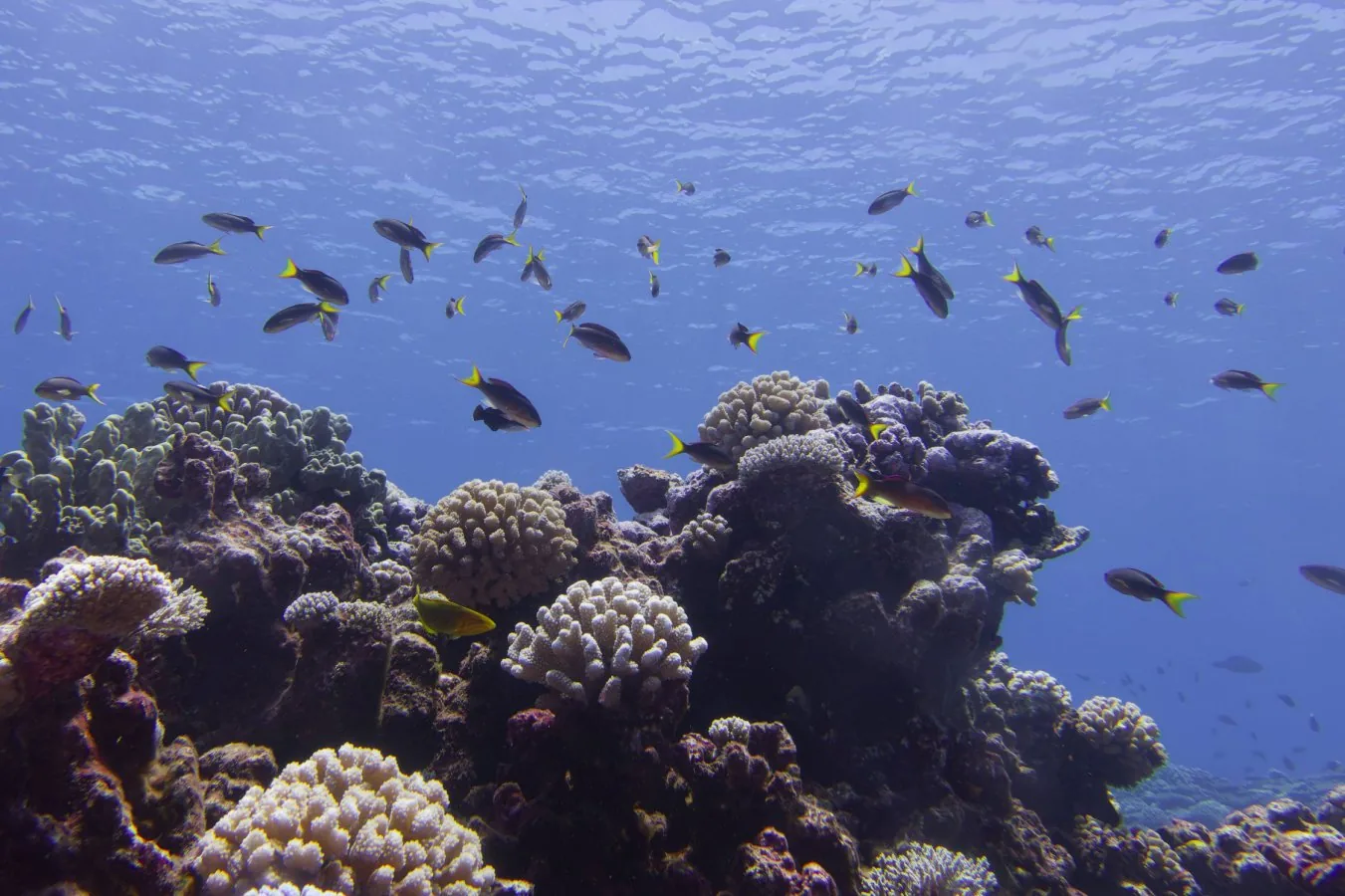
Mechanisms of Heat-Driven Bleaching
Warm-water corals are tiny invertebrate animals that depend on a symbiotic partnership with microscopic algae living inside their tissue. The photosynthetic algae supply sugars that deliver most of the polyp’s daily nourishment, while the animal provides essential minerals and a protected home within its limestone skeleton. This partnership built massive tropical reefs over millennia [1].
Ocean heat stress acts as the primary global driver behind modern reef degradation [1]. When surface waters warm, microscopic algae become stressed and release toxic reactive oxygen compounds like free radicals, forcing the coral polyp to eject its colorful partners in self-defence [2]. Without symbiotic algae, corals slowly starve and become vulnerable to lethal diseases [1]. Field monitoring from the National Oceanic and Atmospheric Administration (NOAA) indicates that individual reefs now face bleaching conditions nearly every year [2].
Reef ecosystems require several undisturbed years between marine heatwaves to recover their lost living coral cover. Valderrábano said in an email to Mongabay that if climate projections prove accurate, repeated bleaching will cause corals to be replaced by simple turf and string algae [1]. Reefs cannot recover if they suffer more than three bleaching events within five years. “It would definitely reinforce that perverse loop,” said Valderrábano, warning that frequent heatwaves prevent colonies from regenerating [2].

Lessons from the Galapagos Collapse
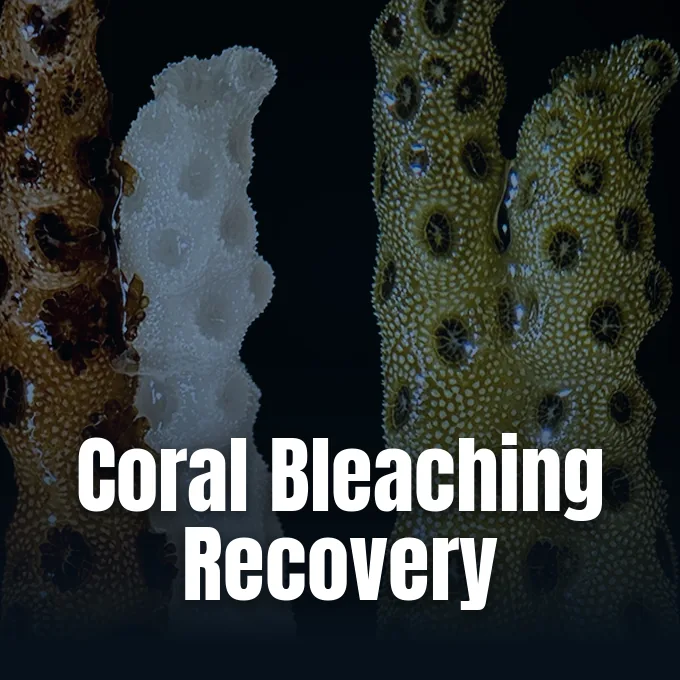
Ecosystem collapse is already a historical reality rather than an abstract model. The reefs of the Western Galapagos Islands in Ecuador collapsed when ocean temperatures spiked during the 1982/83 super El Niño, creating an extreme marine thermal event documented by the IUCN. That single weather event wiped out 95 percent of the living coral, which meets the formal IUCN criteria for ecosystem collapse [2].
The thermal spike transformed thriving golden brush corals into bare white skeletons that quickly became smothered by string algae, leaving the seabed devoid of its former structure [2]. Four mass bleaching events hit the region in following decades, preventing native colonies from rebuilding their former populations while making the Western Galapagos Islands in Ecuador the only documented shallow reef on Earth to suffer complete ecological collapse [1].
In New Scientist, Alec Luhn reported that earlier widespread die-offs consistently followed powerful El Niño cycles, raising concerns that the ongoing record Pacific warming pattern could spark a comparable wave of destruction. If ocean temperatures stay elevated for months, other shallow reefs could follow the path of the Western Galapagos Islands in Ecuador. Scientists cautioned that warm-water reefs are crossing an ecological tipping point beyond which natural recovery becomes impossible [2].
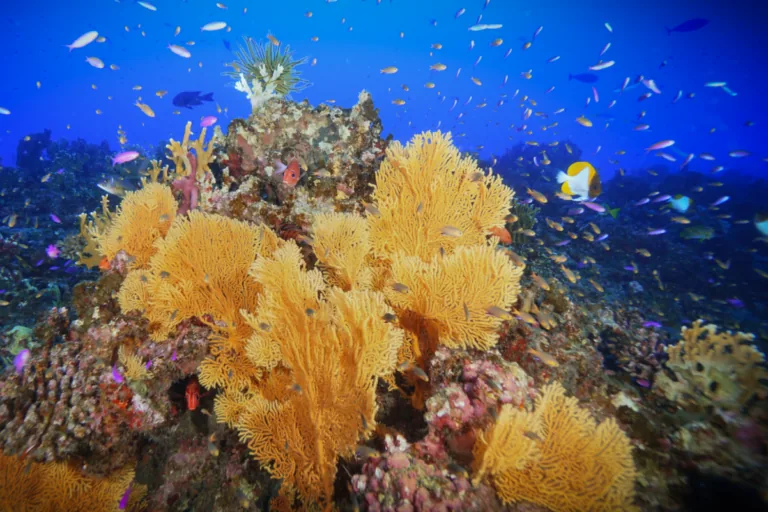
Can Tropical Coral Reefs Avoid Extinction?
Coral colonies encounter steep reproductive barriers as local populations dwindle. Most shallow reef species reproduce through broadcast spawning, releasing massive clouds of eggs and sperm into the open water simultaneously on synchronized nights to achieve fertilization before currents carry the gametes away. For fertilization to occur, colonies must remain close together so that gametes can cross-fertilize before open ocean currents disperse them [2].
When heatwaves kill off large portions of a reef, tropical coral reefs lose the density needed for successful sexual reproduction. Isolated corals persist in scattered patches across vast stretches of barren rock. “If the population size gets so small that you don’t have another coral to mate with nearby, then reproductive failure will happen,” said James Guest, a coral researcher at Newcastle University in the UK. “That species is in what’s called an extinction vortex,” Guest said, describing how fragmented colonies fail to produce viable offspring [2].
Even if small pockets of coral survive on large formations like the Great Barrier Reef in Australia, spatial separation can prevent larvae from repopulating barren sectors. Iconic reef builders like elkhorn corals and pillar corals could disappear locally because isolated colonies cannot cross-fertilize. This reproductive failure means that ecosystem collapse can become locked in long before the final living coral polyp dies in the water [2].
Emissions Targets and Adaptation Limits
Some coral species display an innate ability to adjust to warmer ocean waters over generations. Research conducted by James Guest in the Pacific archipelago of Palau indicates that local corals have been developing about 0.1 degrees Celsius of additional heat tolerance per decade, demonstrating that natural selection operates in shallow reefs even though thermal adjustment remains slow [2].
Natural adaptation alone cannot protect marine ecosystems against extreme temperature spikes. “But if we get a really severe heatwave, it’s quite likely that the increase in heat tolerance isn’t going to be enough to protect those reefs,” said Guest. In response, some scientists have proposed experimental interventions such as deploying sunshades over shallow reefs or geoengineering marine clouds to reflect sunlight during record El Niño events [2].
Marcos Valderrábano at the IUCN and James Guest at Newcastle University agree that technological fixes cannot replace swift reductions in greenhouse gas emissions. A phaseout of fossil fuels provides the only durable path to ensure that tropical reefs survive the coming decades. “The more we can do to reduce pressure on them, the better chance they have of using their natural capacity to adapt and recover,” said Guest at Newcastle University. At the UN summit in Armenia, the IUCN called on nations to enact real protections before these ecosystems disappear [2].
- ONLINE NEWS Mongabay. (2026, October 22). Nearly all the world’s coral reefs are at risk of collapse within 50 years, IUCN warns. [Article Link]
- ONLINE NEWS Luhn, A. (2026, October 22). All tropical coral reefs could collapse within 50 years. New Scientist. [Article Link]
APA 7: PerEXP Teamworks. (2026, October 24). IUCN Warns Tropical Coral Reefs Face Collapse Within 50 Years. PerEXP Teamworks. https://perexpteamworks.com/en/tropical-coral-reefs-face-collapse-risk/


