





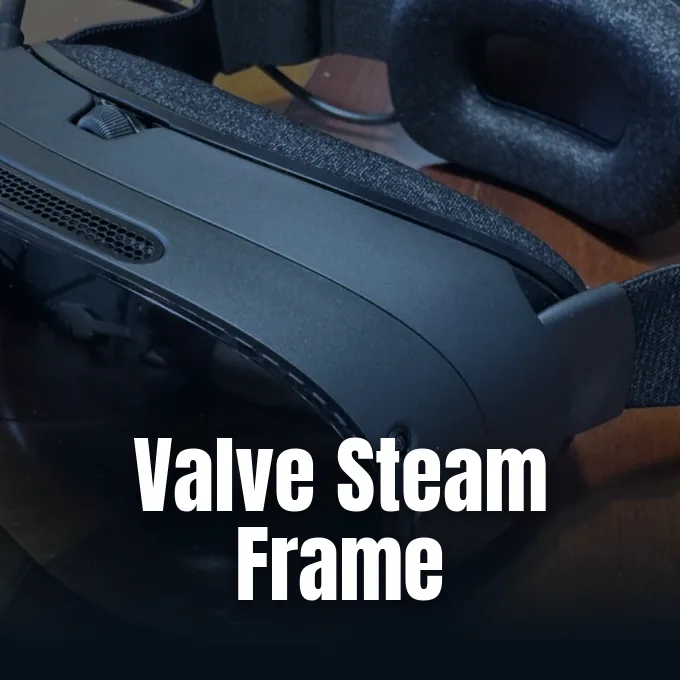
Strapping a headset to the face usually means fighting front-heavy plastic, but Valve inverted that weight by anchoring its power cell behind the skull. The company opened reservations on September 14, 2026, for the Steam Frame VR, a standalone and streaming headset starting at $1,059. Early hardware evaluations from major outlets reveal a remarkably comfortable device held back by modest battery life and an intimidating price tag. Reservations opened immediately. [2]
Counterbalanced Ergonomics and Face Fit
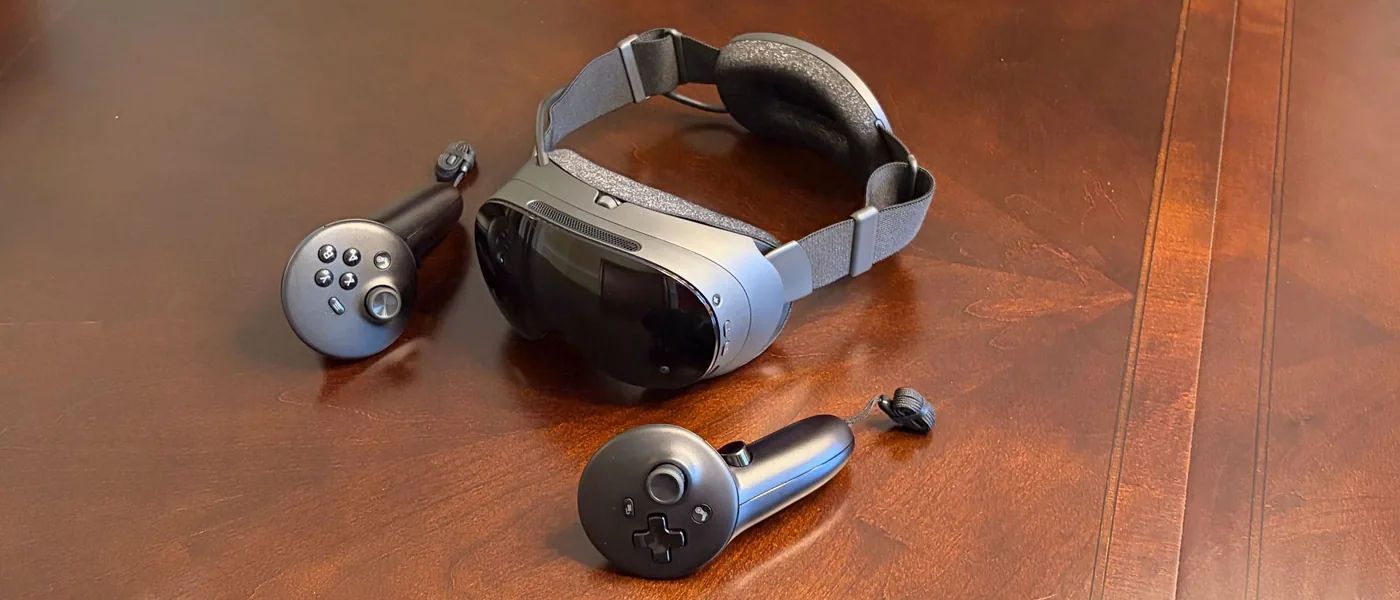
Weight distribution dictates whether a virtual reality headset feels wearable or punishing during prolonged gaming sessions. Valve achieved a total operating weight of 440 grams (roughly 0.97 pounds), trimming approximately 15 percent compared to the 515-gram Meta Quest 3. Kyle Orland of Ars Technica observed that roughly half of that mass sits inside the curved, cushioned 21.6-watt-hour battery housing stationed at the back of the headstrap. This physical counterweight prevents the front optical block from dragging down the bridge of the nose. The counterbalance works. [2]
Facial contact introduces familiar thermal friction once gameplay intensifies. The ski-goggle facial interface traps facial heat and perspiration as players move vigorously through virtual spaces. Gizmodo’s Kyle Barr noted that while the headset feels light initially, extended play leaves distinct red fabric indentations across the brow and cheekbones. Seated players face another compromise: the rear battery pack creates a noticeable bulge that prevents leaning the head comfortably against chairs or couch headrests. [1]
Users with eyeglasses encounter noticeable physical pressure against corrective frames. Devindra Hardawar of Engadget reported that the included magnetic spacer fails to prevent thin frames from pressing tightly against the nose, advising prescription lens inserts from Zenni Optical that typically retail for around $50. Valve offers an optional $59 Ergonomic Accessories Kit containing a secondary top stabilization strap, controller grips, and an extended light-blocking gasket to seal out external glare. [3, 4]

Inside the Steam Frame VR Optics
Visual fidelity relies on dual LCD pancake lenses delivering 2,160 by 2,160 pixels per eye across a 110-degree horizontal field of view. Refresh rates scale from a baseline 72 Hz up to an experimental 144 Hz ceiling. Why did Valve select liquid-crystal displays instead of premium organic light-emitting diodes? Brandon Hill of Tom’s Hardware highlighted that opting for LCD panels allowed Valve to control manufacturing expenses and thermal dissipation, whereas micro-OLED hardware would have pushed the baseline price far past $1,059. Cost discipline determined the optical architecture. [4]
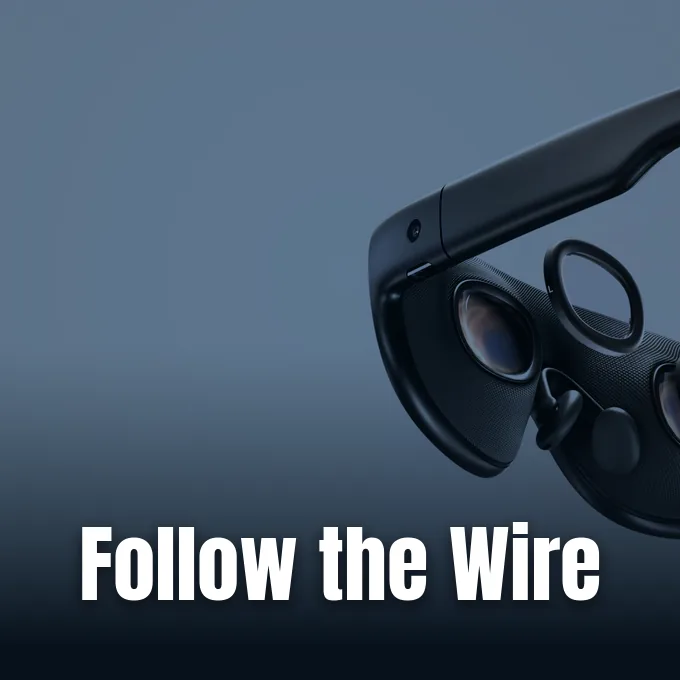
Mechanical adjustments sit directly on the chassis. An interpupillary distance dial on top of the headset accommodates spacing from 57.6 to 69.6 millimeters, backed by an internal lock switch designed to prevent inadvertent calibration shifts when donning or removing the unit. Four external optical cameras handle inside-out motion tracking across six degrees of freedom, although Kyle Orland documented noticeable juddering and image ghosting during swift head gestures. These external sensors feed a monochromatic passthrough video feed that displays physical surroundings solely in grainy grayscale. Meta equipped its budget Quest 3S with full-color passthrough for mixed reality software, but Valve omitted augmented reality ambitions entirely in order to dedicate processing headroom to traditional immersive gaming. [2, 4]
Two internal infrared cameras track pupil orientation to enable foveated rendering (a technique where software renders maximum graphical detail exclusively where the eye focuses). This optical tracking reduces graphics pipeline workloads. Play space configuration still requires manually tracing boundaries on the floor with hand controllers, lacking the automated environmental room scanning present on competing commercial hardware. [1, 4]

Battery Drain and Performance Profiles
Power consumption represents the most acute operational hurdle facing the platform. Operating in its default Performance mode, the 21.6-watt-hour battery exhausts stored energy in roughly 60 to 90 minutes during native virtual reality play sessions. Testing standalone executions of Half-Life: Alyx and Superhot VR, Kyle Barr observed the headset plummeting from full charge to zero in just over an hour. Internal active cooling fans expel a persistent current of heated air upward away from the brow while generating an audible mechanical whine under heavy graphical loads. High computing throughput exacts an immediate energy tax. [1, 2]
SteamOS offers an alternate Playtime setting to curb aggressive electrical depletion. Kyle Orland tested this power profile and confirmed that unplugged longevity stretches past two hours, but the software enforces that extension by capping the display refresh rate at 72 Hz and downscaling native render targets. Visual fidelity suffers severe degradation as distant geometry blurs and nearby edges develop distracting stair-step aliasing artifacts. Fast head rotations exhibit pronounced animation stuttering. Most players will find Playtime mode an unsatisfying compromise. [2]
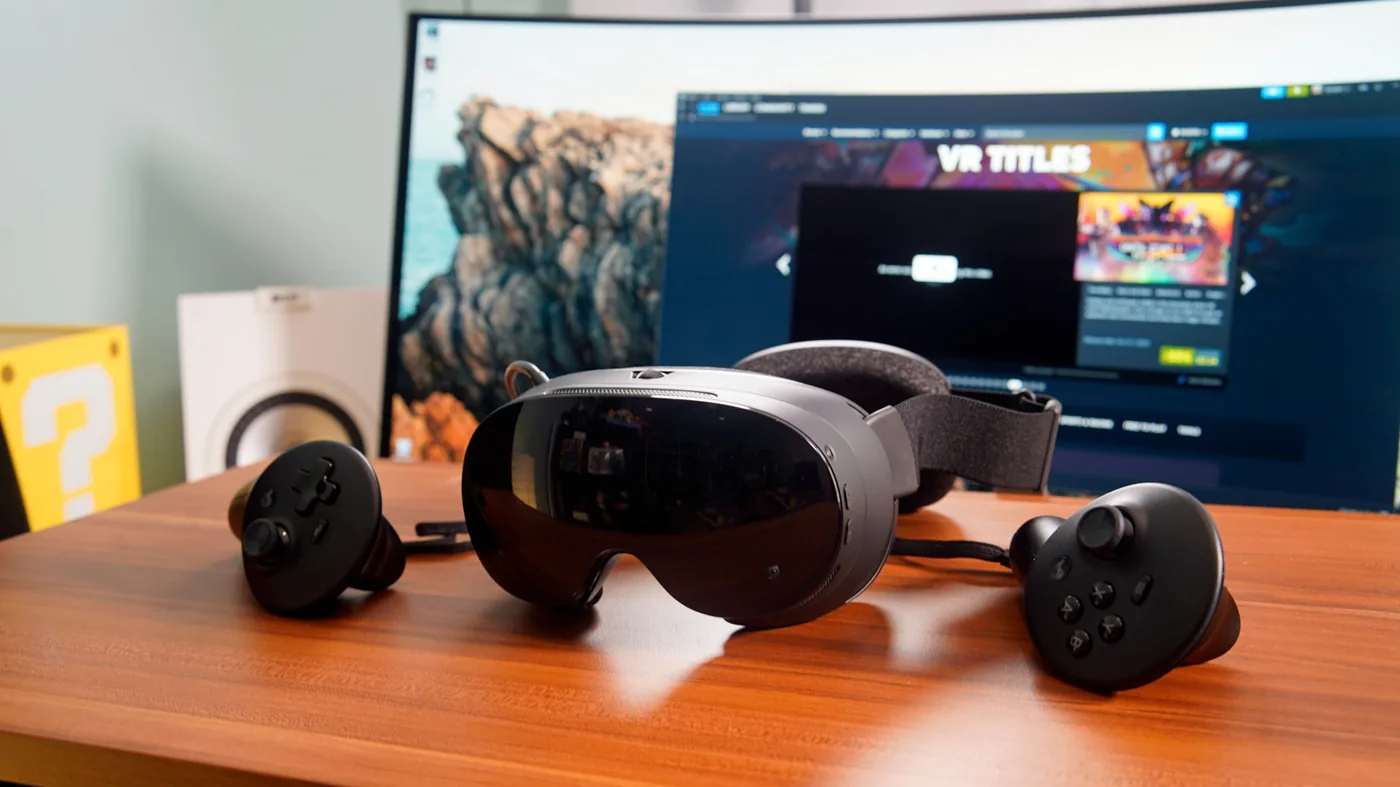
Recharging the headset introduces further downtime because Valve omitted dedicated rapid-charging circuitry. The system accepts up to 45 watts over USB-C through a port located on the rear battery cradle, requiring well over an hour simply to reach a 50 percent charge level. Tethering a lengthy power cord allows uninterrupted gaming at the cost of tethered movement. Untethered play demands patience. [1]
Snapdragon Silicon and Emulated Gaming
Under the hood, Valve installed a Qualcomm Snapdragon 8 Gen 3 system-on-chip featuring eight processor cores paired with 16 gigabytes of unified LPDDR5X memory. Storage configurations span 256 gigabytes for the base model up to 1 terabyte, supplemented by a microSD slot tucked behind the magnetic face cushion. Valve adapted SteamOS 3 (built on an Arch Linux base running the KDE Plasma desktop) for the Steam Frame VR to execute x86 Windows software on Arm architecture through FEX emulation and the Proton translation layer. A single press of the plus button summons a complete desktop computing environment. [1, 4]
Native software performance exhibits noticeable variation. Valve certified 130 titles with a Great on Steam Frame verification badge, encompassing VR staples like Beat Saber and flat releases like Portal 2 and Dave the Diver. Unverified titles behave unpredictably: Nightdive Studios’ System Shock remake operated smoothly, while Remedy’s Control crashed repeatedly due to broken shadow rendering under Arm translation. Valve bundles a standalone port of Half-Life: Alyx at no added cost, delivering responsive gunplay and interactive physics despite downgraded textures and jagged edges. [1, 3]
When running legacy VR platformers like Moss, whose studio fate was examined when Polyarc announced it was shutting down, navigation loads swiftly. Older classics thrive. [3]
Dedicated Dongle and PC Streaming
Wireless PC streaming represents the platform’s core operational strength. Rather than congesting existing home routers, the headset includes a dedicated 6 GHz Wi-Fi 6E USB dongle that connects directly to a desktop computer. Brandon Hill benchmarked this tether on a gaming rig equipped with an Intel Core Ultra 7 265K processor and an Nvidia GeForce RTX 4060 Ti graphics card, recording seamless frame rates in Half-Life: Alyx without dropped frames. Kyle Orland recorded latency fluctuating between just five and ten milliseconds on SteamOS diagnostic overlays. Direct Wi-Fi pairing removes visual stuttering. [2, 4]
Network optimization relies heavily on foveated streaming. By monitoring gaze direction with internal eye-tracking cameras, the headset prioritizes bandwidth for imagery occupying the center of vision while streaming peripheral details at reduced resolution. Control inputs mirror commercial conventions. Moving away from the strap-bound controllers of the Valve Index, the new Steam Frame VR gamepads adopt standard analog sticks, triggers, grip buttons, and face buttons powered by standard AA alkaline batteries rated for 40 hours of continuous use. Familiarity replaces experimental ergonomics. [1, 4]
Valve created a technically impressive streaming receiver, yet commercial questions linger over its market timing. Asking $1,059 for the base 256-gigabyte edition and $1,299 for the 1-terabyte SKU places the hardware far above Meta’s $350 Quest 3S and $600 Quest 3. Devindra Hardawar argued that launching a thousand-dollar headset during an industry-wide contraction in dedicated VR game development risks alienating casual players. Valve succeeded in delivering the Steam Frame VR as an exceptionally comfortable display for tether-free PC gaming, but only dedicated desktop enthusiasts will justify its steep entry price. [3]
- ONLINE NEWS Barr, K. (2026, September 14). Steam Frame review: Valve shows us VR was always meant to be a toy. Gizmodo. [Article Link]
- ONLINE NEWS Orland, K. (2026, September 14). Steam Frame: The Ars Technica review. Ars Technica. [Article Link]
- ONLINE NEWS Hardawar, D. (2026, September 14). Valve Steam Frame review: Solid standalone VR that’s too little, too late. Engadget. [Article Link]
- ONLINE NEWS Hill, B. (2026, September 14). Valve Steam Frame review: Competent as a standalone VR, but wireless streaming remains the focus. Tom’s Hardware. [Article Link]


1 comment