






A camera aperture physically opens and closes inside Apple’s new iPhone Pro Max, giving its contest with Samsung’s Galaxy S26 Ultra a moving part beyond the usual specification race. Apple introduced the iPhone 18 Pro Max at its Surprise and Shine event, according to CNET’s September 10 report. The reported starting price reaches $1,299. Samsung counters with two telephoto cameras, a built-in pen and a screen that hides content from sideways glances. [1, 2]
iPhone Pro Max Meets Ultra
Apple and Samsung now meet at almost the same entry price, with CNET listing their 256GB models at $1,299 and $1,300 respectively, while Engadget lists both at $1,299. CNET’s Mike Sorrentino reports a $100 increase over the iPhone 17 Pro Max. Neither supplied comparison includes an official storefront capture, so those amounts remain reported prices rather than independently checked offers. The difference worth examining lies in what each handset adds. [1, 2]
Why is the iPhone Pro Max so expensive? CNET points to its position at the top of Apple’s conventional phone range, its camera and battery upgrades, and a possible contribution from RAM shortages to the price increase. Apple provides no cost breakdown in the supplied reporting. The shortage explanation remains an attribution, not a confirmed cause. Engadget’s comparison also describes a new A20 Pro processor, although its performance advantage still needs testing. [1, 2]
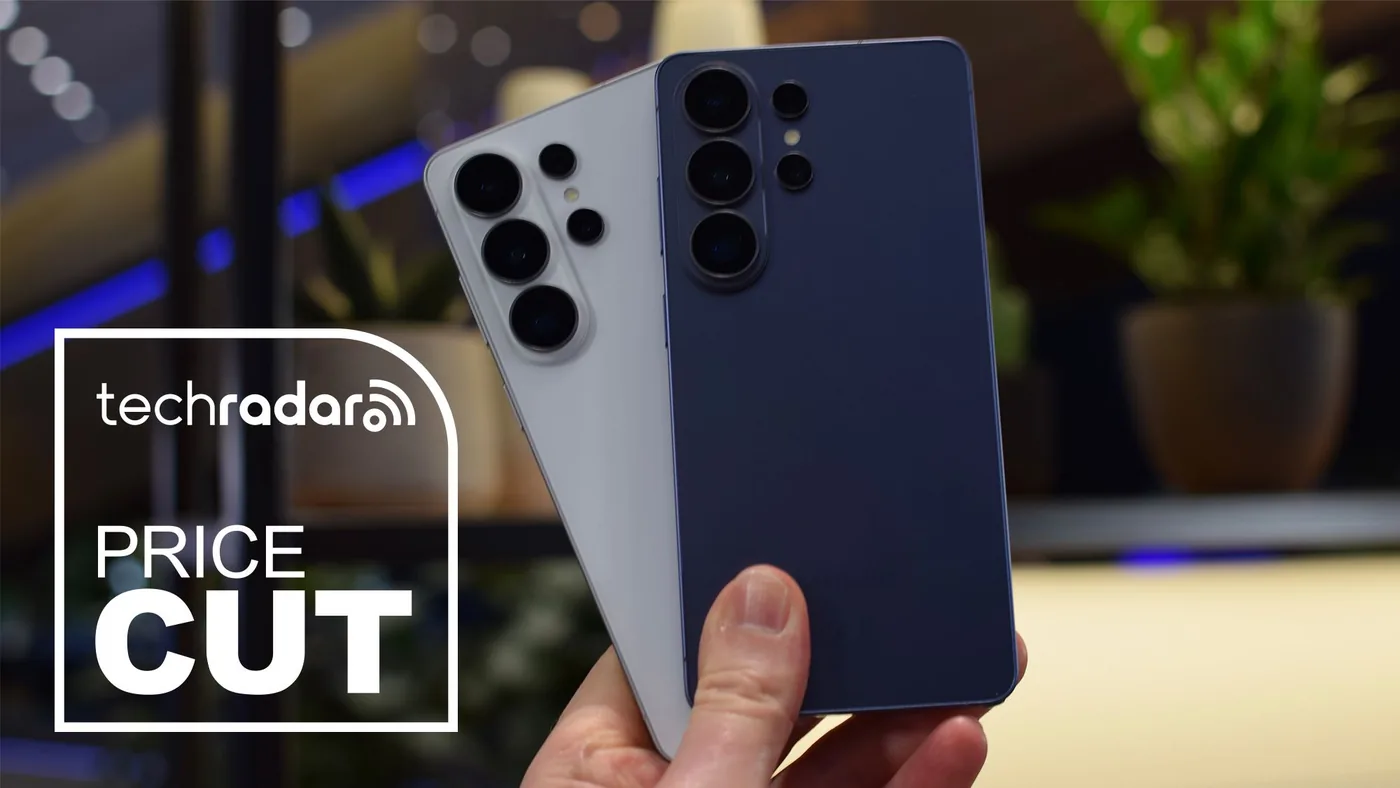
Samsung already faces retail discounts. TechRadar’s Nico Arboleda reports an Australian Amazon offer of AU$1,685 on September 11, describing it as 23% below the regular price. That Australian offer cannot establish the cheaper American purchase: the currency and market differ, and the report does not establish how long the discount lasts. For now, the two US starting prices put the physical differences into sharper focus. [3]
A Lighter Phone, a Private Screen
Samsung weighs less. Both comparisons put the Galaxy S26 Ultra at 214 grams and the iPhone 18 Pro Max at 249 grams, leaving a 35-gram gap before either receives a case. Engadget also gives Samsung the slimmer body, at 7.9 millimeters against Apple’s 8.75 millimeters. Apple keeps rounded corners and a back combining aluminum and glass; Samsung uses a straighter outline and a glass back. [1, 2]
Samsung’s Privacy Display supplies the more unusual distinction: CNET says it can obscure selected applications or notifications when someone looks at the screen from an angle, without an added privacy protector. The S Pen comes built in. Engadget highlights handwritten notes as one use for the stylus, giving Samsung a practical difference that does not depend on a benchmark result or the next software update. [1, 2]
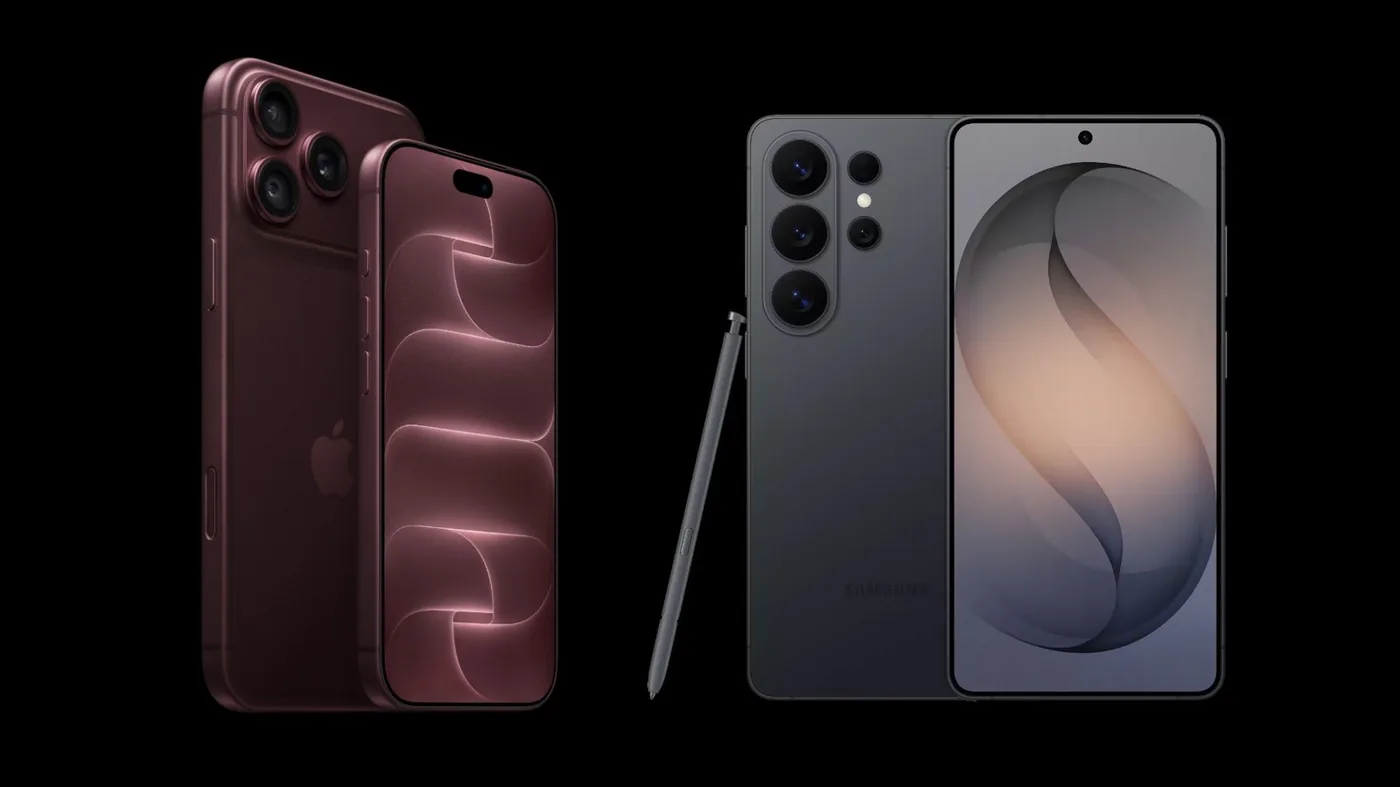
Apple’s exact screen diagonal needs clarification. CNET says 6.8 inches; Engadget says 6.9. Both describe a 120Hz panel (refreshing up to 120 times per second), and both give Samsung a 6.9-inch display. Engadget lists higher peak brightness for Apple and higher resolution for Samsung, but those specifications alone do not establish which screen looks better in everyday use. The rear cameras introduce a less subtle hardware divide. [1, 2]


Moving Aperture, Two Zoom Cameras
Apple gives the iPhone Pro Max a variable aperture (an opening that mechanically changes how much light reaches the sensor). Engadget’s Filipe Espósito and CNET’s Mike Sorrentino both describe the mechanism as a central camera upgrade. Apple retains three rear cameras: wide, ultrawide and telephoto, with the last offering 4x optical zoom. PerEXP Teamworks’ coverage of the iPhone 18 Pro’s variable-aperture camera examines the same feature. [1, 2]
Samsung takes a different route through the scene. CNET lists a 200-megapixel main camera, a 50-megapixel ultrawide, a 10-megapixel telephoto at 3x and a 50-megapixel telephoto at 5x, providing two dedicated telephoto choices around Apple’s single 4x option. Engadget agrees on those zoom positions. Samsung lacks the variable aperture described for Apple. Neither comparison supplies matched photographs that establish an overall image-quality winner. Camera counts and zoom positions explain the available hardware; they leave the quality of an actual photograph open to testing. [1, 2] CNET’s camera figures also contain an internal mismatch: its prose calls Apple’s main sensor 49 megapixels, while its table says 48, matching Engadget’s account.
Video figures conflict too. Engadget reports 4K capture at up to 120 frames per second for Apple; CNET’s table lists 4K at 60. Both report Samsung’s 8K recording. An exact iPhone maximum needs confirmation before a frame-rate comparison can settle the choice for filming. [1, 2]
Charging Claims Need a Stopwatch
Samsung reached 76% charge in 30 minutes in CNET’s test. The publication gives the Galaxy S26 Ultra a 5,000-mAh battery (milliamp-hours measure electrical charge capacity) and 60-watt wired charging, and says the result earned its fastest-wired-charging Lab Test award. CNET measured last year’s iPhone 17 Pro Max at 69% in the same interval. The new iPhone has no comparable result in the supplied report. [1]
Apple claims 45 hours of video playback, according to CNET. That is a playback claim, not a mixed-use endurance test. CNET also attributes a 5,391-mAh capacity for the physical-SIM model to Apple’s Irish website, while leaving the US eSIM model’s capacity unresolved. A larger capacity does not establish the runtime winner here. CNET explicitly says it still needs to test the iPhone 18 Pro Max. [1]
Engadget reports that both phones can reach 50% in around 15 minutes using a 60-watt charger, but CNET says Apple has not disclosed its charging speed and gives a different figure in its table. These reports cannot support a confirmed charging tie. The same caution applies to processing power: Engadget describes Apple’s A20 Pro as a 2-nanometer chip against Samsung’s 3-nanometer Snapdragon 8 Elite Gen 5, while acknowledging that real-world testing remains outstanding. [1, 2]
Software Carries the Choice Forward
Apple keeps Face ID. Samsung uses an under-display fingerprint reader. [1, 2]
Apple’s software pitch reaches further into messages and calendars. CNET reports that its Siri AI assistant uses Apple’s collaboration with Google’s Gemini to retrieve information from emails and texts and turn it into reminders or calendar entries. Samsung’s Galaxy AI emphasizes proactive suggestions and photo editing in the same account. CNET describes those capabilities without providing a comparative accuracy test, so neither assistant earns a reliability advantage from this reporting. [1]
Samsung promises seven years of operating-system and security updates, according to CNET and TechRadar. Their software snapshots differ: CNET’s table lists Android 16, while TechRadar reports a stable One UI 9 release built on Android 17 the following day. The supplied accounts do not resolve regional rollout coverage. Existing AirPods and Apple Watch ownership gives the iPhone Pro Max another practical attraction, Engadget argues, because the choice also involves devices already in use. [1–3]
Why choose an iPhone Pro Max? The reported appeal combines a large conventional screen, Apple’s accessory ecosystem and mechanical aperture control; Samsung answers with lower weight, its pen and two telephoto cameras. The unresolved contest is camera output and endurance under matching conditions. CNET still needs its new iPhone battery test, and Engadget still needs real-world A20 Pro results before either report can turn the launch specifications into a measured verdict. [1, 2]
- ONLINE NEWS Sorrentino, M. (2026, September 10). Apple iPhone 18 Pro Max vs. Samsung Galaxy S26 Ultra: The highest-end phones compared. CNET. [Article Link]
- ONLINE NEWS Espósito, F. (2026, September 10). iPhone 18 Pro Max vs Samsung Galaxy S26 Ultra: How these XL phones compete. Engadget. [Article Link]
- ONLINE NEWS Arboleda, N. (2026, September 11). Forget the new iPhones and Google Pixels — this 23% discount on Samsung’s flagship Galaxy S26 Ultra offers better value for money. TechRadar. [Article Link]


1 comment