





Engadget published a hardware breakdown on November 1, 2026, showing that building a desktop computer with performance matching Microsoft’s Xbox Series S costs approximately $740 before taxes. Tech writer Max Miller selected current retail parts from Amazon and major outlets to match or exceed console graphical output, which targets 1440p resolution at up to 120 frames per second. The 512GB base console now sells for $500 following recent price hikes, but rising hardware demand driven by artificial intelligence workloads has pushed budget computer components to higher retail levels [1].
Benchmarking Against the Xbox Series S
Max Miller established clear baseline rules for the Engadget hardware comparison to give PC builders a realistic estimate. The theoretical PC had to beat the Xbox Series S at native 1080p, or at 1440p with upscaling and lower graphical settings. Every component had to come brand new from major retailers like Amazon. Used parts were ruled out. Refurbished hardware deals vanish quickly, and component shortages have kept older graphics cards unexpectedly expensive in 2026, preventing builders from finding cheap legacy hardware that matches console capabilities on paper [1].
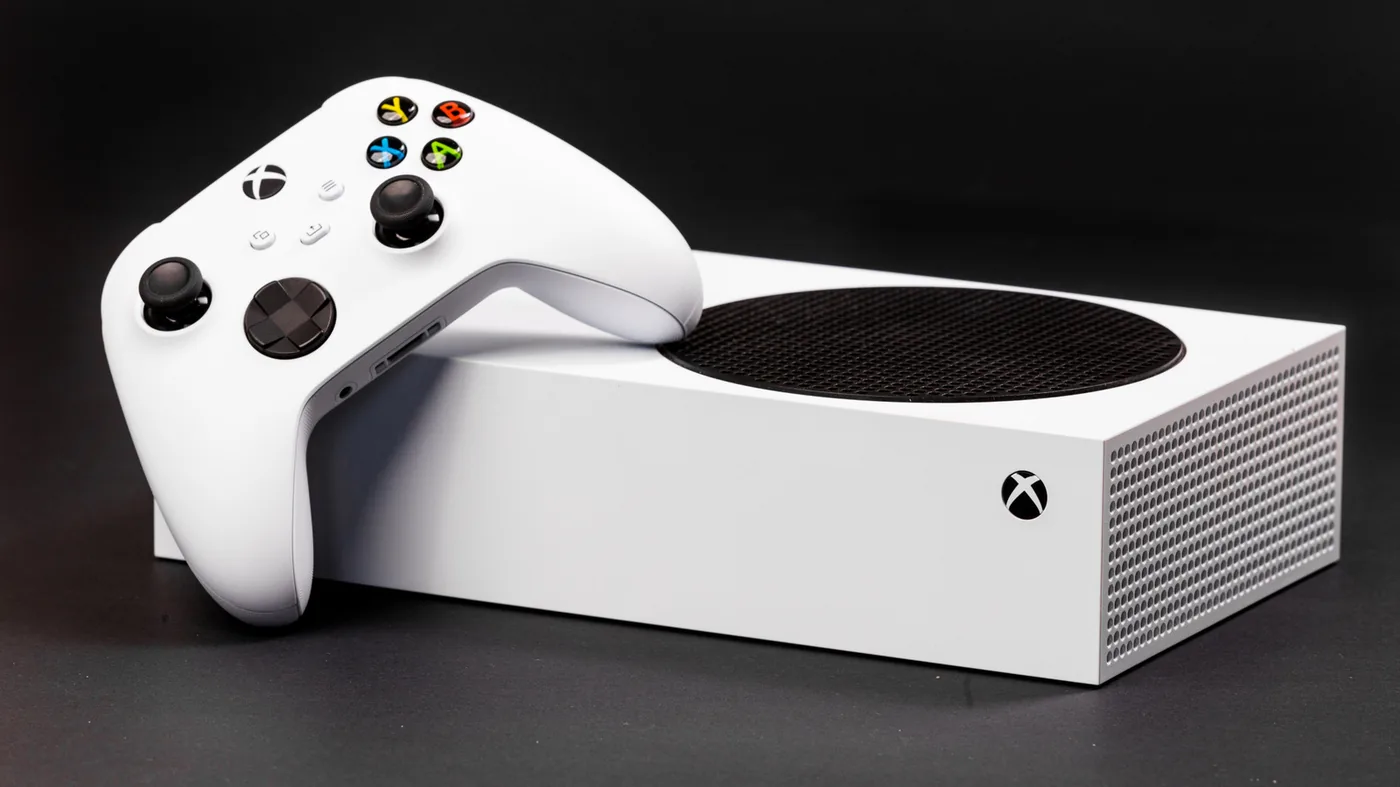
Custom console architecture complicates direct paper comparisons. Microsoft built the Series S around an AMD Zen 2 processor with 8 physical cores clocked at 3.6GHz, which drops to 3.4GHz in multithreaded tasks. The console pairs that CPU with an AMD RDNA2 graphics processor featuring 12 compute units at 1,565MHz and 10GB of unified GDDR6 memory on a 128-bit bus [1].
Consoles benefit from targeted software optimization that lets games run smoothly on modest hardware. Desktop PCs lack that unified setup. An equivalent custom computer needs slightly faster retail components to deliver the same perceived gaming smoothness. Miller said the trade-off of building a budget PC that outperforms the budget console on paper “will also crush your wallet” [1].
Processor and Memory Choices
Miller chose AMD silicon. The main platform decision came down to whether builders should invest in newer AMD AM5 motherboards or stick with older AMD AM4 hardware to save money. AM5 offers long-term upgrades, but AM4 cuts costs on both motherboards and system memory. Miller selected an AMD Ryzen 5 5600 processor for $160 on Amazon. The chip beats the console’s AMD Zen 2 processor. Miller noted that the AMD Ryzen 5 5600X3D provides extra gaming power through its larger L3 cache for $175 on sale, though the standard Ryzen 5 5600 remained the primary budget pick for this build [1].
The build houses the AMD Ryzen 5 5600 in an ASRock B550M Phantom Gaming 4 motherboard priced between $80 and $90. That board uses AMD’s B550M chipset. It includes VRM heatsinks to prevent thermal throttling and avoid PCIe bottlenecks, although buyers might need to update the BIOS before installing the Ryzen 5 5600 [1].
System memory required balancing cost against real-world gaming performance. The Xbox Series S shares 10GB of GDDR6 memory between graphics and general computing, but AMD Ryzen desktop processors run significantly faster when paired with dual-channel RAM. Miller chose a Lenovo 2x4GB DDR4 kit running at 3,200MT/s for $40. DDR4 saves cash. Two 4GB Lenovo sticks provide enough speed to beat the console without incurring the steep retail prices demanded by newer DDR5 modules [1].

Graphics Card Selection
The graphics card proved to be the most expensive component in the entire project. The nearest historical equivalent to the Series S graphics chip is the NVIDIA GeForce GTX 1060 from 2019, but Miller rejected that legacy card because it lacks the hardware capability to run modern games. NVIDIA’s GeForce RTX 3050 costs about $250, but its 6GB of VRAM creates potential bottlenecks in current releases. Intel sells the Arc B570 with 10GB of VRAM for $290, and NVIDIA offers a single-fan RTX 5050 for roughly $300. Miller picked AMD. The build uses the ASRock Challenger Radeon RX 7600 8GB, which retails for $330 and provides an all-AMD setup that eliminates driver conflicts while delivering superior graphical throughput [1].
At $330, the ASRock Challenger Radeon RX 7600 8GB costs more than the original launch price of the entire Series S console. The graphics card alone takes 45 percent of the total PC budget. Its 8GB of VRAM and modern AMD RDNA architecture let PC gamers run titles at 1080p and 1440p with higher frame rates than Microsoft’s budget hardware can produce [1].
The retail GPU market remains distorted by surging commercial AI compute demand. Older graphics cards once dropped steadily in price on the secondary market, but current hardware economics have kept retail tags high even on budget silicon. Miller picked an AMD Radeon RX 7600 card to match console architecture, giving builders a straightforward setup that avoids Intel Arc driver issues [1].
Chassis, Cooling, and Power
The remaining components include cooling, solid-state storage, a power supply, and an enclosure. For processor cooling, Miller chose the Thermalright Peerless Assassin 120 SE for roughly $35 on Amazon. The dual-tower cooler runs quiet. It provides ample thermal headroom for the AMD Ryzen 5 5600, keeping operating temperatures low during extended gaming sessions [1].
Storage and power components formed another substantial expense for the desktop build. A 512GB solid-state drive that matches or exceeds internal console storage speed costs about $100 in today’s retail market. For system power, Miller picked a 600W Thermaltake Toughpower GX2 power supply with 80+ Gold certification. The Thermaltake unit easily accommodates the build’s estimated 350W thermal design power. Miller housed the parts inside a Zalman Cubix-G micro-ATX case priced between $35 and $45, though builders might need an inexpensive adapter to wire the front USB-C connection [1].
These supporting parts show how quickly small hardware expenses add up during a custom PC build. Microsoft packages a power supply, custom enclosure, and specialized cooling inside every console box at factory cost. Custom PC builders buy separate retail parts. Desktop computer builds struggle to match entry-level console prices on initial purchase because of retail markups on cases, power supplies, and storage drives [1].
Why the Xbox Series S Remains Cheaper
A complete cart of new retail components brings the total desktop price to roughly $740 before taxes. That total sits noticeably above the $500 price tag Microsoft charges for the 512GB Xbox Series S, and it more than doubles what the console cost at launch. Microsoft leverages manufacturing scale and custom silicon engineering to keep retail pricing down. The company sells console hardware at minimal profit margins because it recoups revenue through digital game sales, Xbox Game Pass subscriptions, and accessories over the console’s lifespan. Standalone desktop computers lack software subsidies, forcing consumers to pay full retail prices on every individual component [1].
Hardware pricing dynamics continue to evolve across the gaming industry. Microsoft has separately projected an $1,800 price for its next Xbox console in 2028, but current budget buyers face immediate trade-offs between convenience and cost. A $740 PC costs far more upfront, but it isn’t limited to playing games or streaming media [1].
For PC enthusiasts willing to spend $740, the custom desktop offers clear advantages. The build beats the Xbox Series S at 1080p, runs productivity applications, and allows step-by-step hardware upgrades when budgets allow. Upgrades remain simple on PC. For players seeking an inexpensive plug-and-play gaming machine, Microsoft’s Xbox Series S remains the cheaper option despite recent retail price increases [1].
- ONLINE NEWS Miller, M. (2026, November 1). How much would it cost to build a PC similar to the Xbox Series S? Engadget. [Article Link]


