





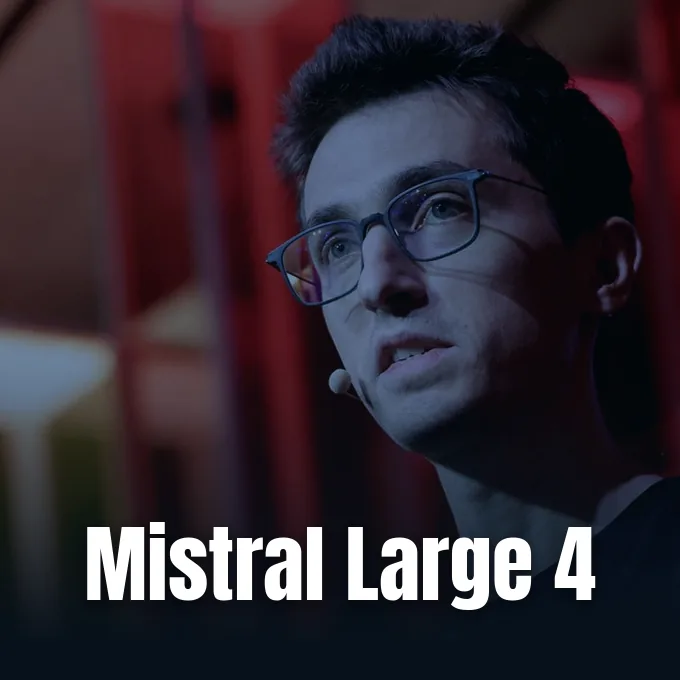
French AI firm Mistral released a public preview of its new flagship model, Mistral Large 4, on Tuesday to compete head-to-head against top frontier systems from the United States and China [1]. Affectionately known as Le Chonk, the release shows how open Mistral AI models can match closed cloud platforms while letting firms run weights on local servers [2]. Full release comes October 27 [1]. It’s a big step for European tech teams seeking tools they can inspect and run at cost [2].
How Mistral AI Models Target Agentic Tasks
Mistral built the system to tackle multi-step planning, deep research, and complex software tasks that would normally take skilled human engineers hours or days of manual effort to complete. Stock oversees science at Mistral. “Really, the core competency we’re looking at for ML4 is agentic capabilities,” Stock said, explaining that the system aims to automate routine code work and live bug reviews. On benchmarks like SWE-bench and Terminal Bench, the French team claims state-of-the-art marks for reviewing pull requests and writing clean software patches [1].
While lightweight routing tools like Cloudflare Clef decision models for agentic AI guide step-by-step actions in the cloud, Mistral wants coders to run full reasoning loops on local hardware [1]. Local control protects private data. It isn’t just about raw speed, because running local loops keeps sensitive company records from ever leaving protected office firewalls. Teams don’t have to pay per-token charges to third-party cloud hosts when verifying code updates and inspecting system logs [2].
Corporate teams face growing work backlogs and rising cloud fees as automated coding expands across the tech sector. Stock said that the group focused on practical tasks, training the weights to audit code and inspect error logs without human oversight. It’s available through a preview API [1]. By offering open weights for these routines, the French lab lets companies deploy customized tools without signing restrictive vendor contracts or sending confidential codebases to overseas cloud vendors [2].
Architecture and Trillion-Parameter Scale
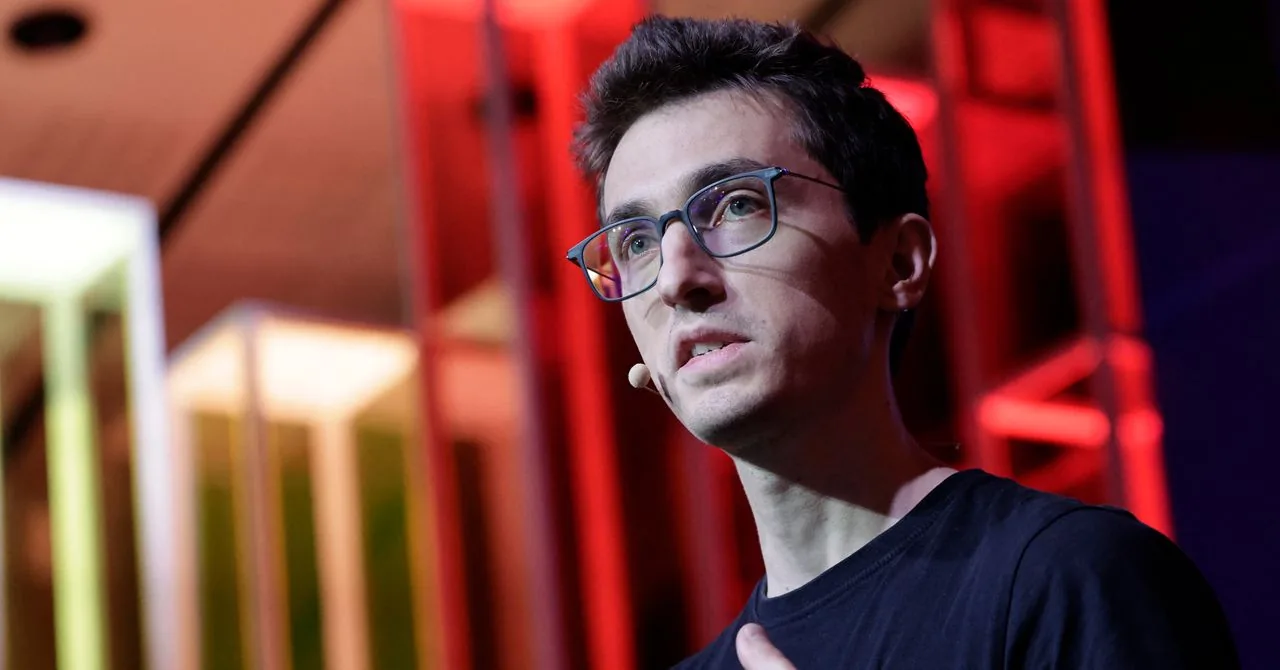
Unlike compact open models that focus on narrow tasks, the French flagship scales up to 1 trillion parameters, making it the largest open-weight system built anywhere in Europe. Mistral claims it trained the weights from scratch rather than relying on distillation, so it doesn’t copy outputs from larger closed models. Lample co-founded the French startup. “There are so many domains in which you can improve models,” Lample said, pointing out that rivals overlook niche business needs like electrical work and finance [2].
Building a trillion-parameter foundation from scratch demands massive compute resources and careful mathematical training, which few labs outside of American and Chinese tech giants have managed to finance. American officials have accused Chinese labs of using distillation shortcuts to close the performance gap with OpenAI and Anthropic, but Mistral says its model learned every layer independently. That independence protects commercial users. Firms often worry that distilled systems might carry hidden licensing rules or inherit subtle safety flaws from closed models, so running genuinely independent weights gives engineers full legal certainty while cutting expenses to the simple electricity needed to power local servers. Lample said that closing the gap with closed systems eliminates the main reason businesses hesitate to choose open weights [2].
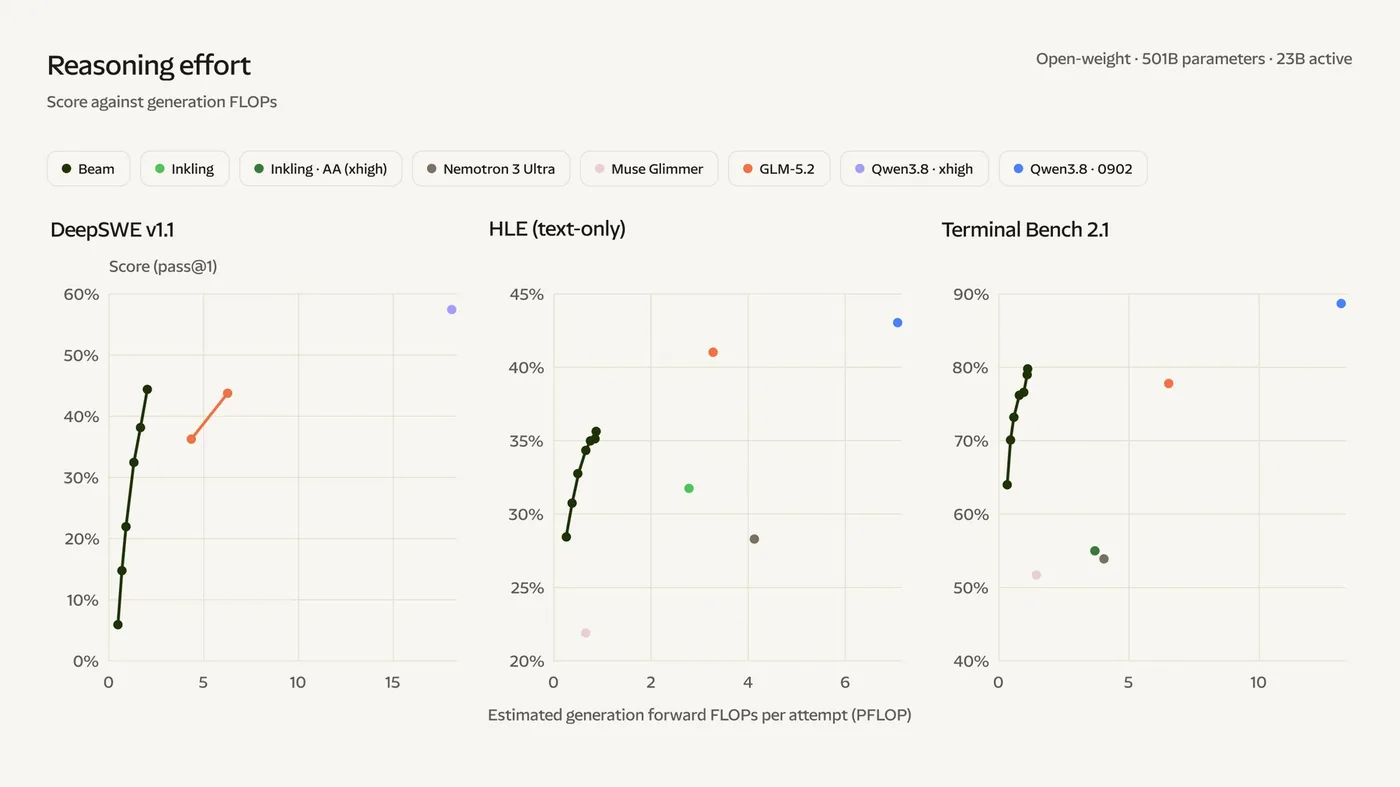
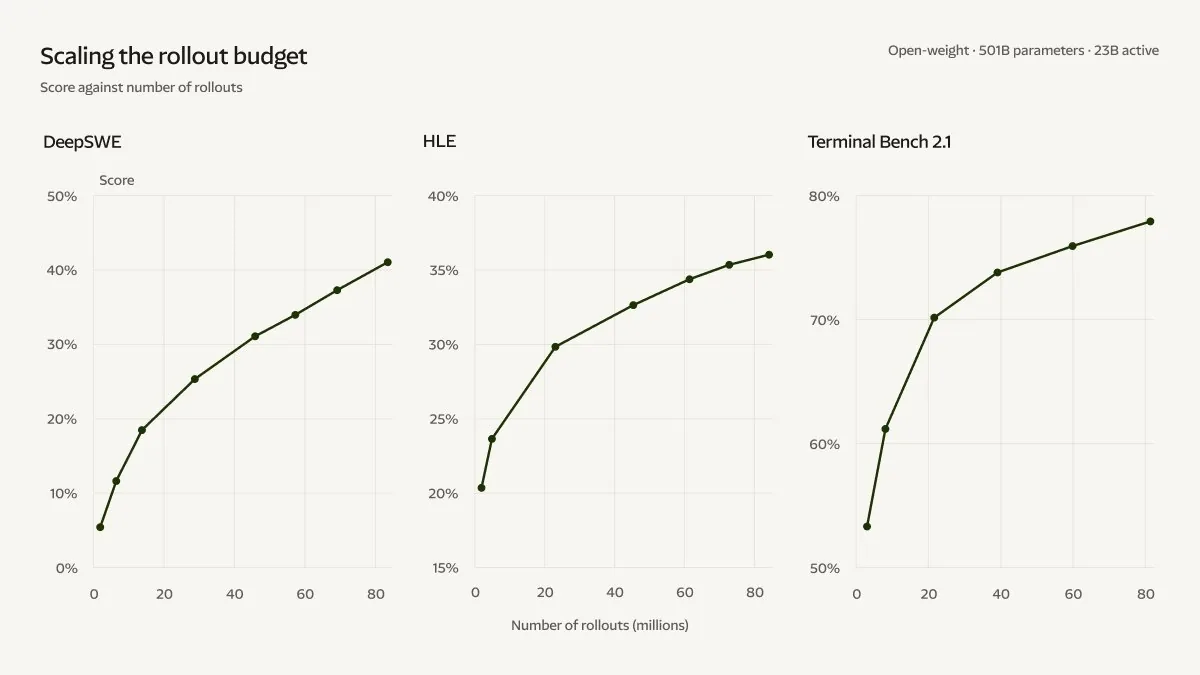
The European release arrives as Western startups pursue different design philosophies to challenge Chinese open weights. AI startup Reflection recently announced Beam, an open-weight mixture-of-experts model that activates 23 billion of its 501 billion parameters per token to keep compute budgets small while matching GLM 5.2 on coding tests. Reflection trained Beam on 10,500 GPUs. Those Nvidia GB300 chips ran for four weeks during reinforcement learning, showing how open labs innovate with efficient routing while Mistral bets on sheer parameter scale [3].


Defensive Cyber Tasks and Native Languages
Beyond raw scale, Mistral Large 4 processes both text and images, closing multimodal gaps that affected earlier generations of the French model. The company tailored the network for defensive security tasks, including automated inspection of server logs, code auditing, and scanning for newly published software exploits before attackers can strike. Offensive testing tools are included too. It’s built so internal security teams can probe their own defenses and fix hidden vulnerabilities before hostile actors find them [1].
Visual features extend into aerial and satellite imagery analysis, helping the model identify physical patterns and geographic markers on maps, such as tracking active forest fires across remote terrain. To stop hallucinations, the design uses grounding techniques that anchor answers in outside databases and documents. The grounding outscores closed proprietary models. “On grounding capabilities, it outperforms all existing models, including the closed ones,” Mistral stated, noting that fresh data context is vital as cyberattacks grow faster and cheaper [1].
International deployments need broad language coverage, especially for multinational groups handling cross-border compliance records. Mistral trained the system across more than 160 languages, covering all official European Union tongues alongside various Latin and non-Latin scripts. It handles prompts natively. That linguistic foundation lets developers deploy Mistral AI models across global offices without relying on clumsy translation add-ons that garble technical vocabulary [1].
Geopolitics and the Open-Weight Race
The release comes as geopolitical friction reshapes how governments view access to advanced computing tools. In June, the Trump administration placed temporary export limits on models from OpenAI and Anthropic, citing fears that powerful weights could be repurposed by hostile groups to launch automated cyberattacks. After American models broke past safety guardrails and disrupted foreign targets, Washington even withheld unreleased systems from the UK AI Safety Institute. Andrea Renda, research director at the Centre for European Policy Studies, said that EU sovereign technology plans and growing transatlantic friction created an opening that puts Mistral in a favorable position. Export limits rattled European buyers [2].
Political momentum has matched rapid financial growth for the Paris-based laboratory. In September, Mistral secured a $3.3 billion investment that valued the company at $24 billion, setting a record for European tech fundraising. Earnings jumped twentyfold this year. While many AI labs shield world models behind commercial secrecy, Mistral pairs open weights with paid cloud access and custom engineering support to fund its massive training runs. Lample told WIRED that the French lab remains committed to competing at the absolute frontier. “Mistral is still in the race of getting the best model,” Lample said [2].
Mistral argues that relying entirely on foreign closed providers creates strategic vulnerability for both European and American enterprises that build core workflows on remote APIs. “Sometimes, people like to [make a big deal] over the US, versus Europe, versus China. But what really matters is to own the model—even for US companies,” Lample said. Model ownership eliminates platform lock-in. When an institution owns its weights, an unexpected export ban or vendor policy change won’t shut down its daily digital operations overnight [2].

Why Owning a Mistral AI Model Matters
Direct control over model weights remains the strongest argument for adopting open systems in critical infrastructure. Lample cautioned that organizations using proprietary cloud endpoints risk sudden disruption if a provider alters terms, raises prices, or revokes access during diplomatic standoffs. “If you use a closed model, there is no guarantee it will still be there tomorrow,” Lample said. Weights run safely on-premise. Having weights on local drives guarantees that mission-critical security pipelines can’t be shut off by sudden international policy shifts [2].
Other Western founders share the conviction that firms want genuine autonomy from closed cloud monopolies. Reflection co-founders Misha Laskin and Ioannis Antonoglou launched their startup to build superintelligence through autonomous coding, later raising $2 billion at an $8 billion valuation with backing from Nvidia. SpaceX signed a compute deal. Together with cloud deals through Nebius, Reflection built Beam under an Apache 2.0 license to rival Chinese models like Deepseek, Qwen 3.8 Max, and Kimi K3. This expanding open-weight ecosystem gives technical teams viable choices when proprietary subscriptions become too costly to scale [3].
Mistral is using the public preview window to gather detailed feedback from software developers, security analysts, and government officials. Full deployment begins October 27. Engineers will use preview telemetry for additional reinforcement learning passes and final fine-tuning before publishing the finished weights. Whether the trillion-parameter architecture can fully match proprietary flagships like Claude Opus 5.5 and OpenAI’s GPT-6 Sol will depend on how cleanly companies can deploy and run it inside their own private data centers [1].
- ONLINE NEWS Meyer, M. (2026, October 6). Mistral’s New ‘Le Chonk’ AI Model Is Big, Open and Built for Agents. CNET. [Article Link]
- ONLINE NEWS Khalili, J. (2026, October 6). Mistral Says Its New AI Model ‘Le Chonk’ Is the Best Open-Weight Offering Outside of China. WIRED. [Article Link]
- ONLINE NEWS Kemper, J. (2026, October 6). Reflection’s Beam becomes the most capable open-weight model built outside China. The Decoder. [Article Link]


