





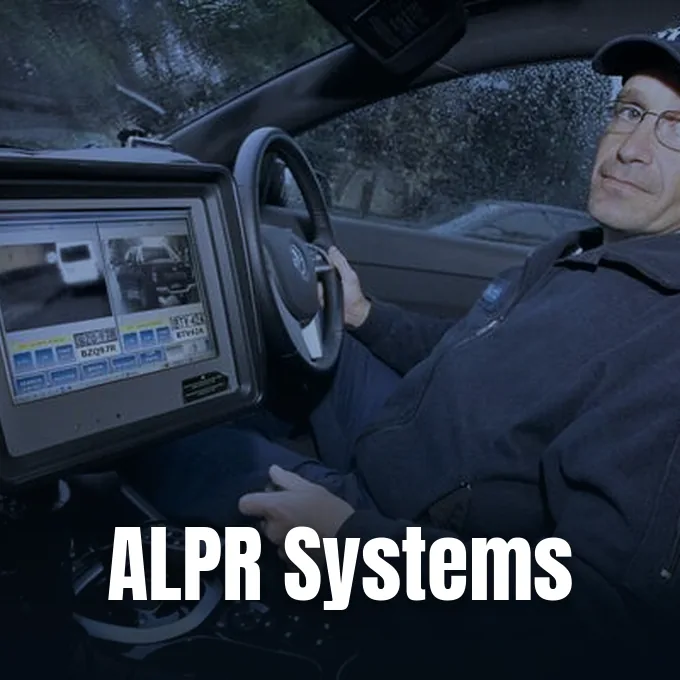
Modern traffic networks rely on optical tools to identify moving vehicles without disrupting daily transit. Optical character recognition sits at the core of alpr systems, turning roadside camera footage into structured digital text that computers evaluate instantly. These setups pair cameras with recognition software to catalog vehicle movements, assess congestion charges, and aid police inquiries on public highways. The entire workflow happens in fractions of a second as a car travels past a roadside sensor. A digital camera takes a snapshot, software isolates the plate rectangle, characters are separated from their background, and database queries check the registration against national records. Highways agencies and police forces worldwide depend on this rapid automated sequence to process millions of daily vehicle journeys without creating congestion at toll booths or border checkpoints [13].
What Are ALPR Systems?
Roadside alpr systems turn visual plate images into machine-readable digital characters using an automated pipeline. Known internationally as automatic number plate recognition and Automatisk nummerpladegenkendelse, this technology operates on fixed gantries, mobile police patrol cruisers, and parking gates [13]. A camera takes a photo. The optical software then reads the letters to build vehicle location data. In earlier decades, officers checked plates by eye. As traffic grew, researchers Badr, Abdelwahab, Alieldin, and Abdelsadek found that manual checks became impossible on modern highways. Transport authorities now deploy optical plate scanners to manage congestion fees like the London Congestion Charge, enforce road safety rules, and track stolen cars across busy highway networks without stopping moving traffic [3, 7].
Deployments follow two basic engineering models. In edge setups, computing hardware at the camera post finishes optical character recognition on site. This roadside unit completes the entire read within 250 milliseconds, recording the plate number, lane identity, and time stamp before sending a text record to remote servers [13].
The second model routes camera images from multiple lanes into a central computing server farm. Server farms process images in batches, but they need high network bandwidth to transmit visual feeds from roadside cameras to remote hubs [13]. Researchers Bansal, Nehra, and Kabra documented how facility managers use these optical tools at security gates for military zones and government facilities like the Supreme Court or Parliament [5]. In restricted compounds, cameras scan incoming vehicles against lists of authorized staff cars. When an authorized car arrives, the gate opens promptly. Small parking setups sometimes accept a single-character reading error because the likelihood of an unauthorized car having an almost identical plate number stays extremely low [13].
Infrared Sensors and Shutter Speeds
Capturing clear pictures of license plates on fast-moving cars presents severe physical hurdles because standard daylight cameras suffer from blinding sun glare, oncoming headlights, and rapid motion blur [2]. Roadside alpr systems rely on infrared illumination. Infrared light brightens retroreflective plates without blinding drivers with a visible flash, while optical bandpass filters on camera lenses block ambient glare from passing traffic [13].
Mobile patrol units face tougher hurdles. Law enforcement cruisers patrol with cameras aimed at oncoming highway traffic, where relative closing speeds can exceed 160 km/h (100 mph) while processors draw power solely from the car battery [13]. In Australia, Wollongong highway patrol deployed three infrared cameras during Operation Stay Alert over the Queen’s Birthday weekend. Senior Constable Phil Roddy of the NSW Police said that the equipment read 1,843 plates in seven hours [9].
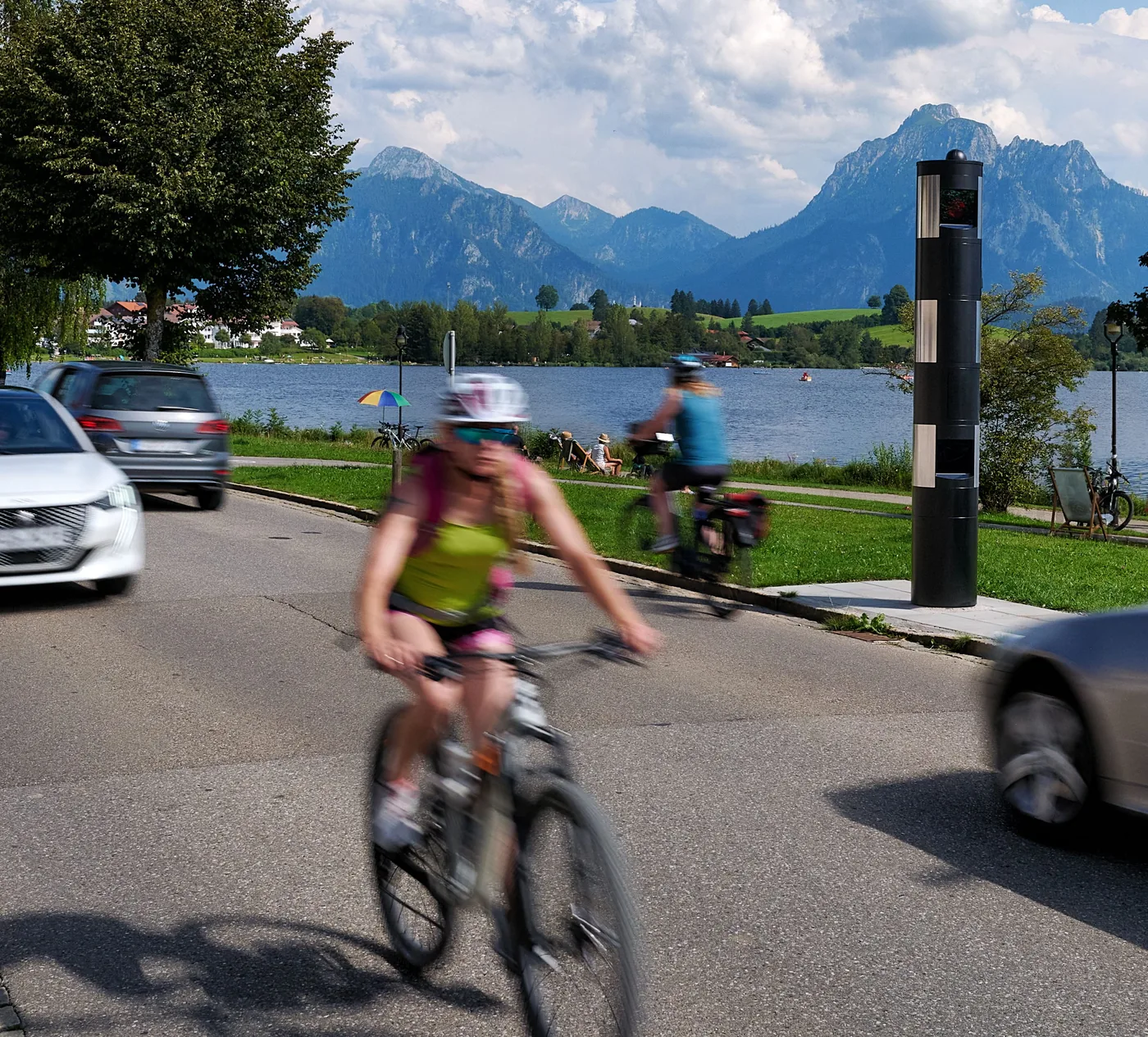
Camera angles vary based on police duties. Highway patrol units use forward-facing cameras with longer focal lengths to read plates across multiple highway lanes, whereas city officers need wider lenses to scan parked cars along urban curbs. When cars park perpendicularly in lots, officers need specialized short focal lenses turned sideways [13]. Traffic engineering firms like Jenoptik build these digital sensors into fixed roadside Traffitower units, mobile speed trailers, and traffic light posts. Jenoptik holds over 300 patents worldwide and has installed more than 30,000 systems in 80 countries. These camera towers combine optical plate readers with piezo sensors, laser units, radar devices, and induction loops to measure speed and detect red light violations [11].
Image Processing for Plate Localization
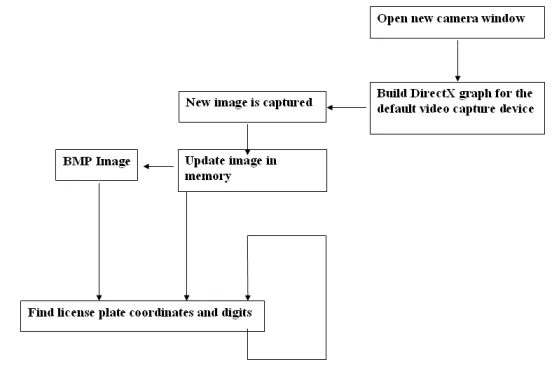
After an optical sensor captures a vehicle picture, software must isolate the license plate from the wider background of grilles, bumpers, headlights, and roadside signage through rapid edge detection [1, 13]. This opening step is called plate localization. Intensity filters find high-contrast boundaries where characters sit [1].
Morphological math operations and histogram analysis help remove non-plate objects, isolating the true rectangular plate perimeter from complex vehicle body panels and front radiator grilles [3]. Because vehicles travel at diverse angles, software uses coordinate mapping to correct skew and scale the plate to standard proportions [13]. Uneven lighting across the bumper can confuse simple thresholding code. Researchers at the Technion Vision and Image Science Laboratory (VISL) solved this problem with adaptable image quantization in MATLAB. Supported by the Ollendorff Minerva Center, project supervisor Johanan Erez guided tests that converted color RGB frames into black-and-white representations. The Technion team set a fixed quantization threshold where the integral over the histogram reached 0.33 of the total pixels. The mathematical concept relies on the fact that dark letters and digits make up roughly 33% of a normal license plate area [6].

Following quantization, filtering tools strip away minor noise that could distort letter outlines. Median filtering cuts out small speckles, while connected component analysis removes plate borders and untangles touching digits [6]. In related research, scholar Lourdes showed how normalization scales the plate to uniform dimensions and boosts contrast between characters and the plate backing [1]. Research by Nayak showed that these cleaning steps yield a clear binary image suitable for character recognition [4].
Character Isolation via Neural Networks
With the plate image cleaned, software separates each letter and digit through character segmentation. Horizontal and vertical projection profiles measure pixel densities across the isolated plate, locating the blank vertical valleys between adjacent characters to slice text strips into discrete bounding boxes [1, 4]. Segmentation must handle tough cases where paint wear or dirt merges two digits together [4]. Once bounding boxes isolate each character, the software scales each glyph to a uniform pixel grid for classification [1].
Engineers use two main methods to classify isolated characters: template matching and neural networks. Template matching compares unknown characters against stored font patterns using correlation formulas [1]. While template matching is fast, artificial neural networks handle skewed, dirty, or damaged characters far better on real roads [3].
At the Technion VISL laboratory, engineers built a feed-forward neural network to recognize digits. The network used an input layer of 200 pixels describing each character on a 20-by-10 grid, with ten output nodes indicating the probability for digits zero through nine [6]. After classification, syntactical rules check the resulting text against national plate standards. For example, when Dutch vehicle plates changed style in 2002, designers placed small gaps in letters like P and R to make them distinct for optical software. Syntactical rules also prevent misreading the number zero as the letter O. Software averages readings over successive camera frames to yield an accurate result [13].

How ALPR Systems Match Vehicle Records
Once optical recognition reads a plate, alpr systems check the text against law enforcement hotlists. These hotlists track stolen vehicles, expired registrations, and cars tied to unpaid warrants [13]. In England, the City of London Police placed 20 fixed camera posts and three mobile units to monitor roughly 100,000 daily vehicle movements. Former Chief Superintendent Alex Robertson said that running an automated registration check against the Police National Computer took four seconds before sending hit notifications to the central control room. If the computer finds a match, an alert reaches the control room so staff can decide whether officers should intercept the car. Stored plate images also let detectives review which vehicles entered an area before or after a crime [7].
Automated plate matching proved decisive during major criminal hunts. In November 2005, a CCTV network in Bradford tracked a suspect getaway car within minutes of the fatal shooting of Pc Sharon Beshenivsky, enabling arrests early the next morning. West Yorkshire Police Chief Superintendent Geoff Dodd called the technology “the best investigative tool we have had since the introduction of DNA analysis” [8].
Other countries report similar field results. Swedish authorities tested camera systems across nine sites, including Skåne and Hudiksvall, where Rikspolisstyrelsen checked plates against the Vägtrafikregistret database. Unit chief Per Blomqvist said the scanners quickly caught drivers without licenses or insurance [12]. Senior Constable Phil Roddy of the NSW Police said that his Wollongong patrol car sounded a bell for unregistered cars and an alarm for serious driver warrant warnings [9]. In England, the National ANPR Data Centre linked 43 regional police forces, achieving a 95% reliability rate for British plates [7].
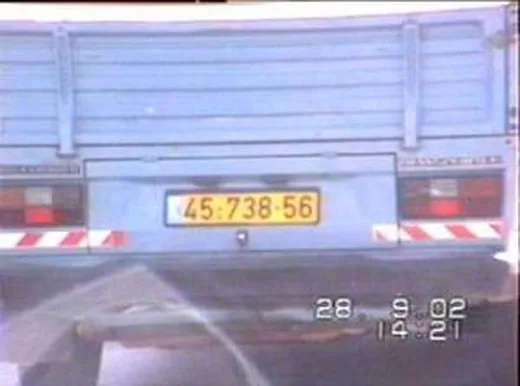
Physical Obstacles and Reading Errors
Optical readers face severe physical obstacles on public roads. Fast vehicle speeds create severe motion blur if camera shutters are slow, while thick road dirt, mud, and splashing snow coat reflective plate characters on busy motorways [2, 13]. Harsh sunlight reflects off polished vehicle metal, blinding digital camera sensors during sudden highway lane changes that tilt the optical viewing angle away from oncoming traffic [13].
Car hardware adds more physical impediments. Tow bars and trailer hitches frequently block lower portions of license numbers. Bicycles carried on rear car racks hide characters from view, prompting authorities in Victoria, Australia to require official bike plates. Towed trailers and campers often display different registration numbers than the front car. Furthermore, American states with rear-only plates render forward-facing police cameras ineffective against oncoming traffic, requiring rear-facing cruiser cameras [13].
Highway alpr systems also have structural limits regarding what human driver actions they can uncover. Swedish police officer Bengt Svensson pointed out that while scanners quickly spot administrative infractions like unpaid registration taxes, they cannot detect drunk drivers or cars stolen just minutes earlier [12]. Optical readers cannot judge human driver conditions. In addition, plate cloning poses a challenge when criminals duplicate legitimate plate sequences onto cars of the same make and model. To combat cloned plates, the British national database searches for impossibly fast journeys. Peter Wilson, assistant national ANPR coordinator, said that if the same plate appears in London and then in Liverpool ten minutes later, software flags a clone immediately before innocent motorists receive wrongful fines [7].
Retention Policies in ALPR Systems
The expansion of modern alpr systems has sparked debate over data storage and driver privacy. Civil liberties groups distinguish between hits and no-hits. Hits involve wanted cars, whereas no-hits represent innocent drivers. The Danish national network covers 24 stationary camera locations with 48 mobile police cruisers patrolling roadways to monitor daily vehicle movements across the entire domestic transit network [10].
In Denmark, freedom of information inquiries revealed that the system logged 830 000 no-hits every day, maintaining a 90-to-1 ratio where 99% of captured plates held no police interest. The Danish Data Protection Agency ruled in March 2015 that general retention of all no-hits was unlawful, permitting storage for up to 30 days only during targeted police operations. Danish police kept stationary cameras operating as targeted operations, prompting rights groups IT-Pol Denmark and Bitbureauet to file formal regulatory complaints with the national data protection agency. Danish police also planned to link plate records to POL-INTEL, a predictive policing tool from Palantir Technologies [10]. Public unease over automated tracking has spurred legislative efforts like the Ban Flock Act to restrict camera expansion.

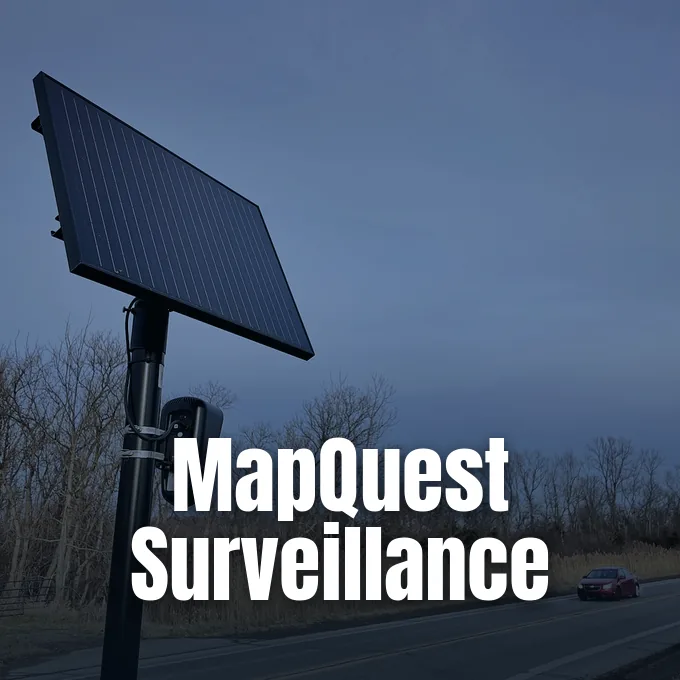
In Britain, the Protection of Freedoms Act 2012 established statutory controls over police plate archives. The National ANPR Data Centre in Hendon receives roughly 50 million plate reads daily, keeping records for up to two years. Under statutory rules established by the Protection of Freedoms Act 2012, records under 91 days require an Inspector’s approval for serious crime inquiries, while data up to one year needs a Superintendent’s sign-off [14]. Civil rights group Liberty, through legal director James Welch, cautioned that broad camera nets create mass surveillance [7]. In response, independent researchers encourage public mapping of surveillance camera layers to document roadside sensors.
Origins at the Police Scientific Development Branch
The technical roots of plate reading go back to British research in the nineteen-seventies. Engineers invented the technology in 1976 at the Police Scientific Development Branch in the United Kingdom. Working prototypes operated by 1979, prompting government contracts with EMI Electronics and Computer Recognition Systems in Wokingham. Early trial deployments took place along the busy A1 highway and at the Dartford Tunnel, evaluating how well optical hardware detected vehicle registrations in active road traffic. In 1981, police made the first arrest of a stolen car detected through an automated plate reader [13].
During the nineties, PC software advances made plate scanning practical for mobile cruisers. Early systems required expensive, bulky computers tied to fixed speeds and angles. Cheaper PC hardware allowed software to process images from moving cars without fixed approach paths. Processing units shrank to fit inside standard police car trunks [13].
Today, automated reading forms global transport infrastructure. Manufacturers like Jenoptik, which incorporated Computer Recognition Systems, built upon early British research to create modern traffic networks [11]. In Britain alone, 11,000 cameras send data to Hendon, recording roughly 18 billion plate sightings each year while generating 25,000 daily hits against the Police National Computer. Association of Chief Police Officers coordinators Frank Whiteley and John Dean oversaw the network linking 43 forces [7, 14]. From early Dartford Tunnel experiments to modern highways, alpr systems now serve as standard tools for vehicle tracking, road safety, and criminal investigations across global transport corridors [13].
- ACADEMIC JOURNAL Lourdes, J. Z. (2024). Automatic Number Plate Recognition. American Journal of Electronics & Communication, 4(3). [Article Link]
- ACADEMIC JOURNAL Patel, C. I., Shah, D., & Patel, A. M. (2013). Automatic Number Plate Recognition System (ANPR): A Survey. International Journal of Computer Applications, 69(9), 21-33. [Article Link]
- ACADEMIC JOURNAL Badr, A., Abdelwahab, M. M., Alieldin, A. M. T., & Abdelsadek, A. M. (2011). Automatic Number Plate Recognition System. Annals of the University of Craiova Mathematics and Computer Science Series, 38(1), 62-71. [Article Link]
- ACADEMIC JOURNAL Nayak, V. (2020). Automatic number plate recognition. International Journal of Advanced Trends in Computer Science and Engineering, 9(3), 3783-3787. [Article Link]
- ACADEMIC JOURNAL Bansal, D., Nehra, S., & Kabra, P. (2023). Automatic Number Plate Recognition. Journal of Analysis and Computations, 17(2), 10-19. [Article Link]
- WEBSITE Vision and Image Science Laboratory. (2017). Car License Plate Recognition. Technion – Israel Institute of Technology. [Article Link]
- ONLINE NEWS Mathieson, S. A. (2007). Worried about being watched? You already are. The Guardian. [Article Link]
- ONLINE NEWS BBC News. (2005). CCTV network tracks ‘getaway’ car. [Article Link]
- ONLINE NEWS Hoctor, M. (2012). Mass surveillance system nicks drivers. Illawarra Mercury. [Article Link]
- WEBSITE European Digital Rights. (2020). Denmark: Targeted ANPR data retention turned into mass surveillance. [Article Link]
- WEBSITE Jenoptik. (2025). Systems to increase road safety. [Article Link]
- ONLINE NEWS Sjögren, H. (2014). Polisens nya vapen: ‘Terminator’-teknik. Expressen. [Article Link]
- WEBSITE Wikipedia. (2026). Automatic number-plate recognition. [Article Link]
- WEBSITE Wikipedia. (2026). Automatic number-plate recognition in the United Kingdom. [Article Link]


