



Switching between mobile screens and desktop workstations often forces readers to search through long web pages to find lost text. Google Chrome tab sharing addresses that friction by recording precise reading coordinates during device transfers. Google Chrome rolled out updated browser capabilities that retain both page scroll positions and partially entered form data when transferring open tabs. Writing for The Verge, reporter Jess Weatherbed detailed how these browser synchronization upgrades eliminate common workflow interruptions during extended research and multi-device study sessions [1].
Chrome Tab Sharing Preserves Reading Progress
Academic research often involves navigating dense multi-page publications where losing a reading position disrupts critical focus, forcing students to manually scroll through lengthy text to retrace their previous line of thought. Google Chrome has long allowed people to dispatch open tabs from a mobile screen to a desktop computer, but earlier software versions simply reopened the transmitted page at the top of the browser window. Google Chrome tab sharing eliminates repetitive manual repositioning by recording the exact coordinate where reading stopped. Google Chrome synchronizes coordinates instantly. When a reader transitions between hardware environments, the receiving Google Chrome browser displays the webpage at the identical sentence without requiring manual scrolling [1].
Reporter Jess Weatherbed highlighted these practical improvements in detailed coverage for The Verge. Writing for The Verge, Jess Weatherbed explained that Google Chrome synchronization simplifies multi-device study sessions across platforms. Consider a student examining a 50-page paper on Behavioral Economics during a crowded morning train ride. Sending that document to a desktop workstation opens the study material at the exact sentence viewed during the transit commute. Chrome remembers exact coordinates. By capturing exact coordinates before dispatch, this persistent Google Chrome tab memory ensures that researchers never waste time scanning dense pages to find their place again [2].
Technical workflows also gain efficiency when reference documents maintain their orientation across hardware transitions. While reading policy files or technical documentation in Google Chrome, losing track of active tables creates delay. Google Chrome preserves tab state by capturing document coordinates at the exact moment of dispatch. Once the receiving hardware finishes loading the transmitted page, Google Chrome automatically repositions the viewport to match the original document coordinates without any manual intervention [1].
Hardware Shortcuts Speed Tab Dispatch Across Devices
Accessing device dispatch controls on desktop operating systems requires only a few menu selections. Users click the standard three-dot overflow menu in the upper corner of the Google Chrome interface, navigate to the Cast, Save, and Share submenu, and pick the Send to Your Device prompt. Desktop navigation streamlines cross-device tab sharing by displaying a list of registered computers and mobile hardware linked to the active Google account. Selecting the target hardware immediately transmits the active page together with its current scroll coordinate [2].
Frequent researchers can place a dedicated button directly on their Google Chrome toolbar for faster access. Opening the New Tab Page reveals the Customize Chrome side panel, where users open the Toolbar section to activate a permanent device-sharing shortcut (a dedicated hardware dispatch pathway). Desktop Chrome speeds navigation. This placement reduces tab routing to a single click, eliminating the need to explore nested menus while reviewing urgent research files across high-priority desktop projects [2].
In Chrome for Android, sharing functions operate through the standard share menu. A carousel of connected devices appears immediately for fast mobile dispatch [2].

Google Chrome Tab Sharing Retains Incomplete Forms
Entering extensive data into web forms on mobile touchscreens frequently creates administrative headaches. Typing long addresses, academic citations, or project details on glass keyboards causes typing fatigue and accidental submission errors. Google Chrome tab sharing preserves partially filled forms when routing pages across connected screens. If an individual begins completing an intricate questionnaire or job application on a smartphone, sending that tab to a desktop setup retains the typed text without erasing input fields, corrupting dropdown selections, or resetting complex multi-line text responses [1].
Reverse routing functions with equal reliability when writers must step away from their workstations. When someone begins entering registration data or filling administrative surveys on a laptop, transferring the tab allows them to finish the submission on a mobile device while traveling. The updated tab synchronization system packages field entries within the transmitted page payload. Google preserves input fields [1].
Google Chrome pairs these transfer improvements with existing workspace management utilities inside the browser. Users coordinating multi-source research projects can organize active web sessions through tab groups, display comparative documents using Split View (a standard side-by-side comparison mode), or arrange tabs along vertical and horizontal orientations. Tab organization tools complement cross-device tab sharing by maintaining clear workspaces across multiple monitors. When combined with immersive reading mode and text-to-speech tools such as read aloud, cross-device tab sharing creates a cohesive environment for complex study sessions [2].

Gemini in Chrome Expands Beyond YouTube Media
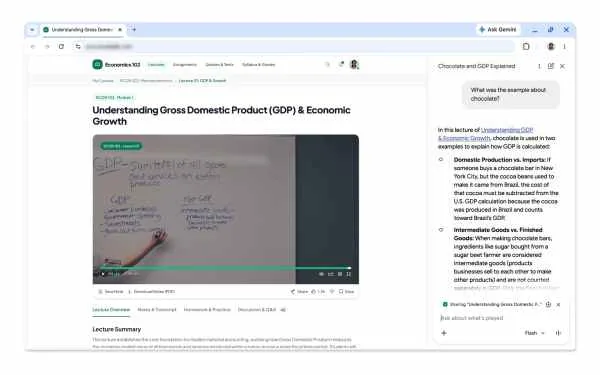
Artificial intelligence assistance inside Google Chrome is expanding to analyze external multimedia formats. While earlier iterations focused primarily on text summaries and YouTube transcripts, updated capabilities allow Chrome Gemini integration to evaluate audio and video files hosted across the broader web. This browser capability assists university students and independent researchers who frequently listen to specialized audio seminars, recorded philosophy lectures, and educational podcasts hosted outside standard video platforms [1].
In an official announcement, Google illustrated how the tool processes non-video educational recordings. “Listening to a podcast on ancient Rome, or reviewing a recording of your last philosophy lecture?” Google said. “Gemini in Chrome can identify key takeaways, find specific information, or clarify confusing moments for almost any audio or video file once you’ve played it through.” The Google Chrome side panel processes audio. By extracting structure from finished media files, the artificial intelligence side panel helps listeners review spoken arguments without transcribing hours of recorded discussion [1].
Media analysis integrates directly into Google Chrome tab sharing because users frequently research subjects across multiple recording formats before synthesizing their notes on desktop hardware. Whether analyzing historical lectures on Ancient Rome or evaluating scientific recordings in Google Docs, listeners can extract key arguments without navigating away from active study materials. A researcher might discover an audio seminar on mobile while traveling, bookmark the timestamp, and subsequently route the tab to an office workstation to examine related lecture slides. Educational research explores whether wakeful rest helps the brain stabilize fragile memories, a cognitive principle that aligns with structured review cycles. Chrome Gemini provides automated thematic summaries directly inside the Google Chrome side panel, allowing students to extract core concepts before testing their knowledge [1].
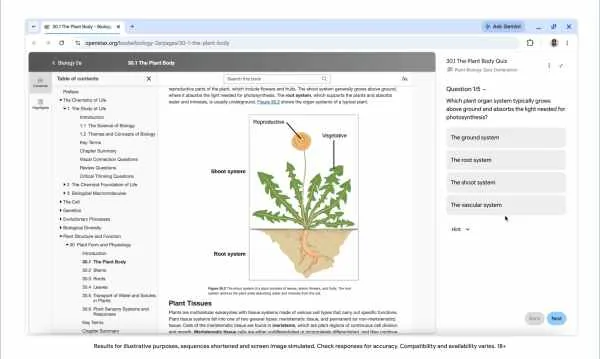
Cross-Device Tab Sharing Supports Interactive Study Quizzes
Google expanded its study toolset by introducing interactive knowledge testing generated directly from active tab content. Chrome Gemini integration scans open browser pages, identifies central arguments, and constructs multiple-choice or short-answer questions to test user comprehension. The tool operates across diverse web sources, including Google Docs files, research papers on Behavioral Economics, YouTube video transcripts, and educational reference websites. Users across India test questions. Google Chrome preserves study momentum. Google noted that the system is engineered to highlight core concepts and help users check their understanding rather than relying solely on passive reading [2].
Deployment of the interactive quiz feature is proceeding through phased geographical tiers. The tool is currently rolling out on desktop platforms in English for users located in the US and India. Google plans wider international availability across additional geographical territories and mobile operating systems in the coming months. India receives rollout updates. This phased rollout allows developers to monitor performance on complex study materials before deploying the feature across the global user base [2].
Combined with scroll position retention, interactive study quizzes transform how learners review detailed online content across their daily schedules, providing instant self-assessment tools directly inside the browser window as researchers navigate between diverse educational platforms and complex source documents. By saving active coordinates, retaining incomplete forms, and interpreting complex media files, Google Chrome tab sharing establishes a seamless bridge between quick mobile reading and intensive desktop analysis. Readers transitioning from a morning commute can instantly reopen research articles in Split View at their exact scroll depth, generate structured knowledge quizzes from the same tab, and verify key concepts without manually rebuilding their browsing session. Google Chrome continues to refine these productivity utilities as intelligent cross-device synchronization becomes standard across the modern web [1].
- ONLINE NEWS Weatherbed, J. (2026, September 24). Now Google Chrome shares tabs to new devices that save where you were. The Verge. [Article Link]
- ONLINE NEWS Li, A. (2026, September 24). Chrome now saves scroll position, filled forms when sending tabs between devices. 9to5Google. [Article Link]


