





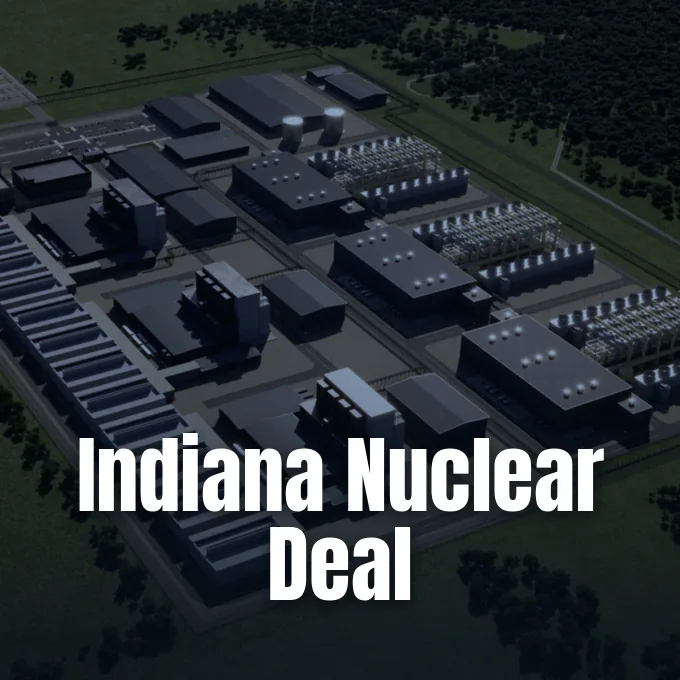
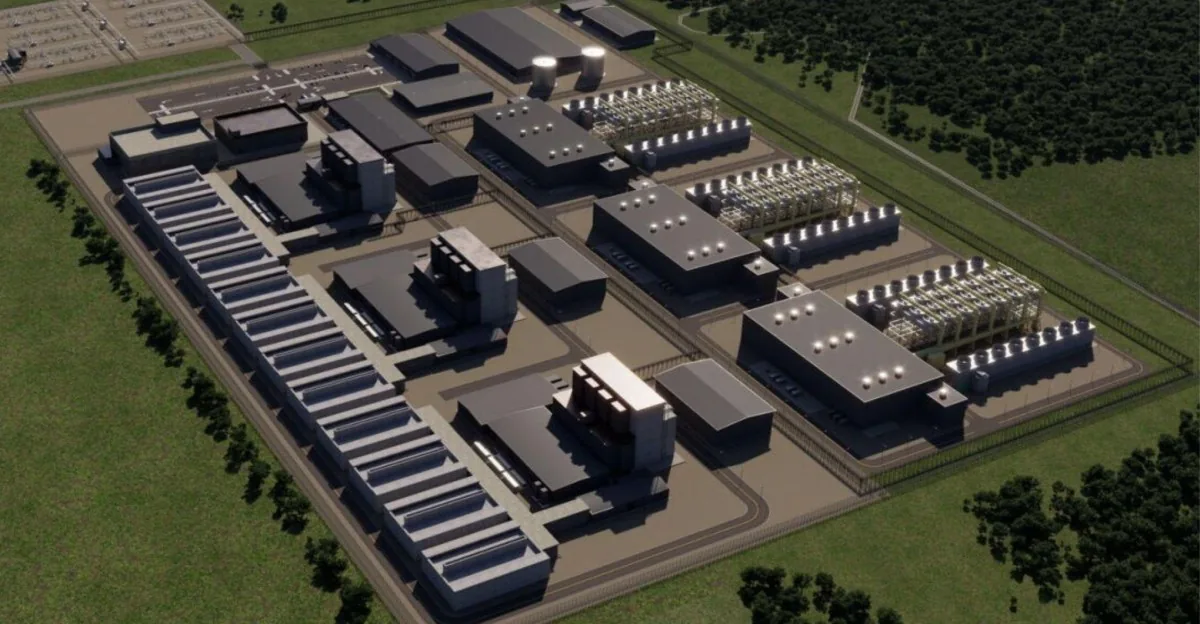
Amazon said on Monday that it will fund development of a proposed 960-megawatt nuclear energy facility in Indiana with utility American Electric Power and reactor designer X-energy [1]. The partnership is the second atomic energy deal between Amazon and X-energy, aiming to supply clean power to the local grid and data centers [2]. Under the plan, this new Amazon nuclear plant will feature 12 Xe-100 small modular reactors built at a retired coal site [1].
Details of the Amazon Nuclear Plant Agreement
Utility operator American Electric Power, known as AEP, will run the plant, while X-energy supplies 12 reactors in a project three times larger than the first deal Amazon and X-energy signed two years ago [1]. Together with local power firms, Amazon and X-energy aim to bring over 5 gigawatts of atomic generating output online across America by 2039 [2]. Amazon has backed X-energy for years. In October 2024, Amazon led a $700 million Series C-1 funding round to help X-energy finish its reactor designs and licensing reviews. As TechCrunch reported, tech leaders bet that small modular reactors can pull the nuclear sector out of its prolonged slump. X-energy went public in April [1].
Amazon says the facility “could” create 1,000 construction jobs and 100 permanent roles in Sullivan County. But the partners haven’t announced a building schedule or target date for operations [2]. Site work remains unscheduled [1]. Early deals don’t guarantee quick completion [2].
Unlike private arrangements where a single customer consumes all generated energy on site, this proposed Amazon nuclear plant will connect straight into the public electric grid to feed regional consumers while also serving nearby Amazon data centers that require steady electricity around the clock. The grid connection is shared [1]. That open design helps answer community worries about tech campuses draining municipal power supplies [2]. It won’t solve every power crunch overnight, but the connection gives households and local employers equal access to clean electricity [1].
Site History at Breed Generating Station
The project will occupy the site of the former Breed Generating Station in Fairbanks, Sullivan County, located south of Terre Haute [2]. Breed burned coal for decades. The facility once anchored regional power output [1]. Power company owners closed the plant and retired its boilers, leaving demolition crews to work at the property continuously since 2008 to clear away old metal structures, foundations, and coal handling equipment [2]. Engineers can tap into existing transmission corridors, road links, and utility rights-of-way that would take years to permit on open ground [1]. Those established grid links give the Fairbanks property a clear practical edge over undeveloped rural acreage and cut site preparation costs [2].
Indiana carries a painful past with atomic power. The state hosts the unfinished Marble Hill Nuclear Power Plant, abandoned in 1983 after sponsors spent $2.5 billion without producing power. Demolition at Marble Hill has continued since 2008. Neither company has shared the Fairbanks contract value, preventing cost comparisons [2].
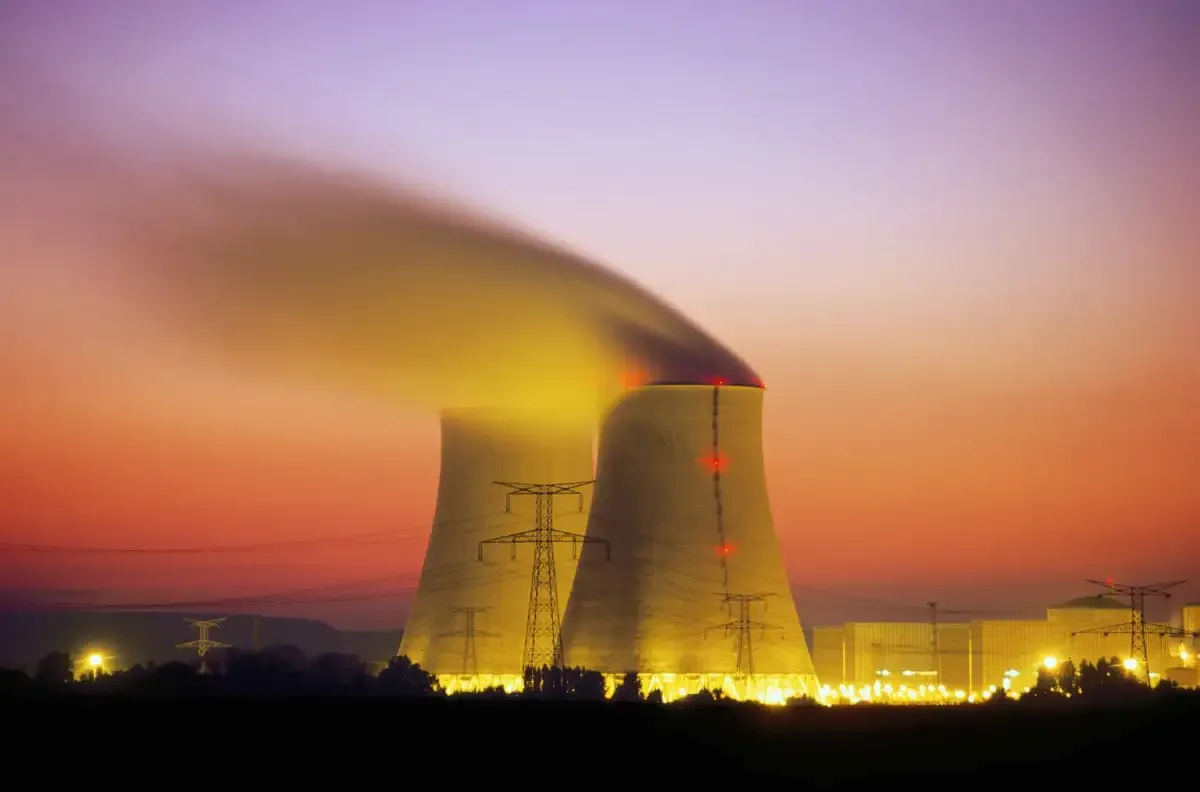
A switch from coal to nuclear reactors fits Indiana’s shifting power mix as aging fossil units shut down [2]. Rising power demand from factories and computer hubs puts steady pressure on local utilities [1]. When residents ask why Indiana grid systems face supply strain during peak seasons, utility planners point to retiring coal capacity that hasn’t been replaced with dependable baseload generation [2]. Building at the Fairbanks property provides clean power without clearing new land [1].


Reactor Design and Cooling Options
The planned station will deploy 12 units of the Xe-100 small modular reactor designed by X-energy, generating up to 960 megawatts of total capacity. Small modular reactors (SMRs) are built in factories in standardized sections and shipped to building sites by truck or rail. This modular approach aims to avoid the massive cost overruns and building delays that hit older gigawatt-scale atomic stations in the United States. By shrinking reactor footprints and streamlining factory work, reactor developers hope to keep schedules predictable. Lower capital costs could also help regional power companies invest in atomic energy without risking insolvency [1]. As The Verge reported, the Xe-100 represents an advanced design undergoing testing [2].
Cooling flexibility is a key technical feature cited by X-energy and Amazon. The Xe-100 reactors can use air, water, or a hybrid cooling setup combining both methods. Amazon says this allows deployment in water-constrained areas without straining local supplies. Advanced systems also use specialized nuclear reactor fuel [2].
Despite these design promises, the Xe-100 is an advanced reactor that’s still undergoing development and licensing [2]. No commercial Xe-100 unit has operated on an electric grid yet. Federal regulators must examine every safety barrier, emergency cooling system, and control mechanism before builders can pour safety-related concrete. Industry experts also point out that factory production doesn’t automatically yield cost savings right away, since manufacturing advantages often take about a decade to appear [1].
Why the Amazon Nuclear Plant Faces Hurdles
Before X-energy can build reactors in Indiana, it must prove its technology at a chemical plant owned by Dow Chemical near Seadrift, southeast of Houston, Texas. The Seadrift project is designed to host four Xe-100 reactors to supply industrial heat and electricity, but X-energy hasn’t broken ground on the installation. Texas recently filed a lawsuit accusing the Seadrift plant of “habitual non-compliance” with water and solid-waste rules and environmental permits. Building in Texas can’t begin until the U.S. Nuclear Regulatory Commission (NRC) finishes reviewing the company’s construction permit application, which is now in its final review stages. Those licensing hurdles must be cleared before Indiana work begins [1].
Market swings present another test for X-energy as it scales up capital-intensive reactor production. The company debuted on the Nasdaq in April through an initial public offering priced at $23 per share. Investor excitement drove the price up 27% during its first trading session, but shares have dropped by nearly two-thirds since that debut. News of the deal with Amazon sent X-energy shares up about 10% in premarket trading on Monday, but the stock was down by less than 2% by publication time [1].
Indiana isn’t the only state where Amazon is exploring atomic power for cloud infrastructure. Last autumn, Amazon outlined plans for the Cascade Advanced Energy Facility in Washington to house 12 advanced reactors. Building remains years away. Partners don’t expect to break ground until the end of this decade. Because advanced nuclear facilities require lengthy environmental analysis, safety reviews, and regulatory licensing steps, work on this Amazon nuclear plant will face similar multi-year development timelines before delivering clean electricity to the public grid [2].
Tech Industry Demand for Nuclear Power
Amazon isn’t alone among technology firms looking to atomic power to feed expanding digital systems. Rival cloud providers including Meta, Microsoft, and Google are pursuing nuclear energy deals to power artificial intelligence data centers that run heavy computing workloads. Machine learning models consume immense volumes of power day and night, straining existing utilities. While solar farms and wind turbines supply growing shares of clean electricity, their intermittent output can’t match the steady baseload electricity that server halls require [2].
Earlier this month, Amazon outlined commitments to power grid infrastructure in an extended blog post aimed at easing public pushback against data center growth. Tech corporations have encountered rising community data center backlash over heavy water consumption, regional transmission bottlenecks, and potential rate increases for households. By helping fund new generation resources rather than simply buying up existing power reserves, Amazon hopes to soften resistance from local consumers and state regulators. It will still take years before anyone reaps the benefits of these planned power stations [2].
Amazon and X-energy want to deploy more than 5 gigawatts of nuclear generating capacity across the country by 2039 [1]. The two partners must navigate complex state regulatory reviews, build steady manufacturing supply chains, and win public trust in communities that remember past nuclear cancellations. Small modular reactors offer a path toward clean baseload power, but turning deals on paper into operating machinery in Sullivan County will demand sustained capital and patience [2]. For now, the Indiana agreement provides a blueprint for how tech capital might fund the next generation of American nuclear reactors [1].
- ONLINE NEWS De Chant, T. (2026, October 19). Amazon to fund 12 small nuclear reactors at former Indiana coal plant. TechCrunch. [Article Link]
- ONLINE NEWS Weatherbed, J. (2026, October 19). Amazon is funding a new nuclear plant in Indiana. The Verge. [Article Link]


