




Amazon has finished building its 1,000th satellite at a factory in Kirkland, Washington, moving closer to rolling out broadband service from orbit before the end of the year. While hardware assembly has scaled up quickly, only 396 satellites orbit Earth today because rocket shortages kept flights grounded through recent months. The gap cost Amazon regulatory spectrum priority over summer, yet the team hasn’t slowed down its assembly lines as it prepares for launch [1]. Delivering Amazon satellite internet to paying users remains on track for a first rollout in selected latitudes before year-end [2].
Kirkland Factory Accelerates Amazon Satellite Internet Production
Amazon transformed an empty 170,000 square foot building in Kirkland into an active satellite factory in 15 months after taking over the property in December 2022. Early manufacturing moved at a sluggish pace, taking six months to produce the first 27 craft. Today, the plant’s assembly lines finish 27 satellites each week. That output ranks Amazon second globally in satellite manufacturing volume, trailing only SpaceX [1]. That rapid turnaround helped the program clear its first 1,000 spacecraft even when rocket availability didn’t keep up with production [5].
To speed up production, Amazon builds its propulsion hardware in-house and discarded decades of aerospace validation rules in favor of methods drawn from consumer electronics. Testing that once took weeks now wraps up in a few hours, helping assembly crews diagnose faults before satellites ship to Florida. The program is managed by Rajeev Badyal, who previously directed Starlink during its early phase before Elon Musk dismissed him eight years ago over launch pace disputes. When asked about scaling the manufacturing lines, Badyal told Ars Technica that building a fleet at this scale isn’t a simple task, stating: “If this was easy, everybody else would be doing it.” [1]
Kirkland’s current pace provides the hardware foundation for Amazon satellite internet as flight schedules resume [5]. The plant keeps turning out units every day, and workers have already started preparing hardware designs for a second-generation constellation. Technicians can’t afford bottlenecks on the factory floor while rockets prepare to lift off [1].

Launch Bottlenecks Ground Amazon Satellite Broadband
Even with 1,000 satellites built, only 396 units circle Earth today. The in-orbit total remains far below the 3,232 satellites needed for the first-generation network. A United Launch Alliance Vulcan rocket suffered a nozzle fault that paused missions, while Blue Origin lost a New Glenn booster when it exploded on its pad during a hot-fire test in May [1]. Those setbacks stalled orbital deliveries despite Amazon reserving over 100 launches across four rocket providers at an expense topping $10 billion [4].
The launch drought has created a traffic jam on the ground. Hundreds of completed satellites sit in storage at processing sites near Cape Canaveral [2]. Amazon satellite broadband relies on multiple launch partners because no single launch provider has enough rocket capacity to handle the constellation’s deployment timeline alone [4]. Blue Origin founder Jeff Bezos and CEO Dave Limp said they’re committed to flying New Glenn later this year to work through the backlog [2]. Amazon has also booked rides on SpaceX Falcon 9 and Arianespace Ariane 6 rockets to get more hardware into orbit [4].
Melissa Wuerl, director of launch systems for the program, explained that ground teams are ready to ramp up flights as soon as rockets return to the pad. Wuerl said: “With hundreds of flight-ready satellites standing by at the Cape and a new, dedicated vertical integration facility ready to support Leo Vulcan 1 and subsequent missions, we have a clear path to increase launch and deployment cadence, helping us quickly expand network coverage following an initial service rollout later this year,” [2].


Three Shells and Laser Links Form the Orbital Mesh
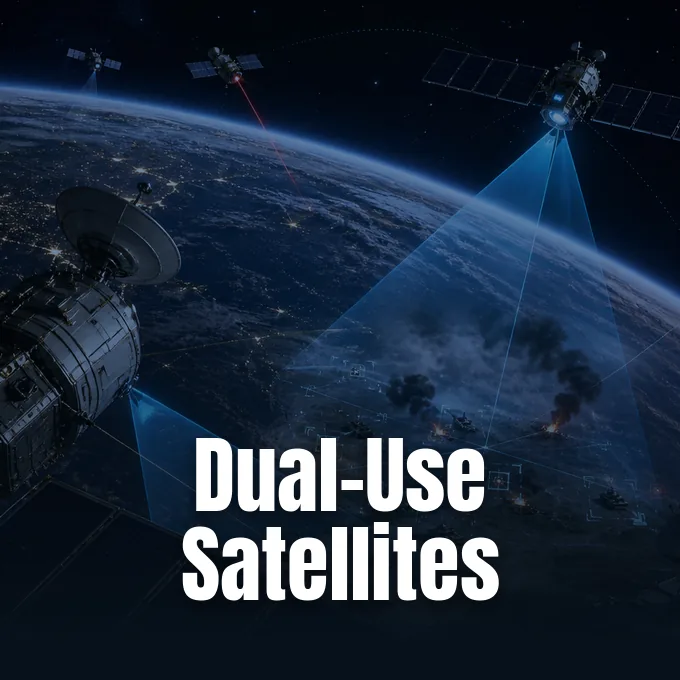
The Federal Communications Commission authorized Amazon to fly 3,236 satellites across three orbital shells at altitudes of 590 km, 610 km, and 630 km. Distributing spacecraft across 98 orbital planes between 340 miles and 400 miles above Earth gives the constellation flexibility to maintain coverage if individual craft fail. Each orbiter relies on Hall-effect thrusters powered by xenon electric propulsion. These plasma thrusters deliver thrust to adjust altitude, avoid collisions, and complete deorbiting burns at the end of a ten-year working lifespan [4].
Rather than relying only on ground antennas to bounce data back and forth, the spacecraft link directly to one another using optical inter-satellite links. These infrared laser connections maintain 100 gigabits per second of data throughput over distances reaching 2,600 km while traveling at roughly 25,000 km/h relative to the ground. In-space demonstrations have already verified these laser links across distances of 1,000 km. Orbital tests show the laser mesh routes user traffic smoothly between satellites without signal degradation [4].
The laser mesh turns the constellation into an orbital data backbone that doesn’t need constant ground station handoffs, a routing challenge also seen in lunar ground stations routing Artemis data back to Earth. Ground antennas still connect local gateways to the wider internet, but inter-satellite routing lets Amazon satellite internet bypass terrestrial fiber constraints in remote regions [4].

Terminal Hardware Prepares Amazon Leo Internet for Users
Connecting customers to the space network requires user hardware, and Amazon designed three separate terminal models for different user needs. Every terminal uses Ka-band phased-array antennas operating between 17 and 30 GHz, steering beams electronically without mechanical moving parts. While Ka-band signals provide high bandwidth, they’re vulnerable to rain fade during storms, an engineering tradeoff in satellite links that Amazon offsets by keeping multiple satellites in view [4].
For everyday consumers, Amazon created the compact Leo Nano and the standard Leo Pro. The Nano terminal measures 7 by 7 inches, weighs about 1 kg, and provides download speeds up to 100 Mbps for portable setups. The standard Pro model measures 11 by 11 inches, weighs 2.4 kg, and reaches speeds up to 400 Mbps for residential households [4]. Both consumer models are expected to cost buyers under $400. That price point establishes Amazon Leo internet with an accessible entry tier against rival satellite dishes [3].
Commercial and government customers can choose the larger Leo Ultra, which measures 20 by 30 inches and delivers 1 Gbps download speeds with 400 Mbps upload throughput. Amazon began offering an enterprise preview for select commercial partners in November, and full service will debut in five countries in 2026 [4]. Speaking on the company’s long-term broadband goals, Badyal said: “This is only the beginning of our journey to provide reliable, affordable broadband to communities around the world.” [3]
Regulatory Deadlines Squeeze Commercial Rollout Plans
Regulatory conditions set by the Federal Communications Commission have introduced sharp operating pressures on Amazon’s rollout plans. Amazon faced a deadline on July 30 requiring 1,616 operational satellites in orbit, which represented half of its authorized fleet. Because launch vehicle delays left only 396 satellites in space, the FCC waived license cancellation but stripped spectrum priority across the Ka and Ku bands for all craft launched after that date [1].
Under the FCC ruling, newly launched satellites can’t interfere with SpaceX’s Starlink, which already holds priority in those shared frequency bands. Still, regulatory officials stated that frequency rights could return early in October 2027 once Amazon verifies that assembly targets and launch bookings are locked in place. Stacking 1,000 finished spacecraft in storage while reserving flights on Vulcan and Ariane 6 forms Amazon’s public argument that its manufacturing pipeline is ready [1].
Amazon still faces an established incumbent in Starlink, which has deployed roughly 10,000 satellites and signed up more than 10 million subscribers in 125 countries [2]. Even so, Amazon founder Jeff Bezos said there is plenty of room for competing satellite providers: “There’s insatiable demand for the internet. There’s room for lots of winners there. I predict Starlink will continue to be successful, and I predict Kuiper will be successful as well,” [3]. European carriers Vodafone and Vodacom have tested beta connections on the network since April. Their field trials indicate enterprise interest in Amazon satellite internet before commercial launches resume [1].
- ONLINE NEWS Stanciuc, A.-M. (2026, October 8). Amazon builds 1,000th satellite, says space internet service is weeks away. The Next Web. [Article Link]
- ONLINE NEWS Palmer, A. (2026, July 2). Amazon has deployed enough satellites to launch Leo service later this year. CNBC. [Article Link]
- ONLINE NEWS Hughes, J. (2026, August 4). Amazon launches Project Kuiper satellite internet service. TechResearch. [Article Link]
- WEBSITE New Space Economy. (2026, March 23). Amazon Leo: Inside Amazon’s billion-dollar bet on satellite internet. New Space Economy. [Article Link]
- ONLINE NEWS Zetik. (2026, October 8). Amazon builds 1,000th satellite, targets 2026 space internet debut. Zetik. [Article Link]
- WEBSITE daily.dev. (2026, October 8). Amazon builds 1,000th satellite, says space internet service is weeks away. daily.dev. [Article Link]


