





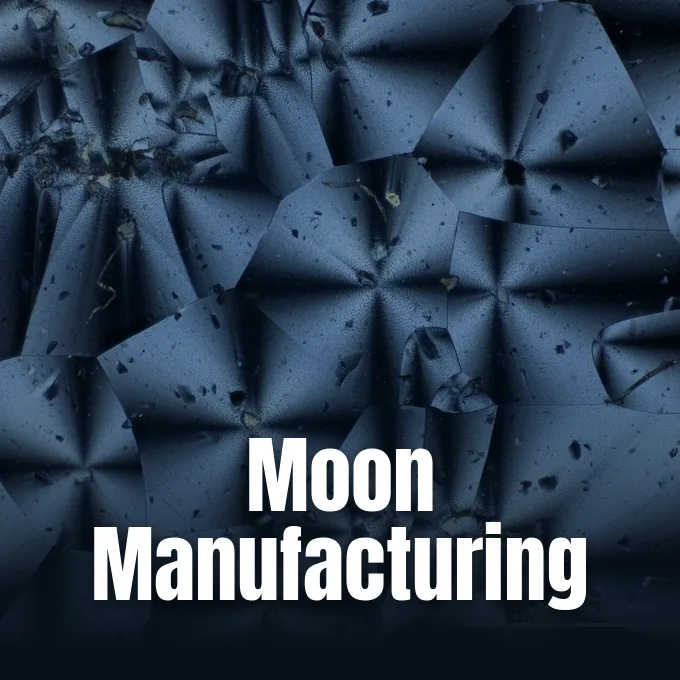
High-resolution laboratory microscopy has revealed colorful, kaleidoscope-like crystal structures inside an innovative moon manufacturing material engineered to transform planetary logistics [1]. Developed at NASA’s Glenn Research Center in Cleveland, the composite blends simulated lunar regolith with biodegradable polymers synthesized by microbes [2]. Can future lunar expeditions achieve true industrial self-sufficiency without constant terrestrial resupply? The versatile material allows future exploration crews to produce essential hardware directly on the lunar surface, sharply reducing the payload mass and launch costs required for long-term space expeditions [1].
- NASA Glenn Develops Resilient Moon Manufacturing Material
- What Under Microscope Examination Shows in Dust Samples?
- Bacterial Biopolymers Fueling Lunar Manufacturing Material
- Simulated Regolith Particles Reinforce Structural Polymers
- On-Demand Fabrication of Habitat Tools and Brackets
- Testing Material for Moon Manufacturing in Harsh Environments
NASA Glenn Develops Resilient Moon Manufacturing Material
Research chemical engineer Allison Christy led the experimental project at NASA’s Glenn Research Center in Cleveland, collaborating with summer interns Tyler Klinchuch, Ethan Bilodeau, and Emma Levenson to establish a practical manufacturing solution. Allison Christy led the team. Transporting heavy construction inventory from Earth across interplanetary distances imposes unsustainable fiscal burdens on deep space exploration programs. Rather than shipping finished replacement hardware, astronauts could fabricate tools directly on extraterrestrial ground using regional resources. Glenn researchers pursued that operational independence by combining biological synthesis with mineral regolith to pioneer a resilient moon manufacturing material [1].
While parallel orbital research aboard the International Space Station investigates microgravity soldering experiments for delicate in-flight electronics maintenance, NASA Glenn focuses instead on structural surface manufacturing. Long-duration planetary habitation requires equipment that tolerates severe mechanical strain without demanding dedicated cargo flights from terrestrial launchpads. Christy recognized that operational flexibility defines survival during planetary missions where emergency shipments cannot arrive quickly. Versatility provides critical insurance against unexpected structural failures. Christy emphasized that crews cannot carry every spare part across cislunar space, meaning astronauts must adapt available resources whenever components break down in isolated habitats [1].
Working within specialized research laboratories, the engineering group focused on resolving logistical dependencies that constrain lunar habitation models [1]. Tyler Klinchuch assisted. Their work secured essential institutional backing through NASA Glenn’s 2026 Center Innovation Fund, an initiative managed by the agency’s Technology Mission Directorate. Logistics coordination aligns with broader agency programs overseen by the Launch Services Program Office at Kennedy Space Center in Florida through 2030 and 2032 to deploy sustained lunar surface payloads [2].
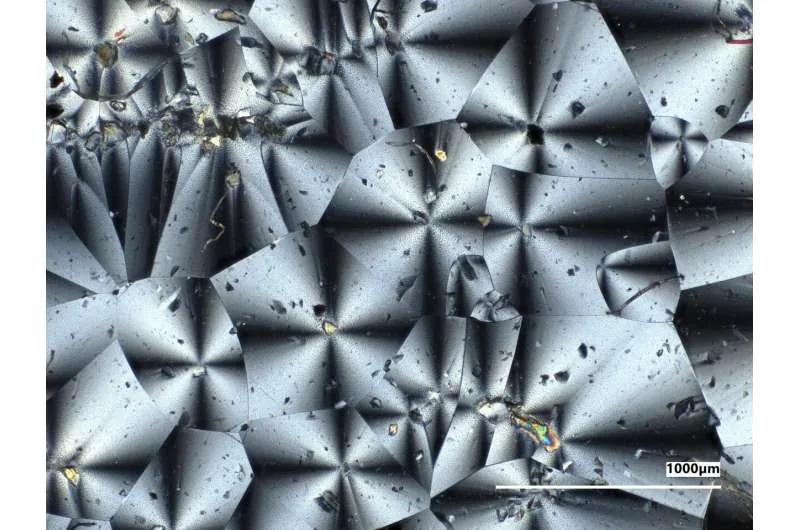
What Under Microscope Examination Shows in Dust Samples?
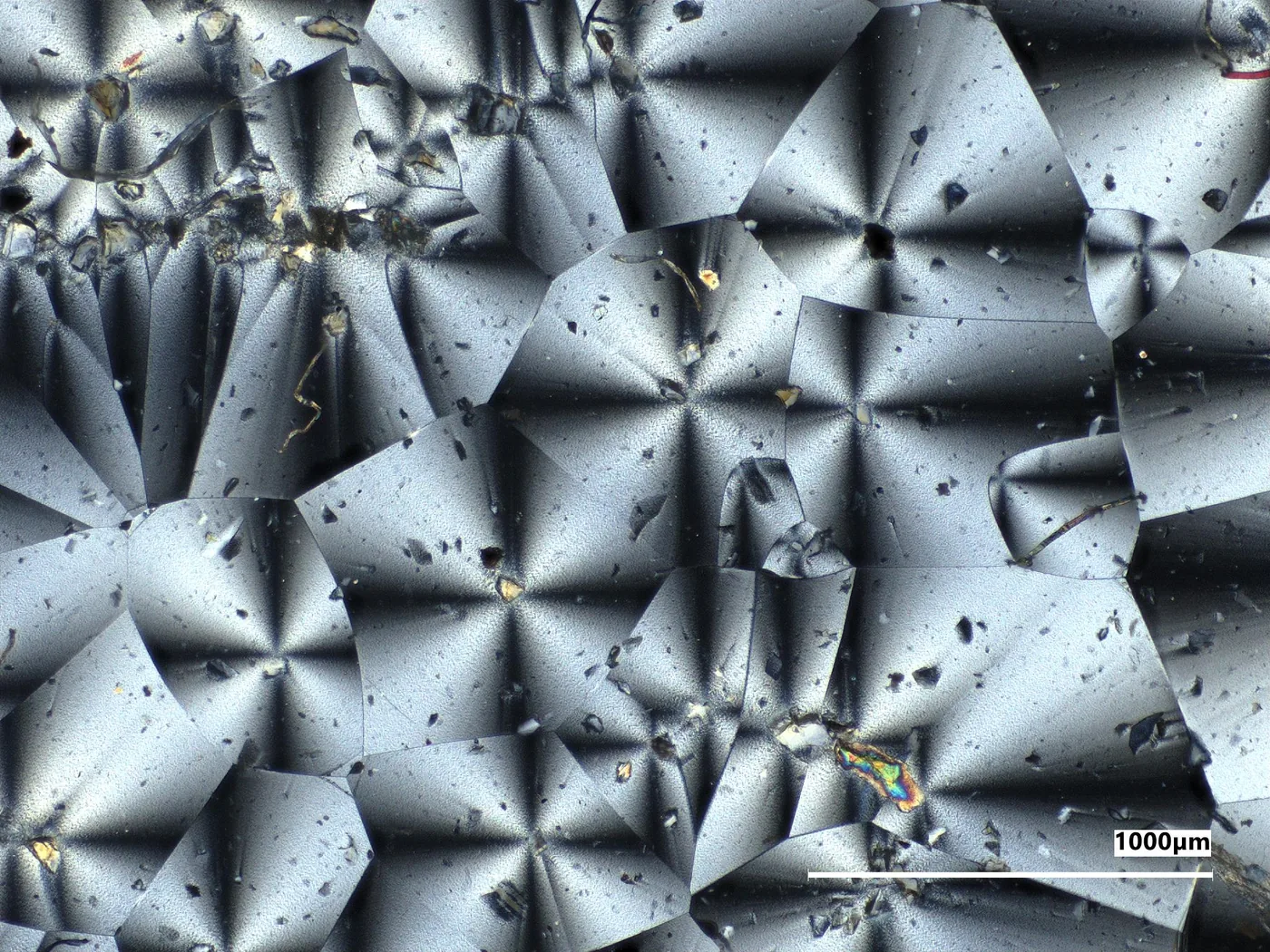
Optical magnification exposes dense geometrical networks where mineral grains anchor into the polymer matrix, producing striking chromatic patterns that reflect compositional variations between test batches. Both dust simulants behaved differently. Allison Christy and her intern researchers documented distinct visual signatures between formulations derived from disparate planetary environments. The laboratory evaluated two distinct simulants (mineral analogs engineered to mimic extraterrestrial soil) to gauge how regional minerals alter crystalline geometry in this moon manufacturing material. A gray specimen under the microscope represents composite manufactured using mock Moon dust, whereas a reddish specimen corresponds to mock Mars dust [1].
Fine mineral particles interlock tightly within the polymer matrix, showing that simulated dust does not disrupt the continuous binding of resin chains. Ellen Bausback reported that adjusting the proportions and mineral types of regolith allowed the engineering team at Glenn Research Center to calibrate physical durability and elastic thresholds for specific structural duties. Microscopic analysis verifies that simulated dust particles distribute evenly across the plastic rather than clumping into brittle structural flaws. Mineral grains integrate seamlessly throughout the cured binder. Such uniform crystalline dispersion proves crucial for manufacturing reliable components capable of bearing sustained loads under extraterrestrial gravity [1].
Microscopic examination reveals colorful, kaleidoscope-like crystal structures forming across composite samples produced at NASA Glenn. Tyler Klinchuch assisted. The visual patterns confirm uniform structural consolidation [1].
Bacterial Biopolymers Fueling Lunar Manufacturing Material
The underlying plastic binder is fully biodegradable and derives from bacterial synthesis, creating a renewable production cycle that operates independently from petroleum supplies. In closed-loop space habitats, biological cultures could feed on crew waste or exhaled carbon dioxide, transforming metabolic byproducts into structural feedstock. Allison Christy highlighted the biological elegance of this process during laboratory evaluations. “The plastic literally grows within the bacteria’s little bodies,” Christy explained, calling the microbial development remarkably efficient. Microbes synthesize the plastic. Scientific Editor Gaby Clark and Chief Editor Andrew Zinin noted that biotechnology offers scalable production pathways that eliminate the need to transport heavy raw synthetic resins across deep space [1]. Microbial processing creates functional biopolymers without requiring high-temperature petrochemical refining infrastructure, making biological fabrication an ideal cornerstone for self-sufficient planetary outposts [2].
Cultivating polymer-producing microbes significantly reduces the logistical footprint of interplanetary supply chains by converting cabin air, carbon dioxide, and metabolic waste into valuable raw manufacturing stocks. Instead of carrying thousands of kilograms of inert plastic pellets from launchpads on Earth, astronauts can cultivate biological cultures in compact bioreactors during transit. In situ biological synthesis transforms waste management into proactive material manufacturing at Glenn Research Center. Ethan Bilodeau assisted in polymer formulation. The resulting bioplastic serves as an adaptable moon manufacturing material binder that hardens into resilient hardware when combined with local mineral dust, demonstrating sustainable manufacturing for lunar exploration [1].
Biological cultures generate structural feedstock continuously. Emma Levenson tracked culture growth. Scientific Editor Gaby Clark observed steady cellular synthesis [1].


Simulated Regolith Particles Reinforce Structural Polymers
Mixing fine regolith particles into the bioplastic dramatically alters mechanical performance, yielding composite formulations that exhibit enhanced tensile rigidity and superior thermal resistance. Pure bioplastics often lack the structural stiffness demanded by heavy load-bearing applications in aerospace environments. Glenn Research Center chemical engineers discovered that incorporating simulated lunar and Martian dust particles directly into the plastic matrix (the continuous polymer network surrounding the particles) made the composite significantly stronger and easier to process. Intern Emma Levenson conducted composite trials. Simulated dust mixtures replicate the abrasive physical properties of true lunar regolith, ensuring that mechanical stress tests accurately reflect operational surface conditions. The team adjusted material properties by testing different types and quantities of simulated dust, validating an adaptable moon manufacturing material platform [1].
Earlier orbital surveys identifying unusual lunar crater formations highlighted how varied surface mineral deposits remain across planetary bodies, reinforcing the necessity of adaptable fabrication media. Allison Christy evaluated particle distribution. Basaltic lunar dust yields exceptional compressive strength, whereas iron-rich Martian simulant modifies thermal dissipation across the cured resin matrix. Regolith dust functions as an active structural reinforcer rather than a passive filler. The material responds effectively to molding and extrusion parameters, enabling future crews to fabricate parts without specialized industrial foundries. Glenn engineers evaluated fine particle bonding. This tuning flexibility ensures that habitat builders can adjust resin recipes based on the precise mineralogy of their immediate landing coordinates [1].

Simulant particle bonding determines structural durability. Ethan Bilodeau verified tension thresholds. Chief Editor Andrew Zinin noted favorable test comparisons [1].
On-Demand Fabrication of Habitat Tools and Brackets
Interior habitat construction demands dependable components capable of enduring repeated operational loads without risking sudden brittle fractures during astronaut activities. NASA Glenn’s composite can be deployed to manufacture essential equipment used inside future Moon Mars habitats, including rigid structural brackets, utility wrenches, and ergonomic crew chairs. Fabricating structural brackets on-site enables astronauts to reinforce habitat modules, mount environmental sensors, and secure internal power conduits without waiting for resupply rockets. Replacing metallic fixtures with regolith-reinforced polymers dramatically reduces launch mass burdens for deep space transports. Astronauts mold brackets on Mars. Deploying this moon manufacturing material across planetary installations allows crews to craft structural brackets, wrenches, and chairs on demand. By enabling on-demand, fully recyclable fabrication with lunar surface material, the technology advances NASA’s objective of establishing a permanent moon base [1].
Recyclability represents another critical operational advantage of the biodegradable composite, allowing worn or damaged tools to be ground down and remolded into new equipment. Closed-loop material recycling prevents resource exhaustion in extraterrestrial surface settlements where resupply flights remain infrequent and astronomically expensive. Allison Christy underscored that self-sufficiency dictates success when exploration teams venture far beyond Earth’s protective orbit. “You can’t just bring everything with you to the Moon or Mars,” Christy pointed out, emphasizing that astronauts must repair hardware using whatever local feedstock they possess. On-site recyclability eliminates reliance on emergency resupply missions. Astronauts can continuously repurpose existing stocks to satisfy evolving architectural and mechanical needs [1].

Damaged brackets melt into fresh feedstock. Tyler Klinchuch assisted. Emma Levenson recorded zero structural degradation across successive recycles [1].
Testing Material for Moon Manufacturing in Harsh Environments
While laboratory synthesis confirms interior utility, researchers must now verify whether the polymer survives the aggressive temperature swings and cosmic radiation of airless planetary terrain. The engineering team at Glenn Research Center hopes to analyze whether the composite can also perform reliably outside in the harsh external environments of lunar and Martian surfaces. The material is now undergoing testing in Glenn’s Lunar Environment Structural Test Rig to see how it holds up in extreme temperatures [1]. Extreme thermal cycles test durability. Unshielded surface conditions expose hardware to severe thermal cycling between daytime solar radiation and nighttime freezing, requiring rigorous terrestrial simulation prior to mission deployment [2].
Orbital testing will soon subject specimen coupons to real space exposure aboard the International Space Station, augmenting terrestrial chamber simulations with authentic orbital conditions. Several test samples are slated to launch aboard the upcoming Materials International Space Station Experiment 23 (MISSE-23) mission, where external mounts will expose them directly to space vacuum and solar ultraviolet rays. Data collected from MISSE-23 will definitively reveal whether this moon manufacturing material maintains structural integrity after months of exposure to micro-meteoroid impacts and atomic oxygen. The MISSE-23 mission launches soon. Allison Christy expects baseline telemetry before winter [1].
Validating bacterial biopolymers in low Earth orbit provides the decisive technical threshold for deploying self-sustaining manufacturing systems across future surface outposts on the Moon and Mars [1]. Ellen Bausback highlighted the significance of these orbital qualification trials. Institutional coordination with the Technology Mission Directorate and the Launch Services Program Office at Kennedy Space Center ensures these material evaluations transition smoothly into operational exploration hardware [2].
- ONLINE NEWS Bausback, E. (2026, September 29). Under the Microscope: NASA-made material for moon manufacturing. Phys.org. [Article Link]
- ACADEMIC JOURNAL Bausback, E. (2026, September 29). Under the Microscope: NASA-Made Material for Moon Manufacturing. NASA Glenn Research Center. [Article Link]
APA 7: TWs Editor. (2026, September 30). How Moon Manufacturing Material Enables Lunar Habitats. PerEXP Teamworks.


