





Amazon Web Services moved to counter mounting public hostility on Friday by pledging more than $1 billion to host communities and ending secrecy agreements with municipal governments. The decision arrives as an escalating data center backlash spreads in the United States, driven by fears of soaring electricity bills and heavy water consumption from artificial intelligence facilities [3]. Cloud computing head Matt Garman published a detailed essay defending server infrastructure against four perceived community myths, yet civic opposition continues to stall project approvals nationwide [1].
Amazon Pledges $1 Billion Amid Data Center Backlash
Under the new community commitment, Amazon plans to invest $1 billion over five years into towns where it operates server facilities. The capital targets local school education, workforce job training, and community water and energy preservation programs. Garman outlined the initiative as a direct response to mounting public hostility from elected leaders and neighborhood residents who view massive server complexes as resource drains rather than community partners [3].
Garman also declared that Amazon has abandoned nondisclosure agreements (NDAs) when negotiating project terms with government agencies. Local officials previously signed confidential pacts before neighbors even learned that server facilities were under official review [1]. Reporting by Ars Technica showed that civic groups praised the end of confidential contracts while criticizing company attempts to minimize environmental hazards as the wider data center backlash expands. The mixed reception underscores how citizen pushback extends far beyond routine municipal permitting procedures [2].
Amazon contributed over $1 billion to American host communities during the preceding three years [1].
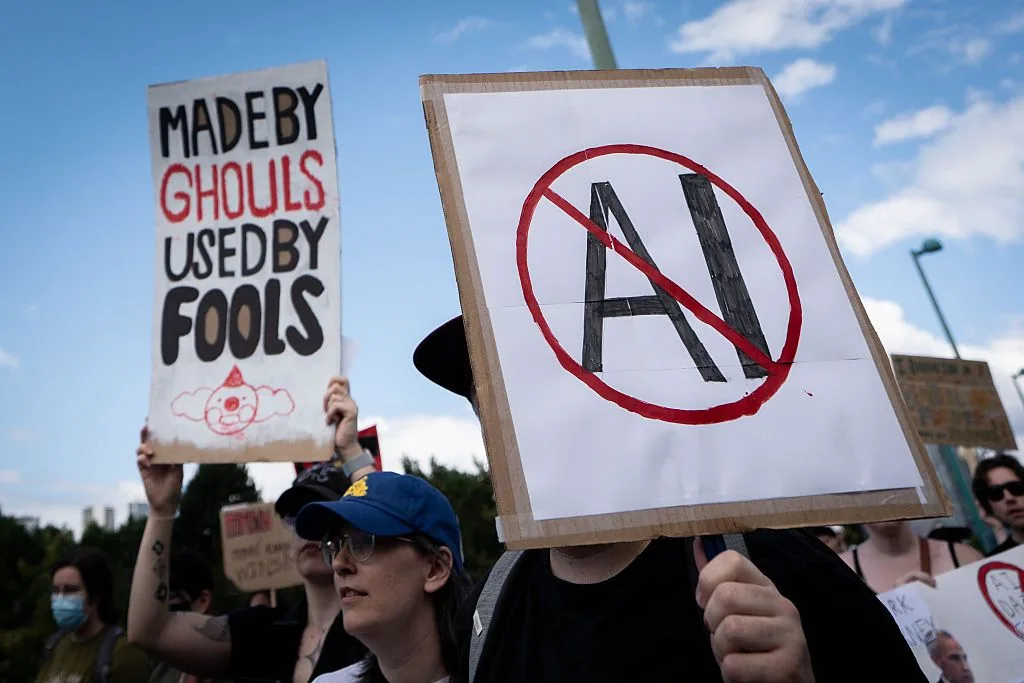
Moratoriums Spread as Power Demands Reshape Grids
Why do so many towns resist high-tech construction when companies promise jobs? The tension stems from the sheer scale of giant computing facilities, which dwarf football stadiums and consume more electricity than small cities [3]. Garman warned that municipal leaders are considering more than 100 data center moratoriums in the country. He argued that blocking construction could handicap American artificial intelligence development against foreign competitors, warning that “the US could be writing its own losing ticket to this race, and the consequences would last generations” [1].
Regulatory resistance has already shifted from public debates into legislative freezes. New York enacted a one-year moratorium on building permits for large server facilities as lawmakers assess local utility constraints. The state moratorium lasts one full year. At the same time, an independent watchdog reported that expanding server complexes served as the main cause behind a 76% wholesale price surge on America’s largest electrical grid. Garman disputed that finding, writing that “in instances where energy rates are going up, it’s primarily because the grid is old and hasn’t been invested in and expanded before the demand arrived” [1].
Global energy projections illustrate the massive power appetite driving industry expansion. A June study published by the United Nations University found that data facilities will account for nearly 3% of global electricity by 2030, consuming 935 trillion watt-hours of power worldwide. Rising utility bills have intensified voter anxiety in host states [3].


Environmental Disputes Challenge Amazon Data Centers
Water consumption forms another major flashpoint for host communities. Cooling advanced processor racks uses millions of gallons of water, creating friction in drought-prone areas where municipal aquifers face depletion. Garman countered criticism by stating that “direct data center water consumption” amounts to only 0.5% of industrial water usage in the United States, pointing to company studies comparing server cooling against agriculture. He maintained that cooling servers demands “orders of magnitude less than golf courses, almond farming, and many other industries” [1].
Independent researchers and environmental advocates argue that company water disclosures present an incomplete picture. Amazon’s official statistics track water used directly inside server cooling systems but omit the immense water volumes consumed off-site during utility power generation and advanced semiconductor manufacturing. While Nvidia claimed its newest cooling systems eliminate “pretty much all water usage” inside facilities, scientists emphasize that neither state nor federal regulators enforce mandatory water reporting rules for computing hubs. Activists argue that without standardized independent audits, voluntary company disclosures cannot satisfy neighborhood residents. This friction has intensified the nationwide data center backlash as communities mounting data center opposition stall infrastructure projects to protect shared utility supplies [1].
Air quality concerns compound the debate. Environmental disputes extend beyond municipal water meters into industrial emissions. The NAACP recently initiated legal action against Elon Musk’s xAI and SpaceX operations over air pollution concerns. Data center developers face parallel challenges as neighbors scrutinize emissions permits [1].
Emissions and Backup Power Generate Civic Friction
Air quality permits for server facilities have triggered significant controversy among host communities. In Texas, environmental regulators granted Amazon permission for a planned server facility to release up to 33 million tons of carbon dioxide annually, exceeding the permitted output of any single domestic power station. Civic groups pointed to that authorization as evidence of heavy environmental disruption [1].
Garman disputed accusations that server facilities generate extreme pollution, arguing that critics fixate on statutory permit ceilings rather than actual operations. “The truth is data center generators almost never run,” Garman wrote. He stated that backup diesel generators remain “idle 99.9% of the time (they run roughly 10 hours per year, mostly for required maintenance testing)”. Auxiliary engines provide emergency electricity during grid failures [1].
Despite political tension, Amazon continues accelerating its infrastructure outlays. The company announced in July that it projected $220 billion in capital expenditures for 2026, rising from an earlier estimate of $200 billion as infrastructure spending accelerates in cloud hubs. Much of that capital funds new computing hubs and AI hardware deployments [3].
Public Distrust Fuels Persistent Data Center Opposition
Underlying the policy battles is an erosion of trust between technology companies and local populations. Environmental activist Erin Brockovich explained that lack of transparency forms the chief complaint from affected communities. Brockovich cited a recurring pattern of “projects announced after permits are already secured, developers who don’t return calls, local officials who signed NDAs before their neighbors knew a project was being considered” [1].
Amazon has responded by hosting community open houses to share project details with neighborhood residents, yet civic skepticism persists among local homeowner coalitions [3]. Writer Jasmine Sun reported that when community members receive assurances from tech companies, the common response is “I don’t believe them”. Anthropic CEO Dario Amodei similarly observed that public resistance represents “fundamentally a crisis of trust,” where citizens suspect institutions of working against public interests whenever massive technological installations arrive in their neighborhoods [1].
National politics adds another layer of complexity to local zoning disputes. President Donald Trump has voiced support for constructing more computing facilities to expand artificial intelligence capacity. Yet public sentiment diverges sharply from federal enthusiasm. An Associated Press poll revealed that 6 in 10 Americans favor restricting the construction of new data centers, uniting majorities among both Republican and Democratic voters. Furthermore, a majority of citizens expressed deep concerns regarding rising electricity bills and local water supplies [3].
- ONLINE NEWS Ha, A. (2026, October 3). Amazon responds to data center backlash, says it no longer uses NDAs. TechCrunch. [Article Link]
- ONLINE NEWS Amazon’s $1B plan to combat data center backlash draws more backlash. (2026). Ars Technica. [Article Link]
- ONLINE NEWS D’Innocenzio, A. (2026, October 2). Amazon to invest $1B into data center communities amid backlash against data center rollouts. Tech Xplore. [Article Link]


