






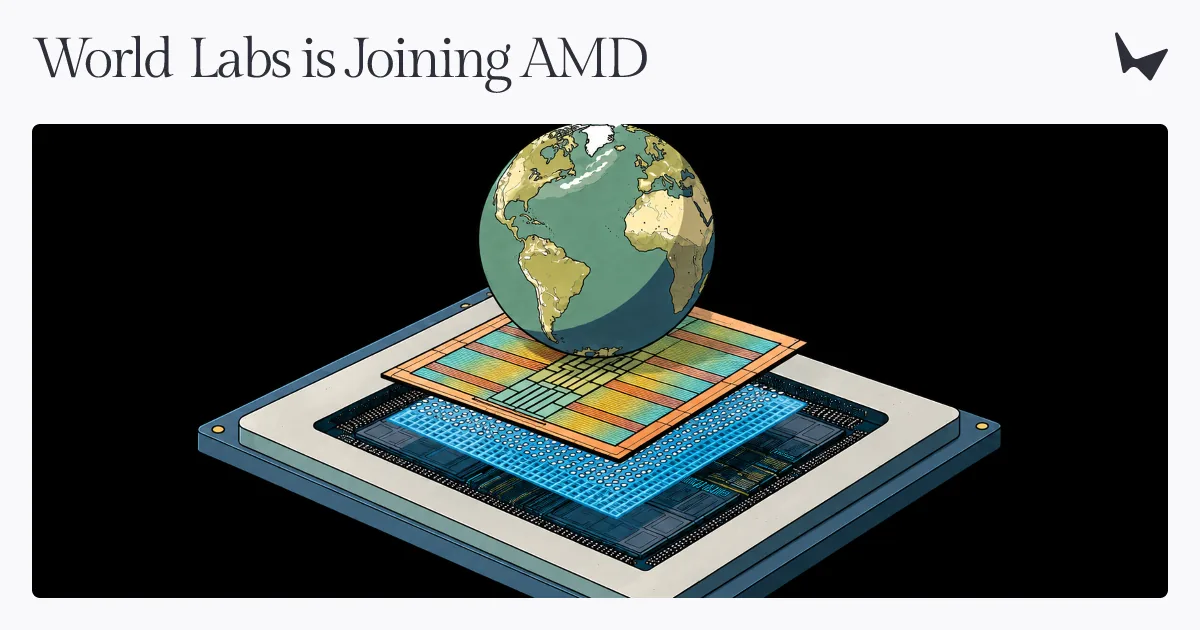
Semiconductor designer AMD announced an agreement to acquire artificial intelligence startup World Labs in an $8.2 billion transaction on September 28, 2026 [1]. The definitive deal brings prominent computer vision researcher Dr. Fei-Fei Li into AMD as an executive vice president and chief scientist, reporting directly to CEO Dr. Lisa Su. Through the AMD World Labs alliance, the two organizations plan to merge spatial deep learning architectures directly with processor silicon to establish an open physical AI ecosystem before the transaction closes by the end of 2026 [2].
Terms Behind the AMD World Labs Agreement
The $8.2 billion valuation reflects intense competition across the semiconductor industry as chipmakers race to secure foundational artificial intelligence software. World Labs justified the merger by stating that advanced AI development requires “close collaboration across model research, systems and compute”. Frontier model workloads will shape future enterprise processors [1].
The purchase did not emerge overnight. Both companies established an operational partnership last year, concentrating on model training and inference optimization across AMD GPUs (graphics processing units) to evaluate real-time spatial calculations. That collaborative engineering work demonstrated that isolating neural network architectures from underlying execution silicon created substantial memory transfer bottlenecks. World Labs leadership realized that joining AMD would bridge foundation models, system platforms, and physical world applications into a cohesive, highly optimized compute stack. By evaluating the AMD World Labs transaction through this engineering lens, both engineering teams confirmed that hardware co-design provides the fastest route to scale spatial algorithms across global enterprise data centers [2].
The transaction is scheduled to close by the end of 2026, subject to customary regulatory approvals and standard closing conditions. Federal regulators continue to scrutinize technology consolidations across enterprise cloud markets. Lisa Su finalized the talks. The agreement commits both organizations to building out an open AI ecosystem, guaranteeing that foundation weights and spatial tools remain accessible to commercial developers and academic researchers rather than locked inside closed proprietary silos [2].
Fei-Fei Li Joins as Chief Scientist
Dr. Fei-Fei Li enters AMD as an Executive Vice President and Chief Scientist, establishing an influential technical leadership role reporting directly to Dr. Lisa Su. Longtime research collaborators Justin Johnson and Ben Mildenhall will join Li to direct the incoming World Labs organization as it integrates into AMD’s frontier research division [2]. In a statement detailing the merger, Li explained that joining the chipmaker fulfills a strategic necessity to scale technical breakthroughs beyond the laboratory: “Now that we have tangible proof of the possibilities, we want to do everything we can to accelerate the future” [1].
Li built her academic reputation as a Stanford computer science professor and a renowned pioneer in computer vision, famously establishing the ImageNet benchmark database that catalyzed modern deep learning competitions. In 2024, Li founded World Labs to advance artificial intelligence beyond conversational text generation and static image recognition. Her technical premise argued that achieving true general intelligence requires an intrinsic mathematical understanding of three-dimensional physics, geometry, and temporal stability. Real-world agency demands physical grounding. Spatial deep learning provides autonomous agents with the perception required to manipulate objects, navigate physical obstacles, and interact safely within human environments [1].
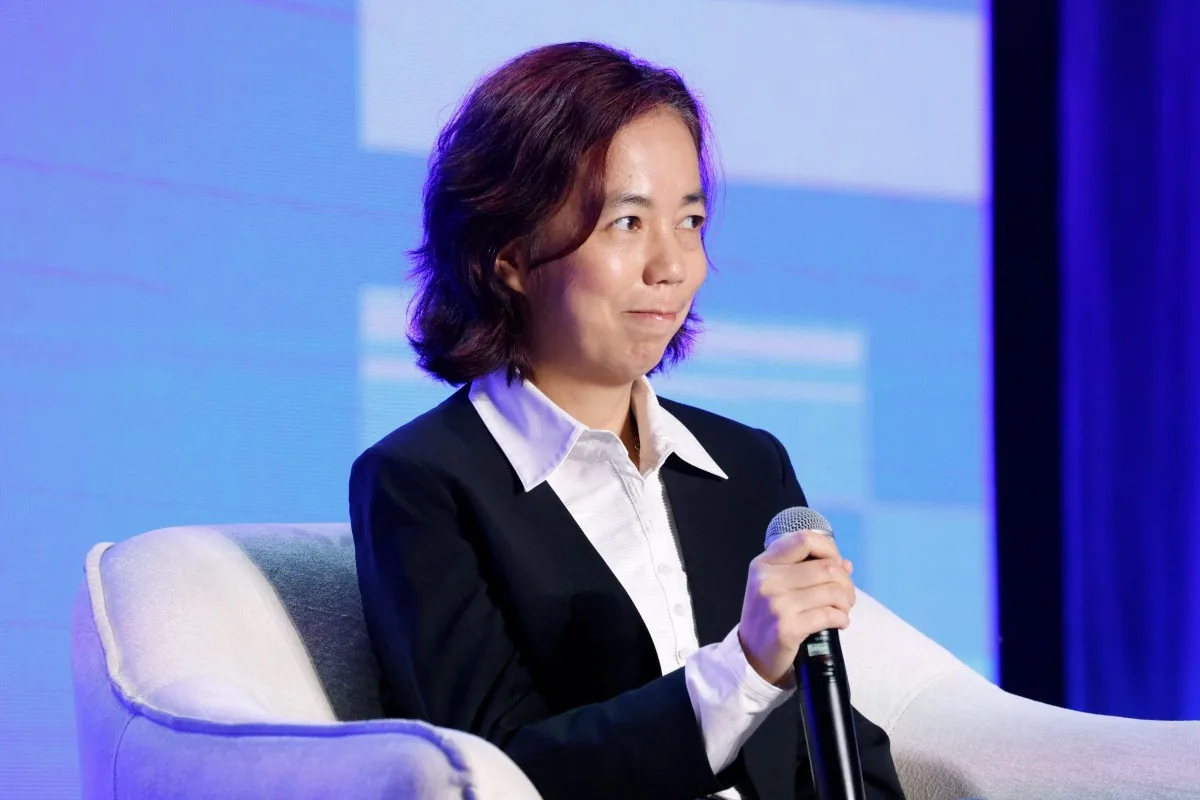
Executive ties between the two organizations deepened publicly earlier this year when Li appeared as a featured guest during AMD’s CES presentation. That keynote appearance previewed technical collaborations that culminated in this week’s definitive agreement. Lisa Su prioritized direct research integration over passive venture funding. The executive structure aligns algorithmic research with chip fabrication [1].


How the World Labs Acquisition Reshapes Hardware
In her public letter announcing the transaction, Li emphasized that expanding physical world models requires direct access to underlying semiconductor development: “To do this requires scaling our efforts, widening our reach, and getting closer to the hardware”. Complex neural networks that process spatial geometry cannot mature in isolation from execution silicon. Generating persistent three-dimensional environments requires enormous memory throughput, compelling model architects to write computational kernels directly against processor instruction sets [1].
AMD executives plan to channel the computational demands of World Labs directly into upcoming chip architectures. Designing competitive artificial intelligence silicon requires forecasting the tensor operations and precision formats that frontier neural networks will execute several years in the future. While numerous competing AI labs shield world models behind commercial secrecy, the AMD World Labs initiative intends to publish open foundation weights to anchor industrial development across robotics and simulation platforms [1]. This open strategy enables academic labs and independent developers to build specialized spatial applications without paying proprietary licensing tolls [2]. Foundation models designed for physical reasoning will become primary drivers of enterprise data center hardware demand [1].
Conventional generative models predict sequential text tokens effectively, but they lack spatial awareness. World Labs designs models specifically to simulate physical collisions, gravity, and object permanence. Hardware access dictates model speed [1]. Integrating specialized spatial operators directly into AMD GPUs accelerates these complex simulation workloads significantly [2].
Simulated Reality and the Challenge to Nvidia
The technology industry defines a world model broadly, encompassing systems ranging from visual language classifiers to generative platforms capable of sustaining real-time physical simulations. World Labs introduced its initial product, Marble, as an interactive spatial tool designed for entertainment experiences and robotic simulation environments. Could interactive virtual worlds train next-generation robots before physical deployment? Roboticists increasingly view high-fidelity synthetic environments as a necessary pathway toward functional embodied AI (the application of artificial intelligence to physical robots operating in real space) [1].
The acquisition provides AMD with strategic software assets to challenge longtime rival Nvidia across enterprise artificial intelligence deployments. Nvidia has already staked an early claim in physical simulation by releasing its Cosmos suite of open-weight world models. Prior to this agreement, AMD had focused public model releases primarily on text- and video-based architectures. Incorporating the AMD World Labs team allows AMD to provide full-stack software and hardware solutions, strengthening customer retention for its enterprise Instinct accelerator lines across commercial research organizations [1].
World models are critical for training generative systems across industrial robots, autonomous vehicles, and bipedal humanoids. Real-world training data remains scarce, expensive, and dangerous to collect at scale. Synthetic data generated inside simulated physical worlds will prove decisive for commercial robotics programs pursued by companies like Tesla and Figure. Reliable simulations remove physical bottlenecks [1].
Closing Conditions for the World Labs Deal
Uniting with AMD positions the AMD World Labs engineering group to construct an integrated platform spanning hardware accelerators, system software, and open foundation models. Justin Johnson and Ben Mildenhall will work with Dr. Li to lead this research organization, operating as a distinct frontier unit inside AMD’s corporate structure [2]. This expansion aligns with AMD’s competitive positioning following its historic race to a $1 trillion valuation, proving that executive leadership intends to invest aggressively in foundational software capabilities rather than relying exclusively on raw chip performance [1]. By committing to an end-to-end open AI ecosystem, AMD aims to attract robotics developers who prefer transparent model architectures over proprietary cloud interfaces [2].
Both corporate boards approved the transaction [2]. Formal closing remains scheduled before the end of 2026, contingent on customary regulatory reviews and standard closing conditions [1] [2].
Regulatory agencies in multiple jurisdictions will examine the competitive implications of the merger during the coming months [1]. While review processes proceed, technical leaders from both organizations are planning their unified engineering priorities. Dr. Lisa Su and Dr. Fei-Fei Li intend to deploy combined teams to accelerate spatial model training across AMD GPU infrastructure immediately upon transaction closing [2]. The decisive benchmark for the alliance will be whether World Labs can deliver production-ready spatial models that establish AMD as a premier computing platform for physical artificial intelligence [1].
- ONLINE NEWS Fernholz, T. (2026, September 28). AMD will acquire Fei-Fei Li’s World Labs for $8.2 billion. TechCrunch. [Article Link]
- PRESS RELEASE World Labs. (2026, July 28). World Labs is Joining AMD. [Article Link]


