





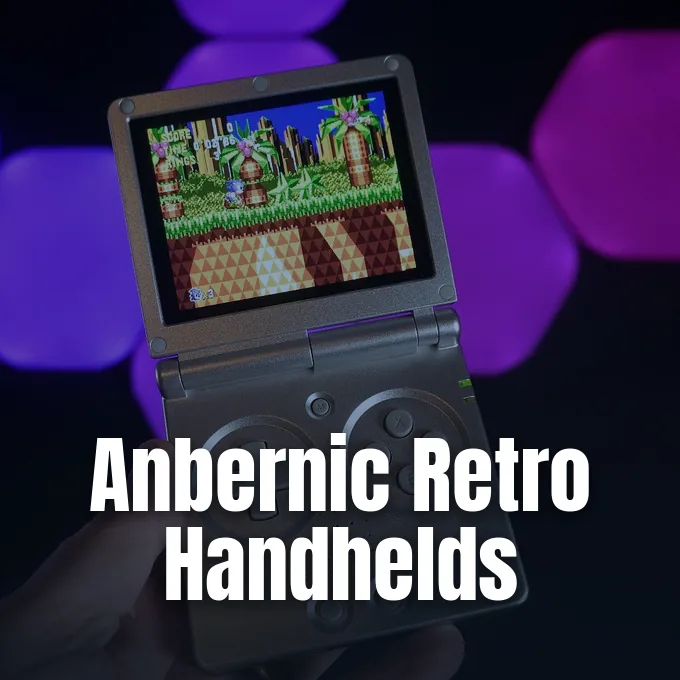
Anbernic retro handhelds have grown from obscure clone devices into a recognized lineup of dedicated gaming machines. Founded in Shenzhen by Shenzhen YangLiMing Electronic Technology Co., the brand pairs low-cost system-on-chip processors with open-source firmware to emulate vintage game platforms from the Nintendo Entertainment System to 32-bit consoles. Rather than relying on cloud streaming or subscription libraries, each console plays digital ROM files stored on removable microSD cards using physical controls tuned for classic arcade and console software [13]. Today the company sells dozens of distinct form factors, covering traditional Game Boy vertical layouts, clamshell cases, and multi-screen Android systems [1].
- Origins of the Early RG Series
- Processor Chips and Display Ratios
- Clamshell Designs in Anbernic Retro Handhelds
- Software Ecosystems on Linux and Android
- Do Anbernic Retro Handhelds Come With Games?
- Flagship Upgrades to Dual Screen Formats
- Software Forks Around Anbernic Retro Handhelds
- Choosing Between Form Factors
Origins of the Early RG Series
The manufacturer launched its business in 2017 when Shenzhen YangLiMing Electronic Technology Co. registered the trademark in Shenzhen and released its first official handheld, the Retro Game, later abbreviated as the RG series. Early experiments like the PAP KIII led into a steady production cadence that averaged four to five devices annually according to corporate records, though company materials cite eight to ten annual models across more than forty designs [1, 13]. An unusual promotional episode occurred in December 2018 when American rapper Soulja Boy marketed the SouljaGame Console, a direct rebrand of Anbernic hardware that was shut down in less than a month [13]. The episode showed the hardware’s appeal.
Hardware development advanced as Anbernic moved toward custom shells and laminated screens. In November 2019, the company unveiled the RG350, promoting it as the first 4:3 open-source gaming handheld equipped with an IPS display. A premium metal version followed in March 2020 with the RG350M, featuring an aluminum alloy chassis and a fully laminated panel that eliminated internal dust gaps [1]. Reviewer Begina de Miguel of El País Escaparate named the RG350 the best retro handheld under 100 euros, praising its durable chassis and stable emulation [13].
By 2023, Anbernic retro handhelds gained widespread recognition in American publications. Critics Billy Givens and Harry Rabinowitz selected the RG351P in Popular Mechanics as the top handheld for emulation. Jordan McMahon of The Strategist similarly recommended the RG35XX for retro gamers [13]. The brand had found its audience.

Processor Chips and Display Ratios
For several years, Anbernic built its lineup around the Rockchip RK3326, a quad-core processor clocked at 1.5 GHz with a Mali-G31 GPU and 1 GB of RAM [11, 15]. That single chipset powered the plastic RG351P, the metal RG351M, the vertical RG351V, and the horizontal metal RG351MP [15]. Reviewer Brandon Saltalamacchia at Retro Dodo observed that while the Rockchip RK3326 ran 8-bit, 16-bit, and original Sony PlayStation games flawlessly, it suffered audio stuttering and frame drops on the Nintendo 64 and PlayStation Portable. Handheld makers relied on the chip because it remained abundant and cheap during international parts shortages [11]. It was a practical compromise.
Screen dimensions created clear dividing lines between specific retro consoles. The RG351P and RG351M used a 3.5-inch 480×320 display with a 3:2 aspect ratio, which matched the Game Boy Advance perfectly but forced pillarboxing on 4:3 Super Nintendo and Sega Genesis software. Conversely, the RG351V and RG351MP featured a 640×480 screen with a native 4:3 ratio [15]. Testing the RG351V for Gizmodo, Andrew Liszewski admired the vivid laminated screen but noted that the single analog stick made complex PlayStation titles awkward to navigate and could not handle GoldenEye 007 smoothly [7].
Silicon power improved when Anbernic integrated the Allwinner H700 quad-core processor into the RG35XX family. Running at 1.5 GHz, the chip doubled core counts over the original RG35XX. Wesley Copeland at GamesRadar+ reported that the H700 ran Sega Dreamcast titles smoothly, although heavy PSP games struggled [5].
Clamshell Designs in Anbernic Retro Handhelds
In May 2024, Anbernic entered the folding market with the RG35XXSP, a dedicated clamshell console inspired by Nintendo’s 2003 Game Boy Advance SP [1, 14]. The design enclosed a 3.5-inch 640×480 IPS display inside a folding case that fit inside standard carrying pouches. Clamshell Anbernic retro handhelds in this line added four face buttons alongside dual shoulder triggers to accommodate Super NES and Sony PlayStation games [14]. Wesley Copeland at GamesRadar+ called the $64.99 price tag a massive advantage over inflated secondhand markets for vintage Game Boy hardware [5]. Nostalgia fueled strong initial sales.
Testing revealed distinct strengths alongside minor ergonomic drawbacks. Reviewer Damien McFerran at Time Extension rated the RG35XXSP nine out of ten stars, explaining that its sharp IPS panel surpassed the backlit AGS-101 Game Boy Advance SP in contrast and viewing angles [14]. Yet Copeland noted that the stiff D-pad hindered diagonal inputs in fighting games like Street Fighter. Players also found the microswitch buttons excessively clicky, leading community tinkerers to install dampening tape beneath the switches [5].
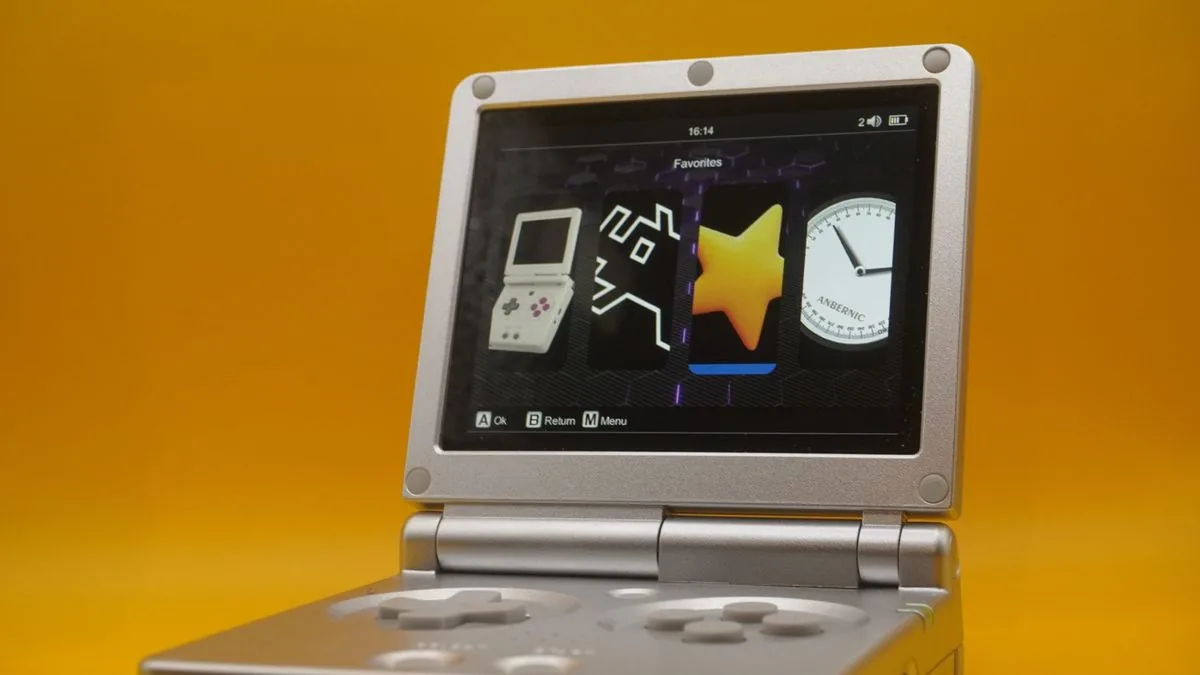
Anbernic updated the concept in 2026 with the RG SP. Writing for Engadget, Sam Rutherford reported that the console removed thumbsticks to replicate the original Game Boy Advance SP lines. It featured a 3.4-inch 720×480 screen with exact three-times integer scaling and a chassis ten percent thinner [6].
Software Ecosystems on Linux and Android
Software choices on portable hardware divide into two distinct operating environments. Budget models rely on streamlined Linux distributions like EmuElec that boot straight into an emulator menu without unnecessary background overhead [12, 15]. The community expanded these foundations with custom operating systems like ArkOS and 351ELEC, which offer faster artwork scrapers and improved hotkeys [15]. These Linux builds turn the console into a dedicated appliance where players place ROM files onto a microSD card and start playing right away [11].
A dual-boot configuration arrived in December 2021 when Anbernic released the RG552 [1]. Gerald Lynch at TechRadar reviewed the RG552, detailing how it booted Batocera from a 16 GB microSD card for retro gaming while storing Android 7.1 on 64 GB of onboard memory. Batocera presented a polished jukebox frontend with automated cover art and metadata scrapers. Android gave users direct access to standalone emulator apps like ReDream from the Google Play Store, providing smoother frame rates for 3D consoles such as the Sega Dreamcast [4]. Setup required tweaking individual emulator menus.
Recent flagships like the RG 55G1 run Android 14 on Qualcomm Snapdragon G1 Gen 2 chips with active fan cooling. The RG Home launcher allows players to switch between Qualcomm and Turnip Vulkan drivers. These settings resolve graphical glitches in demanding emulators [2].
Do Anbernic Retro Handhelds Come With Games?
Anbernic retro handhelds purchased through third-party retail channels often arrive bundled with thousands of games, though hardware bought directly from the official manufacturer does not include licensed game files. Reviewing the RG351V for Business Insider, Ben Gilbert found that his Amazon unit shipped with 2,521 classic games stored across several console directories on an included microSD card. Players could instantly launch titles like Super Mario World and Mario Kart 64 out of the box [12].
Selling preloaded memory cards created immediate legal resistance from major console makers. While emulators are legal software tools, distributing copyrighted ROM files without permission violates copyright law. Industry organizations took notice of these listings, leading to trade filings where the ESA targeted Anbernic emulation handhelds in formal submissions concerning commercial piracy. In response to inquiries, Amazon stated that it invested over $700 million in 2020 and employed 10,000 staff to protect brands from intellectual property infringement, removing offending seller pages from its storefront [12]. Unauthorized listings quickly resurfaced under other seller names.
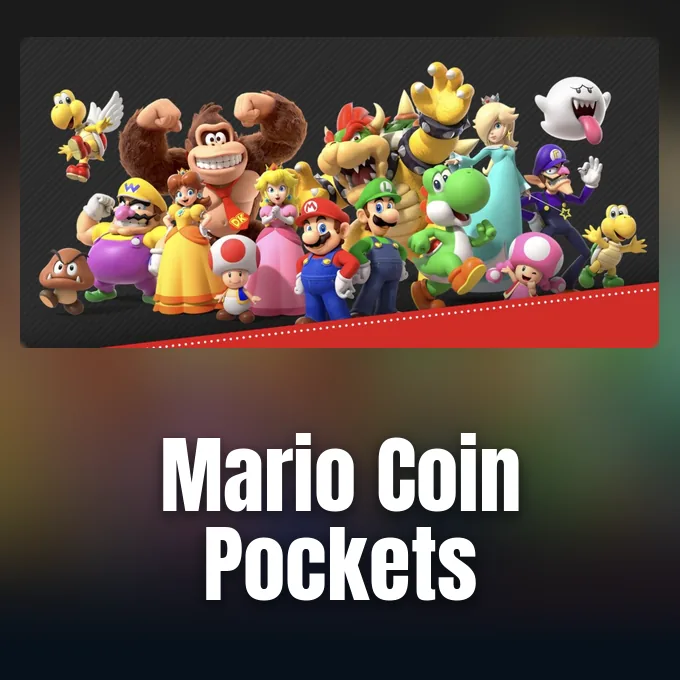
Nintendo has defended its properties vigorously, regulating commercial ROM use while safeguarding character designs, as seen when Nintendo updated Super Mario renders with coin pockets on vintage overalls. Writing for The Guardian, Keith Stuart described Anbernic units as unofficial handhelds dependent on grey-market downloads, comparing them to licensed cartridge systems like the £50 Super Pocket from Blaze Entertainment [3]. Experienced enthusiasts recommend purchasing blank cards and supplying legally dumped ROMs [4, 11].
Flagship Upgrades to Dual Screen Formats
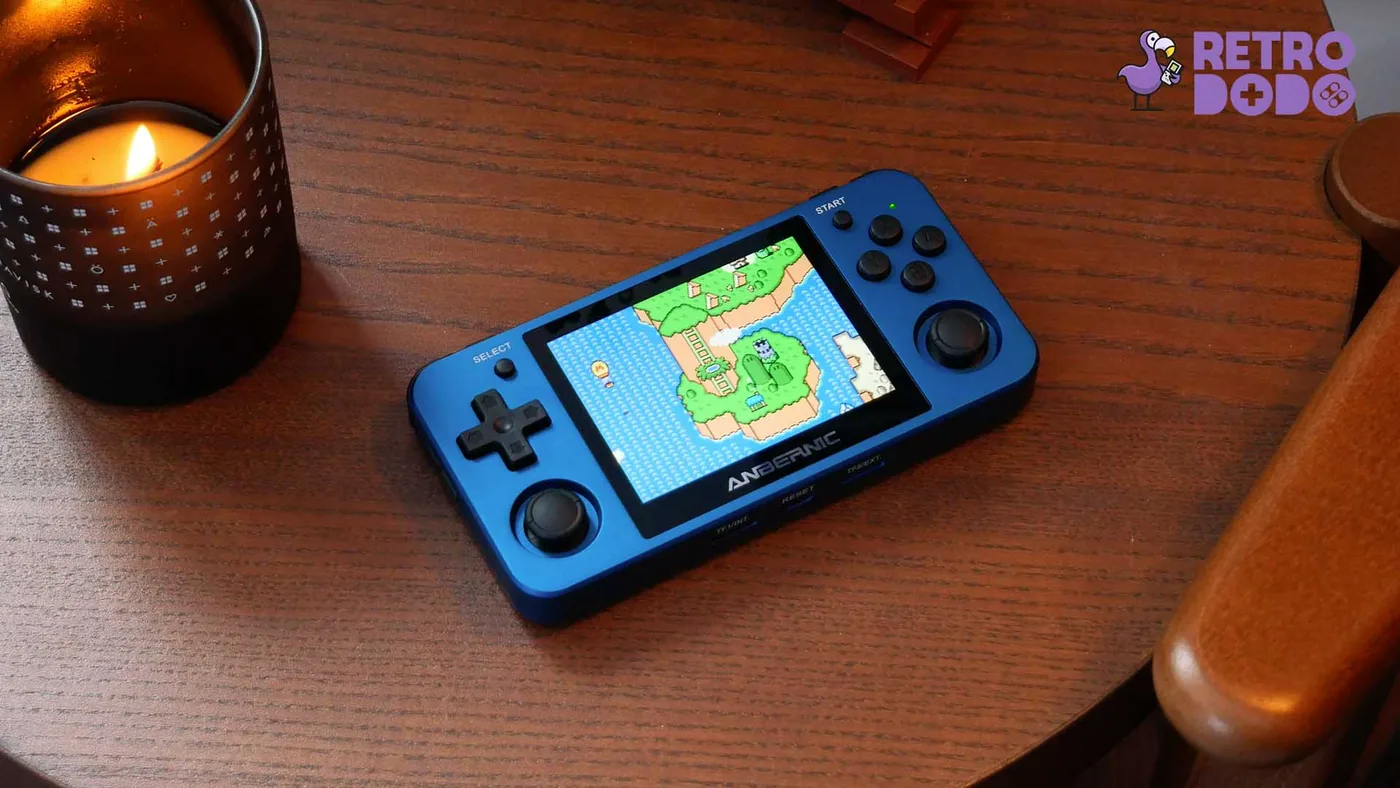
Recent development cycles showed Anbernic retro handhelds experimenting with novel mechanical form factors. In June 2025, the manufacturer introduced the RG Slide, using a sliding screen to conceal gaming buttons beneath the panel. It released the RG 476H in September 2025, featuring a borderless full-screen glass front that unified the display and outer frame into a single plane. In November 2025, the brand debuted the RG DS, its first dual-screen clamshell. The RG Rotate followed in 2026, combining a UNISOC T618 processor with a 1:1 square display on a swivel hinge for both vertical and horizontal play [1]. The design drew widespread curiosity.
The most ambitious dual-screen console in the catalog is the RG DDS. The handheld features a 4.7-inch upper IPS display at 1200×720 and a 4-inch lower touchscreen at 960×720. Powered by a Qualcomm Snapdragon G2 Gen 2 processor running Android 16, the device includes a built-in telescopic capacitive stylus [2]. Anbernic opened pre-orders at $284.99 for the 8 GB RAM and 128 GB storage model, with a 12 GB RAM and 256 GB storage version priced at $349.99 ahead of shipments starting December 10, 2026 [9].
Promotional videos demonstrated the hardware running Transformers: Devastation via the Bachata S4 PlayStation 4 emulator at 53 to 60 frames per second. The RG DDS also ran Nintendo DS titles like Golden Sun: Dark Dawn in melonDS at 5x resolution. DisplayPort output supports AR glasses [9].
Software Forks Around Anbernic Retro Handhelds
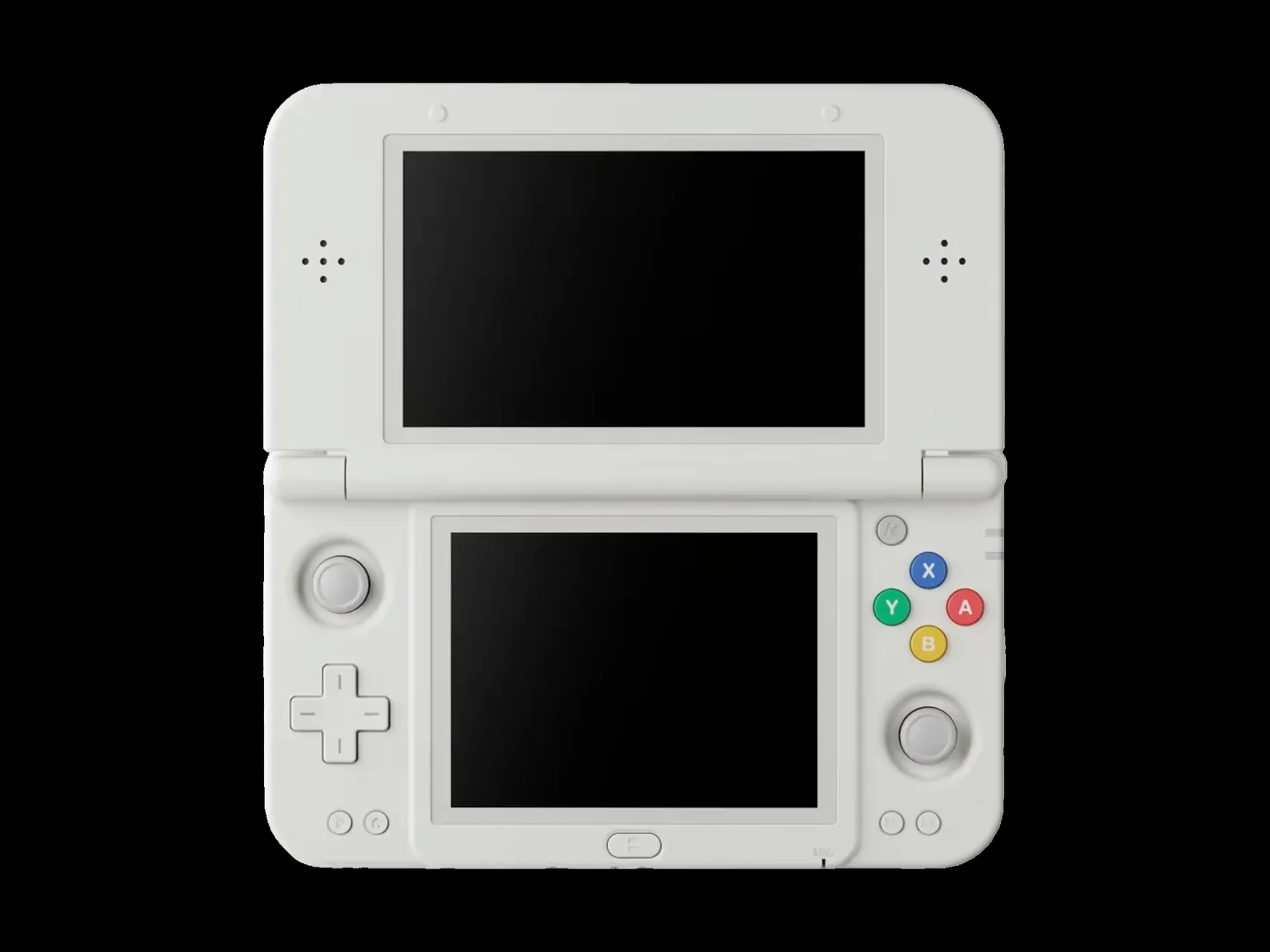
The connection between hardware makers and emulator programmers produced notable community friction in October 2026. The developers behind Azahar, the leading Nintendo 3DS emulator, announced that they would no longer support Anbernic retro handhelds after marketing clips showed the upcoming RG DDS running games on an unauthorized fork named AzaharPlus. Azahar had formed after Nintendo settled its high-profile federal lawsuit against Tropic Haze LLC, which forced the shutdown of both the Yuzu Switch emulator and the Citra 3DS emulator [8]. Emulator creators grew cautious.
Lead programmer PabloMK7 merged Lime3DS and Citra into Azahar with strict anti-piracy protections: the emulator omitted decryption keys, requiring players to decrypt game files manually using tools like GodMode9 on real Nintendo 3DS hardware. However, a third-party programmer released AzaharPlus, restoring automatic decryption and enabling users to download game assets directly from official servers. Azahar developers objected to the fork retaining their logo and name while circumventing protections intended to protect the project from Nintendo lawsuits [8].

When Anbernic showcased Nintendogs + Cats running on AzaharPlus, Azahar formally severed ties with the company. Frontends like Cocoon had already blocked the fork to avoid controversy. Azahar still runs on Anbernic hardware, but users will receive no official support [8].
Choosing Between Form Factors
Selecting among Anbernic retro handhelds depends on which gaming libraries a player plans to emulate. Budget horizontal machines like the RG35XX series start around $65, delivering responsive physical controls for classic 8-bit and 16-bit software [5]. Writing for Digitally Downloaded, Matt S. reviewed the RG35XXSP and praised its durable clamshell shell and reliable battery life, noting that it became his preferred travel device even though he owned a powerful ROG Ally [10]. Each model fills a specific niche.
Gamers who favor vertical orientations can choose between retro options like the RG351V and modern designs like the RG 40XXV, which won the Most Popular Peripheral award at the Hong Kong Convention and Exhibition Centre in 2025 [1]. These vertical shells mimic the iconic Game Boy form factor while delivering vibrant 4:3 IPS screens that render vintage games without scaling distortion. However, single analog sticks and thick battery compartments mean vertical units are poorly suited for demanding 3D games that require dual sticks [7]. Buyers must weigh nostalgia against ergonomics.
At the top of the lineup, units like the RG552 and RG DDS target enthusiasts seeking larger displays and advanced 3D emulation [2, 4]. While the $227 RG552 introduced dual-booting with Batocera and Android 7.1, the RG DDS reaches $349.99 with Snapdragon hardware capable of running PlayStation 4 software [4, 9]. Matching budget with desired console generations ensures the best purchase [5, 11].
- WEBSITE Anbernic. (2017). About Us. [Article Link]
- WEBSITE Anbernic, & Retro Game Corps. (2026). Anbernic | The Best Retro Game Console. [Article Link]
- ONLINE NEWS Stuart, K. (2024). Super Pocket review – an affordable mini console that’s simply a joy to play. The Guardian. [Article Link]
- ONLINE NEWS Lynch, G. (2022). Anbernic RG552 review. TechRadar. [Article Link]
- ONLINE NEWS Copeland, W. (2024). Anbernic RG35XXSP Review: ‘A great Game Boy Advance SP handheld homage’. GamesRadar+. [Article Link]
- ONLINE NEWS Rutherford, S. (2026). The Anbernic RG SP looks like an awesome update to one of the most iconic Game Boys of all time. Engadget. [Article Link]
- ONLINE NEWS Liszewski, A. (2021). This Super-Powered Game Boy Is a Solid Placeholder for the Analogue Pocket. Gizmodo. [Article Link]
- WEBSITE Andrew. (2026). Azahar, the De Facto 3DS Emulator, Will No Longer Support Anbernic Handhelds. Retro Handhelds. [Article Link]
- WEBSITE Andrew. (2026). Anbernic RG DDS Gameplay Showcase Starts With PS4 Emulation Because Why Not. Retro Handhelds. [Article Link]
- WEBSITE Matt, S. (2024). Gadget Review: Anbernic RG35XXSP. digitallydownloaded.net. [Article Link]
- WEBSITE Saltalamacchia, B. (2021). RG351MP Review – One Of My Favourite Metal Handhelds. Retro Dodo. [Article Link]
- ONLINE NEWS Gilbert, B. (2021). Amazon allows pirated Nintendo games to be sold through knockoff gaming devices, including one that resembles the Game Boy. Business Insider. [Article Link]
- WEBSITE Wikipedia. (n.d.). Anbernic. [Article Link]
- WEBSITE Wikipedia. (n.d.). Anbernic RG35XXSP. [Article Link]
- WEBSITE Wikipedia. (n.d.). Anbernic RG351. [Article Link]


