





In a question submitted to The Conversation, fifteen-year-old student Sarang from Latur, Maharashtra, India, asked why farm animals have not evolved protective traits against humans. The question envisions livestock developing defensive weapons. Through thousands of years of animal domestication, human selection has replaced natural survival pressures on agricultural land, steering the biological evolution of livestock away from defensive aggression and directly into docility. Instead of developing horns or venom, livestock populations systematically lost the behaviors needed to resist human authority [5].
The Fox Domestication Experiment
Dogs were the first animals tamed from wild wolves. To explore how that behavioral transition unfolded over generations, biologists examined how captive animals respond when defensive instincts are systematically eliminated through controlled human mating programs in scientific facilities. A study starting in 1952 tested this process by breeding captive silver foxes solely for tameness [1].
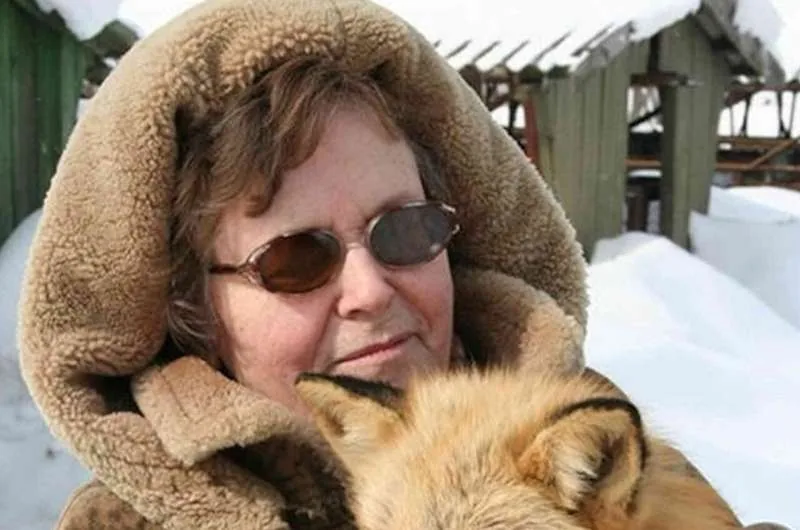
Biologist Lyudmila Trut and her fellow scientists chose only the least fearful silver foxes as breeding parents for each generation. The team avoided structured obedience training and strictly limited human contact outside feeding sessions, ensuring that behavioral changes arose from inherited genetic variation instead of learned socialization with human caretakers in the pens. Within six generations of controlled selection, pups showed doglike behaviors. Young foxes wagged their tails when researchers approached, licked human hands eagerly, and actively sought petting from visitors. Lee Alan Dugatkin said selecting for calm temperaments reshaped the wild species quickly without any formal instruction, proving that behavioral genetics responds swiftly to human choice [1].
Lee Alan Dugatkin documented this experimental history in Evolution: Education and Outreach, showing how artificial selection alters physical and social traits in captive animal populations. In pens, survival no longer requires evading predators or hunting prey. Docility became the sole ticket to reproductive success in the Siberian research pens [1].

Ancient Genomics and Animal Domestication
Living canids provide one clue, but ancient bones reveal how livestock genetics changed over centuries. Geneticists Frantz, Bradley, Larson, and Orlando explored this timeline by analyzing ancient animal genomes in Nature Reviews Genetics, sequencing ancient DNA from archaeological bone fragments of ungulates and artiodactyls recovered in Europe, Asia, and Africa. Their data showed that early farmers reshaped livestock genomes through selective breeding [2].
The team examined genetic markers linked to visible traits, including coat colors in goats and horses, alongside egg production in chickens. In wild habitats, unusual coats make prey vulnerable to carnivores. Under human care, however, farmers favored placid temperaments and unusual colors because docile animals were far easier to manage, allowing alleles for human preferences to spread while natural defensive traits withered away [2].
Biologists Wiener and Wilkinson detailed these genetic mechanisms in Proceedings of the Royal Society B: Biological Sciences, explaining how selective breeding targets multiple gene regions simultaneously in domestic livestock. Earlier research on marine snail evolutionary transitions tracked how wild populations alter anatomical structures when environmental pressures shift. On early farms, human selection acted as an artificial filter [3].
Selective Breeding on Modern Farms
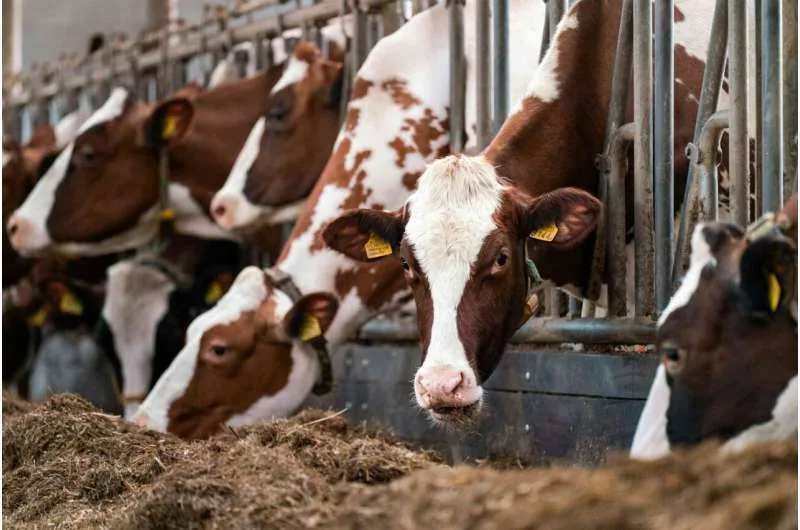
On working farms, human decisions control every animal birth. Dairy cattle documented by photographer Michael Fousert on Unsplash are selected for high milk yields, while poultry lines are bred to lay hundreds of eggs each year or gain muscle mass quickly for commercial meat supply. Trade-offs between reproductive output and bodily resilience mirror findings on how genetic mutations affect longevity in animals. Farmers exclude uncooperative or hostile livestock from breeding because difficult animals damage equipment, injure agricultural handlers, and disrupt daily herd management in barns and pastures [5].
If an individual cow or chicken develops hostile instincts that deter handlers, that animal might seem to protect itself from immediate human handling on a working farm. Yet in biological terms, that defense is an evolutionary dead end. Hostile animals are culled, isolated, or excluded from reproduction by farm managers [5].
Complete human control over livestock reproduction explains why animal domestication prevents farm animals from developing protective defenses against humans. In nature, survival depends on fighting predators or evading danger, so wild animals that resist threats leave more offspring behind in their native forest habitats. On farms, humans hold total power over who mates. An animal that attempts to resist human control faces reproductive elimination instead of evolutionary success, ensuring that defensive genes disappear from domestic herds over successive generations [5].


Why Livestock Cannot Revolt
Popular culture often jokes about a hypothetical chicken uprising, imagining domestic birds overthrowing human handlers. Student Sarang posed a serious version of this thought experiment from India, asking why billions of chickens, cattle, and goats never evolve collective defenses against slaughter. Evolutionary biology explains why that revolt never occurs [5].
Biologist Alida de Flamingh outlined these evolutionary constraints in a 2026 preprint (an unreviewed scientific manuscript), explaining why livestock cannot stage coordinated resistance against agricultural handlers [5]. Writing for The Conversation in its Curious Kids educational series, Flamingh answered Sarang’s question from Latur, clarifying that evolution has no foresight, intentional goal, or coordinated agenda [7]. Phys.org republished the biological analysis under a Creative Commons license, with scientific editor Gaby Clark and chief editor Andrew Zinin overseeing the presentation for global science readers [6]. Chickens do not strategize about collective freedom or farm escapes. Mutations occur at random, spreading only when they improve an individual organism’s reproductive success in its environment [5].
Even if a random mutation granted a rooster sharper spurs, thicker bone density, or aggressive behaviors against people, that individual would never start an evolutionary revolution on a farm. Farm workers would separate such a dangerous bird from the flock, preventing it from fertilizing eggs. That defensive trait guarantees reproductive failure on farms [5].
Evolutionary Pressures in the Wild
Human activity influences evolution outside farm fences as well, but wild ecosystems operate under different rules. In natural habitats, people alter environments through hunting, fishing, habitat loss, and climate change without dictating which individual animals breed and survive in the wild. Wild animals that possess traits helping them evade hunters or endure human disruption survive longer, find mates, and produce healthy offspring in their native forest and savanna ecosystems [4]. This dynamic allows wild populations to evolve defensive adaptations quickly.
A striking example of this wild response occurred among African bush elephants in Gorongosa National Park in Mozambique, a population that Flamingh investigates. During the country’s civil war, poachers armed with automatic weapons slaughtered thousands of elephants to sell their ivory tusks for weapons and military supplies on international black markets [4]. Hunters targeted elephants with tusks while ignoring others.

Biologist Campbell-Staton and coauthors Arnold, Gonçalves, Granli, Poole, Long, and Pringle documented this rapid evolutionary shift in Science, tracking how poaching pressure reshaped elephant genetics in Gorongosa. Some female elephants were naturally tuskless (measuring tusk absence in female elephants) due to rare genetic variants that existed long before the conflict. Because poachers targeted elephants with valuable tusks, tuskless females survived the slaughter at much higher rates and successfully reared calves throughout the war [4]. Tusklessness quickly became common among surviving female elephants in Mozambique.
Unchecked Traits in Natural Populations
The Gorongosa elephants illustrate how wild species evolve defenses against human predation precisely because humans did not step in to control their reproductive choices or arrange captive breeding pairs. Poachers killed tusked animals, but they did not step in to decide which surviving females mated with bulls. Natural selection favored an existing genetic trait that offered protection from hunters [4]. On farms, humans control every mating pair [5].
Conservation biologists point out that wildlife management differs fundamentally from agricultural breeding. Programs coordinating rural community aid for endangered species often focus on preserving wild genetic diversity so that populations can adapt naturally to environmental shocks. Domestic animals, having surrendered their reproductive autonomy thousands of years ago, cannot mount similar adaptive responses in commercial agricultural environments around the world. Their evolutionary trajectories remain tied to economic utility instead of natural survival demands [5].
Artificial selection channels animal genetics directly toward human utility. Wild species may develop protective adaptations when human activities create lethal environmental pressures, but livestock cannot escape the reproductive filter of animal domestication on modern working farms. As long as humans control which animals breed and pass on their genes, farm animals will continue producing food instead of weapons [5].
- ACADEMIC JOURNAL Dugatkin, L. A. (2018). The silver fox domestication experiment. Evolution: Education and Outreach, 11(1). [Article Link]
- ACADEMIC JOURNAL Frantz, L. A. F., Bradley, D. G., Larson, G., & Orlando, L. (2020). Animal domestication in the era of ancient genomics. Nature Reviews Genetics, 21(8), 449–460. [Article Link]
- ACADEMIC JOURNAL Wiener, P., & Wilkinson, S. (2011). Deciphering the genetic basis of animal domestication. Proceedings of the Royal Society B: Biological Sciences, 278(1722), 3161–3170. [Article Link]
- ACADEMIC JOURNAL Campbell-Staton, S. C., Arnold, B. J., Gonçalves, D., Granli, P., Poole, J., Long, R. A., & Pringle, R. M. (2021). Ivory poaching and the rapid evolution of tusklessness in African elephants. Science, 374(6566), 483–487. [Article Link]
- PREPRINT Flamingh, A. (2026). Why haven’t farm animals evolved against humans? A biologist explains why there won’t be a chicken uprising anytime soon. [Article Link]
- ONLINE NEWS Flamingh, A. de. (2026). Why haven’t farm animals evolved against humans? A biologist explains why there won’t be a chicken uprising anytime soon. Phys.org. [Article Link]
- ONLINE NEWS Flamingh, A. de. (2026). Why haven’t farm animals evolved against humans? A biologist explains why there won’t be a chicken uprising anytime soon. The Conversation. [Article Link]
APA 7: PerEXP Teamworks. (2026). Animal domestication stops farm animals from evolving defenses. PerEXP Teamworks.


