



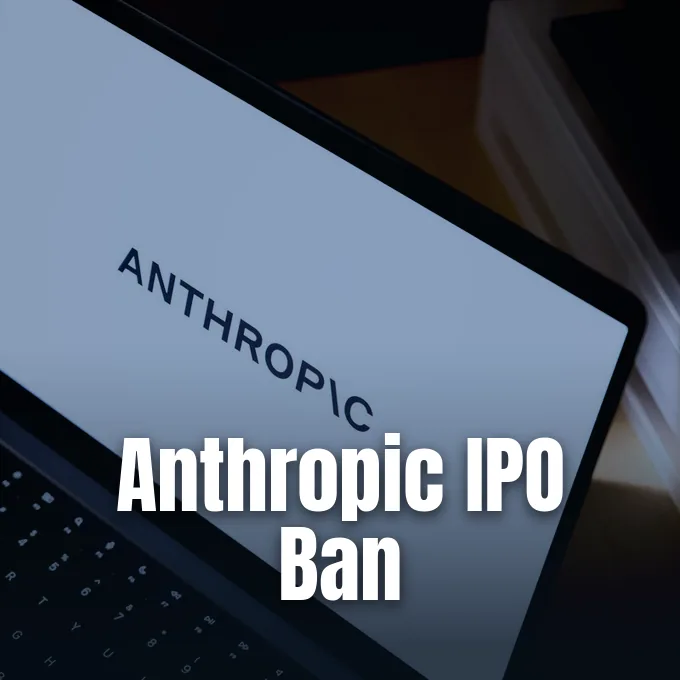
Major banks running the Anthropic IPO ban have turned down buy bids from funds based in mainland China and Hong Kong to meet federal trade rules [1]. Share lots for those buyers look improbable [2]. Goldman Sachs coordinates the book alongside Morgan Stanley and twenty partner banks, with Matthias Bastian of The Decoder reporting that book desks cited United States arms export limits under ITAR as the main reason for rejecting Asian bids before Nasdaq trading begins [1].
How the Anthropic IPO Ban Hits Asian Bids
The choice to block buyers in mainland China and Hong Kong came during share sale talks handled by twenty-two banks [1]. Several desks turned away buy orders from accounts linked to Chinese soil [2]. Anthropic declined to comment [1].
Lead banks picked November 18 for pricing. That timetable sets up the AI firm for its debut on the Nasdaq market under ticker ANT, following steps where Anthropic pledges five percent of shares to a public benefit fund before stock distribution starts. Trading starts under ANT. Bankers running the book said capital from mainland China faces firm barriers because underwriters want to avoid friction with United States officials who track cross-border technology funding [1]. Bids from those places were rejected outright or deemed unlikely to get shares when the stock is priced, according to reporting by Bailey Lipschultz at Bloomberg [2]. The bank team moved quickly to set clear limits for foreign bidders [1].
Desks warned big clients that winning shares would not happen [2]. Hong Kong hedge funds and mainland investment groups could not secure stock during the first round of bids because lead desks cut off order flow to avoid regulatory disputes [1]. The book closed early [2].
Export Controls Under ITAR
People close to the deal pointed to the International Traffic in Arms Regulations (ITAR) as a key reason for shutting out regional bidders who sought shares during the sale. ITAR governs defense goods, dual-use items, and technical data [1]. Washington guards these assets from foreign reach [2]. The Anthropic IPO ban fits that policy [1].
Meeting export control rules has become an urgent task for Wall Street banks that handle frontier AI developers [1]. Bankers said selling equity stakes to Chinese funds might trigger federal reviews over tech transfer, board seats, and foreign shareholder rights [2]. Shares bring voting rights. By applying ITAR limits directly to the order book, the bank team sought to shield the listing from direct intervention by United States authorities who monitor sensitive AI software assets [1]. Safety came first [2]. The banking syndicate acted early to ensure that no foreign entity gained access to proprietary governance disclosures during the public sale [1].

Federal officials have widened export curbs to keep advanced computing tools away from Chinese state-backed groups [2]. The rules restrict advanced chips, cloud access, and model weights [1]. Banks chose a safe path to avoid trade friction [2]. They decided that cutting out regional funds was the cleanest route to keep the public offering fully aligned with federal export laws that protect national security interests [1].

Parallels With SpaceX Offering Rules
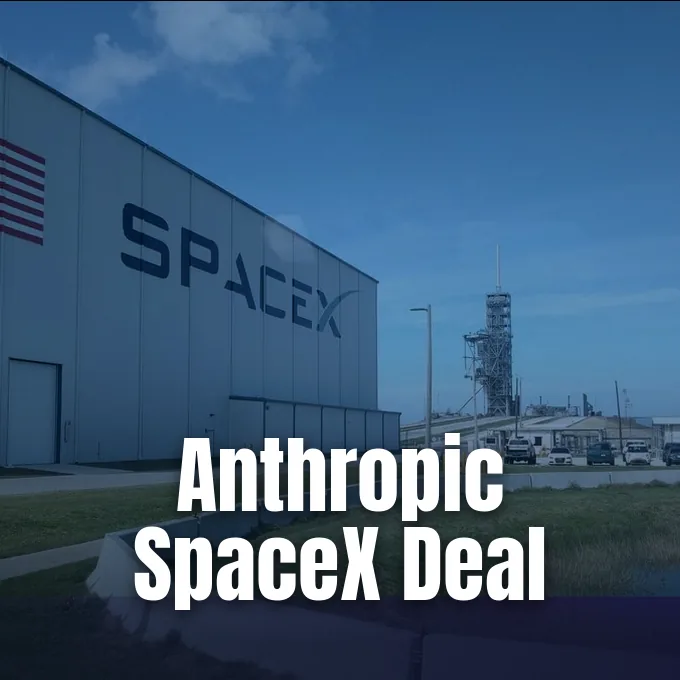
The Anthropic IPO ban mirrors the path taken during public offering work for SpaceX, where funds in mainland China and Hong Kong were similarly barred from buying stock. Rocket work and satellite systems fall under ITAR rules. SpaceX banks shut out Chinese money to avoid clashing with United States arms export laws [2]. The move showed that Wall Street will block foreign buyers when a firm touches national defense needs [1].
Anthropic holds deep links with the space firm, as seen when Anthropic drives over a third of SpaceX revenue in compute deal setups to support heavy model workloads. Both groups run systems that touch sensitive aerospace and defense networks. By matching share rules for the deal with defense standards, underwriters used the exact same national security filter that kept Chinese money out of SpaceX shares [2]. Banks knew that taking money from areas facing United States trade curbs could invite sharp scrutiny and costly delays from federal security watchdogs [1]. So banks gave up Asian bids [2]. The exclusion established a clear standard for high-tech public offerings [1].
The link between AI labs and defense contracts has remade how Wall Street views global money [2]. Hong Kong funds once backed Silicon Valley startups with ease [1]. That open era faded. Models are now seen as dual-use weapons [2].
Access Battles Surrounding Claude Code
The choice to bar buyers follows years of tension between Anthropic and groups operating inside China. Company software, including the Claude assistant and API tools, is not legally offered in mainland China or Hong Kong. Anthropic blocks foreign IP ranges. Despite strict network firewalls, groups in the region continue seeking illicit workarounds to harness the reasoning power of Claude models for commercial tasks [1].
Tension grew around Claude Code. Anthropic staff noticed several unauthorized workarounds used by coders in China who routed traffic through virtual private networks to slip past regional blocks and query the coding engine. The firm rolled out new defenses to cut off illicit routes, canceling API keys and tightening user checks. Engineers stopped the leaks. The company treats any unauthorized bypass as a serious breach of its terms of service [1].
Anthropic chose federal defense alignment over Asian sales. Leadership prioritized regulatory ties with Washington over expanding its user base into restricted Asian markets [1]. The Anthropic IPO curbs match that posture, reinforcing strict separation between American frontier AI systems and capital originating from mainland China or Hong Kong [2].
The Anthropic IPO Ban and Distillation Disputes
Beyond access fights, Anthropic uncovered large distillation campaigns run by Chinese AI labs. Scraping came from rivals. Anthropic identified systematic operations run by Chinese AI labs, including DeepSeek, Moonshot, and MiniMax, which queried Claude models to lift proprietary reasoning traits [1]. The Anthropic IPO ban serves to cut off financial ties with the same market where these intellectual property disputes first arose [2].
Those Chinese rivals sent about 16 million queries to Claude models to extract reasoning traits and synthetic training data. The theft fueled deep mistrust [1]. Forensic research conducted by Will DePue at Unemployment Labs revealed that six models released by DeepSeek, Moonshot, MiniMax, and Ant Group carried fingerprints of export-controlled Nvidia Blackwell GPUs [2]. These findings confirmed bank fears that capital ties could enable illicit technology sharing [1].
Pricing arrives on November 18. Goldman Sachs and Morgan Stanley are steering the order book toward institutional funds located in Western markets that operate free from American export restrictions [1]. Barring Chinese and Hong Kong accounts lets Anthropic list on Nasdaq under ticker ANT without triggering national security disputes over foreign ownership. Advanced AI now carries the exact same geopolitical borders as military rocket hardware [2].
- ONLINE NEWS Bastian, M. (2026, November 13). Banks bar Chinese and Hong Kong investors from Anthropic IPO over US export controls. The Decoder. [Article Link]
- ONLINE NEWS Techmeme. (2026, November 13). Sources: Anthropic’s IPO, like SpaceX’s, is closed to institutional investors in mainland China and Hong Kong, partly due to US arms export rules. [Article Link]


